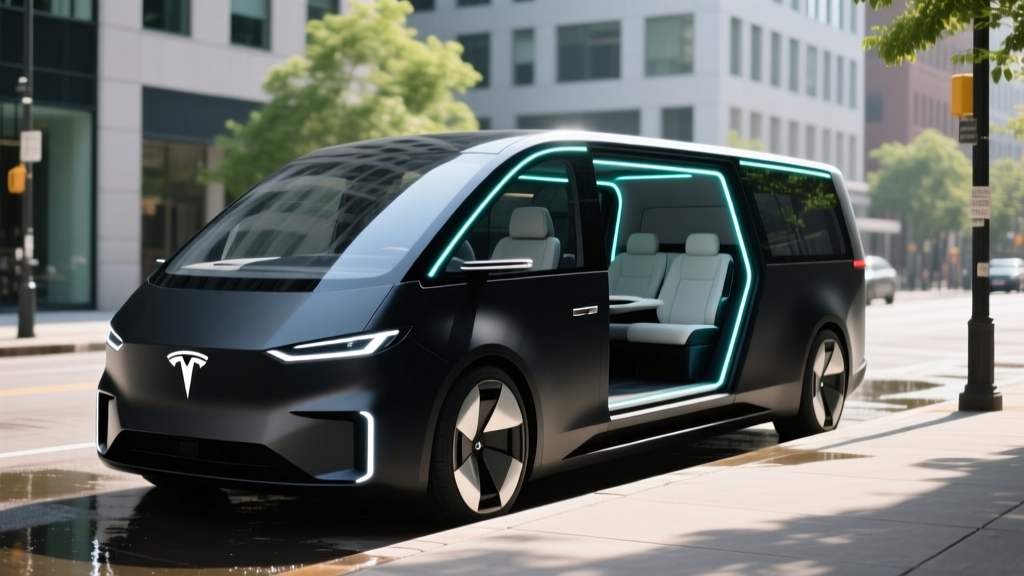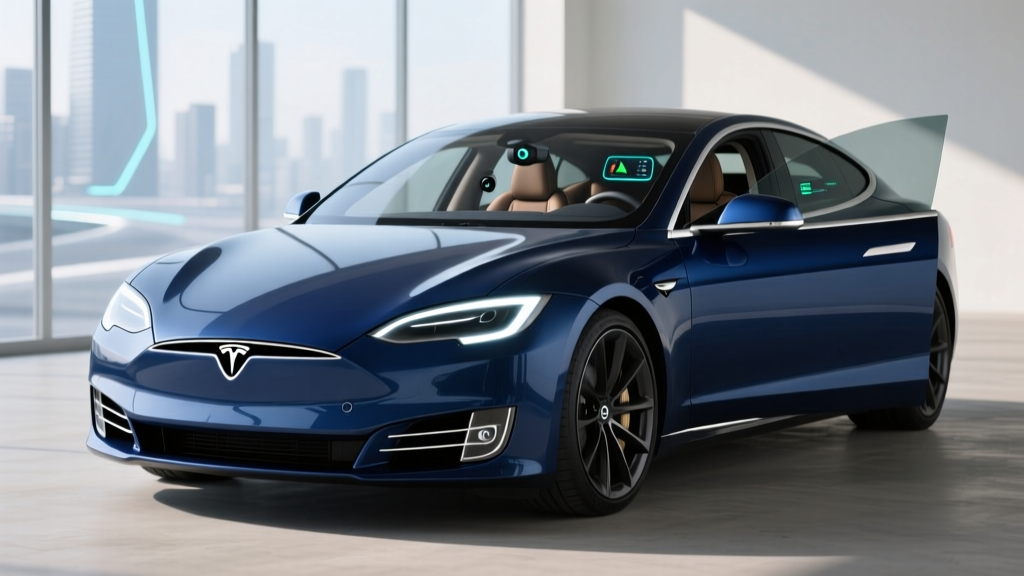
Tesla's marketing has leaned heavily on safety as a core brand pillar for years, but claims and data are two different things. This profile examines Tesla safety through the lens of verifiable crash-test results, driver-assistance limitations, and real-world ownership factors — then pairs that analysis with the range, charging, and pricing data every EV buyer needs. We're covering the current 2025–2026 lineup: Model 3, Model Y, Model S, Model X, and the Cybertruck.
NHTSA and IIHS Crash-Test Results Across the Lineup
The National Highway Traffic Safety Administration (NHTSA) and the Insurance Institute for Highway Safety (IIHS) are the two authoritative crash-testing bodies in the U.S. Here's where each current Tesla stands as of early 2026.
| Model | NHTSA Overall | IIHS Rating | Notes |
|---|---|---|---|
| Model 3 (2024+ refresh) | 5 Stars | IIHS Top Safety Pick+ | Strong small-overlap and pedestrian scores |
| Model Y (2025+) | 5 Stars | IIHS Top Safety Pick+ | Updated side-impact structure |
| Model S | 5 Stars | Top Safety Pick (older test cycle) | Platform dating to 2012; IIHS retest pending |
| Model X | 5 Stars | Not fully rated (recent cycles) | Falcon Wing doors complicate side-pillar tests |
| Cybertruck | Not yet rated | Not yet rated | Stainless exoskeleton; no crash-test data published |
The NHTSA 5-star ratings for Model 3 and Model Y are well-earned, reflecting excellent performance in frontal, side, and rollover tests. The low center of gravity from the under-floor battery pack contributes to strong rollover resistance across all Tesla sedans and crossovers. The IIHS Top Safety Pick+ designation for the refreshed Model 3 and Model Y requires good or acceptable scores in all crashworthiness tests plus adequate headlight performance — an area where earlier Teslas stumbled.
For the Model S and Model X, the underlying architecture is over a decade old. While they still hold 5-star NHTSA ratings, IIHS has updated its test protocols significantly since those models were last fully evaluated. Buyers should note this gap.
Active Safety and Driver-Assistance: Autopilot and FSD Supervised
Every Tesla ships with Autopilot as standard — a Level 2 system providing adaptive cruise control and lane-centering. The optional Full Self-Driving (Supervised) package adds automated lane changes, traffic-light recognition, and navigation-guided steering on mapped roads. As of 2026, FSD (Supervised) costs $8,000 upfront or $99/month.
Tesla's active-safety suite includes automatic emergency braking, blind-spot monitoring, lane-departure prevention, and obstacle-aware acceleration. These features perform well in controlled testing. However, NHTSA has opened multiple investigations into Autopilot-related incidents, particularly involving stationary emergency vehicles. In 2024, Tesla introduced an expanded driver-monitoring system using the cabin camera, and in 2025, NHTSA required additional safeguards for all Level 2 systems sold in the U.S.
Real-world context: according to Tesla's own quarterly safety reports, vehicles with Autopilot engaged report roughly one crash per 4–5 million miles driven, versus approximately one per 670,000 miles without. These figures are self-reported and not independently verified, and they do not control for driving environment (highway vs. city). Use them as directional, not definitive. For independently verified data, consult NHTSA's crash databases and IIHS research.
Model 3: Range, Charging, and Pricing Breakdown
The refreshed Model 3 (introduced for the 2024 model year, continuing into 2026) remains Tesla's most affordable vehicle and one of the best-selling EVs in the U.S. Here are the specs that matter.
| Spec | RWD (Base) | Long Range AWD | Performance |
|---|---|---|---|
| EPA Range | 272 mi | 363 mi | 315 mi |
| Battery (usable) | ~57.5 kWh (LFP) | ~75 kWh (NMC) | ~75 kWh (NMC) |
| Max DC Fast Charge | 170 kW | 250 kW | 250 kW |
| 10–80% DCFC Time | ~30 min | ~25 min | ~25 min |
| Level 2 Home Rate | 11.5 kW (~44 mi/hr) | 11.5 kW (~44 mi/hr) | 11.5 kW (~44 mi/hr) |
| 0–60 mph | 5.8 sec | 4.2 sec | 2.9 sec |
| Horsepower | 283 hp | 384 hp | 510 hp |
| Drivetrain | RWD | Dual-Motor AWD | Dual-Motor AWD |
| Efficiency | 132 MPGe / 25 kWh/100mi | 134 MPGe / 25 kWh/100mi | 118 MPGe / 28 kWh/100mi |
| Base MSRP | $38,990 | $45,990 | $52,990 |
Model Y: The Family Crossover Benchmark
The Model Y is Tesla's best-selling vehicle globally and the default comparison target for the Ford Mustang Mach-E, Hyundai Ioniq 5, and Kia EV6. The 2025 refresh brought subtle suspension and interior improvements.
| Spec | Long Range AWD | Performance |
|---|---|---|
| EPA Range | 320 mi | 285 mi |
| Battery (usable) | ~75 kWh (NMC) | ~75 kWh (NMC) |
| Max DC Fast Charge | 250 kW | 250 kW |
| 10–80% DCFC Time | ~25 min | ~25 min |
| 0–60 mph | 4.8 sec | 3.5 sec |
| Horsepower | 384 hp | 456 hp |
| Cargo (behind 2nd row) | 30.2 cu ft | 30.2 cu ft |
| Cargo (seats folded) | 72.1 cu ft | 72.1 cu ft |
| Efficiency | 122 MPGe / 28 kWh/100mi | 111 MPGe / 30 kWh/100mi |
| Base MSRP | $44,990 | $49,990 |
With 30.2 cu ft behind the second row and 72.1 cu ft folded, the Model Y offers more usable cargo volume than most compact SUVs. The optional third row adds two small seats (best for children under 5'2"), but eliminates the flat-load floor. Rear-seat legroom measures 39.4 inches — adequate for adults but tighter than the Ioniq 5's 41.7 inches.
Charging Network: Tesla's Supercharger Advantage
Tesla's Supercharger network remains its single biggest competitive moat. As of early 2026, there are over 6,500 Supercharger stalls in North America, many now open to NACS-equipped vehicles from Ford, GM, Rivian, and others. Tesla owners still benefit from seamless plug-and-charge authentication, reliable stall uptime (~97%+), and integrated navigation-based preconditioning.
| Charging Level | Power | Speed (Miles/Hour) | Typical Use |
|---|---|---|---|
| Level 1 (120V) | ~1.4 kW | 3–5 mi/hr | Overnight trickle, emergencies |
| Level 2 (240V, Wall Connector) | 11.5 kW | ~44 mi/hr | Home daily charging |
| DC Fast (V2 Supercharger) | 150 kW | ~300+ mi/hr peak | Road trips, older stations |
| DC Fast (V3/V4 Supercharger) | 250 kW | ~500+ mi/hr peak | Road trips, newer stations |
A critical charging detail: Tesla's peak kW rating is not sustained. The charge curve tapers significantly above 60% state of charge. A Model Y Long Range charging at a V3 Supercharger will pull close to 250 kW between 10–30% SoC, drop to ~150 kW around 50%, and slow to ~60 kW by 80%. This is why Tesla quotes 10–80% times rather than 0–100%. For daily driving, charging to 80% at home on Level 2 is the recommended practice for NMC battery longevity; LFP batteries in the RWD Model 3 can be charged to 100% regularly without degradation concerns.
Federal Tax Credit Eligibility (§30D) and True Cost
Tesla's eligibility for the federal §30D clean vehicle credit is a moving target. As of 2026, here's the framework:
- MSRP Cap: Sedans (Model 3) must be under $55,000; SUVs/trucks (Model Y, Cybertruck, Model X) under $80,000. All current Tesla trims except Model S and fully loaded Model X qualify.
- Buyer Income Cap: Modified AGI must not exceed $150,000 (single), $225,000 (head of household), or $300,000 (joint).
- Battery Sourcing: The full $7,500 requires meeting both critical-minerals and battery-component requirements. Tesla's shifting supply chain means eligibility can change quarter to quarter. Always verify on the IRS eligible-vehicles list before purchasing.
- Point-of-Sale Transfer: Buyers can transfer the credit to the dealer at purchase, reducing the out-of-pocket price immediately rather than waiting for tax filing.
| Model & Trim | Base MSRP | Est. After $7,500 Credit* | Credit Eligible? |
|---|---|---|---|
| Model 3 RWD | $38,990 | ~$31,490 | Yes (verify sourcing) |
| Model 3 Long Range AWD | $45,990 | ~$38,490 | Yes (verify sourcing) |
| Model Y Long Range AWD | $44,990 | ~$37,490 | Yes (verify sourcing) |
| Model S Dual Motor | $74,990 | $74,990 | No (exceeds sedan MSRP cap) |
| Cybertruck AWD | $79,990 | ~$72,490 | Marginal (near $80K cap) |
*Credit eligibility depends on battery sourcing requirements, buyer income, and MSRP classification. Always confirm on IRS.gov before purchase. Consult a tax professional for personal eligibility.
Warranty, Battery Longevity, and Ownership Costs
Tesla's warranty structure is straightforward:
- Basic Vehicle: 4 years / 50,000 miles
- Battery & Drive Unit (Model 3/Y RWD with LFP): 8 years / 100,000 miles, minimum 70% capacity retention
- Battery & Drive Unit (Long Range/Performance AWD): 8 years / 120,000 miles, minimum 70% capacity retention
- Model S/X Battery & Drive Unit: 8 years / 150,000 miles, minimum 70% capacity retention
The 70% retention threshold is the industry standard, matching competitors like Hyundai and Ford. Real-world degradation data from fleet analytics shows Tesla NMC batteries retaining approximately 88–92% capacity at 100,000 miles under normal use. LFP batteries in the RWD Model 3 tend to degrade more slowly but have lower energy density, explaining the shorter EPA range despite similar physical battery size.
Insurance costs remain a Tesla pain point. Average annual premiums run $2,400–$3,200 depending on model and state — roughly 25–40% above comparable non-Tesla EVs. Tesla's own insurance product, available in select states, uses real-time driving data and can be cheaper for careful drivers but more expensive for those with hard-braking events.
Pros, Cons, and Who Should Buy a Tesla
Pros
- Class-leading Supercharger network access with plug-and-charge simplicity
- Top NHTSA 5-star and IIHS Top Safety Pick+ ratings (Model 3/Y)
- Best-in-class efficiency (kWh/100mi) across Model 3 trims
- Over-the-air updates continuously add features and improvements
- Strong resale value relative to most EV competitors
- LFP battery option allows daily 100% charging without degradation worry
Cons
- No traditional instrument cluster; all info on central screen can distract
- FSD (Supervised) remains Level 2 — not autonomous despite the name
- Insurance premiums 25–40% above segment average
- Build quality inconsistencies still reported (panel gaps, trim rattle)
- No Apple CarPlay or Android Auto integration
- Model S/X platform aging; crash-test ratings not refreshed to latest IIHS protocols
- Choose Model 3 RWD if: You want the most affordable entry into Tesla's ecosystem, commute under 50 miles daily, and can charge at home. At ~$31,490 after the tax credit, it's a compelling value.
- Choose Model 3 Long Range AWD if: You take regular road trips and need the 363-mile EPA range buffer plus dual-motor traction in inclement weather.
- Choose Model Y Long Range AWD if: You need family crossover cargo space (30.2 cu ft), optional third-row seating, and still want Supercharger convenience.
- Look elsewhere if: You prioritize physical controls, need Apple CarPlay, want the latest IIHS test protocols on a large luxury sedan (Model S), or require Level 4 autonomous driving.
Tesla Safety FAQ
What is the real-world range of a Tesla in 2026?
The Model 3 Long Range AWD delivers roughly 300–320 miles in mixed driving, 270–290 on sustained highway trips, and 250–260 in freezing weather. The Model Y Long Range averages ~280 miles mixed. Always precondition the battery for optimal range and charging speed.
How fast does a Tesla charge at home and on the road?
On a Tesla Wall Connector (Level 2, 11.5 kW), expect ~44 miles of range per hour — a full overnight charge from 20% to 80% takes about 6–7 hours. On a V3 Supercharger (250 kW peak), a 10–80% charge takes approximately 25 minutes for Long Range models, though the charge curve tapers significantly above 60% SoC.
How much does a Tesla cost after the federal tax credit?
A Model 3 RWD at $38,990 MSRP drops to roughly $31,490 after the maximum $7,500 §30D credit, assuming you meet income limits and the vehicle meets battery-sourcing requirements. Model Y Long Range drops to ~$37,490. Always verify eligibility on IRS.gov before purchase.
Is Tesla worth buying versus competitors like Hyundai Ioniq 5 or Ford Mach-E?
Tesla wins on Supercharger network reliability, efficiency (kWh/100mi), and software. The Ioniq 5 offers faster 800V charging architecture (~18 min 10–80%), more rear legroom, and Apple CarPlay. The Mach-E provides a more traditional driving feel. If Supercharger access is your top priority, Tesla still leads; if interior quality or physical controls matter more, competitors are strong alternatives.
Does Tesla qualify for the federal EV tax credit in 2026?
Most Tesla models qualify, but eligibility depends on three factors: MSRP caps ($55K for sedans, $80K for SUVs/trucks), buyer income limits ($150K single / $300K joint), and battery-component/critical-minerals sourcing. The Model S does not qualify (exceeds sedan MSRP cap). Check the IRS eligible vehicle list at the time of purchase, as sourcing compliance can change quarterly.
Are Teslas safe in crashes?
The Model 3 and Model Y have earned NHTSA 5-star overall ratings and IIHS Top Safety Pick+ awards — among the highest scores in their segments. The low battery-pack placement provides excellent rollover resistance. However, the Model S and X have not been fully retested under the latest IIHS protocols, and the Cybertruck has no published crash-test data as of early 2026.
Is Tesla Autopilot or FSD actually self-driving?
No. Both Autopilot and Full Self-Driving (Supervised) are SAE Level 2 driver-assistance systems. The driver must remain alert, keep eyes on the road, and be ready to take over at any time. Tesla's cabin camera monitors engagement, but the human driver is legally and practically responsible for the vehicle at all times.