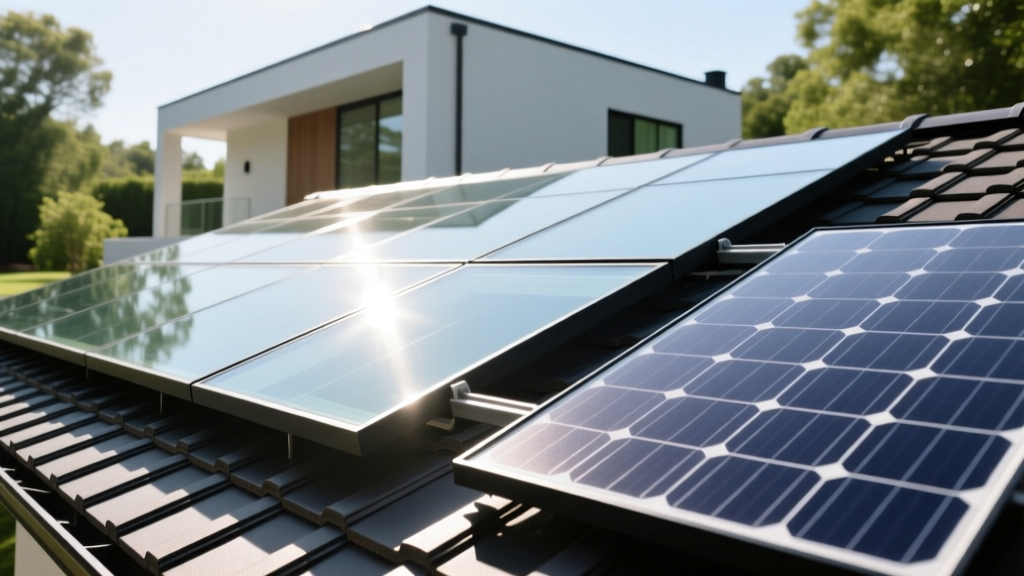
The Real Tesla Roof Shingles Cost in 2026: What Buyers Actually Pay
If you've searched for Tesla roof shingles cost, you've likely found a tangle of outdated estimates, vague "starting at" prices, and marketing gloss. Tesla's Solar Roof — the product that replaces traditional roofing materials with integrated solar and non-solar glass tiles — remains one of the most talked-about home energy products in the EV ecosystem. But the numbers matter, and they've shifted considerably since the product launched.
As of early 2026, a Tesla Solar Roof for an average 2,000-square-foot home with a 10 kW system typically lands between $42,000 and $62,000 before incentives, depending on roof complexity, story count, and local permitting. That translates to roughly $3.50 to $5.50 per watt for the solar portion — significantly higher than conventional rack-mounted solar panels, which average $2.50–$3.50 per watt nationally. The premium buys you aesthetics: the active solar tiles and passive glass tiles create a uniform roof surface that doesn't look like an aftermarket solar installation.
This guide breaks down the actual cost structure, compares it to traditional solar-plus-roof-replacement scenarios, and explains how a Solar Roof factors into EV home charging economics — the reason most of our readers are researching it in the first place.
Breaking Down the Price: Tiles, Labor, and the Hidden Complexity Factor
Tesla's Solar Roof pricing isn't a simple per-panel calculation. The system uses two tile types: active solar tiles (which generate electricity) and non-solar glass tiles (which fill the rest of the roof surface for a uniform look). You're essentially buying a full roof replacement and a solar installation in one product.
| Component | Typical Range | Notes |
|---|---|---|
| Solar tiles (per watt) | $2.10–$2.80/W | Active generation tiles only |
| Non-solar glass tiles | $12–$18/sq ft | Covers non-generating roof area |
| Inverter & electrical | $3,500–$6,000 | Tesla inverter, wiring, panel upgrade |
| Labor & installation | $8,000–$18,000 | Varies heavily by roof pitch/stories |
| Permitting & inspection | $1,500–$4,000 | Local jurisdiction dependent |
| Powerwall (optional) | $12,000–$15,000 ea. | Required in some markets; adds backup |
The single biggest variable that catches buyers off guard is roof complexity. A simple single-story ranch with a low-pitch gable roof will sit at the low end of estimates. A two-story colonial with dormers, valleys, and steep pitch can push costs 30–40% higher. Tesla's online estimator has improved since its early days, but final quotes after the on-site survey frequently differ from the initial web estimate by $5,000–$10,000 in either direction.
Solar Roof vs. Rack-Mounted Panels: The Honest Comparison
Most EV owners researching home solar face a choice: Tesla's integrated Solar Roof, or conventional rack-mounted panels from Tesla or third-party installers. Here's how the numbers stack up for a comparable 10 kW system on a 2,000 sq ft home.
| Factor | Tesla Solar Roof | Rack-Mounted Panels |
|---|---|---|
| Total installed cost | $42,000–$62,000 | $25,000–$35,000 |
| Cost after 30% federal ITC | $29,400–$43,400 | $17,500–$24,500 |
| Aesthetics | Integrated, uniform look | Visible panels on existing roof |
| Roof replacement included? | Yes — full tear-off & install | No — existing roof must be sound |
| Typical install timeline | 3–8 months (wait + install) | 1–3 months |
| Tile warranty | 25 years | 25-year panel; roof separate |
| Efficiency (tile/panel) | ~20.5% module efficiency | 21–23% (premium panels) |
The financial gap narrows when you factor in a needed roof replacement. A quality asphalt shingle roof on a 2,000 sq ft home runs $10,000–$18,000 in 2026. If you'd need that anyway within 3–5 years, the Solar Roof's incremental cost over "new roof + rack panels" drops to roughly $5,000–$15,000 — a premium you're paying for aesthetics and integration.
Federal Tax Credits and Incentives: What Actually Applies
The 30% federal solar Investment Tax Credit (ITC) applies to the solar-generating portion of a Tesla Solar Roof, including associated equipment like inverters and Powerwall battery storage (the Inflation Reduction Act expanded this to include standalone storage). For a $50,000 Solar Roof where $35,000 is attributable to solar components, the ITC would be approximately $10,500.
Important distinctions from the EV §30D tax credit:
- No income cap — the residential clean energy credit (§25D) has no adjusted gross income limits, unlike the vehicle credit.
- No MSRP or sourcing restrictions — these apply only to EV purchases.
- Non-refundable — you can only use it to offset tax liability in the installation year (excess does not carry forward under current rules).
- State incentives vary — some states offer additional rebates or SRECs (solar renewable energy certificates) that further improve payback. Check your state energy office or DSIRE database for specifics.
Consult a tax professional for your specific situation — this is general guidance, not tax advice.
EV Home Charging Economics: Where the Solar Roof Pays Dividends
For our readers, the most relevant question is how a Solar Roof changes the cost of charging an electric vehicle at home. This is where the math gets compelling.
A typical EV owner driving 12,000 miles per year in a vehicle averaging 3.5 miles per kWh consumes roughly 3,430 kWh annually for driving alone. At the U.S. average residential electricity rate of ~$0.17/kWh (2026), that's approximately $583 per year in EV charging electricity costs. Over 25 years — the lifespan of the Solar Roof warranty — that's roughly $14,575 in grid electricity for driving.
If your Solar Roof system generates enough surplus to cover EV charging, that cost drops to near zero (minus any utility interconnection fees or net metering adjustments). A 10 kW system in a moderate-sun region like the mid-Atlantic generates approximately 12,000–14,000 kWh per year — enough to power an average home (10,500 kWh/year per EIA data) with 1,500–3,500 kWh left over for EV charging or other loads.
Installation Timeline and What to Expect
Tesla Solar Roof installations have historically been slow, and 2026 isn't dramatically different. Expect the following timeline:
- Online estimate & virtual consultation: 1–2 weeks
- Site survey & engineering design: 4–8 weeks
- Permitting (jurisdiction dependent): 4–12 weeks
- Installation crew on-site: 5–10 business days (for an average home)
- Utility interconnection approval & PTO: 2–6 weeks
Total time from deposit to power-on: typically 4–8 months. Complex roofs, HOA approvals, or jurisdictions with slow permitting can push this to 10–12 months. Tesla has improved crew scheduling since the 2021–2022 backlog era, but this is still a longer timeline than most rack-panel installers.
Warranty Coverage and Long-Term Durability
Tesla's Solar Roof carries a comprehensive warranty package, but the details matter:
| Component | Coverage | Details |
|---|---|---|
| Solar tiles | 25 years | Defects, weatherization, power output |
| Non-solar glass tiles | 25 years | Wind (up to 110 mph), fire, hail (ANSI FM 4473 Class 3) |
| Inverter | 12.5 years | Shorter than tile warranty — factor replacement cost |
| Powerwall (if added) | 10 years | Unlimited cycles for solar self-consumption/backup |
| Workmanship | Varies | Typically 5–10 years on installation labor |
The glass tiles carry a Class F fire rating and Class 3 hail rating — they're legitimately tough. Real-world reports from early adopters (2019–2021 installs) show strong durability in most climates, though isolated reports of tile cracking from large branches or extreme hail exist. The inverter warranty at 12.5 years is a weak point; budget for at least one inverter replacement over the system's life.
Is the Tesla Solar Roof Worth It for EV Owners?
Whether the Tesla roof shingles cost makes sense for you depends on a specific set of conditions. Here's our decision framework:
- Your existing roof needs replacement within 1–3 years
- You value the integrated aesthetic enough to pay a $10,000–$20,000 premium over rack panels
- Your HOA restricts visible solar panels
- You plan to stay in the home 10+ years to capture the payback
- You want a single vendor for roof + solar + battery + EV charging ecosystem
- Your current roof is in good condition with 10+ years of life
- You want the lowest cost per watt and fastest installation
- You're comfortable with visible panels on your roofline
- You want competitive installer quotes (Tesla is sole-source for Solar Roof)
- You need the system installed within 2–3 months
For EV owners specifically, any home solar system dramatically reduces your fuel costs. The choice between Solar Roof and rack panels is primarily an aesthetic and timing decision, not an EV-specific one. Both will charge your car on sunshine.
Frequently Asked Questions
How much do Tesla roof shingles cost per square foot?
For the complete Solar Roof system (solar and non-solar tiles, installation, permitting), expect $22–$35 per square foot of roof area before incentives. A 2,000 sq ft home typically falls between $42,000 and $62,000 total, depending on system size and roof complexity.
Can I install Tesla Solar Roof tiles on just part of my roof?
No. The Solar Roof is designed as a full roof replacement. Tesla does not currently offer a partial-roof option where solar tiles cover one section and your existing roofing remains on another. If you only want solar on a portion of your roof, rack-mounted panels are the appropriate product.
Does the Tesla Solar Roof increase my home's resale value?
Studies from Zillow and Lawrence Berkeley National Laboratory suggest solar installations add 3–4% to home value on average. The Solar Roof's aesthetic integration may command a slight premium over rack panels in luxury markets, but the full cost premium is unlikely to be recouped at resale. The value is primarily in energy savings during ownership.
How long does a Tesla Solar Roof last compared to asphalt shingles?
Tesla warrants the tiles for 25 years, and they're expected to last 30+ years. Standard asphalt shingles typically last 15–25 years depending on climate and quality. The Solar Roof's tempered glass tiles are more durable against hail and wind than conventional shingles.
Will a Tesla Solar Roof fully power my EV charging?
A properly sized system (10–13 kW for most homes with one EV) can generate enough annual surplus to cover 8,000–15,000 miles of EV driving, depending on your climate and vehicle efficiency. With net metering, your utility credits offset nighttime charging. Without net metering, adding a Powerwall maximizes self-consumption of your solar generation.