If you've been researching home solar and stumbled on the question how much would a Tesla roof cost, you're not alone. The Tesla Solar Roof — the product that replaces your existing shingles with integrated solar tiles — occupies a unique (and often misunderstood) space in the EV-owner's energy stack. It's not a solar panel system bolted to an existing roof; it's a full roof replacement that generates electricity. For EV owners trying to offset Level 2 home charging costs, the math is different than for a gas-car household. Let's break down the real 2026 pricing, compare it to Tesla's own Solar Panels + Powerwall alternative, and figure out who this product actually serves.
What Exactly Is the Tesla Solar Roof?
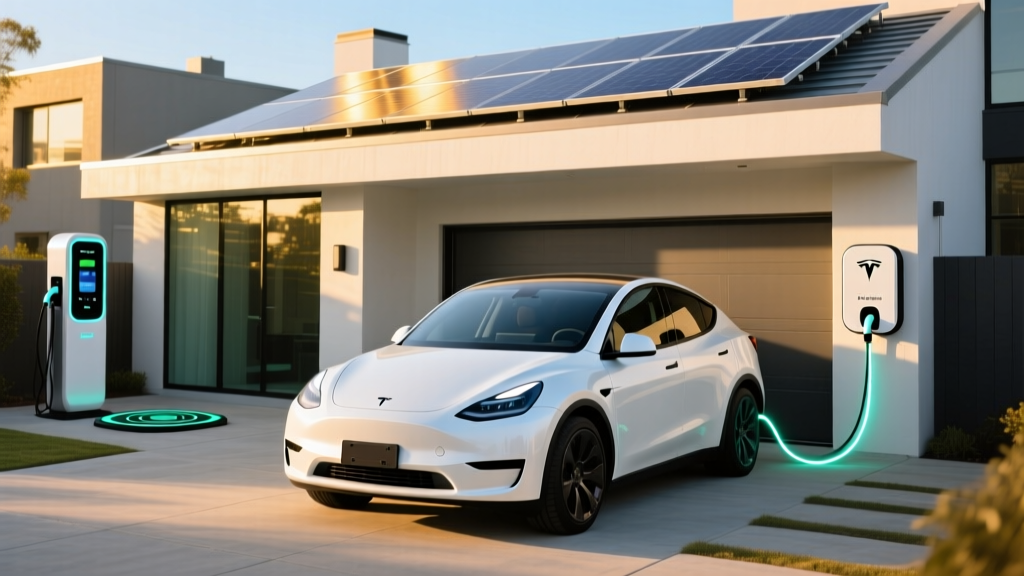
The Tesla Solar Roof is a complete roofing system where some tiles contain photovoltaic cells (active solar tiles) and others are inert architectural-grade glass (inactive tiles) that match aesthetically. Unlike traditional rack-mounted solar panels, the Solar Roof is the roof. It integrates with Tesla's Powerwall 3 home battery (13.5 kWh usable per unit) to store excess generation for nighttime EV charging or backup power.
This distinction matters for cost. You're not just buying a solar array — you're buying a premium roof replacement. If your current roof is 5 years old and in good shape, the Solar Roof forces an early replacement you didn't need. If your roof is 20+ years old and due for replacement anyway, the incremental cost vs. a new architectural shingle roof plus solar panels narrows considerably.
How Much Would a Tesla Roof Cost in 2026?
Tesla's Solar Roof pricing has historically been opaque, with quotes varying dramatically by home size, roof complexity, and local labor. Based on aggregated 2025–2026 customer reports and industry estimates, here's the realistic range:
| Home Size | System Size (kW) | Estimated Installed Cost | Cost per Watt (Solar Portion) |
|---|---|---|---|
| 1,500 sq ft | 6–8 kW | $38,000–$52,000 | $3.80–$5.20 |
| 2,000 sq ft | 8–12 kW | $48,000–$68,000 | $3.60–$4.80 |
| 2,500 sq ft | 12–16 kW | $62,000–$88,000 | $3.50–$4.60 |
| 3,500+ sq ft | 16–22 kW | $80,000–$120,000+ | $3.40–$4.50 |
Adding one or more Powerwall 3 units (13.5 kWh each, ~11.5 kW continuous output) adds roughly $9,000–$12,000 per unit installed. Most EV-owning households opt for two Powerwalls to cover overnight charging and whole-home backup, pushing total project cost well past $60,000–$80,000 for a typical 2,000 sq ft home.
Federal Tax Credit Impact
The federal Residential Clean Energy Credit (IRC §25D) covers 30% of the solar portion of the Solar Roof cost through 2032. The roofing portion (inactive tiles, labor for non-solar sections) does not qualify. On a $60,000 project where roughly $35,000 is attributable to solar components, you'd recover approximately $10,500 as a non-refundable tax credit — assuming sufficient tax liability. Consult a tax professional; this is not tax advice. Unlike the EV purchase credit (IRS §30D), the §25D credit has no income cap and no MSRP cap, but it is non-refundable, meaning it can only offset taxes you owe.
Tesla Solar Roof vs. Tesla Solar Panels + Powerwall
For most EV owners, the more pragmatic comparison is Tesla's own conventional Solar Panel system paired with Powerwall. Here's how the two stack up for a typical 2,000 sq ft home targeting 10 kW of generation:
| Factor | Tesla Solar Roof | Tesla Solar Panels + Powerwall |
|---|---|---|
| Total installed cost (10 kW) | $52,000–$68,000 | $24,000–$32,000 (panels only); +$10,000–$12,000 per Powerwall |
| Cost per solar watt | $3.60–$4.80 | $1.80–$2.60 |
| Roof replacement included | Yes (full tear-off) | No (panels mount to existing roof) |
| Aesthetics | Seamless, flush tiles | Visible rack-mounted panels |
| Warranty (weatherization) | 25 years | 25 years (panels); roof warranty separate |
| Installation timeline | 2–6 months (permitting + full install) | 4–8 weeks |
| EV charging offset (annual) | Equivalent to panel system at same kW | Equivalent to Solar Roof at same kW |
Does the Tesla Solar Roof Make Sense for EV Charging?
The answer depends on three variables: your current roof condition, your aesthetic priorities, and your electricity rate structure.
Scenario A: Your roof needs replacing anyway
If your existing roof is at end-of-life (20+ years, visible wear, upcoming insurance claim), the Solar Roof's incremental cost over a premium architectural shingle roof ($12,000–$18,000) plus a conventional solar array ($22,000–$30,000) is smaller. The total for roof + solar separately might be $38,000–$48,000 vs. $52,000–$68,000 for the Solar Roof. You're paying a $14,000–$20,000 premium for integrated aesthetics. For some homeowners, that's justifiable.
Scenario B: Your roof is relatively new
If your roof has 10–15 years of life left, the Solar Roof forces an unnecessary $15,000–$25,000 roof replacement. Conventional Tesla Solar Panels mounted to your existing roof deliver the same energy output at roughly half the total project cost. For pure EV-charging ROI, panels win decisively.
Scenario C: HOA restrictions or historic district rules
Some neighborhoods restrict visible solar panels. The Solar Roof's flush, shingle-like appearance can bypass these restrictions where rack-mounted panels cannot. In this case, the premium buys regulatory compliance.
EV Home Charging Economics: Solar Offset vs. Grid Rates
To evaluate whether any solar investment pays off for EV charging, you need two numbers: your local electricity rate and your annual EV mileage.
| Charging Source | Cost per kWh | Annual kWh Needed | Annual Cost |
|---|---|---|---|
| Grid (national avg residential) | $0.16 | 4,000 kWh | $640 |
| Grid (CA/HI peak rates) | $0.30–$0.42 | 4,000 kWh | $1,200–$1,680 |
| Grid (time-of-use off-peak) | $0.08–$0.12 | 4,000 kWh | $320–$480 |
| Solar (amortized over 25 yrs, no battery) | ~$0.06–$0.09 | 4,000 kWh | $240–$360 |
| Solar + Powerwall (overnight discharge) | ~$0.10–$0.14 | 4,000 kWh | $400–$560 |
| DC fast charging (public, avg) | $0.35–$0.55 | 4,000 kWh | $1,400–$2,200 |
For most EV owners on time-of-use rates who can charge overnight at $0.08–$0.12/kWh, the annual savings from solar vs. grid is roughly $200–$400. At that rate, even a $30,000 conventional solar system takes 15+ years to pay back purely on EV charging savings. The real ROI comes from offsetting all household electricity — not just the car. A 10 kW system typically covers 70–90% of a 2,000 sq ft home's total load including EV charging, making the payback 7–12 years depending on local rates and net metering policies.
Installation Realities: What Tesla Doesn't Emphasize
Tesla's Solar Roof installation process has a reputation for delays. Based on aggregated owner reports through 2025–2026:
- Permitting can take 4–12 weeks depending on jurisdiction. Historic districts and HOA approvals add time.
- Full tear-off of your existing roof is required. If underlying decking is damaged, repair costs are additional.
- Electrical panel upgrades are common. If your home has a 100A panel, upgrading to 200A (needed for Solar Roof + Powerwall + EV Level 2 charger simultaneously) costs $2,000–$5,000.
- Installation itself takes 5–10 days on-site for an average home, but supply chain and crew scheduling can stretch the calendar timeline to 2–6 months from contract to commissioning.
- Inspection and utility interconnection (PTO — Permission to Operate) adds another 2–6 weeks post-install before you can activate the system.
Tesla Solar Roof Warranty Coverage
| Component | Coverage | Duration |
|---|---|---|
| Solar tiles (power output) | ≥70% of nameplate output | 25 years |
| Weatherization (leaks, wind) | Full roof system | 25 years |
| Inverter | Defects, failure | 12.5 years |
| Powerwall 3 | 70% capacity retention | 10 years |
Note that the inverter warranty (12.5 years) is shorter than the tile warranty. Inverter replacement at year 15–20 is a realistic ownership cost to budget for — roughly $1,500–$2,500 per unit.
Pros and Cons of the Tesla Solar Roof for EV Owners
Pros
- Seamless aesthetics — no visible panels
- Full roof replacement included (if needed)
- Integrated Powerwall enables overnight EV charging on stored solar
- Backup power during outages (with Powerwall)
- 25-year weatherization warranty
- 30% federal tax credit on solar portion
- Tesla app unifies solar, battery, EV charging, and grid data
Cons
- Significantly more expensive than panels + new roof separately
- Long, unpredictable installation timelines (2–6 months)
- Forces early roof replacement if current roof is sound
- Lower energy density per sq ft than conventional panels
- Inverter warranty only 12.5 years
- Limited certified installer network vs. conventional solar
- Electrical panel upgrade often required ($2K–$5K extra)
Who Should Buy the Tesla Solar Roof?
Choose the Tesla Solar Roof if:
- Your existing roof needs full replacement within 1–2 years
- Aesthetics are a high priority (historic home, luxury property)
- HOA or local rules restrict visible solar panels
- You want a single-vendor ecosystem (roof + solar + battery + EV charger)
- Budget allows a $20,000+ premium over the panels-plus-roof alternative
Choose Tesla Solar Panels + Powerwall instead if:
- Your current roof has 8+ years of remaining life
- ROI and payback period are your primary concerns
- You want faster installation (weeks, not months)
- You don't mind visible panels on your roof
- You want to maximize system size per dollar
Frequently Asked Questions
Can a Tesla Solar Roof power my EV charger?
Yes, but indirectly. The Solar Roof generates DC electricity, converts it to AC via the inverter, and feeds your home's electrical panel. Your Level 2 EV charger (e.g., Tesla Wall Connector at 11.5 kW / 48A) draws from that panel. During peak sun hours, your EV charges directly off solar generation. At night, it draws from the Powerwall (if equipped) or the grid. A 10 kW Solar Roof typically generates enough surplus to cover 12,000 miles of EV driving annually in sunny climates.
Does the Tesla Solar Roof qualify for the EV federal tax credit (IRS §30D)?
No. The IRS §30D credit applies only to the purchase of new clean vehicles. The Tesla Solar Roof qualifies for the separate Residential Clean Energy Credit (IRC §25D), which provides a 30% credit on the solar portion of the installation cost through 2032. These are two different tax provisions.
How long does a Tesla Solar Roof last?
Tesla warranties the solar tiles for 25 years at ≥70% power output and covers weatherization (leaks, wind damage) for 25 years. The glass tiles themselves are rated for Class F wind (110 mph) and Class 3 hail impact. Real-world longevity data is still limited — the product launched in 2017, so the oldest installations are approaching 8–9 years as of 2026.
Is the Tesla Solar Roof worth it compared to regular solar panels?
For pure energy economics, no. Conventional solar panels deliver the same kWh per installed watt at roughly half the cost. The Solar Roof's premium buys aesthetics, an integrated roof replacement, and a unified Tesla ecosystem. If your roof needs replacing regardless and you value the seamless look, the premium can be justified. If your roof is fine and you want the fastest payback, panels are the rational choice.
Can I add more Powerwalls later?
Yes. Tesla Powerwall 3 units can be stacked (up to 10 units per system) and added after the initial installation, though each additional unit requires its own installation visit and permitting update. Budget $9,000–$12,000 per additional Powerwall 3 installed.