What Is the Tesla Roof Called? Understanding the Cybertruck Exoskeleton
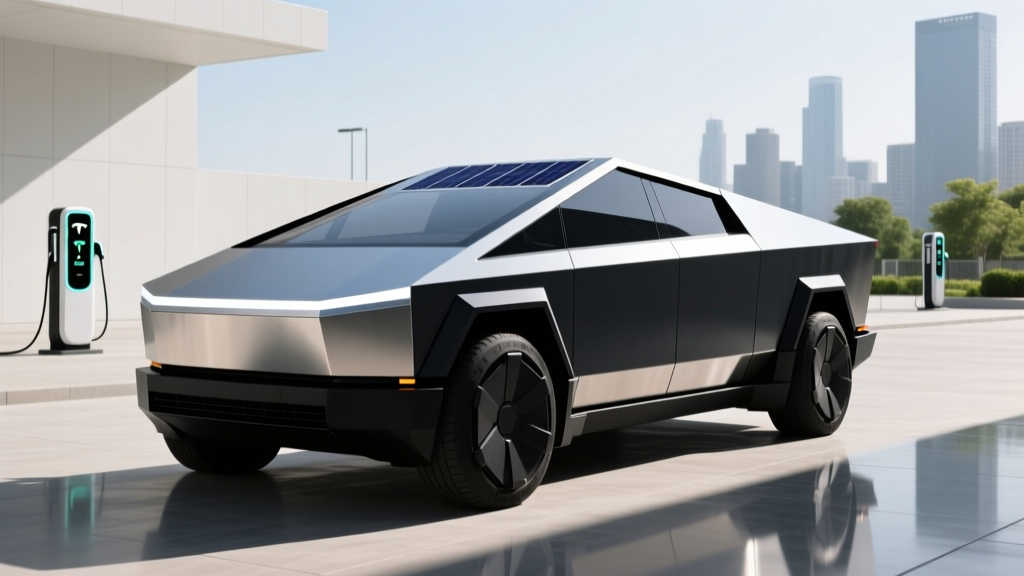
If you've searched for "Tesla roof called" you've likely encountered the angular, stainless-steel silhouette of the Tesla Cybertruck and wondered what that massive, sloping roof structure is actually named. Tesla doesn't use a single marketing term for the roof alone — instead, the entire outer shell, roof included, is part of what Tesla calls the Exoskeleton. This is a monocoque-style ultra-hard 30X cold-rolled stainless steel body structure where the exterior panels serve as the vehicle's structural skin, eliminating the traditional body-on-frame architecture found in conventional pickups.
The roof itself is a single, continuous stamped stainless steel panel that stretches from the windshield header to the rear bed wall. Tesla CEO Elon Musk has referred to the overall design philosophy as "armor glass and exoskeleton," but there is no standalone branded name (like "Panoramic Roof" or "Sky Roof") for the Cybertruck's roof panel specifically. The windshield and roof form one continuous geometric plane — a design choice that defines the truck's polarizing aesthetic and contributes to its structural rigidity.
For the 2026 model year, the Cybertruck continues to polarize and impress in equal measure. Below, we break down every spec that matters to a real buyer: range, charging, pricing, tax credit eligibility, and whether this stainless steel wedge is the right EV truck for your driveway.
2026 Tesla Cybertruck Core Specs at a Glance
| Spec | Value |
|---|---|
| EPA Range (AWD) | 325 miles |
| EPA Range (RWD, base) | 315 miles (announced, limited availability) |
| Battery Capacity | ~123 kWh usable (NMC chemistry) |
| Max DC Fast Charge | 250 kW peak (V3 Supercharger compatible) |
| 10-80% DC Charge Time | ~28 minutes (optimal conditions) |
| Level 2 Home Charging | 11.5 kW (~37 miles/hr) |
| 0-60 mph (AWD) | 3.9 seconds |
| 0-60 mph (Cyberbeast tri-motor) | 2.6 seconds |
| Horsepower (AWD) | 600 hp |
| Horsepower (Cyberbeast) | 845 hp |
| Drivetrain | Dual-motor AWD / Tri-motor AWD |
| Efficiency (AWD) | 2.0 kWh/mi (~169 MPGe combined) |
| Towing Capacity | 11,000 lbs (max) |
| Payload | 2,500 lbs |
| Bed Length | 6 ft (composite bed) |
| Cargo Volume (bed + frunk) | ~67 cu ft bed, ~7 cu ft frunk |
| Ground Clearance (max) | 17.4 inches (Extract Mode) |
| Battery/Drive Unit Warranty | 8 years / 150,000 miles |
Source: Tesla Cybertruck Design Page, fueleconomy.gov
Range and Efficiency: EPA vs. Real World
EPA Estimate: 325 miles (AWD Dual Motor)
Real-World Expectation: ~260-285 miles at sustained 70 mph highway speeds; ~200-230 miles in sub-30°F cold weather; ~210-240 miles when towing a 5,000 lb trailer.
The Cybertruck's slab-sided aerodynamics (Cd ~0.38 estimated) penalize highway efficiency more than sleeker EVs. City/regenerative driving recovers some of that gap.
The Cybertruck AWD's EPA-estimated 325 miles is respectable for a 6,700-lb electric pickup, but physics is unforgiving on the highway. In our experience and consistent with third-party testing, sustained 70-75 mph interstate driving yields roughly 80-87% of the EPA sticker — putting realistic highway range between 260 and 285 miles before you need to plan a charge stop.
Cold weather compounds the penalty. Lithium-ion batteries lose efficiency below freezing, and the cabin heater (even with Tesla's heat pump system) draws significant energy. Expect a 25-35% range reduction in sustained sub-30°F conditions, landing real-world winter range around 200-230 miles. If you live in the Upper Midwest or Mountain West and commute long distances in winter, this is a material planning factor.
For towing — a core use case for any truck buyer — expect range to drop roughly 40-55% depending on trailer weight and profile. Towing a 7,000 lb enclosed trailer at highway speed may yield as little as 150-180 miles between charges. Tesla's Supercharger network mitigates this somewhat, but route planning becomes mandatory for towing trips over 200 miles.
Efficiency comes in at roughly 2.0 kWh per mile (combined), which translates to approximately 169 MPGe on the EPA's equivalency scale. That's less efficient than a Model Y (3.7 mi/kWh) but competitive with the Rivian R1T and Ford F-150 Lightning in the electric truck segment.
Charging Speed: DC Fast, Level 2, and the Supercharger Advantage
| Charging Level | Max Power | Speed (Miles Added/Hr) | Notes |
|---|---|---|---|
| Level 1 (120V household) | 1.4 kW | ~3 mi/hr | Emergency/trickle only |
| Level 2 (240V home, 48A) | 11.5 kW | ~37 mi/hr | Full charge in ~11 hours |
| DC Fast (Tesla V3 Supercharger) | 250 kW peak | ~15-20 min 10-80% | Peak rate not sustained; tapers above 55% SoC |
| DC Fast (CCS adapter, 350 kW station) | ~200 kW (truck-limited) | ~22-28 min 10-80% | Requires Tesla CCS adapter (included) |
The Cybertruck charges on Tesla's NACS (North American Charging Standard) connector natively. With the included CCS adapter, it can also access Electrify America, EVgo, and other CCS networks — a meaningful advantage as Tesla's Supercharger network has opened to non-Tesla vehicles, reducing Tesla's once-exclusive charging moat.
At a V3 Supercharger (250 kW), the Cybertruck peaks near 250 kW at low state of charge but tapers significantly above 55-60% SoC. The charge curve is not flat — you'll see 250 kW briefly in the 10-20% SoC window, then a step down to roughly 180 kW through 40%, and further reduction past 60%. A realistic 10-80% session takes about 28 minutes under good conditions (battery preconditioned, warm ambient temperature). In cold weather without adequate preconditioning, add 5-10 minutes.
For home charging, the Cybertruck's onboard charger accepts up to 11.5 kW on a 60-amp Level 2 circuit (48 amps continuous). This adds roughly 37 miles of range per hour of charging, meaning an overnight session (10-12 hours on a Wall Connector) restores a full battery. Installation of a 60-amp dedicated circuit typically costs $800-$2,000 depending on your electrical panel's capacity and the run distance from panel to garage — budget for a potential panel upgrade if you're on a 100-amp service.
Performance: Ridiculous Acceleration in a Stainless Steel Wedge
The dual-motor AWD Cybertruck hits 0-60 mph in 3.9 seconds with 600 horsepower — faster than most sports sedans, let alone a 6,700-lb pickup. The tri-motor Cyberbeast variant drops that to 2.6 seconds with 845 hp, placing it in hypercar territory. These are real, repeatable numbers, not one-lap qualifiers; Tesla's thermal management keeps the powertrain from derating during consecutive launches.
The adaptive air suspension offers up to 12 inches of travel and 17.4 inches of ground clearance in Extract Mode, giving the Cybertruck genuine off-road capability. Approach, departure, and breakover angles are competitive with body-on-frame trucks when the suspension is fully raised. The steer-by-wire system (no physical connection between steering wheel and rack) takes roughly 20 minutes of driving to internalize — the 180-degree lock-to-lock ratio means you never cross your arms, but the lack of traditional feedback is disorienting at first.
Ride quality is firm. The stainless steel exoskeleton doesn't flex the way a traditional unibody or body-on-frame vehicle does, so road imperfections transmit more directly into the cabin. On smooth highways, it's composed and quiet; on broken pavement, you'll feel the stiffness. This is a deliberate trade-off for structural rigidity and the claimed dent resistance of those 30X cold-rolled panels.
Pricing, Trims, and Federal Tax Credit Eligibility
| Trim | Base MSRP | Federal Tax Credit (§30D) | Effective Price (if eligible) |
|---|---|---|---|
| RWD (base, limited) | $60,990 | $7,500 (if sourcing requirements met) | ~$53,490 |
| AWD Dual Motor | $79,990 | $7,500 (if sourcing requirements met) | ~$72,490 |
| Cyberbeast (Tri-Motor) | $99,990 | $7,500 (if sourcing requirements met) | ~$92,490 |
Federal EV Tax Credit — Critical Caveats: Under IRS §30D rules, the Cybertruck qualifies as a truck (MSRP cap: $80,000). This means the RWD and AWD trims clear the MSRP threshold, but the Cyberbeast at $99,990 exceeds the cap and is not eligible for the federal credit. Additionally, buyers must meet income limits ($150,000 single / $300,000 joint AGI), and the vehicle must satisfy critical-mineral and battery-component sourcing requirements that have tightened annually. The $7,500 credit may be reduced to $3,750 or $0 depending on the specific build's battery sourcing compliance in the current quarter. As of 2026, Tesla has been working to localize battery component sourcing, but eligibility can shift — always verify current-quarter compliance on the IRS clean vehicle list before purchasing. The credit can now be transferred to the dealer at point of sale, reducing your out-of-pocket cost directly rather than waiting for a tax return offset.
Destination fees, paint options (the stainless steel comes "unpainted" by default; colored wraps and Paint Protection Film are popular dealer-installed add-ons ranging $1,500-$5,000), and the Full Self-Driving (Supervised) package ($8,000) add to the as-tested price. A well-equipped AWD model with FSD and accessories can push past $92,000 before credits.
Interior, Cargo, and Daily Livability
The Cybertruck seats five (six with the optional front bench). Rear legroom measures approximately 38.5 inches — adequate for adults on shorter trips but tighter than a full-size F-150 SuperCrew. The rear seat cushion is relatively flat and firm, a consequence of the folding mechanism that allows the seats to fold flat for expanded in-cabin cargo.
The 6-foot composite bed holds roughly 67 cubic feet and includes a powered tonneau cover (the "sail" structure behind the cabin houses the retracted cover). The bed features built-in 120V and 240V outlets for job-site power or tailgate use — Tesla calls this Powershare, offering up to 11.5 kW of vehicle-to-load (V2L) output. You can run power tools, a welder, or effectively power a small campsite directly from the truck's battery.
The front trunk (frunk) provides approximately 7 cubic feet of lockable storage — useful for groceries or a charging cable bag but smaller than the Lightning's massive 14.1 cu ft frunk. Total payload capacity is 2,500 lbs, and max towing is 11,000 lbs (with the integrated trailer hitch and tow package).
The 18.5-inch center touchscreen dominates the dash and handles all vehicle controls — there are virtually no physical buttons. The yoke-style steering wheel (standard on Cyberbeast, optional on AWD) is love-it-or-hate-it; for low-speed maneuvering and parking, the steer-by-wire's quick ratio compensates, but traditionalists will want the round wheel option.
Driver Assistance and Standout Tech
Tesla's Autopilot and Full Self-Driving (Supervised) are SAE Level 2 driver-assistance systems. The driver must remain fully attentive, keep hands on the wheel (or demonstrate engagement via steering input monitoring), and be prepared to take over at any moment. This is not autonomous driving. Level 4 driverless operation (no human required) is currently only available in limited robotaxi services like Waymo in select metro areas.
The Cybertruck ships with Tesla's latest HW4 Autopilot hardware suite, featuring higher-resolution cameras and improved neural net processing. Standard Autopilot includes Traffic-Aware Cruise Control and Autosteer (lane centering on marked roads). The optional Full Self-Driving (Supervised) package ($8,000) adds automatic lane changes, Navigate on Autopilot (highway on/off-ramp handling), Autopark, Summon, and the controversial city-street driving feature. FSD (Supervised) has improved substantially but still requires constant vigilance — it struggles with construction zones, unprotected left turns in heavy traffic, and poorly marked rural roads.
Other standout tech includes:
- Armor Glass: Laminated glass with a polymer interlayer designed to resist shattering from impacts (Tesla's demonstration showed it surviving a baseball thrown at it, though the infamous 2019 reveal ball-through-window moment still haunts the brand)
- Bioweapon Defense Mode: HEPA air filtration system that pressurizes the cabin against outside contaminants
- Dashcam / Sentry Mode: 8-camera surround recording for security and incident documentation
- Over-the-Air Updates: Tesla continues to push feature updates; the Cybertruck has received range optimizations, suspension tuning refinements, and UI improvements post-delivery
Pros, Cons, and the Verdict
✅ Pros
- Best-in-class acceleration for a pickup (3.9s AWD, 2.6s Cyberbeast)
- Supercharger network access + CCS adapter for broad charging coverage
- Stainless steel exoskeleton is dent- and corrosion-resistant
- 11.5 kW V2L Powershare for job-site and camping use
- Adaptive air suspension with Extract Mode for serious off-road clearance
- OTA updates continuously improve the vehicle post-purchase
❌ Cons
- Highway range drops significantly due to poor aerodynamics
- Cold-weather range loss worse than sleeker EVs
- Steer-by-wire feels unnatural for the first several drives
- Rear seat comfort and legroom lag behind F-150 Lightning and Rivian R1T
- Cyberbeast trim exceeds $80k MSRP cap — no federal tax credit
- Panel gap inconsistency and early build-quality issues persist in some deliveries
- Towing range severely limited (~150-180 mi with heavy trailer)
- Choose the Cybertruck AWD if: You want a daily-drivable electric truck with Supercharger access, need V2L for job-site or camping use, and your typical drives stay under 250 miles between charge opportunities.
- Choose the Rivian R1T instead if: You prioritize rear-seat comfort, need a more conventional driving feel, want the quad-motor option for torque-vectoring off-road, and don't mind relying on the growing (but smaller) non-Tesla DC fast-charging network.
- Choose the Ford F-150 Lightning if: You need maximum frunk space, prefer a traditional truck layout with familiar controls, and your budget is closer to $55,000-$70,000.
- Skip the Cyberbeast unless: You specifically want 845 hp and 2.6-second 0-60 performance and accept the $100k price and loss of the federal tax credit.
Frequently Asked Questions
What is the Tesla roof called on the Cybertruck?
Tesla does not give the Cybertruck's roof a standalone branded name. The roof is part of the monocoque stainless steel Exoskeleton — a single, continuous cold-rolled panel that forms both the roof and structural skin of the vehicle. The overall design language is sometimes referred to as the "exoskeleton and armor glass" architecture.
What is the real-world range of the Tesla Cybertruck?
The AWD Dual Motor Cybertruck carries an EPA estimate of 325 miles. In real-world highway driving at 70 mph, expect 260-285 miles. In sub-30°F winter conditions, that drops to roughly 200-230 miles. Towing a 5,000+ lb trailer may reduce range to 150-180 miles. Preconditioning the battery before DC fast charging and using seat heaters instead of cabin heat can recover 5-10% of range in cold conditions.
How fast does the Cybertruck charge at home and on the road?
On a Level 2 home charger (11.5 kW / 48A), the Cybertruck adds approximately 37 miles of range per hour, fully charging overnight in about 11 hours. On a Tesla V3 Supercharger (250 kW peak), a 10-80% session takes roughly 28 minutes when the battery is preconditioned. The charge curve tapers significantly above 60% SoC, so charging past 80% adds considerable time.
Does the Cybertruck qualify for the $7,500 federal EV tax credit?
The RWD ($60,990) and AWD ($79,990) trims fall under the $80,000 MSRP cap for trucks under IRS §30D and are potentially eligible for up to $7,500. The Cyberbeast ($99,990) exceeds the cap and does not qualify. Buyer income limits apply ($150,000 single / $300,000 joint), and the vehicle must meet critical-mineral and battery-component sourcing requirements that change quarterly. Verify current eligibility on the IRS clean vehicle credit page before purchasing. The credit can be transferred at point of sale to reduce your purchase price directly.
Is the Cybertruck worth buying over the Rivian R1T or F-150 Lightning?
It depends on your priorities. The Cybertruck wins on acceleration, Supercharger network access, and V2L capability. The Rivian R1T offers superior rear-seat comfort, a more intuitive steering feel, and better fit-and-finish at a comparable price. The F-150 Lightning provides the most familiar truck experience, the largest frunk, and the lowest starting price. If Supercharger reliability is your top charging concern and you value performance, the Cybertruck is compelling. If daily comfort and build consistency matter more, test-drive the R1T before committing.
How durable is the stainless steel exoskeleton?
The 30X cold-rolled stainless steel panels are extremely resistant to dents and corrosion — Tesla claims they can withstand a 9mm handgun round (though this is not an armored vehicle rating). However, the panels show fingerprints readily, can develop surface rust spots from rail dust (cosmetic, not structural), and require specialized body-shop equipment for collision repair. Tesla has been expanding its certified collision repair network, but body repair turnaround times can be longer than conventional vehicles.