What Is the Tesla Robovan and When Can You Buy One?
The Tesla Robovan is a fully electric passenger and cargo van that Tesla CEO Elon Musk first teased during the October 2024 "We, Robot" event and later referenced in Tesla's 2025 master plan updates. As of early 2026, the vehicle remains announced but not yet available for purchase. Tesla has not published a firm production start date, finalized specifications, or opened reservations, though supply-chain reporting and patent filings suggest a late-2026 or 2027 production target.
This preview compiles every confirmed detail, credible leak, and reasonable engineering projection based on Tesla's current platform architecture (the same 4680-cell structural battery pack used in the Cybertruck and updated Model Y). Where specs are projected rather than confirmed, we label them clearly so you can separate fact from forecast.
Projected Range, Battery, and Efficiency
Tesla has not published an official EPA range figure for the Robovan. However, based on the vehicle's expected curb weight (approximately 5,500–6,200 lbs for the passenger variant), aerodynamic profile, and Tesla's current 4680-cell energy density, we can project a realistic range envelope.
EPA Estimated Range (projected): 250–300 miles*
Battery Capacity (projected): ~100–120 kWh usable, 4680 NMC cells*
Efficiency (projected): ~2.0–2.3 kWh/mile (roughly 110–130 MPGe combined)*
Real-World Range Caveats:
• Highway driving (70–80 mph): Expect 210–260 miles — van-style vehicles suffer significant aero drag above 65 mph, reducing range 15–20% vs. EPA city/combined figures.
• Cold weather (below 32°F): Plan for 180–220 miles. Large cabin volume requires substantial HVAC energy; Tesla's heat pump helps but cannot eliminate a 20–30% cold-weather reduction.
• Full passenger/cargo load: Add 2,000+ lbs of payload and expect another 5–10% range reduction.
Tesla's 4680 cells use a nickel-manganese-cobalt (NMC) chemistry, which offers higher energy density than lithium iron phosphate (LFP) — a necessary trade-off for a heavy van that needs maximum range per kilogram. The structural battery pack design, where cells serve as a stressed chassis member, reduces overall vehicle weight and should improve efficiency relative to a conventional body-on-frame van.
Charging Speed: DC Fast Charge and Home Level 2
Charging speed is the make-or-break spec for any commercial or fleet van, where downtime equals lost revenue. Based on the Cybertruck's confirmed charging architecture and Tesla's V4 Supercharger capabilities, here is what we project:
| Charging Level | Power (kW) | Speed / Time | Notes |
|---|---|---|---|
| DC Fast Charge (V4 Supercharger) | Peak ~250–325 kW* | 10–80% in ~20–28 min* | Sustained rate tapers significantly above 60% SoC; expect average of ~170 kW across a 10–80% session |
| Level 2 Home / Depot (240V, 48A) | 11.5 kW | ~25–30 mi/hr; full charge in 10–12 hrs | Standard Tesla Wall Connector; ideal for overnight fleet depot charging |
| Level 2 Home / Depot (240V, 80A) | 19.2 kW | ~42–50 mi/hr; full charge in 6–7 hrs | Requires upgraded panel and heavier-gauge wiring; commercial depot standard |
| Level 1 (120V, 12A) | 1.4 kW | ~3–4 mi/hr | Emergency/trickle only — impractical for daily van use |
Understanding kW vs. kWh: kW (kilowatts) measures charging power — how fast energy flows into the battery. kWh (kilowatt-hours) measures battery capacity — how much energy the battery holds. A 325 kW peak charge rate does not mean you receive 325 kWh; the rate tapers as the battery fills, particularly above 80% State of Charge. This is why we report 10–80% times rather than full-charge times.
For fleet operators, the key metric is the 10–80% session time. A 20–28 minute DC fast charge during a driver's mandatory break (for commercial van fleets subject to hours-of-service rules) could recover 150–200 miles of range — enough for most urban delivery routes.
Performance and Drivetrain
Tesla has not released official performance figures, but the Robovan is expected to use a dual-motor all-wheel-drive configuration similar to the Cybertruck and Model X. Here is our projected performance envelope:
| Specification | Projected Value* |
|---|---|
| Drivetrain | Dual-motor AWD (RWD single-motor variant possible for fleet) |
| Horsepower | ~500–600 hp (dual-motor)* |
| 0–60 mph | ~4.5–5.5 seconds* |
| Top Speed | ~110–120 mph (electronically limited)* |
| Towing Capacity | ~5,000–7,500 lbs* |
| Payload Capacity | ~2,500–3,500 lbs* |
For context, the Cybertruck AWD produces 600 hp and hits 60 mph in 4.1 seconds. The Robovan will be heavier and less aerodynamic, so slightly slower acceleration is expected — though still dramatically quicker than any combustion-engine van on the market. The Ford E-Transit, by comparison, produces 266 hp with a 0–60 time well above 8 seconds.
Pricing, Trims, and Federal Tax Credit Eligibility
Tesla has not announced Robovan pricing. Based on the vehicle's projected size, battery capacity, and competitive positioning against the Ford E-Transit (starting ~$55,000), Mercedes-Benz eSprinter (~$75,000), and Rivian EDV (fleet-only, estimated ~$70,000+), here is our pricing projection:
| Trim / Variant | Projected MSRP* | After §30D Credit (if eligible) |
|---|---|---|
| Cargo Van (short wheelbase, RWD) | ~$55,000–$60,000* | ~$47,500–$52,500* |
| Cargo Van (long wheelbase, AWD) | ~$65,000–$72,000* | ~$57,500–$64,500* |
| Passenger Van (7–12 seat) | ~$70,000–$80,000* | ~$62,500–$72,500* |
Federal Tax Credit: IRS §30D Eligibility Checklist
Under current IRS §30D rules, the Robovan's tax credit eligibility will depend on several factors that remain unconfirmed until Tesla finalizes its supply chain:
- MSRP cap: Vans are classified as SUVs/trucks under §30D, so the MSRP cap is $80,000 (vs. $55,000 for sedans). Cargo and short-wheelbase passenger variants should clear this; a fully loaded long-wheelbase passenger model may exceed it.
- Buyer income cap: Modified adjusted gross income must not exceed $150,000 (single), $225,000 (head of household), or $300,000 (joint).
- Battery sourcing: A percentage of critical minerals and battery components must be sourced from the U.S. or free-trade-agreement partners. Tesla's 4680 cell production in Austin and Nevada improves domestic sourcing, but cathode mineral provenance (nickel, manganese) must meet escalating annual thresholds.
- Point-of-sale transfer: Eligible buyers can transfer the credit to the dealer at purchase, reducing the upfront price by up to $7,500 rather than waiting for a tax refund.
- Commercial clean vehicle credit (§45W): Fleet buyers and businesses that do not qualify for §30D may instead claim the §45W commercial credit — up to $7,500 for vehicles under 14,000 lbs GVWR. This is often more accessible for business purchases.
Important: Tax credit rules are subject to legislative change. Consult a tax professional and check the latest IRS guidance before making a purchase decision based on credit eligibility.
Cargo, Passenger Space, and Practicality
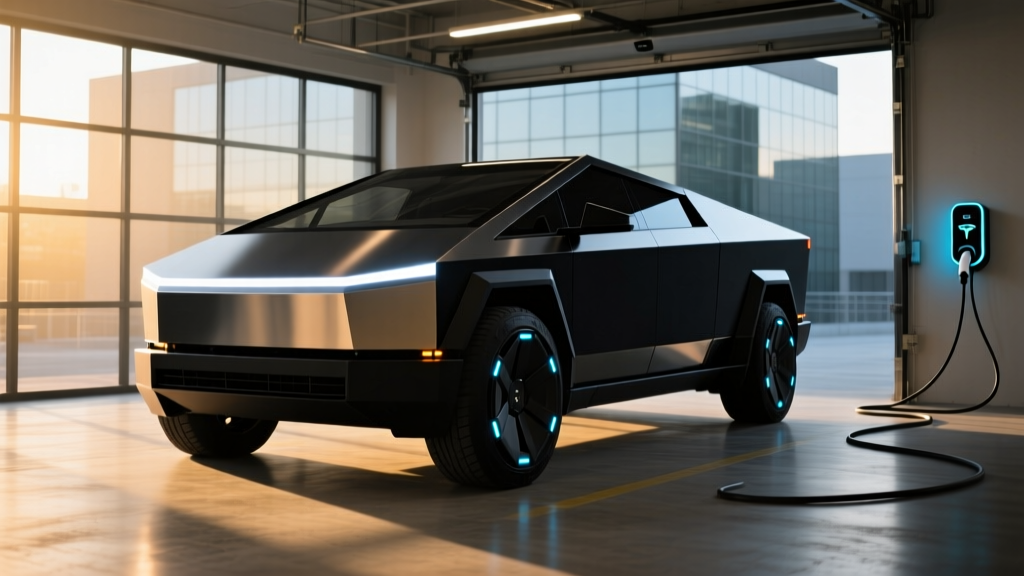
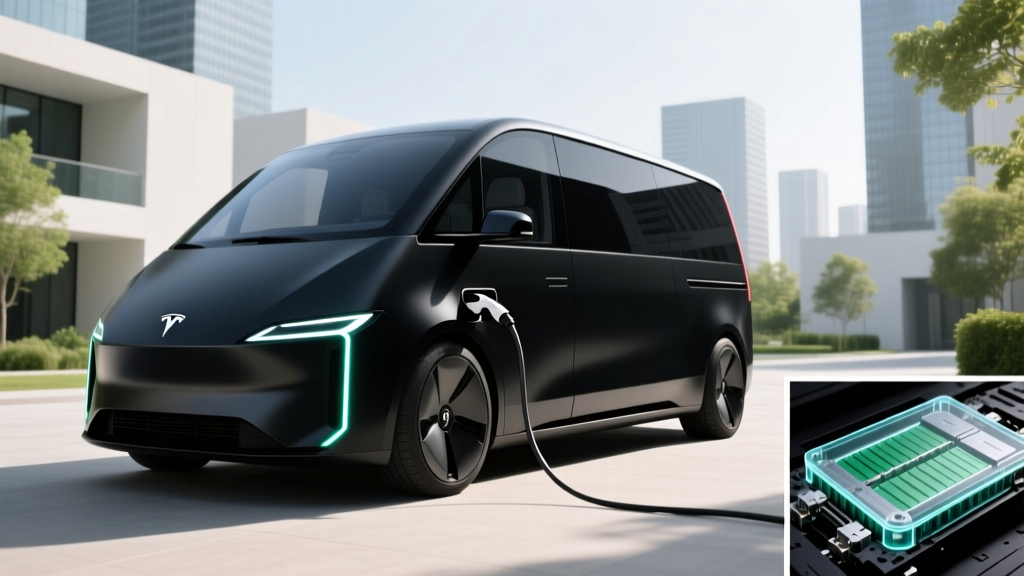
The Robovan's "We, Robot" event teaser showed a vehicle with a distinctive, futuristic silhouette — shorter and more compact than a traditional full-size van like the Ford Transit or Mercedes Sprinter. Based on the concept imagery and patent filings, here is what we project for interior utility:
- Cargo volume (projected): ~250–400 cu ft (short/long wheelbase)* — comparable to a Ford Transit mid-roof
- Cargo floor length (projected): ~8–12 feet*
- Passenger seating (projected): 7–12 seats in passenger configuration*
- Load floor height: Expected to be low due to the skateboard-style battery platform — a significant advantage over body-on-frame competitors
- Door configuration: Likely sliding side doors with a low step-in height; rear barn doors or liftgate TBD
The skateboard architecture (battery and motors below the floor) should provide a flat, unobstructed cargo area — a major practical advantage over the Ford E-Transit, which adapted a combustion-engine platform and retains some floor compromises. Tesla's patent filings also show modular interior rail systems that could allow quick reconfiguration between cargo and passenger layouts.
Tech, Autonomy, and Driver Assistance
This is where the "Robo" in Robovan becomes relevant. Tesla's long-term vision for this vehicle includes autonomous operation, but the near-term reality is more nuanced.
At launch (projected): SAE Level 2 — Tesla Autopilot and FSD (Supervised). The driver must remain fully attentive, keep hands on or near the wheel, and be prepared to take over at any moment. This is not self-driving.
Future potential: Tesla has stated ambitions to achieve Level 4 (fully driverless in defined operational domains) via over-the-air software updates. However, no Tesla vehicle has achieved regulatory approval for Level 4 operation as of 2026. Only Waymo and Zoox currently operate Level 4 robotaxi services in limited U.S. cities.
Expected standard tech features:
- 15.4-inch central touchscreen with Tesla's latest infotainment OS
- Tesla Autopilot (adaptive cruise, lane-keeping, auto emergency braking)
- FSD (Supervised) available as a paid option — includes automatic lane changes, navigate-on-autopilot, and traffic-light recognition
- Over-the-air software updates for feature additions and improvements
- Tesla Vision camera suite (no radar or ultrasonic sensors, consistent with Tesla's current sensor strategy)
- Fleet management API for commercial operators — remote monitoring, geofencing, charge scheduling
- Sentry Mode and remote cabin preconditioning
Notable drawbacks to consider:
- Tesla's camera-only vision system has drawn criticism for reduced performance in heavy rain, fog, and snow compared to lidar-equipped competitors
- No Apple CarPlay or Android Auto — Tesla uses its proprietary infotainment exclusively
- FSD (Supervised) requires an additional purchase (~$8,000 or ~$99/month subscription as of 2026) and still requires full driver attention
- Tesla's service center network, while expanding, remains thinner than Ford or Mercedes-Benz in rural areas — a concern for commercial fleet operators who need fast turnaround on repairs
Warranty and Ownership Costs
Tesla has not published Robovan-specific warranty terms, but based on current Tesla vehicle warranties:
| Component | Projected Coverage* |
|---|---|
| Basic Vehicle | 4 years / 50,000 miles |
| Battery & Drive Unit | 8 years / 120,000–150,000 miles (70% minimum capacity retention) |
| Roadside Assistance | 4 years / 50,000 miles |
For fleet buyers, the battery warranty mileage is the critical number. At 120,000–150,000 miles, it trails some commercial-oriented competitors — the Ford E-Transit offers 8 years/100,000 miles on its battery, but with a lower total capacity to degrade from. Tesla's 4680 cells have shown promising degradation curves in early Cybertruck data, with roughly 5–8% capacity loss over the first 50,000 miles, but long-term van-duty data (heavy loads, frequent DC fast charging) does not yet exist.
Tesla Robovan vs. Competitors: Is It Worth Waiting For?
- Tesla Supercharger network access — the most reliable and extensive DC fast-charging network in North America
- Lowest projected cost-per-mile in the electric van segment (electricity + minimal maintenance)
- Skateboard platform = flat load floor and low step-in height
- Over-the-air updates improve the vehicle over time
- Strong projected performance (quickest van in its class by a wide margin)
- Fleet management API and telematics built-in
- Not yet available — production timeline remains uncertain (late 2026 or 2027)
- Tesla service network gaps in rural and some metro areas
- Camera-only autonomy system may not satisfy all commercial fleet safety requirements
- No Apple CarPlay/Android Auto
- Tesla's build-quality track record introduces risk for commercial fleets that need panel-fit consistency
- Unproven in van-duty cycle (heavy loads, high-mileage fleet use)
Wait for the Tesla Robovan if: Your current van fleet doesn't need replacement until 2027+, you operate primarily in urban/suburban areas with Supercharger access, and your routes fit within a 200–250 mile daily range envelope.
Buy the Ford E-Transit now if: You need vans in production today, your fleet operates in areas with limited Supercharger coverage, you require established commercial dealer service infrastructure, or your budget caps at ~$55,000 per vehicle.
Consider the Rivian EDV if: You qualify as a commercial fleet buyer (Rivian's EDV is currently fleet-only through Amazon and select partners) and want a purpose-built electric delivery van with proven real-world mileage data.
Frequently Asked Questions
What is the real-world range of the Tesla Robovan?
Based on projected specs, expect 210–260 miles in real-world highway driving and 180–220 miles in cold weather, against a projected EPA estimate of 250–300 miles. The van's large frontal area and weight are the primary range reducers at highway speeds. Actual EPA figures will be published closer to launch.
How fast does the Tesla Robovan charge?
Projected peak DC fast-charge rate is 250–325 kW on Tesla V4 Superchargers, with a 10–80% session taking approximately 20–28 minutes. Home Level 2 charging at 11.5 kW adds roughly 25–30 miles per hour. Note that peak kW is not sustained — the charge curve tapers significantly above 60% State of Charge to protect battery longevity.
How much does the Tesla Robovan cost after tax credits?
Projected MSRP ranges from ~$55,000 to $80,000 depending on trim. If eligible for the full $7,500 federal §30D credit (subject to buyer income caps, MSRP caps, and battery-sourcing requirements), effective pricing could start around $47,500. Commercial buyers may alternatively qualify for the §45W commercial clean vehicle credit. Final pricing and credit eligibility are unconfirmed.
Is the Tesla Robovan worth buying vs. the Ford E-Transit or Mercedes eSprinter?
If Tesla delivers on projected range (250–300 miles vs. the E-Transit's EPA-confirmed 126 miles), Supercharger access, and performance, the Robovan would be the most capable electric van on the market. However, the Ford E-Transit is available today at a lower starting price with an established commercial service network. The right choice depends on your timeline, route requirements, and service-infrastructure needs.
Does the Tesla Robovan qualify for the federal EV tax credit?
Eligibility is unconfirmed because Tesla has not finalized battery sourcing for the Robovan. Under current IRS §30D rules, the van must meet MSRP caps ($80,000 for van/SUV classification), buyer income limits, and critical-mineral/battery-component sourcing thresholds. Tesla's domestic 4680 production is favorable, but cathode mineral sourcing must be verified at time of purchase. Check the IRS Clean Vehicle Credit list at the time of your order.
Will the Tesla Robovan be self-driving?
Not at launch. The Robovan will ship with Tesla Autopilot and FSD (Supervised), which are SAE Level 2 driver-assistance systems requiring full driver attention. Tesla has stated ambitions for future Level 4 autonomy via software updates, but no timeline or regulatory approval exists for this. If driverless operation is a near-term requirement, only Waymo and Zoox currently offer Level 4 services in limited U.S. markets.