Tesla has long dominated headlines with its sedans, SUVs, and trucks, but the commercial-vehicle space remains a frontier the company has only lightly touched with the Semi. The Tesla Robovan — a concept first teased by Elon Musk during Tesla's 2024 We Robot event and elaborated on in subsequent investor briefings — aims to fill a gap between the Cybertruck's utility profile and purpose-built urban logistics vehicles from rivals like Rivian and BrightDrop. As of early 2026, the Robovan remains in the announced/concept stage and is not available for consumer or fleet purchase. Below, we compile every confirmed and estimated specification Tesla has shared, apply real-world EV ownership context, and compare the Robovan's projected positioning against the commercial vans it would face on the road.
What Is the Tesla Robovan?
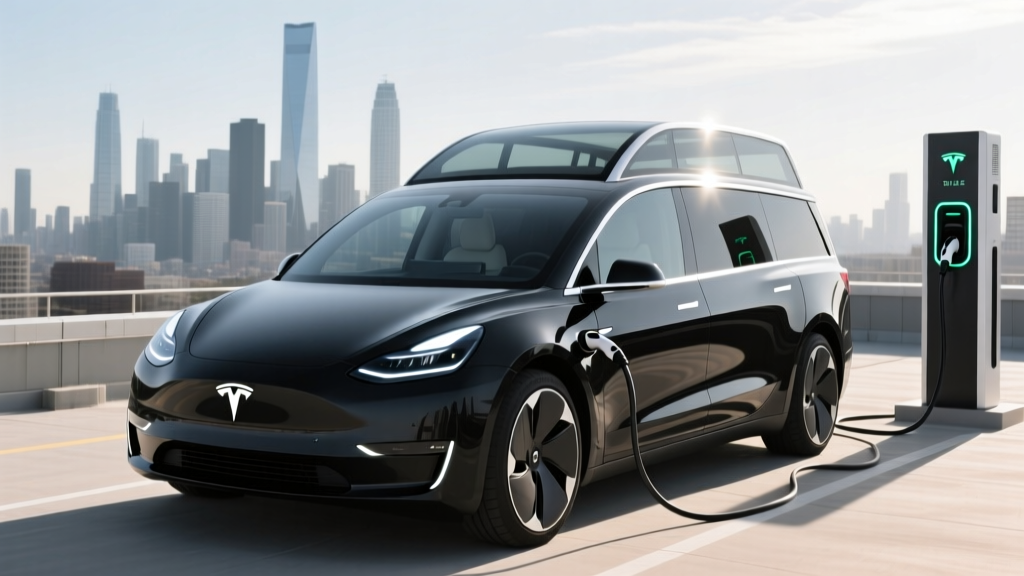
The Tesla Robovan is a proposed electric cargo and passenger van designed for last-mile delivery, urban fleet operations, and — eventually — autonomous logistics. Tesla has described the vehicle as a high-volume, cost-optimized platform built on a new, smaller vehicle architecture distinct from the Model Y/3 platform and the Cybertruck/Semi platforms. Visually, the concept shown at We Robot featured a compact, rounded form factor with a low step-in height, a flat load floor, and no traditional driver controls in its most autonomous configuration.
Tesla has not published a formal spec sheet. The numbers below are compiled from Tesla's Q4 2025 earnings call commentary, patent filings, and supply-chain reporting. All figures are preliminary and subject to change before production begins.
Projected Specifications at a Glance
| Attribute | Projected / Estimated Value |
|---|---|
| EPA Range (target) | 200–250 mi (estimated) |
| Battery Capacity (usable) | ~60–75 kWh (estimated, LFP chemistry) |
| Peak DC Fast Charge | ~150–200 kW (estimated) |
| 10–80% DC Charge Time | ~25–35 min (estimated) |
| Level 2 Home/Depot Charge | 11.5 kW (~35–40 mi/hr added) |
| Drivetrain | Rear-wheel drive (single motor), AWD optional |
| 0–60 mph | Not disclosed (van-class: est. 7–9 sec) |
| Horsepower | Not disclosed (est. 200–280 hp) |
| Cargo Volume | Not disclosed (target class: 250–350 cu ft) |
| Base MSRP (target) | ~$25,000–$35,000 (announced target, unconfirmed) |
| Federal Tax Credit (§30D) | Unknown — depends on battery sourcing at launch |
| Battery / Powertrain Warranty | Expected 8 yr / 100,000 mi (Tesla fleet standard) |
Range and Efficiency: What to Expect in Real-World Use
EPA target: 200–250 mi (preliminary)
Real-world expectation: Urban delivery routes with frequent stops and regen braking may achieve close to EPA figures. Sustained highway driving at 70+ mph could reduce range to ~160–200 mi. Cold-weather operation (below 32°F) may reduce usable range by 20–30%, yielding ~140–180 mi in winter conditions. Cargo load and HVAC use further affect efficiency.
Tesla has indicated the Robovan will use a lithium iron phosphate (LFP) battery pack, consistent with the company's strategy of reserving nickel-manganese-cobalt (NMC) chemistry for performance and long-range variants. LFP cells are heavier and less energy-dense than NMC, but they offer superior cycle life (3,000+ full cycles with minimal degradation), lower cost, and a reduced reliance on cobalt and nickel — critical minerals that have complicated Tesla's §30D tax credit eligibility in past model years.
For a delivery van averaging 80–120 miles per day on urban routes, a 200+ mile EPA range provides a comfortable operational buffer with a single overnight depot charge. However, fleet operators running longer suburban or inter-city routes will need to plan for mid-day DC fast charging or route segmentation.
Efficiency will depend heavily on the Robovan's aerodynamic profile and weight. Cargo vans typically achieve 2.0–2.5 kWh/mi in real-world urban use. If Tesla targets 2.2 kWh/mi, a 66 kWh usable pack would yield roughly 300 mi of theoretical range — though the EPA cycle, real-world cargo loads, and HVAC draw will compress that figure.
Charging: DC Fast, Depot Level 2, and Fleet Considerations
| Charging Level | Power | Miles Added per Hour | Notes |
|---|---|---|---|
| Level 1 (120V) | ~1.4 kW | ~3–4 mi/hr | Not practical for fleet ops |
| Level 2 (240V, depot) | 11.5 kW | ~35–40 mi/hr | Full charge overnight (~6–8 hrs) |
| DC Fast Charge | ~150–200 kW (peak) | ~400–550 mi/hr (peak) | 10–80% in ~25–35 min; taper above 80% |
Fleet charging is where the Robovan's viability will be tested. Most commercial van fleets charge overnight at a depot using Level 2 hardware. At 11.5 kW, a fully depleted 66 kWh pack would require approximately 5.5–6 hours to reach full charge — well within an overnight window for vehicles parked from 8 PM to 6 AM.
For DC fast charging, Tesla's projected 150–200 kW peak rate is modest by 2026 passenger-car standards (the Cybertruck and refreshed Model 3 can peak above 250 kW), but it is appropriate for a van platform prioritizing cost and battery longevity over charge speed. LFP chemistry also tolerates frequent high-state-of-charge operation better than NMC, meaning fleet managers can charge to 100% daily without the accelerated degradation concerns that apply to Tesla's NMC packs.
The Robovan is expected to ship with the NACS (North American Charging Standard) connector, granting access to Tesla's Supercharger network — an advantage over rivals using CCS1, though Electrify America and other CCS networks remain widely available for commercial fleets with mixed-voltage depots.
Performance, Drivetrain, and Platform
Tesla has not released 0–60 mph or horsepower figures for the Robovan. Based on the vehicle's projected curb weight (est. 4,500–5,500 lbs) and a single-motor rear-wheel-drive layout, a 7–9 second 0–60 mph time is reasonable for the base variant. An optional dual-motor AWD configuration could bring that closer to 5–6 seconds, though AWD adds cost, weight, and complexity that most urban delivery fleets will not need.
The smaller vehicle platform underlying the Robovan represents a significant manufacturing bet. Tesla has stated this platform will use a "unboxed" assembly process — building sub-assemblies in parallel and joining them late in production — which the company claims will reduce factory footprint by 40% and per-unit cost substantially. Whether these manufacturing gains translate into a sub-$30,000 commercial vehicle remains to be seen; Tesla has a history of announcing aggressive pricing targets that shift before production.
Pricing, Tax Credits, and Ownership Economics
Tesla's stated target for the Robovan is in the $25,000–$35,000 range, which would make it one of the least expensive new electric commercial vehicles on the market. For context, the Rivian EDV (Electric Delivery Van) built for Amazon is not available for general fleet purchase, and GM's BrightDrop Zevo 400 starts above $70,000 for fleet buyers.
Federal tax credit eligibility under IRS §30D is uncertain at this stage. The credit — up to $7,500 for qualifying new EVs — depends on three factors that Tesla cannot confirm until production begins:
- MSRP cap: Vans and trucks must have an MSRP at or below $80,000 (the Robovan would easily clear this).
- Buyer income cap: Modified adjusted gross income must not exceed $150,000 (single) / $300,000 (joint) for personal purchases. Fleet/corporate purchases may qualify under the separate §45W commercial clean vehicle credit instead.
- Battery sourcing: Critical minerals and battery components must meet escalating domestic-content and FEOC (Foreign Entity of Concern) thresholds. Tesla's LFP cells have historically sourced from CATL in China, which would disqualify the credit under current FEOC rules unless Tesla secures an alternative supply chain.
Fleet buyers should also investigate the §45W commercial clean vehicle credit, which offers up to $7,500 for vehicles under 14,000 lbs GVWR and does not carry the same battery-sourcing restrictions — though it cannot be stacked with §30D. Consult a tax professional for entity-specific eligibility.
Technology, Autonomy, and the Robotaxi Connection
The "Robo" in Robovan is not incidental. Tesla has positioned the vehicle as compatible with its Full Self-Driving (Supervised) software and, eventually, its planned unsupervised autonomous platform. In Tesla's vision, Robovans could operate as driverless cargo movers within geofenced urban zones — effectively a logistics counterpart to the Tesla Robotaxi.
Tesla's FSD (Supervised) is an SAE Level 2 driver-assistance system. The driver must remain fully engaged, monitor the road, and be prepared to take over at all times. True driverless operation (SAE Level 4) requires regulatory approval that Tesla has not yet obtained for any vehicle. Any future unsupervised Robovan deployment would need to clear NHTSA and state-level autonomous vehicle regulations — a process that competitors like Waymo (Alphabet) and Zoox (Amazon) have spent years navigating with dedicated safety cases.
On the technology front, expect the Robovan to ship with Tesla's latest hardware suite (HW5 or later), a minimalist interior centered on a single touchscreen, over-the-air software updates, and Tesla's fleet management API for route optimization and remote diagnostics. Tesla's vertically integrated approach — controlling hardware, software, charging, and data — gives it a potential edge in fleet total-cost-of-ownership calculations, though it also locks operators into the Tesla ecosystem.
Competitive Landscape: Robovan vs. Rivals
| Vehicle | Est. Range (EPA) | Battery | Est. Price | Status |
|---|---|---|---|---|
| Tesla Robovan | 200–250 mi | ~60–75 kWh (LFP) | $25,000–$35,000 | Announced / Concept |
| BrightDrop Zevo 400 | ~250 mi | 165 kWh (NMC) | ~$70,000+ | In production |
| Rivian EDV (Amazon exclusive) | ~150 mi | ~105 kWh (NMC) | Not publicly sold | Fleet-only |
| Ford E-Transit | 126 mi | 68 kWh (NMC) | ~$45,000+ | In production |
| Canoo Lifestyle Delivery Van | ~130 mi | ~80 kWh | ~$35,000+ | Limited production |
The Robovan's projected price advantage is substantial, but price alone does not win fleet contracts. BrightDrop and Ford offer established dealer networks, commercial service infrastructure, and proven uptime records. Tesla's commercial service network remains thin compared to legacy OEMs, and fleet operators will weigh the risk of a first-generation product from a company with a history of early-production quality issues.
Who Should Watch the Tesla Robovan?
- Urban last-mile delivery fleets seeking lowest possible per-mile cost
- Tesla ecosystem adopters wanting integrated charging, software, and fleet management
- Operators who can depot-charge overnight and run <150 mi/day routes
- Early movers willing to accept first-generation product risk for a price advantage
- You need a van in production today with established commercial service support
- Your routes exceed 200 mi/day or require frequent DC fast charging
- You require guaranteed §30D or §45W tax credit eligibility at purchase
- Cargo volume needs exceed the compact-van class (~350 cu ft)
Frequently Asked Questions
What is the real-world range of the Tesla Robovan?
Tesla targets an EPA range of 200–250 miles, but real-world delivery use with cargo, HVAC, and stop-and-go driving will likely yield 160–220 miles depending on conditions. Cold weather may reduce that further to 140–180 miles.
How fast does the Tesla Robovan charge?
Tesla estimates a DC fast-charge peak of 150–200 kW, enabling a 10–80% charge in approximately 25–35 minutes. Level 2 depot charging at 11.5 kW will fully recharge the pack overnight in 6–8 hours.
How much does the Tesla Robovan cost after tax credits?
The announced target MSRP is $25,000–$35,000. Federal tax credit eligibility is unconfirmed and depends on battery sourcing rules at the time of production. Fleet buyers may qualify under the §45W commercial credit instead of §30D.
Is the Tesla Robovan available to buy now?
No. As of early 2026, the Robovan remains an announced concept. Tesla has not confirmed a production start date, pricing, or ordering process. All specifications are preliminary.
Does the Robovan qualify for the federal EV tax credit?
It is too early to confirm. Eligibility under IRS §30D depends on MSRP (likely compliant), buyer income (varies), and battery-component/critical-mineral sourcing (uncertain given Tesla's LFP supply chain). Check IRS.gov for current rules at the time of purchase.
Is the Robovan self-driving?
Tesla plans to offer FSD (Supervised), which is an SAE Level 2 driver-assist system requiring full driver engagement. Fully driverless operation would require Level 4 certification from NHTSA and state regulators, which Tesla has not yet obtained for any vehicle.