When Tesla held its highly anticipated "We, Robot" event on October 7, 2024, the company unveiled the Cybercab concept, refreshed Model S/X hints, and a vision for autonomous ride-hailing. Now well into 2026, the dust has settled enough to separate what's actually shipping from what remains on the roadmap. This profile breaks down the concrete outcomes of that Tesla announcement on October 7 and what it means for buyers today — covering the production vehicles you can order now and the robotaxi program still working through regulatory approval.
What Tesla Actually Announced on October 7
The October 7 event at Warner Bros. Studios covered three major threads: the Cybercab (a purpose-built, steering-wheel-free robotaxi), the Robovan (an autonomous people-mover), and an Optimus robot demonstration. For current EV buyers, the most actionable takeaway was Tesla's reaffirmation of its Model Y and Model 3 production lineup as the bridge vehicles — equipped with Hardware 4 (AI4) sensors and the latest FSD (Supervised) software — until the Cybercab enters volume production.
Crucially, the Cybercab was presented as an announced, not yet available vehicle. Tesla targeted a production start no earlier than 2026, with volume scaling into 2027. As of this writing, the Cybercab has not received NHTSA approval for driverless operation on public roads, and no consumer purchase option exists. It is designed as a fleet-only robotaxi, not a retail vehicle.
The Vehicles You Can Actually Buy: 2026 Model Y & Model 3
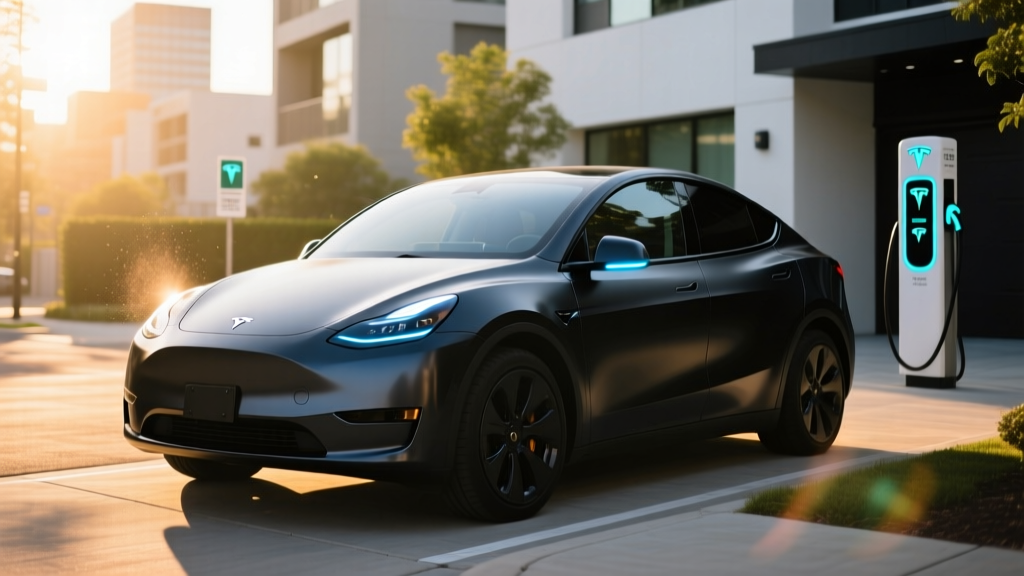
While the Cybercab headlines the future, Tesla's 2026 production lineup remains the Model 3 and Model Y — both updated with the "Highland" (Model 3) and "Juniper" (Model Y) refreshes. Here's what the current lineup looks like with exact specifications.
| Spec | Model Y Long Range AWD | Model 3 Long Range AWD |
|---|---|---|
| EPA Range | 320 mi | 341 mi |
| Battery (usable) | ~75 kWh, NMC | ~75 kWh, NMC |
| Max DC Fast Charge | 250 kW | 250 kW |
| 10–80% DC Time | ~27 min | ~25 min |
| Level 2 Home Rate | 11.5 kW (~44 mi/hr) | 11.5 kW (~44 mi/hr) |
| 0–60 mph | 4.8 sec | 4.2 sec |
| Horsepower | 384 hp | 346 hp |
| Drivetrain | Dual Motor AWD | Dual Motor AWD |
| MPGe (combined) | 111 MPGe | 132 MPGe |
| Efficiency | 30 kWh/100 mi | 25 kWh/100 mi |
| Cargo Volume | 30.2 cu ft (rear seats up), 72.1 cu ft (folded) | 23.0 cu ft trunk + frunk |
| Base MSRP | $46,630 | $47,740 |
Source: fueleconomy.gov and Tesla.com. Prices exclude destination fee. Verify current pricing at time of order.
Real-World Range: What the EPA Sticker Doesn't Tell You
Tesla's heat pump (standard on both models since 2021) helps mitigate cold-weather cabin-heating losses compared to resistive heaters, but battery chemistry still limits low-temperature performance. Preconditioning the battery — which the car does automatically when you navigate to a Supercharger — is essential for achieving advertised charge speeds. If you arrive at a DC fast charger with a cold battery, peak kW will be severely limited until the thermal management system warms the pack.
Charging Speed: DC Fast and Home Level 2
| Level | Power (kW) | Miles Added per Hour | Typical Use Case |
|---|---|---|---|
| Level 1 (120V) | ~1.4 kW | ~3–5 mi/hr | Overnight trickle; emergency top-up |
| Level 2 (240V, 48A) | 11.5 kW | ~44 mi/hr | Daily home charging; full charge in ~7–8 hrs |
| DC Fast (Supercharger V3) | Peak 250 kW | ~180 mi in 15 min | Road trips; 10–80% in ~25–27 min |
Charging curve reality: The 250 kW peak rate applies only at low state of charge (roughly 10–30% SoC) with a preconditioned battery. Above 50% SoC, the rate tapers significantly — by 80%, you'll see roughly 50–70 kW. This is why Tesla (and all EV makers) quote 10–80% times rather than 0–100%. Charging from 80–100% on DC fast charge can take as long as the 10–80% session. For battery longevity, Tesla recommends daily charging to 80% and only charging to 100% before long trips.
With the NACS connector now standard across the industry, Tesla owners retain native access to the Supercharger network — over 6,500 stations and 70,000+ connectors in North America as of early 2026. Non-Tesla EVs with NACS adapters can also access V3 and V4 Superchargers, though at their own vehicle's charge-rate limits.
Pricing, Trims, and Federal Tax Credit Eligibility
| Trim | MSRP (before dest.) | Est. After §30D Credit | §30D Eligible? |
|---|---|---|---|
| Model 3 RWD | $38,990 | ~$31,490 (if eligible) | Partial — battery sourcing rules vary by build date |
| Model 3 Long Range AWD | $47,740 | ~$40,240 (if eligible) | Partial — verify at purchase |
| Model Y Long Range AWD | $46,630 | ~$39,130 (if eligible) | Yes — under $80K SUV cap, verify sourcing |
| Model Y Performance | $51,490 | ~$43,990 (if eligible) | Yes — under $80K SUV cap, verify sourcing |
Federal tax credit rules (IRS §30D) are not universal. Eligibility for up to $7,500 depends on:
- MSRP cap: SUVs (including Model Y) must be under $80,000; sedans (Model 3) under $55,000
- Buyer income cap: AGI ≤ $150K single / $225K head of household / $300K joint filers
- Battery sourcing: Critical minerals and battery components must meet phased-in thresholds from FEOC-compliant sources — this changes annually and varies by build date
- Point-of-sale transfer: As of 2024+, eligible buyers can transfer the credit to the dealer at purchase, reducing the upfront price rather than waiting for tax filing
Always verify current eligibility on IRS.gov and confirm with your tax professional before relying on the credit in your purchase budget. Tesla's checkout page typically indicates estimated credit eligibility, but the final determination is yours.
Cybercab Status: What October 7 Meant for Robotaxi Buyers
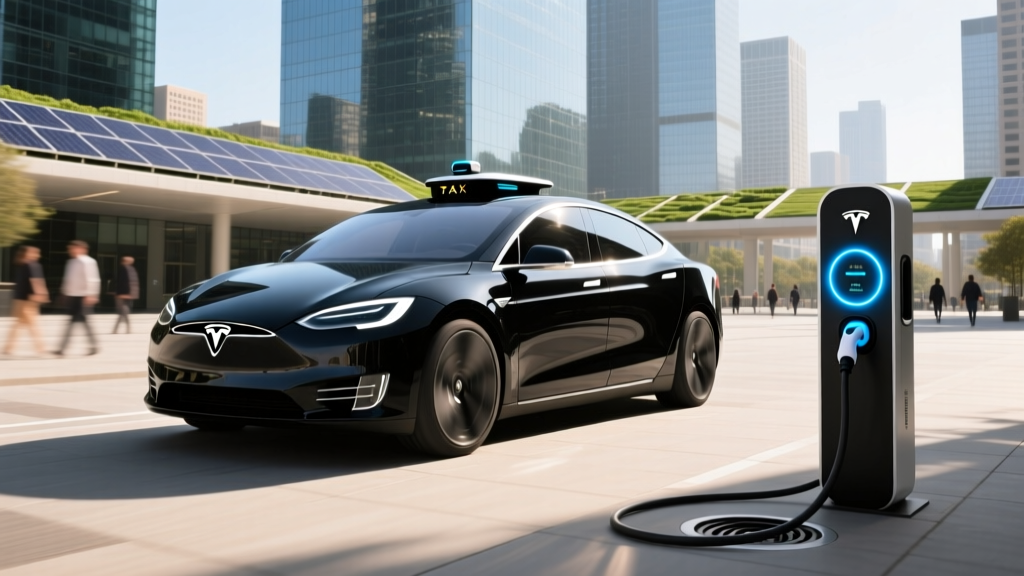
The Cybercab concept showed a two-seat vehicle with a projected sub-$30,000 production cost, a ~250-mile range target, and inductive (wireless) charging. Tesla claimed operating costs under $0.20 per mile. However, these figures are manufacturer projections — not independently verified — and the regulatory pathway for a vehicle with no manual controls remains untested at scale in the US.
For context, Waymo's Level 4 robotaxi service (using the Jaguar I-PACE with steering wheel retained) operates in Phoenix, San Francisco, and Los Angeles with extensive safety records and regulatory approvals built over years of phased deployment. Tesla's approach — attempting to leapfrog directly to a steering-wheel-free production vehicle — faces significant NHTSA and state-level regulatory scrutiny.
Who Should Buy a Tesla Today (and Who Should Wait)
Buy a 2026 Model 3 if: You prioritize efficiency (132 MPGe combined) and driving dynamics over cargo space. The Highland refresh improved ride quality and cabin insulation substantially.
Wait if: You're specifically interested in Tesla's autonomous ride-hail vision. The Cybercab is years from consumer-relevant deployment, and FSD (Supervised) remains a Level 2 system requiring full driver attention. If hands-free driving is your priority, GM's Super Cruise and Ford's BlueCruise on mapped highways offer validated hands-off (but eyes-on) Level 2 experiences today.
Pros and Cons: The 2026 Tesla Lineup
Pros
- Supercharger network: 70,000+ connectors, highest reliability of any DC network
- Class-leading efficiency: Model 3 at 25 kWh/100 mi beats most competitors
- Over-the-air updates continuously add features post-purchase
- Strong resale value relative to EV market average
- Minimalist interior = low maintenance, few physical parts to fail
- Standard heat pump preserves range in cold weather better than resistive systems
Cons
- No Apple CarPlay or Android Auto — Tesla-only infotainment
- FSD (Supervised) costs $8,000 extra or $99/mo and is still Level 2
- Panel gaps and paint quality remain inconsistent vs. legacy luxury brands
- Rear-seat comfort in Model 3 is tight for tall adults (35.3" legroom)
- Insurance premiums run 15–30% higher than comparable ICE vehicles
- 250 kW peak DC charge rate trails Hyundai/Kia's 800V architecture (350 kW)
Battery, Warranty, and Long-Term Ownership
Tesla provides an 8-year / 120,000-mile battery and drive unit warranty on the Model Y Long Range and Model 3 Long Range (the RWD Model 3 with LFP chemistry carries 8 years / 100,000 miles). The warranty guarantees the battery will retain at least 70% of its original capacity over the warranty period.
Real-world degradation data from Tesla's fleet shows most NMC packs lose roughly 10–12% capacity in the first 50,000 miles, then degrade very slowly — typically retaining 85–90% capacity at 150,000 miles. LFP packs (used in the RWD Model 3) show even slower degradation and can be charged to 100% daily without longevity concerns, though they offer less range and reduced cold-weather performance.
Battery replacement cost outside warranty: approximately $12,000–$16,000 for a remanufactured pack at a Tesla service center, though full replacements are rare — most degradation claims involve individual module swaps at lower cost.
Frequently Asked Questions
What is the real-world range of the 2026 Tesla Model Y?
The EPA rates the Model Y Long Range AWD at 320 miles. Real-world highway driving at 70–75 mph typically yields 265–285 miles. In sub-freezing temperatures, expect 220–255 miles. Always precondition before long trips to maximize both range and charge speed.
How fast does a Tesla charge at home and on the road?
On a Level 2 home charger (240V, 48A), both Model 3 and Model Y add roughly 44 miles of range per hour — a full overnight session restores 250+ miles. On a V3 Supercharger, peak rate is 250 kW, achieving 10–80% in approximately 25–27 minutes with a preconditioned battery.
How much does a 2026 Tesla cost after the federal tax credit?
The Model Y Long Range starts at $46,630. If you meet all IRS §30D requirements (income under $300K joint, vehicle under $80K MSRP, battery sourcing compliance), the effective price drops to approximately $39,130 via point-of-sale transfer. However, battery-sourcing rules change annually — confirm eligibility at purchase.
Is a Tesla worth buying vs. Hyundai Ioniq 5 or Ford Mustang Mach-E?
Tesla wins on Supercharger access and efficiency. The Ioniq 5 charges faster (800V architecture, 10–80% in ~18 min at 350 kW chargers) and offers CarPlay. The Mach-E provides a more traditional crossover feel and Ford dealer service. If Supercharger proximity matters for your road trips, Tesla's network advantage is significant. If you mostly charge at home and want faster public DC charging, the Ioniq 5 is compelling.
Does the Tesla Model Y qualify for the $7,500 federal EV tax credit?
It can — the Model Y is classified as an SUV (under the $80K MSRP cap) and typically meets pricing requirements. However, eligibility also depends on your income, the specific battery's critical-mineral sourcing for that build month, and your tax situation. Check fueleconomy.gov and consult a tax professional.
Will the Cybercab from the October 7 event be available to consumers?
No. The Cybercab is designed as a fleet-only robotaxi. Tesla has not announced a consumer purchase option, and the vehicle requires NHTSA exemption for its steering-wheel-free design. Production timing remains uncertain. If you need an EV today, the Model Y and Model 3 are the relevant products.