The phrase Tesla robot hands has become one of the most searched robotics topics in the EV world, and for good reason. Tesla's Optimus humanoid program — and specifically the articulated, sensor-dense hands it has been iterating on since 2022 — represents a bet that the same neural-net architecture powering Full Self-Driving (Supervised) can generalize to bimanual manipulation. For EV buyers and Tesla shareholders alike, the question is whether these robotic end-effectors are a credible path to factory automation and consumer products, or an expensive side project. This profile breaks down the current state of Tesla's robot hands, where they fit in the Optimus timeline, and what the technology signals about Tesla's broader EV and energy strategy heading into 2026.
What Are Tesla Robot Hands? The Optimus End-Effector Explained
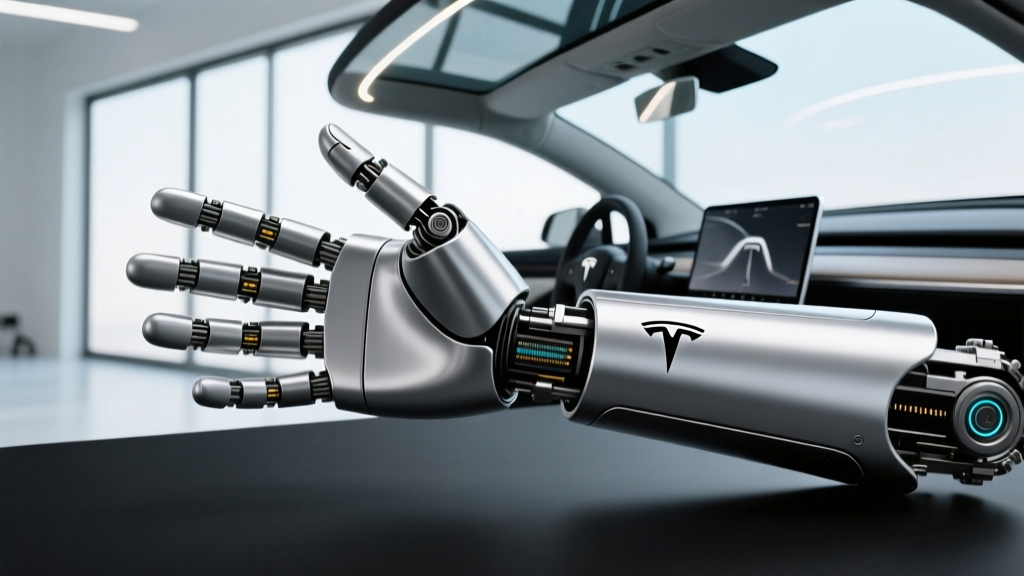
Tesla's robot hands are the articulated grippers mounted on the Optimus (also called Tesla Bot) humanoid platform. The latest publicly demonstrated iteration — shown at Tesla's 2024 We, Robot event and updated through 2025 engineering releases — features 22 degrees of freedom (DoF) across five fingers, with tendon-driven actuation routed through the forearm rather than the palm. This keeps the hand slim and shifts motor mass proximally, improving swing dynamics.
Each finger uses a combination of brushless DC motors and high-resolution encoders. The fingertips integrate tactile sensor arrays capable of detecting force, slip, and texture — critical for tasks like threading a cable, grasping an egg without crushing it, or sorting mixed bin parts on a Fremont assembly line.
Tesla has openly stated that the hand design borrows from its vehicle-manufacturing experience: the same tolerance stacking and fixture design principles that let a Model Y robot arm weld a subframe are applied in miniature to the Optimus hand. The result is an end-effector that Tesla claims can handle up to 20 lbs of payload per hand while maintaining sub-millimeter positional accuracy in structured environments.
Technical Specifications: Dexterity, Sensors, and Actuation
Because Optimus is not a consumer vehicle, there is no EPA sticker or fueleconomy.gov entry. However, Tesla has published enough engineering data to construct a meaningful spec sheet for the robotic hands and the Gen-3 platform they attach to.
| Parameter | Optimus Gen-3 Hand Spec |
|---|---|
| Degrees of Freedom | 22 DoF (5 fingers, multi-joint) |
| Actuation Type | Tendon-driven, brushless DC motors in forearm |
| Tactile Sensing | Capacitive + piezoresistive fingertip arrays |
| Payload Capacity | ~20 lbs (9 kg) per hand |
| Gripper Span | Approx. 170 mm max open |
| Control Latency | <10 ms closed-loop (on-device inference) |
| AI Architecture | End-to-end neural net, shared FSD vision stack |
| On-Device Compute | Tesla custom SoC (derivative of HW4) |
| Platform Battery | ~2.3 kWh, 52V pack (torso-mounted) |
| Platform Weight | ~130 lbs (59 kg) total robot |
| Platform Height | 5'8" (173 cm) |
The 2.3 kWh battery is not an EV traction pack, but it is a lithium-ion unit managed by the same BMS philosophy Tesla uses in its vehicles — active thermal management, cell-level balancing, and a state-of-charge buffer to prevent deep discharge. Expect a full work-shift runtime of roughly 4–6 hours of mixed manipulation tasks before a recharge is needed, based on Tesla's internal factory pilot data.
The AI Stack: How FSD Vision Feeds the Robot Hands
The most consequential decision Tesla made with Optimus was to reuse the Full Self-Driving (Supervised) vision-only neural network as the perception backbone. The robot's head-mounted cameras use the same occupancy-network and object-detection pipelines that let a Model 3 navigate an unprotected left turn. The difference is that instead of outputting steering and throttle commands, the network outputs joint-space trajectories for 22 finger actuators.
This shared-stack approach means every mile driven by the Tesla fleet on FSD (Supervised) is, in principle, training data for Optimus spatial reasoning — and every manipulation task Optimus learns in the Fremont or Austin factory can refine the edge-case handling of the vision system. It is a data flywheel that no dedicated robotics company (Boston Dynamics, Figure AI, Agility Robotics) currently matches in scale.
Production Timeline: When Do Tesla Robot Hands Reach Scale?
Tesla has publicly stated an intent to deploy thousands of Optimus units within its own factories by late 2025 and into 2026, primarily for repetitive, ergonomically taxing tasks: wire-harness insertion, battery-cell sorting, seat-belt threading, and parts kitting. External sales to other manufacturers are targeted for 2026–2027, with a long-stated aspirational consumer price point of $20,000–$30,000 — though that figure assumes high-volume production that does not yet exist.
The hands themselves are the pacing item. Tendon-driven systems are notoriously difficult to assemble at scale because cable tension must be calibrated per-unit. Tesla's manufacturing-engineering team has acknowledged this bottleneck and is reportedly moving toward modular cartridge-style finger assemblies that can be snapped into the palm frame and auto-tensioned by a fixture, reducing per-unit assembly time from hours to minutes.
Competitor Comparison: Tesla Hands vs. Figure, Shadow, and LEAP
Tesla is not the only player in dexterous robotic manipulation. Here is how the Optimus Gen-3 hand compares to other prominent platforms in 2025–2026:
| Feature | Tesla Optimus Gen-3 | Figure 02 (Figure AI) | Shadow Dexterous Hand | LEAP Hand (CMU/open) |
|---|---|---|---|---|
| DoF | 22 | ~18 | 24 | 16 |
| Actuation | Tendon, forearm motors | Hybrid tendon + direct | Tendon, McKibben pneumatic | Direct-drive servos |
| Tactile Sensing | Integrated fingertip arrays | Integrated (spec TBD) | Optional BioTac | None (research platform) |
| AI Stack | FSD-derived end-to-end NN | OpenAI multimodal | Research / ROS | Research / RL |
| Est. Unit Cost (hand pair) | <$5,000 (at scale) | Not disclosed | ~$100,000+ | ~$2,000 (DIY) |
| Production Scale | Internal pilot, 1,000s planned | Pilot with BMW | Low-volume research | Open-source / academic |
The key differentiator is cost-at-scale. The Shadow Hand has been the gold standard for research dexterity for over a decade, but at six figures per unit it is a laboratory instrument, not a factory tool. Tesla's advantage is its willingness to accept slightly lower DoF in exchange for manufacturability at automotive volumes — the same trade-off it made with its vehicle interiors.
What Tesla Robot Hands Mean for EV Buyers and Owners
If you are shopping for a Tesla vehicle in 2026, you might wonder why a robotics project matters. Three connections are direct:
- Manufacturing cost reduction: Every Optimus unit deployed on the Fremont or Austin line is a labor-hour offset. Tesla has historically passed manufacturing savings into vehicle price cuts. If Optimus scales, expect continued downward pressure on Model Y and next-gen platform MSRP.
- FSD improvement loop: The manipulation neural net and the driving neural net share vision architecture. Edge cases solved in one domain (e.g., recognizing a partially occluded bolt) transfer to the other (recognizing a partially occluded pedestrian).
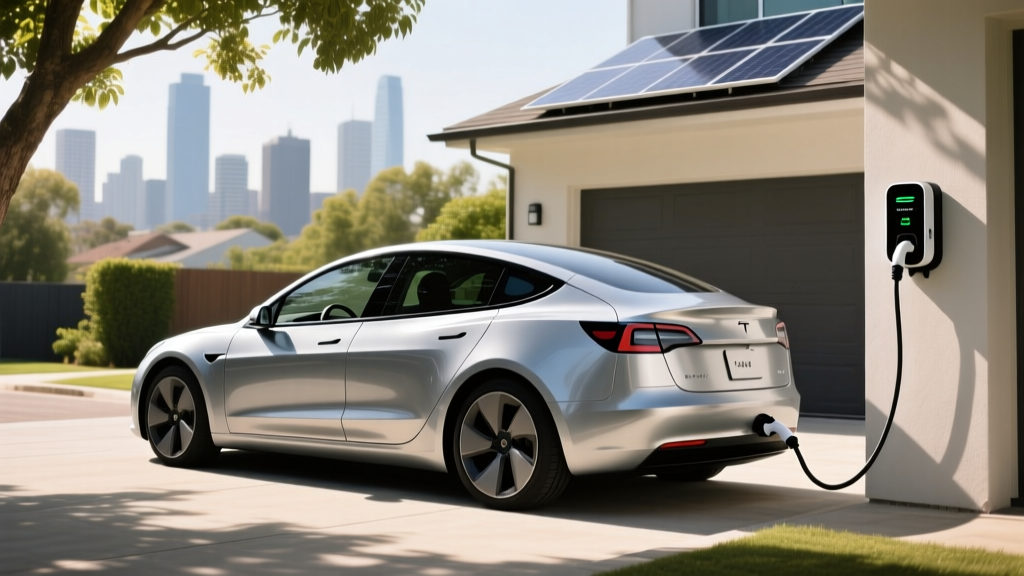
- Energy ecosystem: Optimus charges from a standard 120V/240V outlet, drawing roughly 0.5–1 kW during charging. In a future V2H (vehicle-to-home) or Powerwall-integrated setup, your Tesla vehicle, Powerwall, and Optimus robot would all be nodes on the same home energy network managed by the Tesla app.
Pricing, Availability, and the Tax-Credit Question
Optimus is not a consumer product as of 2026, and it does not qualify for the IRS §30D federal EV tax credit — that credit applies to new plug-in electric vehicles meeting MSRP, buyer-income, and battery-sourcing requirements, not to robotics platforms. Tesla has not opened pre-orders for external Optimus units.
For context on Tesla's current vehicle lineup and §30D eligibility, the IRS clean vehicle credit page remains the authoritative source. The 2026 Model Y Long Range (starting ~$44,990) and Model 3 Long Range (starting ~$42,380) remain eligible for up to $7,500 in point-of-sale credit, subject to the $80,000/$150,000/$225,000 modified AGI caps and critical-mineral/battery-component sourcing requirements that continue to tighten annually.
Pros, Cons, and the Honest Assessment
What Tesla Gets Right
- Shared FSD vision stack gives a data advantage no pure-play robotics firm can match
- Tendon-driven design with forearm motors keeps hand mass low and swing dynamics fast
- Tactile fingertip sensing enables force-sensitive tasks beyond simple pick-and-place
- Manufacturing-at-scale DNA from automotive production is a genuine moat for cost reduction
- Integrated energy ecosystem (vehicle + Powerwall + robot) is a unique value proposition
Where the Risks Lie
- Tendon-driven systems are historically difficult to service in the field — cable replacement is labor-intensive
- Consumer availability timeline has slipped repeatedly (original 2023 demo → still internal pilot in 2026)
- 22 DoF is fewer than the Shadow Hand; highly complex manipulation (e.g., surgical, watchmaking) is out of scope
- No public safety certification standard yet exists for humanoid robots operating near untrained humans
- Price claims ($20k–$30k consumer unit) remain aspirational without disclosed BOM analysis
Frequently Asked Questions
Can I buy Tesla robot hands in 2026?
No. The Optimus platform, including its hands, is deployed only within Tesla's own manufacturing facilities. There is no consumer or third-party purchase channel as of early 2026.
How many degrees of freedom do Tesla robot hands have?
The Gen-3 Optimus hand has 22 degrees of freedom across five fingers, using tendon-driven actuation with motors located in the forearm.
Do Tesla robot hands use the same AI as Tesla vehicles?
Yes. The perception stack is derived from the FSD (Supervised) vision neural network, adapted to output joint-space manipulation commands instead of driving commands.
Will Optimus ever qualify for a tax credit?
The IRS §30D credit applies to qualified plug-in electric vehicles, not robotics platforms. Unless Congress creates a new credit category for humanoid robots, Optimus will not qualify. Always verify current rules at irs.gov.
What is the payload capacity of each Optimus hand?
Tesla has stated approximately 20 lbs (9 kg) per hand in structured tasks, with the full robot rated for roughly 45 lbs of total carried load while walking.
How does Tesla's robot hand compare to Boston Dynamics' Atlas?
Atlas uses hydraulic (now transitioning to electric) actuation optimized for dynamic locomotion and whole-body agility. Optimus prioritizes cost-at-scale and manipulation dexterity for factory tasks. They solve different problems: Atlas is a research and rescue platform; Optimus is a manufacturing tool.
Tesla's robot hands are not a product you can buy today, but they are a credible engineering program with a plausible path to factory deployment at scale. For EV buyers, the near-term relevance is indirect but real: every Optimus unit on a Tesla assembly line is a bet that manufacturing costs — and therefore vehicle prices — will continue to fall. Watch the tendon-cartridge assembly patents and the Fremont pilot deployment numbers for the clearest signal of whether this program is tracking to timeline or slipping again.