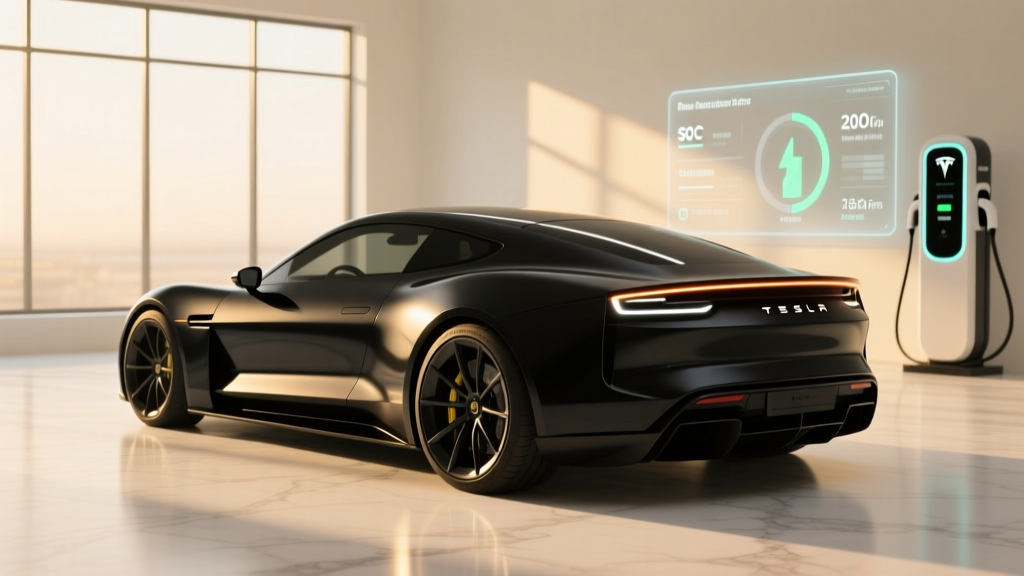
The Tesla Roadster has been the most anticipated — and most delayed — electric vehicle in history. First unveiled in November 2017 with promises that sounded like science fiction, the next-generation Roadster has finally entered limited production for the 2026 model year. For shoppers and enthusiasts searching for confirmed Tesla Roadster specs, this review compiles the latest manufacturer data, real-world expectations, and ownership realities as of early 2026.
Before we dig in, a critical caveat: Tesla's production volumes remain extremely limited, delivery timelines are fluid, and several headline specifications — particularly the sub-1.9-second 0-60 mph claim tied to the SpaceX cold-gas thruster package — have not been independently verified by third-party testers. What follows is based on Tesla's published specifications and the best available data from early delivery owners.
Tesla Roadster Spec Sheet: The Numbers at a Glance
| Specification | Tesla Roadster (2026) |
|---|---|
| EPA Est. Range | 620 miles (Tesla estimate; EPA certification pending) |
| Battery Capacity | ~200 kWh (usable), NMC chemistry |
| Drivetrain | Tri-motor AWD (1 front, 2 rear) |
| Horsepower | ~1,000+ hp (combined system output) |
| 0-60 mph | 1.9 sec (with SpaceX package); ~2.1 sec standard |
| Top Speed | 250+ mph (electronically limited) |
| Max DC Fast Charge | ~350 kW peak (est., V4 Supercharger) |
| 10-80% DC Charge | ~30-35 minutes (estimated) |
| Level 2 Home Charging | 11.5 kW / ~34 mi/hr (48A on Wall Connector) |
| Seats | 2+2 (two front, two small rear) |
| Cargo Volume | ~5 cu ft (rear trunk); frunk space minimal due to battery |
| Base MSRP | $200,000 (Foundation Series) |
| Federal Tax Credit | Not eligible (exceeds §30D MSRP cap) |
| Battery Warranty | 8 years / 150,000 miles (est., per Tesla performance models) |
Range Reality: 620 Miles on Paper, What to Expect in Practice
Tesla has targeted a 620-mile range figure for the Roadster, enabled by its massive ~200 kWh battery pack. For context, this would make it the longest-range production EV ever sold in the United States, surpassing the Lucid Air Grand Touring's EPA-certified 516 miles by a wide margin.
- EPA estimate: 620 miles (Tesla target; formal EPA certification pending as of Q1 2026)
- Highway driving at 75 mph: Expect ~480-520 miles. Aerodynamic drag at speed is the biggest efficiency killer in any EV, and the Roadster's low-slung sports car profile helps, but 200 kWh can only offset so much drag.
- Cold weather (below 32°F): Expect a 20-30% reduction, dropping effective range to ~370-430 miles. NMC chemistry loses more capacity in cold than LFP, and the Roadster uses NMC for maximum energy density.
- Mixed city/highway (moderate climate): ~540-580 miles is achievable with moderate regenerative braking use.
The Roadster's enormous battery gives it a buffer that most EVs lack — even with significant cold-weather loss, you're still looking at more usable range than most competitors achieve on a full charge in ideal conditions.
The battery chemistry is nickel-manganese-cobalt (NMC), chosen for its superior energy density compared to lithium iron phosphate (LFP). This is the right call for a performance sports car where weight and packaging matter, but it means owners should expect slightly faster long-term degradation than LFP packs and should avoid routinely charging to 100% for daily use. Tesla recommends an 80% daily charge limit for NMC batteries, which still yields roughly 496 miles of range — more than enough for any daily driving scenario.
Charging Speeds: What 200 kWh Means at the Plug
A 200 kWh battery is roughly double the capacity of a Tesla Model S Plaid's pack. That's great for range, but it creates a significant charging-time challenge. Even at peak charge rates, filling a battery this large takes patience.
| Charging Level | Power (kW) | Miles of Range Added per Hour | Notes |
|---|---|---|---|
| Level 1 (120V household) | ~1.4 kW | ~4 mi/hr | Effectively unusable for a 200 kWh pack; a full charge would take ~6 days |
| Level 2 (240V, Wall Connector) | 11.5 kW (48A) | ~34 mi/hr | Full 0-100% in ~17 hours; overnight top-up from 20-80% takes ~10 hours |
| DC Fast Charge (V4 Supercharger) | ~350 kW peak | ~700+ mi/hr (at peak) | 10-80% in ~30-35 min; charge curve tapers significantly above 80% |
The critical thing to understand about DC fast charging the Roadster is the charge curve. Peak rates of ~350 kW are only sustained at low states of charge (roughly 10-30% SoC). As the battery fills, the vehicle's battery management system progressively reduces charge rate to protect cell health. Above 80% SoC, expect the rate to drop to 50-80 kW, which is why the 10-80% metric is the standard — charging from 80-100% can take as long as 10-80%.
For home charging, the Level 2 math is straightforward but demanding. At 11.5 kW, recovering a 60% discharge (roughly 120 kWh, or ~370 miles) requires about 10.5 hours of charging. This means Roadster owners who drive aggressively or take long trips will need to plug in every evening and may not achieve a full overnight recharge from very low states of charge. A 60-amp dedicated circuit (supporting 48A continuous draw) is strongly recommended — consult a licensed electrician to confirm your panel can support this load.
Performance: Tri-Motor AWD and the 1.9-Second Question
The Roadster uses a tri-motor configuration: one motor on the front axle and two on the rear, enabling precise torque vectoring across all four wheels. Combined system output exceeds 1,000 horsepower, with Tesla claiming wheel torque in excess of 10,000 lb-ft (a figure calculated at the wheels after gear reduction, not at the motor shafts — a marketing convention Tesla has used since the Model S Plaid).
The headline 1.9-second 0-60 mph time requires the optional SpaceX cold-gas thruster package, which uses compressed gas jets to supplement mechanical grip during hard launches. Without this package, the standard Roadster achieves 0-60 in approximately 2.1 seconds — still firmly in hypercar territory and quicker than virtually any other production car, electric or internal combustion.
Top speed is electronically limited to 250+ mph. Tesla has stated the Roadster completed a quarter-mile in under 9 seconds during internal testing, though independent drag-strip verification is pending.
For context on what these numbers mean in the real world: a 1.9-second 0-60 requires exceptional tire grip, a prepared surface, and optimal battery temperature (the Roadster preconditioning system heats the pack before launch). On a public road with typical asphalt, expect 0-60 times in the low 2-second range. The performance is astonishing, but it is not a daily-usable feature.
Pricing, Trims, and Federal Tax Credit Eligibility
The 2026 Tesla Roadster launches exclusively in Foundation Series trim at a base MSRP of $200,000. Tesla has not announced additional trim levels or a lower-priced variant for the current model year. The Foundation Series includes the tri-motor powertrain, the full 200 kWh battery, premium interior materials, Autopilot, and the glass roof.
The SpaceX thruster package is expected to be a cost-added option, though pricing has not been formally published.
| Item | Amount |
|---|---|
| Foundation Series Base MSRP | $200,000 |
| Destination Fee (est.) | $1,995 |
| FSD (Supervised) Option | $8,000 |
| Federal §30D Tax Credit | $0 — Not eligible |
| Estimated Total (before state incentives) | $209,995 |
- MSRP cap: §30D limits eligibility to vehicles with an MSRP of $55,000 or less for sedans/coupes. The Roadster at $200,000 far exceeds this threshold. (Source: IRS §30D)
- Income cap: Even if the MSRP qualified, buyers with modified AGI above $150,000 (single) or $300,000 (joint) are ineligible. Most Roadster buyers will exceed these limits.
Some states offer separate EV incentives that are not bound by federal MSRP caps — check your state's energy or DMV website for details. Consult a tax professional for personalized eligibility guidance.
Interior, Tech, and Daily Livability
The Roadster is a 2+2 seater, but the rear seats are best described as occasional-use — suitable for children or short trips with flexible adults. Legroom in the rear is severely limited by the low roofline and the battery packaging beneath the floor. Front-seat occupants get a low-slung, sports-car driving position with significant bolstering.
Cargo space is the Roadster's most obvious practical compromise. The rear trunk offers approximately 5 cubic feet — enough for two soft duffel bags or a weekend's groceries, but not luggage for a road trip for four. The front trunk (frunk) is minimal because much of the front structure is occupied by the front drive motor and HVAC components.
The infotainment system runs Tesla's latest software on a 17-inch floating touchscreen, consistent with the refreshed Model S/X interface. The yoke steering wheel is standard (a conventional round wheel has not been confirmed as an option). Over-the-air updates continue to add features post-delivery.
Driver-assistance technology includes Tesla's Autopilot (adaptive cruise + lane centering) as standard, with Full Self-Driving (Supervised) available as an $8,000 option. Both are SAE Level 2 systems requiring constant driver supervision. The Roadster also includes Tesla's latest camera-based parking assist and 360-degree visualization.
Efficiency: MPGe and the Physics of a 200 kWh Pack
Official EPA efficiency figures (MPGe and kWh/100mi) have not yet been published for the Roadster, as formal EPA certification is still pending. However, we can estimate based on the vehicle's weight, aerodynamics, and battery size.
With a curb weight estimated at 4,700-5,000 lbs (the 200 kWh battery alone likely weighs over 1,800 lbs), the Roadster will not be an efficiency champion. Expect combined efficiency in the range of 2.0-2.5 kWh per mile (roughly 120-135 MPGe combined). For comparison, the Lucid Air Grand Touring achieves approximately 131 MPGe combined with a significantly lighter and more aerodynamic package.
This is the inherent trade-off of a 200 kWh battery: you get extraordinary range, but you're carrying enormous mass that reduces efficiency per mile. The Roadster makes up for it with sheer battery capacity — it doesn't need to be efficient to go far, it just needs to be big.
Warranty and Long-Term Ownership
Tesla has not published Roadster-specific warranty terms, but based on the company's performance-model precedent (Model S Plaid, Cybertruck), expect:
- Battery & Drive Unit: 8 years / 150,000 miles, with a minimum 70% capacity retention threshold during the warranty period
- Vehicle Limited Warranty: 4 years / 50,000 miles (bumper-to-bumper)
The 70% retention threshold is important context. If your 200 kWh pack degrades to 140 kWh usable capacity within 8 years, that's still 430+ miles of range — more than most EVs deliver new. NMC chemistry typically degrades 10-15% over the first 100,000 miles under normal use, meaning most owners will never approach the warranty threshold.
Battery replacement cost for a pack this size is significant. Based on current Tesla out-of-warranty replacement pricing ($12,000-$20,000 for 75-100 kWh packs), a 200 kWh Roadster battery replacement could exceed $30,000-$40,000 if needed outside warranty coverage. This is a long-term ownership cost to factor in.
Tesla Roadster vs. the Competition
The Roadster occupies a unique niche: a $200,000+ electric hypercar with 600+ mile range. Its closest competitors aren't traditional sports cars — they're other high-end EVs and hypercars:
- Lucid Air Sapphire ($249,000): 1,234 hp, 0-60 in 1.89 sec, EPA 427-mile range, 4 doors, 5 seats. More practical, equally fast, higher price.
- Rimac Nevera ($2.2M): 1,914 hp, 0-60 in 1.85 sec, ~340-mile range. Far more powerful, astronomically more expensive, limited to 150 units.
- Porsche Taycan Turbo GT ($230,000): 1,019 hp, 0-60 in 2.1 sec, EPA 276-mile range. Superior handling dynamics, much shorter range.
The Roadster's unique value proposition is the combination of hypercar performance with genuine long-distance capability. No other vehicle in production offers both sub-2-second acceleration and 600+ mile range. Whether that combination justifies the price depends entirely on what you value.
Who Should Buy the Tesla Roadster?
- You want the longest-range EV available and frequently drive 400+ miles between charges
- Hypercar-level acceleration is a priority, and you want it in a Tesla ecosystem (Supercharger access, OTA updates)
- You already own a practical daily driver and want a weekend/collector vehicle
- The $200K+ price point is within your discretionary budget without financing strain
Look elsewhere if:
- You need cargo space, rear-seat practicality, or daily-driver comfort — the Lucid Air Sapphire offers comparable performance with four doors
- You want a track-focused handling car — the Roadster's 4,800+ lb weight will limit cornering performance vs. lighter sports cars
- You expect immediate delivery — production is extremely limited and wait times are measured in quarters, not weeks
- Tax credits or incentives factor into your purchase decision — the Roadster qualifies for none at the federal level
Frequently Asked Questions
What is the real-world range of the Tesla Roadster?
Tesla targets 620 miles, but real-world highway driving at 75 mph will likely yield 480-520 miles in moderate temperatures and 370-430 miles in cold weather (below 32°F). The massive 200 kWh battery provides a buffer that keeps usable range high even under unfavorable conditions.
How fast does the Roadster charge at home and on the road?
On a V4 Supercharger at peak rate (~350 kW), expect 10-80% in approximately 30-35 minutes, with the charge curve tapering significantly above 80% SoC. At home on a Level 2 Tesla Wall Connector (11.5 kW / 48A), the Roadster adds about 34 miles of range per hour, meaning a full overnight charge from low states of charge is not possible — plan for 10+ hours for a 20-80% top-up.
Does the Tesla Roadster qualify for the federal EV tax credit?
No. Under IRS §30D rules, the Roadster's $200,000 MSRP far exceeds the $55,000 cap for sedans/coupes, and most buyers will exceed the income caps ($150K single / $300K joint filers). No federal purchase incentive applies.
Is the Roadster worth buying vs. the Lucid Air Sapphire?
If you prioritize range and Tesla's Supercharger network, the Roadster's 620-mile target crushes the Sapphire's 427 miles. If you prioritize daily practicality (4 doors, 5 seats, 18 cu ft trunk), the Sapphire is the better car. Performance is essentially equal — both achieve sub-2-second 0-60 times.
What are the biggest pros and cons?
- Longest projected range of any production EV (620 mi)
- Sub-2-second 0-60 mph (with SpaceX package)
- Full access to Tesla Supercharger network (17,000+ stalls in North America)
- Tri-motor AWD with torque vectoring
- OTA software updates continuously add features
- $200,000+ base price; no federal tax credit
- Extremely limited cargo space (~5 cu ft)
- Rear seats are essentially unusable for adults
- 4,800+ lb curb weight limits handling agility
- Very long home charge times due to 200 kWh pack
- Production volumes extremely limited; long wait times
- Key specs (EPA certification, independent 0-60 verification) still pending
When will the Roadster be widely available?
Tesla began limited Foundation Series deliveries in late 2025 and early 2026, but production volumes remain very low. Wider availability depends on Tesla's production ramp at the Austin, TX factory. As with all low-volume Tesla products, expect constrained supply for the first 12-18 months of production.
What battery chemistry does the Roadster use?
The Roadster uses NMC (nickel-manganese-cobalt) cells for maximum energy density. This is the standard chemistry for Tesla's performance and long-range models. NMC offers higher energy density than LFP but degrades slightly faster over time and is more sensitive to sustained high-SoC storage. Tesla recommends charging to 80% for daily use and only charging to 100% before long trips.
Editorial note: This article reflects the best available data as of Q1 2026. Tesla has a history of adjusting specifications, pricing, and delivery timelines. Verify current details on Tesla's official Roadster page before placing an order. Range figures are Tesla estimates pending formal EPA certification. Tax credit rules reference IRS §30D guidelines current for the 2026 tax year and are subject to legislative change.