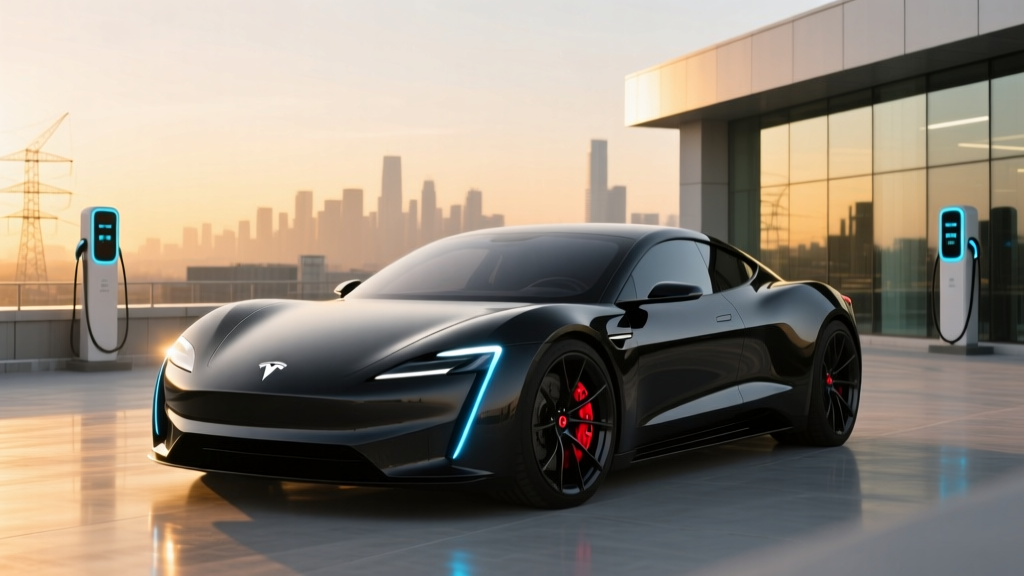
The Tesla Roadster has lived in automotive purgatory longer than almost any other announced electric vehicle. First teased in 2017 with staggering performance claims, then repeatedly delayed, the second-generation Roadster remains — as of early 2026 — an announced but unreleased vehicle. Tesla has not confirmed a firm production start date, and specifications below are based on Tesla's public statements, earnings calls, and prototype sightings, not final EPA certification or production builds.
If you are holding a Tesla Roadster reservation or weighing whether to place one, this profile synthesizes every confirmed and estimated data point available, applies real-world EV ownership context, and clarifies the tax-credit and pricing realities that marketing materials gloss over.
Announced Specifications at a Glance
| Attribute | Tesla Claim / Estimate |
|---|---|
| EPA Range (claimed) | 620 miles (unverified by EPA) |
| Battery Capacity | ~200 kWh (announced); chemistry unconfirmed, likely NMC/NCA |
| Drivetrain | Tri-motor AWD (one front, two rear) |
| Horsepower | Estimated 1,000+ hp (wheel torque multiplier claim) |
| 0–60 mph | 1.9 seconds (claimed, with SpaceX package); ~2.1 sec base |
| Top Speed | 250+ mph (claimed) |
| Max DC Fast Charge | Unconfirmed; expected 250–350 kW on V4 Supercharger |
| 10–80% DC Charge Time | Est. 25–35 min (based on pack size and peak rate) |
| Level 2 Home Charging | Est. 11.5–19.2 kW (44–70 mi/hr at 48A) |
| Seating | 2+2 (two front, two small rear) |
| Base MSRP (announced) | ~$200,000 (Founders Series: $250,000) |
| Federal Tax Credit (§30D) | Not eligible — exceeds $55K sports car MSRP cap |
| Battery/Powertrain Warranty | Unconfirmed; likely 8 yr / 150,000 mi based on Model S/X precedent |
Range Reality: 620 Miles Claimed, but Expect Less on the Road
Tesla's headline figure of 620 miles of range would shatter every production EV on the market if certified. For context, the Lucid Air Grand Touring currently holds the production record at 516 miles EPA with a 118 kWh pack. The Roadster's claimed 200 kWh battery is roughly 70% larger, making the math plausible — but EPA certification involves standardized city and highway drive cycles that don't capture every real-world variable.
The Roadster's aerodynamic profile — a low-slung sports car with active aero elements — should help highway efficiency, but its wide tires and performance-oriented tuning will work against it. Expect an efficiency figure in the neighborhood of 30–35 kWh per 100 miles under mixed driving, translating to roughly 110–120 MPGe if EPA-certified at that rate.
Charging Speed: A 200 kWh Pack Changes the Math
Here is where the Roadster's enormous battery creates a practical challenge. Charging speed is measured in kW (power), but the time to fill a battery depends on its kWh (energy capacity). A 200 kWh pack requires moving a massive amount of energy, even at high charge rates.
| Charging Level | Power (kW) | Miles of Range per Hour | 10–80% Time |
|---|---|---|---|
| Level 1 (120V, 12A) | ~1.4 kW | ~4 mi/hr | ~100+ hours |
| Level 2 (240V, 48A) | ~11.5 kW | ~35 mi/hr | ~14–16 hours |
| Level 2 (240V, 80A Wall Connector) | ~19.2 kW | ~58 mi/hr | ~9–10 hours |
| DC Fast (V4 Supercharger, est.) | ~250–350 kW peak | ~750–1,000 mi/hr peak | ~25–35 min (est.) |
Charging-curve reality: Peak kW rates are never sustained across the full 10–80% window. A 200 kWh pack charging at 350 kW peak will likely taper significantly above 60% state of charge (SoC) to protect cell longevity. Expect the average charge rate across a 10–80% session to be closer to 200–250 kW, not the headline peak. This means a 140 kWh refill (70% of 200 kWh) at an average 225 kW takes roughly 37 minutes — respectable, but not the 15-minute stops you might expect from a smaller-pack EV.
For home charging, the math is stark: filling a 200 kWh pack from 10% to full on a standard 48A Level 2 circuit takes overnight and then some. Roadster owners will likely want an 80A Tesla Wall Connector (requiring a 100A dedicated circuit) to achieve a full overnight charge. Consult a licensed electrician before assuming your panel can support this.
Performance: Tri-Motor AWD and the SpaceX Thruster Option
Tesla has confirmed a tri-motor all-wheel-drive layout — one motor on the front axle, two on the rear — which enables torque vectoring and the claimed sub-2-second 0–60 mph time. The optional "SpaceX package" (a $50,000 add-on announced in 2019) includes cold-gas thrusters positioned around the vehicle to improve cornering grip, braking, and acceleration. Whether this package survives to production remains an open question.
The claimed 1.9-second 0–60 mph would make the Roadster the quickest production car ever sold, beating the Rimac Nevera (1.85 sec with rollout) and Dodge Challenger SRT Demon 170 (1.66 sec with rollout and prep). Note that Tesla's 0–60 figures typically exclude the 1-foot rollout used by drag-racing conventions, making direct comparison tricky.
Top speed is claimed at 250+ mph, which would require tire technology rated for sustained operation at that velocity — a non-trivial engineering constraint that has delayed other hyper-EVs.
Pricing, Reservations, and the Tax Credit Reality
Tesla's announced base price for the Roadster is $200,000, with the limited "Founders Series" at $250,000 (limited to the first 1,000 units). Reservation holders placed deposits ranging from $5,000 to $50,000+ depending on when they reserved and which tier they selected.
| Item | Amount / Status |
|---|---|
| Base MSRP (announced) | $200,000 |
| Founders Series MSRP | $250,000 |
| SpaceX Package (announced) | +$50,000 |
| Reservation Deposit | $5,000–$50,000+ (refundable, tier-dependent) |
| §30D Federal Tax Credit | $0 — Not eligible |
| Reason | MSRP exceeds $55,000 sports car / $80,000 SUV-sedan cap under IRS §30D rules |
The federal tax credit does not apply. Under current IRS §30D regulations, new clean vehicles classified as sedans or "other" (which includes sports cars) face a $55,000 MSRP cap, while SUVs, vans, and pickups face an $80,000 cap. At $200,000+, the Roadster exceeds every possible threshold. Additionally, buyer income caps ($150K single / $300K joint AGI) and critical-mineral battery-sourcing requirements would further limit eligibility even if the price were lower. There is no path to a federal credit here — budget accordingly.
Some states offer their own EV rebates or HOV-lane access that may apply regardless of price, but these vary by jurisdiction. Check your state's energy or DMV website for specifics.
Interior, Cargo, and Daily Practicality
The Roadster is a 2+2 sports car, meaning two full-size front seats and two small rear seats suitable for children or luggage overflow. Tesla has not published official cargo volume figures, but the original 2008 Roadster offered essentially zero trunk space. The Gen 2 is expected to include a modest rear trunk and possibly a small frunk (front trunk), with estimated total cargo capacity in the 8–12 cubic foot range — comparable to a Porsche 911.
Expect a minimalist Tesla interior centered on a large touchscreen (likely 15–17 inches), yoke or round steering wheel (Tesla has alternated between these across models), and premium audio. The glass roof is expected to be removable, stored in the trunk.
Driver-assistance will almost certainly include Autopilot (adaptive cruise + lane centering) and the option to purchase FSD (Supervised). Both are SAE Level 2 systems — the driver must remain fully engaged, hands on or near the wheel, and eyes on the road at all times. This is not autonomous driving.
Who Should Hold a Reservation — and Who Should Walk Away
Keep your Tesla Roadster reservation if:
- You want a halo electric sports car and can absorb a $200K+ purchase with no federal tax credit
- You value Tesla's Supercharger network and software ecosystem above all else
- You are willing to wait — potentially through 2027 or beyond — for production to begin
- You already own a practical daily driver and the Roadster is a weekend/collector vehicle
- You need confirmed delivery dates and EPA-certified specs before committing six figures
- You want a usable back seat or meaningful cargo space for road trips
- You are counting on the federal tax credit to offset cost (it will not apply)
- You prefer vehicles with established reliability data and independent safety ratings (NHTSA/IIHS)
Roadster vs. Competitors: The Hyper-EV Landscape
The Roadster does not exist in a vacuum. Several rivals have already shipped or are closer to production:
- Rimac Nevera — 1,914 hp, 1.85-sec 0–60, 550-mile WLTP range (~490 EPA est.), 120 kWh pack, ~$2.4M. Already delivered to customers.
- Lotus Evija — 1,972 hp, sub-3-sec 0–60, ~250-mile range (est.), 70 kWh pack, ~$2.3M. Limited production underway.
- Lucid Air Sapphire — 1,234 hp, 1.89-sec 0–60, 427-mile EPA range, 118 kWh pack, $249,000. In production and delivering now.
- Porsche Taycan Turbo GT — 1,019 hp, 2.1-sec 0–60, 276-mile EPA range, 105 kWh pack, ~$230,000. Available now.
The Roadster's claimed advantage is range — 620 miles would dwarf every competitor. But range alone does not define a sports car, and Tesla's repeated delays have allowed rivals to establish real-world credibility. The Lucid Air Sapphire, in particular, offers similar acceleration, four doors, and actual availability for roughly the same price.
Frequently Asked Questions
Is the Tesla Roadster available to buy right now?
No. As of early 2026, the Roadster is announced but not in production. Tesla has not confirmed a firm delivery date. You can place a reservation with a deposit, but this does not guarantee a delivery timeline.
Will the Roadster really get 620 miles of range?
Tesla claims 620 miles, but this figure has not been EPA-certified. Real-world highway driving at 75+ mph and cold-weather conditions will reduce this significantly — likely to 400–540 miles depending on conditions. Independent verification will only come after production begins.
Does the Tesla Roadster qualify for the $7,500 federal EV tax credit?
No. Under IRS §30D, the Roadster's $200,000+ MSRP far exceeds the $55,000 cap for sedans and sports cars. Buyer income limits and battery-sourcing rules would further restrict eligibility even at a lower price.
How long does it take to charge a 200 kWh battery at home?
On a standard 48A Level 2 circuit (11.5 kW), a full charge from 10% takes roughly 15–17 hours. An 80A Tesla Wall Connector (19.2 kW) reduces this to about 9–10 hours. Most owners will need a panel upgrade and dedicated 100A circuit for the faster option.
What happens to my reservation deposit if Tesla cancels the Roadster?
Tesla's reservation terms state that deposits are refundable. If the program is cancelled or you choose to cancel, you should receive your deposit back. However, review the specific terms you agreed to at the time of reservation, as they have changed over the years.
Is the Roadster self-driving?
No. The Roadster will ship with Tesla Autopilot and optional FSD (Supervised), both of which are SAE Level 2 driver-assist systems. The driver must remain fully attentive and in control at all times. No production Tesla vehicle is capable of autonomous (Level 4/5) driving.