The Short Answer: Still Announced, Still Not Here
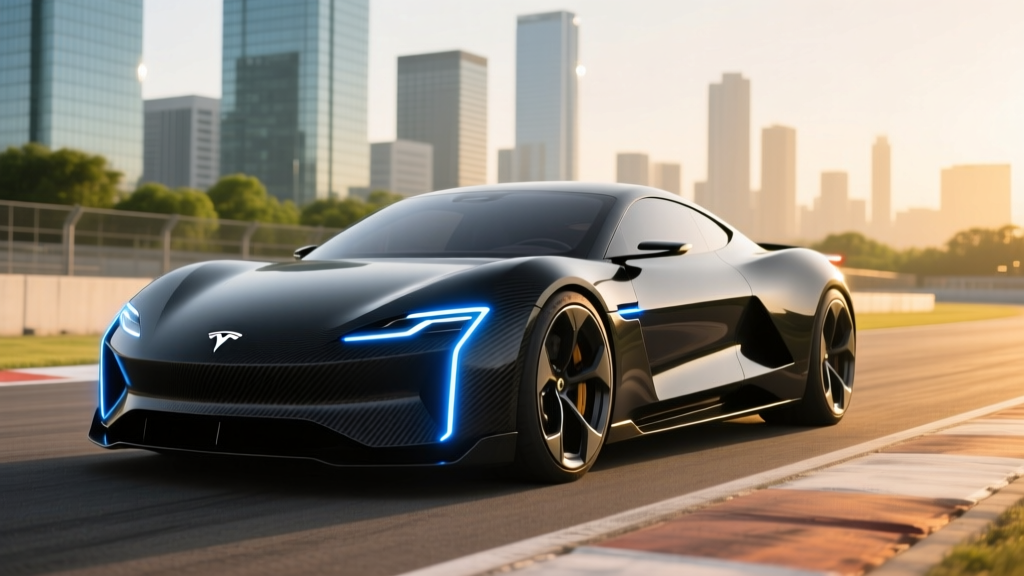
If you've been asking "is the Tesla Roadster ever coming out?" — you're not alone. First unveiled in November 2017 alongside the Tesla Semi, the second-generation Roadster has become the most delayed vehicle in Tesla's history. As of early 2026, the Roadster remains an announced, unreleased model. It is not available for purchase, no firm production date has been confirmed, and Tesla has not published finalized EPA-certified specifications.
What we do have is a collection of claims made by Elon Musk and Tesla at various events, some prototype sightings at Tesla's Gigafactory Texas, and a reservation system that has been open (and occasionally closed) for years. Below, we break down every announced spec, contextualize what's realistic, and help you decide whether waiting for the Roadster makes sense — or whether you should look at EVs you can actually drive today.
Announced Tesla Roadster Specifications (Preliminary)
Here's everything Tesla has publicly claimed about the next-gen Roadster, compiled from the 2017 unveiling, subsequent earnings calls, and Musk's public statements. Where data is missing or contradictory, we note it.
| Specification | Tesla's Claim | Realistic Expectation |
|---|---|---|
| EPA Range | 620 miles | 450–550 mi (EPA-certified) |
| Battery Capacity | 200 kWh | 150–200 kWh (likely NMC/NCA) |
| Battery Chemistry | Not disclosed | NMC or NCA (energy-density priority) |
| 0–60 mph | 1.9 seconds (base), 1.1s (with SpaceX package) | 1.9s plausible; 1.1s unverified |
| Top Speed | 250+ mph | 250 mph (electronically limited likely) |
| Quarter Mile | 8.8 seconds | Sub-9s plausible with AWD traction |
| Drivetrain | AWD, tri-motor | AWD tri-motor (confirmed architecture) |
| Horsepower | Not officially disclosed | Estimated 1,000+ hp (tri-motor) |
| Seating | 2+2 (four seats) | 2+2, rear seats very tight |
| Base MSRP | $200,000 (originally), $250,000 (Founders Series) | $200,000–$250,000+ at launch |
| Reservation Deposit | $50,000 (fully refundable at various points) | Deposit terms have changed multiple times |
| Torque | 10,000 Nm (7,376 lb-ft) wheel torque | Wheel torque, not motor torque — misleading metric |
Range Reality: 620 Miles Is the Dream, Not the Guarantee
Tesla's headline claim of 620 miles of range would shatter every production EV record if achieved. For context, the Lucid Air Grand Touring holds the current EPA crown at 516 miles with a 118 kWh battery pack. To hit 620 miles, Tesla would need either a vastly more efficient powertrain or a battery significantly larger than anything currently in production.
Claimed range: 620 miles
Likely EPA-certified range: 450–550 miles (if/when certified)
Highway driving at 75 mph: Expect 15–20% reduction → ~380–440 miles
Cold weather (below 32°F): Expect 25–35% reduction → ~315–410 miles
Track use / aggressive driving: Range could drop 40–50%
A 200 kWh battery pack would be enormous — roughly 70% larger than the Model S Plaid's ~100 kWh pack. The weight implications are significant: the Roadster would likely exceed 4,800–5,200 lbs, which hurts handling in a sports car. Tesla may have revised the battery size downward during development. Industry analysts estimate a 150–180 kWh pack is more realistic for a vehicle Tesla actually intends to produce at scale.
The chemistry is almost certainly NMC (nickel manganese cobalt) or NCA (nickel cobalt aluminum), both of which prioritize energy density over the cycle-life advantages of LFP. For a $200,000+ halo car, energy density matters more than the 100% daily-charge tolerance that makes LFP attractive in commuter EVs.
Charging: What We Know and What We Don't
Tesla has not published official charging specifications for the Roadster. However, we can make educated projections based on Tesla's current Supercharger V4 infrastructure and the charging architecture of the Cybertruck and refreshed Model S.
| Charging Level | Power / Rate | Estimated Speed |
|---|---|---|
| Level 1 (120V household) | ~1.4 kW | ~3–4 miles per hour |
| Level 2 (240V home, 48A) | ~11.5 kW | ~28–35 miles per hour |
| DC Fast Charge (V4 Supercharger) | Peak ~350 kW (projected) | 10–80% in ~25–35 min (projected) |
| DC Fast Charge (sustained avg) | ~200–250 kW avg | Charge curve tapers significantly above 60% SoC |
Key charging insight: A 200 kWh battery — or even a 150 kWh pack — takes a long time to fill. Even at a sustained 250 kW average, charging from 10% to 80% on a 200 kWh pack means pushing ~140 kWh into the battery, which takes roughly 33 minutes under ideal conditions. In practice, thermal management, charge-curve tapering above 60% State of Charge (SoC), and station congestion will extend this. For a 150 kWh pack, expect 10–80% in roughly 25 minutes at a V4 Supercharger.
At home on a Level 2 Wall Connector (11.5 kW), fully recharging a 200 kWh pack from empty would take approximately 17–18 hours. Most owners will charge opportunistically, topping up 30–50% overnight rather than doing full cycles.
Performance: The Numbers That Turn Heads
If even 80% of Tesla's performance claims hold up, the Roadster will be one of the fastest production cars ever built. Here's what's been announced:
- 0–60 mph: 1.9 seconds (base tri-motor AWD)
- 0–60 mph with SpaceX package: 1.1 seconds (using cold-gas thrusters for added downforce/traction)
- Quarter mile: 8.8 seconds
- Top speed: 250+ mph
- Drivetrain: Tri-motor all-wheel drive (one front motor, two rear motors)
The 1.9-second base claim is within the realm of plausibility. The Tesla Model S Plaid, with a similar tri-motor layout, achieves 0–60 in 1.99 seconds. The Roadster's lighter weight (sports car vs. sedan) and stickier tires could shave off that extra tenth.
The 1.1-second claim with the "SpaceX package" is far more speculative. This package reportedly uses cold-gas thrusters (compressed air) mounted around the vehicle to increase downforce and traction during launches. No production car has ever achieved a 1.1-second 0–60 on street tires. The physics require roughly 2,000+ hp and near-perfect traction. Treat this number with extreme skepticism until independently verified.
For comparison, the Rimac Nevera — a $2.2 million electric hypercar — does 0–60 in 1.85 seconds with 1,914 hp. If Tesla delivers 1.9 seconds at $200,000, it will be the best performance-per-dollar vehicle in history.
Pricing, Trims, and Federal Tax Credit Eligibility
The Roadster's pricing has shifted multiple times since 2017. Here's the current known structure:
| Trim | Announced MSRP | Federal §30D Tax Credit | Effective Price |
|---|---|---|---|
| Base Roadster | $200,000 | $0 (exceeds MSRP cap) | $200,000 |
| Founders Series | $250,000 | $0 (exceeds MSRP cap) | $250,000 |
| SpaceX Package (add-on) | TBD (est. +$50,000) | $0 | ~$250,000–$300,000 |
Tax credit reality: Under IRS §30D rules, the federal EV tax credit has an MSRP cap of $55,000 for sedans and $80,000 for SUVs, vans, and pickup trucks. The Roadster, classified as a passenger car, would need an MSRP at or below $55,000 to qualify. At $200,000+, it is categorically ineligible for the federal credit. Additionally, buyer income caps ($150,000 single / $300,000 joint AGI) would disqualify most buyers in this price range regardless.
The $50,000 reservation deposit that Tesla collected has been a point of controversy. At various points, Tesla has stated the deposit is refundable, applied to the purchase price, or converted to a non-refundable "order fee." If you currently hold a reservation, verify your deposit status directly with Tesla before making any financial assumptions.
Interior, Cargo, and Daily Usability
The Roadster is a 2+2 sports car, meaning two front seats and two very small rear seats. Based on the prototype shown at unveiling events and subsequent appearances:
- Front seats: Sport buckets, likely manually adjustable to save weight
- Rear seats: Best suited for children or cargo overflow; expect less than 28 inches of rear legroom
- Cargo (trunk): Estimated 5–8 cu ft (rear trunk); no frunk confirmed due to front motor packaging
- Roof: Removable glass roof panel (announced), stows in the trunk
- Infotainment: Expected to use Tesla's current-generation 15–17" touchscreen with the same software stack as Model S/X
This is not a practical daily driver. It's a weekend car, a track toy, and a statement piece. If you need cargo space for groceries, child seats, or road-trip luggage, the Model S or even the Cybertruck are vastly more functional.
Tech, Driver Assistance, and Warranty (Projected)
The Roadster will almost certainly ship with Tesla's latest hardware suite, which as of 2026 includes:
- Autopilot: Standard adaptive cruise control and lane-keeping (SAE Level 2)
- Full Self-Driving (Supervised): Available as a paid add-on; still requires active driver supervision at all times (SAE Level 2)
- Cameras/sensors: Tesla Vision (camera-only, no LiDAR or radar)
Warranty (projected based on current Tesla terms):
- Basic vehicle: 4 years / 50,000 miles
- Battery & drive unit: 8 years / 150,000 miles (with minimum 70% capacity retention)
Tesla's battery warranty guarantees that the pack will retain at least 70% of its original capacity during the warranty period. For a 200 kWh pack, that means at least 140 kWh usable at the 8-year mark. Battery replacement costs for a pack this size would be substantial — likely $25,000–$40,000+ out of warranty, based on current Tesla service pricing for the Model S/X.
Is It Worth Waiting For? Roadster vs. What You Can Buy Now
The honest answer to "is the Tesla Roadster ever coming out?" is: probably, but not soon, and not as originally promised. Tesla has a long track record of announcing vehicles years before delivery — the Cybertruck was unveiled in 2019 and didn't reach customers until late 2023, with significant spec changes from the original concept.
Here's how the Roadster compares to EVs you can actually purchase in 2026:
| Metric | Tesla Roadster (Announced) | Tesla Model S Plaid | Lucid Air Sapphire | Rimac Nevera |
|---|---|---|---|---|
| Availability | Not on sale | Available now | Available now | Limited production |
| Price | ~$200,000 | $89,990 | $249,000 | $2,200,000 |
| EPA Range | 620 mi (claimed) | 396 mi | 427 mi | ~290 mi (WLTP) |
| 0–60 mph | 1.9s (claimed) | 1.99s | 1.89s | 1.85s |
| Horsepower | ~1,000+ (est.) | 1,020 hp | 1,234 hp | 1,914 hp |
| Seats | 2+2 | 5 | 5 | 2 |
| Tax Credit | No | No (MSRP cap) | No (MSRP cap) | No |
Wait for the Roadster if: You have $200K+ to spend, already own a practical daily driver, want a Tesla-specific halo car, and are comfortable with an indefinite wait and potential spec changes.
Buy the Model S Plaid if: You want 1,020 hp, sub-2-second 0–60, 396 miles of range, four doors, and Supercharger access — today, for under $90K.
Buy the Lucid Air Sapphire if: You want the fastest production sedan available right now (1,234 hp, 1.89s 0–60) with luxury appointments and don't mind the $249K price tag.
Look at the Rimac Nevera if: Budget is no object and you want verified hypercar performance with 1,914 hp.
Frequently Asked Questions
Is the Tesla Roadster ever coming out?
Most likely yes, but Tesla has not confirmed a production start date as of early 2026. The vehicle was first announced in 2017 with a 2020 target, which has been pushed back repeatedly. Tesla's current production focus is on higher-volume vehicles (Model Y refresh, Cybertruck ramp, next-gen platform). The Roadster is a low-volume halo car and will likely be produced in limited numbers whenever Tesla allocates production capacity.
What is the real-world range of the Tesla Roadster?
Since the Roadster hasn't been EPA-certified, there is no real-world data. Tesla claims 620 miles, but based on current battery technology and the efficiency of similar performance EVs, a realistic EPA figure would be 450–550 miles. Highway driving at 75+ mph and cold weather will reduce this by 15–35%, putting real-world usable range in the 350–440 mile band under typical conditions.
How fast does the Roadster charge?
Tesla hasn't published official charging specs. Based on V4 Supercharger capability (up to 350 kW peak) and the likely battery size (150–200 kWh), expect 10–80% DC fast charging in approximately 25–35 minutes. Home Level 2 charging at 11.5 kW would add roughly 28–35 miles of range per hour, requiring 17+ hours for a full charge on a 200 kWh pack.
Does the Tesla Roadster qualify for the federal EV tax credit?
No. Under IRS §30D, the Roadster's MSRP ($200,000+) far exceeds the $55,000 cap for passenger cars. Additionally, buyer income limits ($150K single / $300K joint) and battery critical-mineral sourcing requirements would likely disqualify most buyers. No federal tax credit should be factored into a Roadster purchase.
How much does it cost to reserve a Tesla Roadster?
Tesla has historically required a $50,000 deposit to hold a Roadster reservation, though the terms (refundable vs. non-refundable) have changed multiple times. If you're considering a reservation, confirm current terms directly with Tesla and understand that production timing remains uncertain.
Is it worth buying vs. the Model S Plaid or Lucid Air Sapphire?
For sheer performance per dollar, the Model S Plaid at $89,990 delivers 1,020 hp and a 1.99-second 0–60 — within a tenth of Tesla's base Roadster claim — at less than half the price, with five seats and proven Supercharger access. The Lucid Air Sapphire offers even more power (1,234 hp) at $249,000. The Roadster's value proposition depends entirely on its exclusivity, design, and whether Tesla delivers on its more extreme claims (620-mile range, SpaceX package). For most buyers, the Plaid or Sapphire are smarter choices today.
What are the biggest pros and cons of the Tesla Roadster?
- Record-breaking range (620 mi claimed)
- Sub-2-second 0–60 mph
- Tri-motor AWD with torque vectoring
- Removable glass roof
- Tesla Supercharger network access
- Halo-car exclusivity and design
- Not available — indefinite wait
- Specs unverified and subject to change
- $200,000+ with no tax credit
- Tiny rear seats and limited cargo
- $50K deposit tied up for years
- Heavy for a sports car (est. 4,800+ lbs)
- No independent testing or safety ratings
Who the Roadster Is For — And Who Should Look Elsewhere
The Tesla Roadster, if and when it arrives, is built for a very specific buyer: someone who already has a stable of vehicles, wants the ultimate Tesla performance statement, and is willing to pay $200,000+ for exclusivity and (potentially) record-breaking specs. It is not a commuter car, a family hauler, or a practical first EV.
Best use case: Weekend drives, track days, collector garage, technology showcase.
Wrong use case: Daily commuting, family transport, road trips with luggage, first-time EV buyers, anyone counting on the federal tax credit.
If you're asking "is the Tesla Roadster ever coming out?" because you're genuinely considering buying one, our advice is straightforward: don't wait. The Model S Plaid delivers 95% of the performance for 45% of the price, and you can drive it home this month. If Tesla eventually produces the Roadster with specs close to what's been announced, it will be an extraordinary machine — but "eventually" is doing a lot of heavy lifting in that sentence.