What the Latest Tesla Roadster Pictures Reveal About Tesla's Hypercar
If you've been searching for Tesla Roadster pictures to get a closer look at the automaker's long-promised electric sports car, you're not alone. First unveiled as a prototype in November 2017 and refreshed with a new design reveal in June 2023, the next-generation Tesla Roadster has become one of the most anticipated — and most delayed — vehicles in EV history. As of early 2026, Tesla CEO Elon Musk has stated that the production Roadster will be officially unveiled by the end of 2026, with customer deliveries expected to follow.
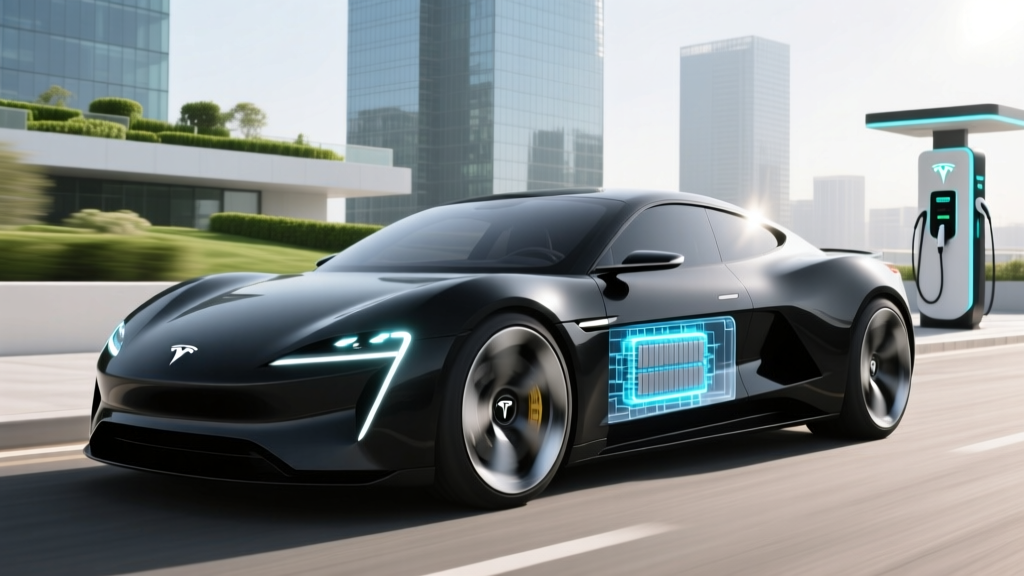
The images Tesla has released so far show a low-slung, two-door coupe with an aggressively sculpted front fascia, a full glass roof that is removable, and a rear decklid that integrates an active spoiler. The latest renderings from the June 2023 event also hinted at a SpaceX-inspired cold-gas thruster package mounted around the rear license plate area — a feature Tesla has suggested could dramatically improve cornering and braking, though its road-legal status remains uncertain.
Because the Roadster is not yet available for purchase, all specifications below are preliminary and based on Tesla's public statements. Final EPA ratings, pricing, and production specs will not be confirmed until the vehicle enters production.
Preliminary Specs: What Tesla Has Claimed So Far
Tesla has shared headline-grabbing numbers for the Roadster across multiple events, but these figures remain targets, not certified specifications. Here's a summary of what the company has stated publicly:
| Specification | Claimed / Estimated Value |
|---|---|
| EPA Estimated Range (Target) | 620 miles (unverified; Tesla claim) |
| Battery Capacity | ~200 kWh (announced; chemistry unconfirmed, expected NMC/NCA) |
| Drivetrain | Tri-motor AWD (one front, two rear) |
| 0-60 mph | 1.9 seconds (base); under 1.0 sec with SpaceX thruster package (claimed) |
| Top Speed | Over 250 mph (claimed) |
| Quarter Mile | 8.8 seconds (claimed) |
| Horsepower | Estimated 1,000+ HP (not officially confirmed) |
| Seating | 2+2 (two front seats, two small rear seats) |
| Roof | Removable glass panel (stored in trunk area) |
| Base MSRP (Reservation Target) | $200,000 (Founder's Series at $250,000) |
It's critical to understand that none of these figures have been validated by the EPA, NHTSA, or any independent testing body. Tesla has a history of announcing ambitious targets that shift before production begins.
Range Reality Check: 620 Miles on a 200 kWh Pack
Real-World Expectation: If Tesla achieves anywhere near 620 miles EPA, real-world highway driving at 75+ mph could yield approximately 480–530 miles. In cold weather (below 32°F), expect an additional 15–25% reduction, potentially dropping to 380–450 miles depending on conditions and cabin heating usage.
A 620-mile EPA rating would require exceptional efficiency — roughly 322 Wh/mile from a 200 kWh pack. For context, the current Lucid Air Grand Touring achieves around 516 miles EPA from a 112 kWh usable pack, running at approximately 217 Wh/mile. The Roadster, as a heavier, wider, higher-drag sports car, would need to overcome significant aerodynamic and mass penalties to approach Tesla's claimed efficiency.
The 200 kWh battery pack is expected to use high-nickel NMC or NCA chemistry rather than LFP, given the energy density requirements. LFP cells, while durable and cost-effective, are heavier per kWh — a non-starter for a performance-oriented vehicle where weight directly impacts handling and acceleration. Tesla's 4680 cell format, currently in production for the Cybertruck and Model Y, is the most likely candidate, though Tesla has not confirmed the Roadster's cell chemistry publicly.
For buyers comparing real-world range expectations across high-performance EVs, the EPA's fueleconomy.gov database remains the authoritative source once the Roadster receives its official certification.
Charging: What to Expect From a 200 kWh Battery
Tesla has not published official charging specifications for the production Roadster, but we can make informed estimates based on Tesla's current Supercharger network capabilities and the physics of charging a pack this large.
| Charging Level | Power / Rate | Estimated Time / Recovery |
|---|---|---|
| Level 1 (120V household) | ~1.4 kW | ~140+ hours for full charge (impractical) |
| Level 2 (240V home, 48A) | ~11.5 kW | ~17–18 hours for full charge; ~35 mi/hr recovery |
| DC Fast Charge (V4 Supercharger) | Peak ~350 kW (estimated) | 10–80% in approximately 30–40 minutes (estimated) |
A 200 kWh pack presents a unique charging challenge. Even at a sustained 350 kW peak — which current Tesla V4 Superchargers can support — filling 70% of a 200 kWh battery (140 kWh) requires a minimum of 24 minutes under ideal conditions. In practice, charge-curve taper above 50–60% state of charge will extend this. Expect 10–80% charging to take roughly 30–40 minutes, which is significantly longer than smaller-pack EVs like the Model 3 or Ioniq 5 that can complete the same window in 18–20 minutes.
Home Level 2 charging at 11.5 kW (48 amps on a 60-amp circuit) would recover approximately 35 miles of range per hour. For a 620-mile pack, a full home charge from empty would require overnight-plus charging — roughly 17 to 18 hours. Most owners will charge opportunistically, topping up from 20–80% daily, which would take around 10 hours on Level 2.
The Roadster will almost certainly use the NACS (North American Charging Standard) connector, as Tesla has standardized this across its entire lineup. The NACS connector is now widely adopted by other manufacturers, ensuring the Roadster will have access to Tesla's Supercharger network — currently the most reliable DC fast-charging infrastructure in the U.S.
Performance, Handling, and the SpaceX Thruster Question
The headline performance figures are staggering, even by 2026 standards. A claimed 1.9-second 0-60 mph time for the base tri-motor configuration would place the Roadster among the quickest production cars ever built, rivaling the Rimac Nevera (1.85 seconds) and surpassing the Lucid Air Sapphire (1.89 seconds in independent testing).
The tri-motor layout — one motor driving the front axle and two motors on the rear — enables precise torque vectoring across all four wheels. This setup, similar to what Tesla uses in the Model S Plaid, allows the Roadster to put down immense power while maintaining traction, which is the limiting factor in sub-2-second acceleration runs.
The more controversial claim is the optional SpaceX cold-gas thruster package. Tesla has stated that compressed-air thrusters positioned around the rear of the vehicle could generate downforce and assist with braking and cornering. Elon Musk has claimed this could push the 0-60 time below 1.0 second. However, several practical and regulatory questions remain:
- Compressed gas tanks add weight and take up space in an already tightly packaged vehicle.
- The system would need periodic refilling — not something available at a typical gas station or EV charger.
- NHTSA and state regulators have not addressed whether road-legal vehicles can carry active thruster systems.
- The durability and maintenance cost of such a system on a daily-driven car is entirely unknown.
Our assessment: the base tri-motor Roadster will be extraordinarily fast without the thruster package. Treat the SpaceX option as an enthusiast novelty that may or may not reach production in its originally described form.
Pricing, Reservations, and Tax Credit Eligibility
Tesla originally announced the Roadster with a base price of $200,000, with a limited "Founder's Series" at $250,000 (capped at the first 1,000 reservations). Reservations required a $50,000 deposit, which was later increased. As of 2026, Tesla's reservation page still lists these target prices, but final production pricing has not been confirmed and is likely to be higher given inflation, battery costs, and the vehicle's extended development timeline.
| Trim | Target MSRP | Federal Tax Credit (§30D) |
|---|---|---|
| Roadster Base | $200,000 | Not eligible (MSRP exceeds $55,000 sedan cap — classified as sports car) |
| Founder's Series | $250,000 | Not eligible (MSRP cap exceeded) |
Under current IRS §30D rules, new clean vehicle tax credits have MSRP caps: $55,000 for sedans and $80,000 for SUVs, vans, and pickups. The Roadster, at $200,000+, will almost certainly exceed any applicable MSRP cap regardless of its vehicle classification. Additionally, buyer income caps apply ($150,000 single / $300,000 joint filer for modified adjusted gross income), and battery critical-mineral and component sourcing requirements must be met.
Bottom line: do not expect the Roadster to qualify for the $7,500 federal EV tax credit. Buyers at this price point should plan for the full MSRP plus applicable state registration fees and luxury taxes. For current IRS §30D eligibility details, consult the IRS New Clean Vehicle Credit page directly.
Interior, Cargo, and Daily Usability
The Roadster is a 2+2 sports car, meaning two full-size front seats and two small rear seats best suited for children or additional storage. Tesla's prototype images show a minimalist interior consistent with the brand's design language — a large central touchscreen (likely 17 inches, similar to the Model S/X), a yoke-style steering wheel, and minimal physical buttons.
Cargo space will be limited. Based on the prototype's proportions and the mid-rear battery placement, expect:
- Front trunk (frunk): Small, likely 2–4 cubic feet — enough for a charging cable and a small bag
- Rear cargo area: Limited by the glass roof storage mechanism; estimated 5–8 cubic feet behind the rear seats
- Total cargo volume: Approximately 8–12 cubic feet combined
Legroom in the front seats should be adequate for adults up to about 6'2", based on Tesla's Model S proportions scaled down. The rear seats will be extremely tight for anyone over 5'4" and are best treated as parcel shelves for most trips.
The removable glass roof is a standout feature. Tesla states the panel can be stowed in the trunk area, converting the coupe into an open-air roadster. The mechanism and weight of the glass panel remain unconfirmed.
Driver Assistance, Technology, and Safety
Expected technology features based on Tesla's current hardware platform (HW4/AI5):
- Autopilot: Adaptive cruise control, lane centering, automatic emergency braking, blind-spot monitoring
- FSD (Supervised): City street navigation, traffic light and stop sign recognition, automatic lane changes — requires active driver supervision
- Infotainment: 17-inch touchscreen, over-the-air updates, streaming media, gaming, Tesla app integration
- Cameras: 8+ external cameras for driver-assist and 360-degree awareness; no ultrasonic sensors (Tesla Vision only)
Safety ratings from NHTSA and IIHS will not be available until the production vehicle is tested. Given the Roadster's low production volume and high price, it's possible that crash-test agencies may not prioritize testing, as is common with low-volume exotic vehicles.
Who the Tesla Roadster Is For — And Who Should Look Elsewhere
- You want a six-figure electric hypercar with record-breaking acceleration
- You already own a practical daily driver and want a weekend/halo vehicle
- You value access to Tesla's Supercharger network and over-the-air software updates
- You're willing to accept first-year production risks and potential delays
- You need practical cargo space, rear-seat usability, or daily-driver comfort
- You want a vehicle available for immediate purchase and delivery
- You need federal tax credit eligibility to justify the purchase
- You prefer established build quality and dealer service networks over startup risk
The Roadster's closest competitors in the electric hypercar/supercar segment include the Rimac Nevera (~$2.2 million, 1,914 HP, 1.85-sec 0-60), the Lotus Evija (~$2.0 million, 1,972 HP), and the Porsche Taycan Turbo GT (~$230,000, 1,019 HP, 2.1-sec 0-60). The Taycan Turbo GT is the most practical and immediately available comparison, offering supercar-rivaling performance in a proven, production-ready package with established dealer support.
Warranty Expectations
Tesla has not published warranty details for the Roadster, but based on the company's current warranty structure for high-performance vehicles:
- Battery warranty: Likely 8 years / 150,000 miles, with a minimum 70% capacity retention threshold — consistent with the Model S/X warranty
- Drive unit warranty: 8 years / 150,000 miles
- Vehicle limited warranty: 4 years / 50,000 miles bumper-to-bumper
Given the Roadster's $200,000+ price, buyers should scrutinize the final warranty terms carefully. Out-of-warranty battery replacement on a 200 kWh pack could cost $30,000–$50,000+ based on current cell pricing and labor, making the warranty coverage period critically important.
Tesla Roadster Pictures: What to Look For in the Latest Images
When examining the latest Tesla Roadster pictures from the 2023 reveal and subsequent leaks, pay attention to several design details that signal production intent versus concept-stage styling:
- Panel gaps and surfacing: The 2023 reveal showed tighter, more production-realistic body panels compared to the 2017 prototype, suggesting the design has progressed toward tooling-ready status.
- Headlight and taillight units: Production-intent lighting elements with DOT-compliant patterns are visible in recent images, a sign of engineering maturity.
- Wheel and tire sizing: Prototype images show massive rear tires (likely 305+ section width) needed to handle the tri-motor torque output.
- The rear thruster area: Images from the 2023 event showed a distinct housing around the rear license plate — this is where the SpaceX cold-gas thrusters would be mounted, though their inclusion in the production model is unconfirmed.
Tesla typically does not release high-resolution press images until closer to production launch. Most available Roadster pictures come from event footage, Elon Musk's social media posts, and Tesla's configurator teasers.
Pros and Cons Summary
- Potentially the fastest production car ever built (sub-2-sec 0-60)
- 620-mile target range would be class-leading for any sports car
- Full access to Tesla Supercharger network (NACS)
- Removable glass roof for open-air driving
- Over-the-air software updates and Tesla ecosystem integration
- Tri-motor AWD with torque vectoring for exceptional handling
- Not yet available — years of delays with no firm delivery date
- $200,000+ price with no federal tax credit eligibility
- 200 kWh battery means long charging times (30-40 min 10-80%)
- Minimal cargo and rear-seat space (2+2 configuration)
- SPACEX thruster package is unproven and may face regulatory hurdles
- First-year production risk: build quality, service delays, software bugs
- No independent safety testing or EPA certification yet
Frequently Asked Questions
When will the Tesla Roadster actually be available to buy?
As of early 2026, Elon Musk has stated that the production Roadster will be officially unveiled by the end of 2026. Customer deliveries would likely follow in 2027 or later, though Tesla's timeline projections have historically been optimistic. Reservation holders should expect further updates as the unveiling approaches.
How much does the Tesla Roadster cost?
Tesla's announced target pricing is $200,000 for the base Roadster and $250,000 for the limited Founder's Series. Final production pricing has not been confirmed and may be higher. The Roadster will not qualify for the $7,500 federal EV tax credit due to its MSRP exceeding the §30D cap.
Will the Roadster really have 620 miles of range?
Tesla has claimed a 620-mile target range from a 200 kWh battery pack. This figure has not been EPA-certified and remains preliminary. If achieved, real-world highway range would likely be 480–530 miles, with further reduction in cold weather. Independent validation will be necessary once production begins.
How fast does the Tesla Roadster charge?
Tesla has not published official charging specs. Based on the expected 200 kWh pack and V4 Supercharger compatibility, we estimate peak DC fast-charging around 350 kW, with a 10–80% charge taking approximately 30–40 minutes. Home Level 2 charging at 11.5 kW would require roughly 17–18 hours for a full charge.
Is the SpaceX thruster package real?
Tesla has described an optional cold-gas thruster system co-developed with SpaceX that would use compressed air to improve acceleration, braking, and cornering. While the concept has been demonstrated in engineering terms, its inclusion in a road-legal production vehicle faces significant regulatory and practical challenges. Treat this feature as speculative until Tesla confirms it for production.
Does the Roadster qualify for the federal EV tax credit?
No. Under current IRS §30D rules, the $7,500 new clean vehicle credit has MSRP caps ($55,000 for sedans, $80,000 for SUVs/vans/pickups). At $200,000+, the Roadster exceeds any applicable cap. Consult the IRS website for current eligibility rules.
What's the best alternative to the Tesla Roadster I can buy now?
If you want extreme electric performance today, the Porsche Taycan Turbo GT ($230,000, 1,019 HP, 2.1-sec 0-60) and Lucid Air Sapphire ($250,000, 1,234 HP, 1.89-sec 0-60) are both in production and available for delivery. The Rimac Nevera ($2.2M) is the ultimate electric hypercar but at a vastly higher price point.