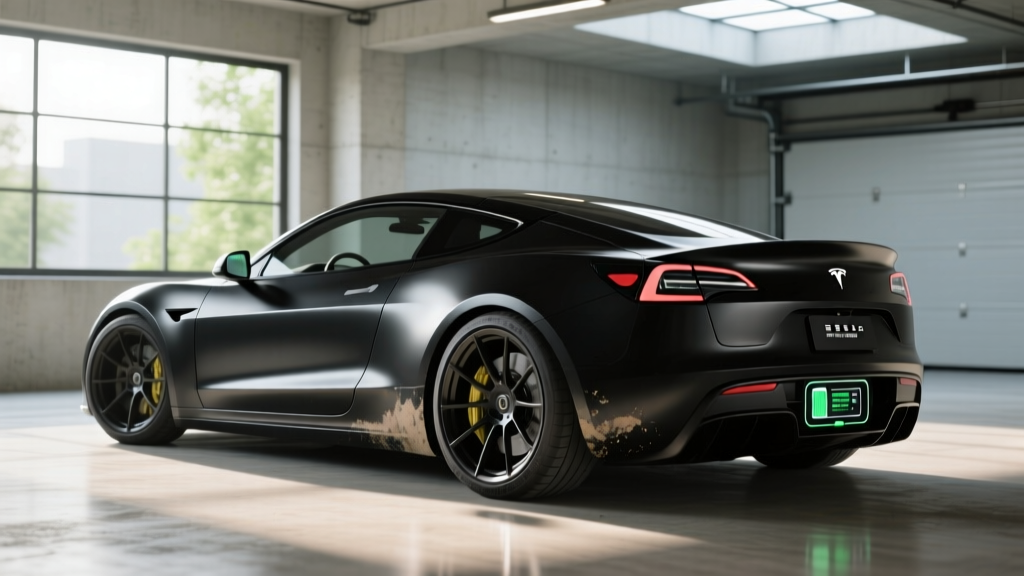
The original Tesla Roadster—the car that proved electric vehicles could be fast, desirable, and practical—holds a unique place in automotive history. Produced from 2008 to 2012, the "old" Tesla Roadster (often called the Roadster 1.0 or simply the first-generation Roadster) was the first production EV to use lithium-ion battery cells and the first to achieve over 200 miles of range per charge. In 2026, this car is no longer just a used EV; it's a collector's piece with very specific ownership realities that diverge sharply from modern electric cars.
If you're searching for "tesla roadster old" because you're considering buying one, evaluating one as an investment, or simply curious about how the first Tesla holds up, this guide covers the exact numbers that matter: real-world range in 2026 (after years of battery degradation), charging limitations on modern infrastructure, maintenance costs, and the critical battery-replacement question that defines ownership.
Original Tesla Roadster: Core Specifications at a Glance
| Specification | Tesla Roadster (2008-2012) |
|---|---|
| Production Years | 2008–2012 |
| Body Style | 2-seat convertible roadster |
| Drivetrain | Rear-wheel drive (RWD), single motor |
| Motor Power | 215 kW (288 hp) / 270 lb-ft torque |
| 0–60 mph | 3.7 seconds |
| Top Speed | 125 mph (electronically limited) |
| Battery Capacity (Original) | 53 kWh (usable ~48 kWh) |
| Battery Chemistry | NMC (Nickel Manganese Cobalt), 6,831 cells |
| EPA Range (Original) | 244 miles (2010+ models) |
| Curb Weight | 2,690 lbs |
| Original Base MSRP | $109,000 (2008); ~$128,000 (2012 Sport) |
| Total Units Produced | ~2,450 |
| Federal Tax Credit (New) | Not eligible (pre-dated §30D program) |
The Battery Question: Degradation, Range, and Replacement in 2026
The single most important factor in evaluating any used Tesla Roadster is the state of its battery pack. These cars are now 14–18 years old, and lithium-ion batteries degrade with time, cycles, and thermal exposure regardless of mileage.
Original EPA Rating: 244 miles (2010–2012 models with upgraded battery); 220 miles (2008–2009 models).
Expected Real-World Range (2026, original battery): 120–180 miles, depending on battery health. A Roadster with 60–70% State of Health (SoH) will deliver roughly 145–170 miles in mild weather on a mix of city and highway driving.
Cold-Weather Impact: Expect 25–35% range reduction in freezing temperatures. A degraded battery in a 20°F winter commute may yield as little as 85–110 miles of practical range.
Highway Driving: At 70+ mph, aerodynamic drag cuts range further. Plan for 110–150 miles on an original battery at sustained highway speeds.
Tesla offered a battery replacement program for the Roadster, but the original program has ended. As of 2026, third-party EV shops and specialized Roadster service providers offer battery rebuilds using modern cells. Costs typically range from $25,000 to $40,000 for a full pack replacement or rebuild, depending on the provider and cell configuration. Some specialists offer module-level repairs for $8,000–$15,000 if only certain cell groups have failed.
The Roadster's battery management system (BMS) was pioneering for its time but lacks the sophistication of modern Tesla packs. It does not feature active liquid thermal management to the degree of current Model S or Model 3 packs, which contributed to faster degradation in hot climates. Buyers in Arizona, Texas, or Southern California should scrutinize battery health reports carefully.
Battery Health: What to Check Before Buying
- State of Health (SoH): Request a diagnostic readout from a qualified Tesla Roadster specialist. SoH below 60% means significant range loss and likely near-term replacement need.
- Cell Imbalance: The 6,831-cell pack can develop imbalances between cell groups ("bricks" and "sheets" in Tesla terminology). Large imbalances indicate aging and may trigger range-limiting BMS protections.
- Charge History: Cars stored at 100% SoC for long periods or frequently deep-cycled will show accelerated degradation.
- Mileage Context: Many Roadsters have low mileage (under 50,000 miles), but calendar age matters as much as cycle count for NMC chemistry.
Charging: Compatibility, Speeds, and Modern Infrastructure Challenges
The original Tesla Roadster predates the Supercharger network, CCS, and even the modern Tesla NACS connector. Understanding its charging limitations is essential before purchasing.
| Charging Method | Power (kW) | Time (0–100%) | Miles Added per Hour |
|---|---|---|---|
| Level 1 (120V household outlet) | ~1.4 kW | ~36 hours | ~5 mi/hr |
| Level 2 — Tesla HPWC (240V, original) | ~16.8 kW (70A) | ~3.5 hours | ~45–52 mi/hr |
| Level 2 — Standard J1772 (240V, 40A) | ~9.6 kW | ~5.5 hours | ~28–32 mi/hr |
| DC Fast Charging | NOT SUPPORTED — Roadster has no DC fast-charge capability | ||
Critical connector note: The Roadster uses a proprietary Tesla connector (the precursor to the modern NACS) for Level 2 charging. It is not compatible with NACS Superchargers, CCS stations, or CHAdeMO without specific adapters, and even then, DC fast charging is not supported by the vehicle's onboard architecture. This is strictly a Level 1 / Level 2 car.
The Roadster came with a portable charger (the "Universal Mobile Connector" of its era) and many original owners installed Tesla's High Power Wall Connector (HPWC), which delivered up to 70 amps / 16.8 kW—one of the fastest home charging rates available at the time. Finding a working HPWC for a Roadster in 2026 may require sourcing used equipment or having a custom Level 2 solution configured by an electrician.
For public charging, you'll need a J1772-to-Tesla adapter (available from third-party manufacturers) to use standard Level 2 public stations. Expect roughly 30–40 miles of range per hour of charging at a typical 40A public Level 2 station.
Performance and Driving Experience: Still Impressive?
The Roadster's 3.7-second 0–60 mph time was extraordinary in 2008 and remains genuinely quick by any standard. The 288-horsepower, single-motor rear-wheel-drive powertrain delivers instant torque with no gear shifts—a sensation that still surprises first-time EV drivers even in 2026.
Based on the Lotus Elise chassis, the Roadster weighs just 2,690 pounds—roughly 1,500 pounds lighter than a modern Tesla Model 3. This gives it razor-sharp handling, communicative steering, and a raw, connected driving feel that no current Tesla replicates. The ride is firm, the cabin is minimal, and the driving position is low and sporty.
Efficiency: The original Roadster was rated at approximately 135 MPGe combined (EPA) and consumed roughly 28–32 kWh per 100 miles in real-world driving. By 2026 standards, this is less efficient than a Model 3 (which achieves ~25 kWh/100mi), but it was competitive at launch.
Notable Drawbacks
- No regenerative braking modes: Unlike modern Teslas, the Roadster offers minimal regen customization. One-pedal driving is not available.
- Limited HVAC: The heating and air conditioning systems are weak by modern standards. Cabin preconditioning while plugged in is supported, but the heat pump technology of current EVs is absent—resistive heating further reduces winter range.
- No over-the-air updates: The Roadster's software is frozen in time. No Autopilot, no FSD, no streaming media, no app integration. The 7-inch touchscreen controls basic vehicle functions only.
- Safety: No airbags beyond front dual units, no electronic stability control on early models, and no modern crash-test ratings from NHTSA or IIHS.
Pricing in 2026: Collector Market and Total Cost of Ownership
The original Tesla Roadster has transitioned from a depreciating used car to a collectible. Prices in 2026 vary widely based on mileage, condition, battery health, and provenance.
| Condition / Spec | Approximate 2026 Market Price |
|---|---|
| Driver-quality, original battery (SoH <60%) | $45,000 – $65,000 |
| Good condition, original battery (SoH 65–80%) | $70,000 – $95,000 |
| Excellent / low-mileage, healthy battery or replaced pack | $100,000 – $150,000+ |
| Roadster Sport (2.5 / Sport 2.5, upgraded motor) | $90,000 – $160,000 |
| Signature / numbered editions, ultra-low mileage | $150,000 – $200,000+ |
Federal Tax Credit Eligibility
The original Tesla Roadster does not qualify for the federal §30D new EV tax credit—it was never eligible (the credit program began after Roadster production ended), and it is far above the MSRP and income caps even if it were. Under current IRS §30D rules, new EV credits are capped at $55,000 MSRP for sedans and $80,000 for SUVs/trucks, with buyer income limits of $150,000 (single) or $300,000 (joint). None of this applies here.
For used EV purchases, the §25E used clean vehicle credit offers up to $4,000 (30% of sale price, capped), but it requires the vehicle's MSRP when new to have been under $25,000—a threshold the Roadster never met. In short: no federal tax incentives apply to purchasing a used Tesla Roadster in 2026.
Annual Ownership Costs
- Insurance: Specialty collector-car insurance (Hagerty, Grundy) typically runs $800–$2,000/year for agreed-value coverage. Standard insurers may quote higher or decline coverage.
- Electricity: At $0.15/kWh national average and 30 kWh/100mi, expect ~$0.045/mile. For 5,000 miles/year, that's roughly $225 in electricity.
- Maintenance: Minimal routine maintenance (no oil changes, no transmission fluid), but specialty parts (Lotus-derived suspension components, Tesla-specific electronics) are expensive and increasingly scarce. Budget $1,500–$3,000/year for unexpected repairs.
- Tires: The Roadster uses specific Michelin Pilot Sport tires; a set costs $1,200–$1,800 installed.
Interior, Cargo, and Practicality
The Roadster is a two-seat sports car with virtually no practical cargo space. The rear trunk holds approximately 3.5 cubic feet—enough for a small weekend bag. There is no frunk (the space is occupied by power electronics), and cabin storage consists of a small glovebox and a shelf behind the seats.
The interior is based on the Lotus Elise, with Tesla-specific modifications including the touchscreen, unique instrumentation, and upgraded upholstery. The carbon-fiber sport seats are supportive but firm, and ingress/egress requires agility due to the high door sills and low roofline. The convertible soft top is manually operated and stores in the trunk.
Legroom: Approximately 43 inches, adequate for most drivers, but the fixed seat position and limited adjustability may not suit all body types.
Who Should (and Shouldn't) Buy the Old Tesla Roadster?
- Historic significance—first production lithium-ion EV, first 200+ mile EV
- Lightweight, engaging, analog driving feel absent in modern EVs
- Appreciating collector value—potential investment asset
- Low running costs (electricity, minimal maintenance) if battery is healthy
- Exclusive—only ~2,450 built; guaranteed conversation starter
- No DC fast charging—road trips are impractical
- Battery replacement costs $25K–$40K; original packs are heavily degraded
- No modern safety features, ADAS, or infotainment
- No federal tax credits or incentives available
- Parts scarcity and specialist-only service network
- Minimal cargo, poor daily-driver practicality
This EV suits best: Collectors, automotive historians, and enthusiasts who want a piece of EV history and plan to drive the car sparingly (2,000–5,000 miles/year). It works as a weekend car, a show piece, or an appreciating garage asset.
This EV is wrong for: Daily commuters, road-trippers, families, or anyone who needs DC fast charging, modern safety technology, or practical cargo space. A modern Tesla Model 3, Hyundai Ioniq 5, or BMW i4 will serve those needs infinitely better.
Key Competitors and Alternatives in 2026
If you're considering a used Tesla Roadster, you're likely cross-shopping either other collectible EVs or modern performance EVs. Here's how the landscape compares:
- Modern Tesla Model 3 Performance (2026): $52,990 MSRP, 315-mile EPA range, DC fast charging at 250 kW, Autopilot, full safety suite, 5-seat practicality. Not a collectible, but a far more capable daily driver. Eligible for up to $7,500 federal credit (subject to IRS eligibility rules including income, MSRP, and battery sourcing requirements).
- BMW i4 M50: ~$67,000, 270-mile range, modern tech and comfort. A performance EV you can actually live with daily.
- Porsche Taycan (used, 2020–2023): $55,000–$80,000 on the used market, 200–227 mile range, 800V DC fast charging, sports-car dynamics. More modern, more practical, and still thrilling.
- Lotus Elise (gas, 2005–2011): The Roadster's donor car. $25,000–$40,000 used. Same chassis, lighter weight, but gasoline-powered. For driving purists who don't need EV status.
Frequently Asked Questions
What is the real-world range of the old Tesla Roadster in 2026?
With an original battery at 65–75% State of Health, expect 140–180 miles in mild weather on mixed driving. Cold weather and highway speeds reduce this to 90–130 miles. A Roadster with a professionally replaced or rebuilt battery pack may achieve 200–240 miles, approaching the original EPA rating of 244 miles.
How fast does the Tesla Roadster charge?
The Roadster does not support DC fast charging. On Level 2, it charges at up to 16.8 kW using Tesla's original HPWC, adding roughly 45–52 miles per hour for a full charge in about 3.5 hours. On a standard 40A J1772 Level 2 station (with adapter), it charges at ~9.6 kW, taking about 5.5 hours for a full charge. Level 1 (120V) adds about 5 miles per hour.
How much does a used Tesla Roadster cost in 2026?
Prices range from roughly $45,000 for a driver-quality example with a degraded battery to over $200,000 for ultra-low-mileage collector specimens. The typical well-maintained Roadster with reasonable battery health sells for $70,000–$100,000. Factor in a potential $25,000–$40,000 battery replacement if the pack is near end of life.
Does the old Tesla Roadster qualify for the federal EV tax credit?
No. The §30D new clean vehicle credit does not apply (the car is used and was never eligible when new). The §25E used EV credit requires an original MSRP under $25,000, which the Roadster never met. No federal tax incentives are available for this vehicle. Consult a tax professional for state-specific incentive eligibility, which varies by jurisdiction.
Can I take a Tesla Roadster on a road trip?
Technically yes, but practically no. With no DC fast charging, you're limited to Level 2 public stations (adding ~30–40 miles per hour of charging). A 200-mile trip would require a 1–2 hour charge stop at a Level 2 station—if one is available along your route. This is a local driving car, not a road-trip vehicle.
Is it worth buying vs. a modern performance EV?
Only if your goal is collecting, historical appreciation, or the unique driving experience of the lightest, most analog EV ever made. As a daily driver or performance car, any modern EV—Model 3 Performance, Taycan, i4 M50—is faster, safer, more practical, more efficient, and cheaper to maintain. The Roadster is a collectible, not a commuter.
Where can I get a Tesla Roadster serviced?
Tesla's official service network no longer supports the Roadster. Owners rely on a small network of independent specialists, Lotus service centers (for chassis/suspension components), and dedicated Roadster community resources. The Tesla Roadster Club and online forums maintain directories of qualified shops.