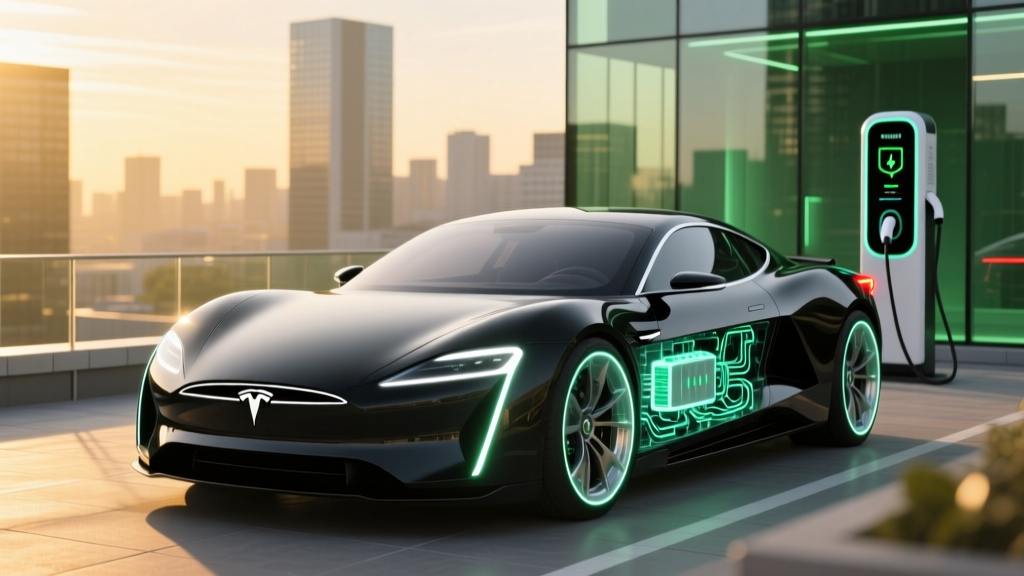
If you have been following Tesla's halo-car saga since its 2017 unveiling, the big question remains: Tesla Roadster how much will it actually cost, and when — or if — will it reach driveways? As of early 2026, the next-generation Roadster is still an announced vehicle. It is not on sale, not EPA-certified, and not independently tested. What we have are Tesla's own preliminary claims, a $5,000 refundable reservation, and a lot of engineering ambition.
This profile dissects every published spec, separates marketing physics from real-world EV ownership, and explains the federal tax-credit reality for a hypercar in this price bracket. If you are weighing a deposit or just benchmarking the state of electric performance cars, this is the most data-grounded Roadster analysis available.
Announced Specs at a Glance: The Roadster by the Numbers
Tesla has revised the Roadster's target specs several times since 2017. The figures below reflect the most recent statements from Tesla's product pages and Elon Musk's public comments through late 2025. None are EPA-verified.
| Attribute | Tesla's Claim | Status |
|---|---|---|
| EPA Range | 620 miles | Unverified — no EPA certification |
| Battery Capacity | ~200 kWh (claimed) | Chemistry unconfirmed; likely NMC/NCA |
| 0-60 mph | 1.9 sec (sub-1 sec w/ SpaceX package) | Unverified |
| Top Speed | 250+ mph | Unverified |
| Horsepower | ~10,000 wheel torque lb-ft; AWD tri-motor | HP figure not formally published |
| Drivetrain | AWD, tri-motor (one front, two rear) | Announced |
| Max DC Fast Charge | Not disclosed | Unknown |
| 10-80% DC Charge Time | Not disclosed | Unknown |
| Level 2 Home Charge | Not disclosed | Unknown |
| Base MSRP | ~$200,000 (est. based on prior statements) | Not finalized |
| Founders Series | $250,000 (first 1,000 units, previously stated) | Reservation closed |
| Seating | 2+2 (tight rear seats) | Announced |
| Federal Tax Credit (§30D) | Not eligible — exceeds MSRP cap | Per IRS rules |
Range Reality: 620 Miles Claimed, but What Does Physics Say?
Tesla claim: 620 miles
EPA-certified: Not yet published (vehicle not on sale)
Real-world expectation: A 200 kWh pack in a low-drag sports coupe could plausibly deliver 450–520 miles on the combined EPA cycle under ideal conditions. Highway driving at 75+ mph, cold weather below 40°F, or aggressive acceleration would reduce that to roughly 350–420 miles. For context, the Lucid Air Grand Touring achieves ~516 EPA miles from a 112 kWh pack; scaling linearly, 200 kWh could reach ~600+ miles on paper, but battery weight, thermal management, and tire rolling resistance do not scale linearly.
The 620-mile figure would shatter every production EV record. Achieving it requires extraordinary efficiency — likely under 300 Wh/mile — in a car that Tesla claims will also produce supercar acceleration. Those two goals are in tension: the battery mass required for 620 miles increases vehicle weight, which hurts efficiency. Tesla's 4680 cells and a structural battery pack could help, but until the EPA publishes a test result on fueleconomy.gov, treat 620 as an aspirational ceiling, not a commute-planning number.
Cold-weather impact: Lithium-ion packs lose 15–30% of usable range in sub-freezing temperatures due to increased internal resistance and cabin-heating loads. Even with a heat pump (expected), plan for 400–470 miles in winter conditions if the 620-mile claim holds.
Battery Chemistry, Pack Size, and Degradation Outlook
Tesla has not published the Roadster's cell chemistry. However, given the performance targets (sub-2-second 0-60, 250+ mph top speed), the pack almost certainly uses a high-nickel NMC or NCA formulation rather than LFP. LFP cells offer longer cycle life and lower cost but cannot deliver the sustained high C-rate discharge needed for 10,000 lb-ft of wheel torque.
A ~200 kWh pack is roughly double the capacity of a Model S Plaid (100 kWh). At current NMC energy densities (~250 Wh/kg at the cell level), that translates to approximately 800 kg (1,760 lb) of cells alone. Total vehicle curb weight could approach 4,800–5,200 lb, which has implications for tire wear, braking distances, and real-world efficiency.
Battery warranty: Tesla typically offers 8 years / 150,000 miles on its high-performance models (Model S/X), with a minimum 70% capacity retention threshold. Expect similar or slightly adjusted terms for the Roadster, though nothing has been formally published.
Charging: The Biggest Unknown in the Roadster Spec Sheet
Tesla has not disclosed the Roadster's DC fast-charging peak rate, charge curve, or Level 2 speed. This is a critical omission for a car claiming 620 miles of range, because a 200 kWh pack takes a very long time to fill at conventional rates.
| Charging Method | Power (kW) | Estimated 10-80% Time | Miles Added per Hour* |
|---|---|---|---|
| Level 1 (120V, 12A) | ~1.4 kW | Not practical (~100+ hours) | ~4–5 mi/hr |
| Level 2 (240V, 48A) | ~11.5 kW | ~14–16 hours | ~35–40 mi/hr |
| Level 2 (240V, 80A — Tesla Wall Connector) | ~19.2 kW | ~8–10 hours | ~60–70 mi/hr |
| DC Fast (350 kW peak, if supported) | 350 kW | ~25–30 min (with taper) | ~700+ mi/hr at peak |
| DC Fast (250 kW — current V3 Supercharger) | 250 kW | ~35–45 min (with taper) | ~500+ mi/hr at peak |
*Miles-per-hour estimates assume ~300 Wh/mile efficiency, which is optimistic for a heavy performance car.
Charging-curve reality: No EV sustains peak kW from 10% to 80%. NMC packs typically taper significantly above 50–60% state of charge. Even if Tesla engineers a 350 kW peak, expect the sustained average from 10-80% to be closer to 220–280 kW. That means 30–40 minutes at a next-gen V4 Supercharger, assuming the Roadster supports the architecture.
The Roadster will use the NACS (North American Charging Standard) connector natively, giving it full access to Tesla's Supercharger network — the most reliable DC fast-charging infrastructure in the U.S.
Performance: The Numbers That Define a Hypercar
Tesla's claimed 1.9-second 0-60 mph time (and sub-1.0 second with the optional SpaceX cold-gas thruster package) would make the Roadster the quickest production car ever built. For context:
- Rimac Nevera: 1.85 sec 0-60 (verified) — $2.2 million
- Pininfarina Battista: 1.9 sec 0-60 — $2.8 million
- Tesla Model S Plaid: 1.99 sec 0-60 (verified) — ~$90,000
The tri-motor AWD layout — one front motor, two rear — mirrors the Plaid configuration but with substantially more torque. Tesla claims 10,000 lb-ft of wheel torque (not motor torque), which is a different measurement convention than most automakers use. Motor output in horsepower has not been formally stated, but 10,000 lb-ft at the wheels with appropriate gearing implies well over 1,000 hp at the motors.
Top speed of 250+ mph requires not just power but aerodynamic stability, tire ratings, and thermal management capable of sustaining extreme loads. Bugatti and Koenigseggspend years validating these parameters. Tesla has not published any high-speed testing data.
Pricing, Tax Credits, and the Real Cost of Ownership
The Tesla Roadster does not qualify for the $7,500 federal EV tax credit under IRS §30D rules. The credit has a $55,000 MSRP cap for sedans/sports cars and an $80,000 cap for SUVs/trucks/vans. At an estimated $200,000+ MSRP, the Roadster exceeds both thresholds. Buyer income caps ($150K single / $300K joint) and battery critical-mineral sourcing rules are irrelevant here — the price alone disqualifies it.
| Trim / Version | Estimated MSRP | Federal Credit | Net Price |
|---|---|---|---|
| Base Roadster | ~$200,000 | $0 | ~$200,000 |
| Founders Series (first 1,000) | $250,000 | $0 | $250,000 |
| SpaceX Package (thrusters) | TBD (add-on) | $0 | TBD |
Insurance and registration: Hypercar insurance for a 1,000+ hp, $200K+ EV will likely run $8,000–$15,000 annually depending on driver profile and state. Registration fees in states like California add $200–$600+ in EV surcharges.
5-year estimated cost of ownership: Assuming 10,000 miles/year, $0.14/kWh home charging, $12K/year insurance, and 15% depreciation (optimistic for a limited-production halo car), you are looking at roughly $310,000–$350,000 in total spend over five years before any maintenance or tire replacement. High-performance EV tires (Michelin Pilot Sport 4S or equivalent) wear fast under 10,000 lb-ft of torque — budget $2,000–$3,500 per set, replaced every 8,000–12,000 miles under spirited driving.
Interior, Cargo, Technology, and Daily Usability
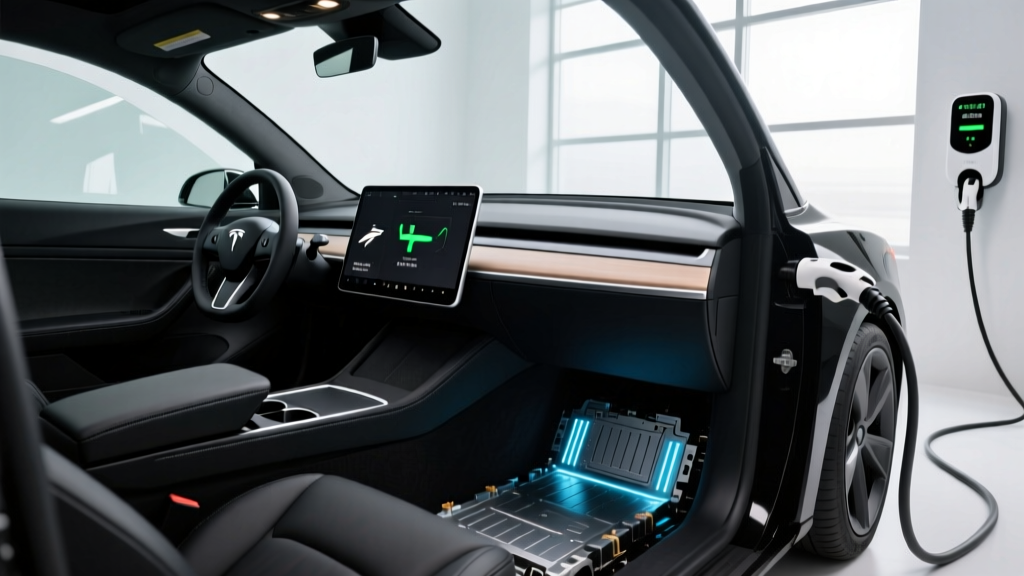
The Roadster is a 2+2 sports coupe. Tesla has shown a minimalist interior with a central touchscreen, a yoke-style steering wheel, and a removable glass roof panel (targa-style). Rear seats are best described as occasional-use — expect roughly 22–26 inches of rear legroom, suitable for children or luggage overflow, not adults on any trip longer than 15 minutes.
Cargo space: Tesla has not published cubic-footage figures. Based on the mid-engine (mid-battery) layout and coupe proportions, expect a front trunk (frunk) of approximately 3–5 cu ft and a rear cargo area behind the seats of roughly 8–12 cu ft. This is a weekend-bag car, not a road-trip hauler.
Tech and driver assists: Expect Tesla's latest infotainment hardware (HW5/AI5), Full Self-Driving (Supervised) capability, and the full Tesla Safety Suite. Important clarification: FSD is SAE Level 2 — a driver-assistance system that requires continuous human supervision. It is not autonomous driving. The driver must remain engaged, hands on or near the wheel, and eyes on the road at all times.
Notable drawbacks:
- No published EPA data — all specs are Tesla claims
- Production timeline has slipped repeatedly since 2017
- Extreme weight (~5,000 lb) for a sports car — impacts handling feel vs. a Lotus or Porsche
- Rear seats are essentially decorative
- No tax credit, high insurance, expensive tire wear
- SpaceX thruster package is unproven in any road-legal vehicle
- 620-mile range claim (if achieved) would be class-leading by 100+ miles
- Sub-2-second 0-60 would be the fastest production car ever
- Native NACS / full Supercharger network access
- Removable glass roof — open-air driving
- Tesla's software and OTA update ecosystem
- Not on sale — announced since 2017 with repeated delays
- No EPA verification on any published spec
- ~$200,000+ with zero federal tax credit
- ~5,000 lb curb weight — heavy for a sports car
- 2+2 seating is impractical for most buyers
- Charging specs completely undisclosed
Who Is the Tesla Roadster Actually For?
This is not a commuter EV, a family hauler, or a practical daily driver. The Roadster targets a narrow buyer profile:
- Collector / halo-car buyer: Someone who already owns a Porsche Taycan Turbo GT, Rimac Nevera, or Lucid Air Sapphire and wants the Tesla brand's ultimate expression.
- Tesla loyalist with budget: An early Model S/X owner who has tracked Tesla's trajectory and wants to be in the first 1,000 Founders Series units.
- Performance benchmark chaser: A buyer motivated by having the fastest-accelerating production car, regardless of practicality.
Who should look elsewhere:
- Daily commuters → Tesla Model 3 Performance ($55K, 315 mi EPA, qualifies for partial credits)
- Families needing space → Tesla Model X or Rivian R1S
- Grand-touring road trippers → Lucid Air Grand Touring (516 mi EPA, ~$125K)
- Track-focused driving → Porsche Taycan Turbo GT (verified handling dynamics, 872 hp, ~$160K)
Roadster vs. the Hypercar EV Field: Is It Worth the Wait?
| Vehicle | Price | Range (EPA) | 0-60 mph | HP | On Sale? |
|---|---|---|---|---|---|
| Tesla Roadster (announced) | ~$200K+ | 620 mi (claim) | 1.9 sec (claim) | ~1,000+ (est.) | No |
| Rimac Nevera | $2.2M | ~287 mi (WLTP) | 1.85 sec | 1,914 | Yes (limited) |
| Pininfarina Battista | $2.8M | ~300 mi (WLTP) | 1.9 sec | 1,900 | Yes (limited) |
| Lotus Evija | $2.3M | ~250 mi (WLTP est.) | <3.0 sec | 1,972 | Yes (limited) |
| Lucid Air Sapphire | $249K | 427 mi (EPA) | 1.89 sec | 1,234 | Yes |
| Porsche Taycan Turbo GT | $160K | 269 mi (EPA) | 2.1 sec | 1,019 | Yes |
The Roadster's value proposition hinges on delivering Rimac-level performance at one-tenth the price, with 2–3x the range. If Tesla achieves even 80% of its claims, the Roadster would be a generational EV. But "if" is doing enormous work in that sentence.
The Lucid Air Sapphire is the closest real-world analog: it is on sale today, EPA-certified at 427 miles and 1.89 seconds to 60, and costs $249,000. For a buyer ready to spend $200K+ on an electric performance sedan, the Sapphire delivers verified, insurable, drivable performance now.
Frequently Asked Questions
Is the Tesla Roadster available to buy right now?
No. As of early 2026, the Tesla Roadster is an announced vehicle. It is not in production, not on sale, and has no firm delivery date. Tesla has accepted $5,000 refundable reservations in the past, but availability has slipped multiple times since the 2017 reveal. All specifications are preliminary and subject to change.
How much does the Tesla Roadster cost after tax credits?
The estimated base MSRP is approximately $200,000, with the Founders Series previously priced at $250,000. The Roadster does not qualify for the $7,500 federal EV tax credit (§30D) because it far exceeds the $55,000 MSRP cap for passenger cars. There is no credit to subtract — the net price equals the sticker price. Some states offer their own incentives, but most have income or price caps that would also exclude a $200K vehicle. Consult a tax professional for your specific situation.
What is the real-world range of the Tesla Roadster?
There is no verified real-world range because the car is not on sale and has no EPA certification. Tesla claims 620 miles from a ~200 kWh pack. Based on efficiency modeling and comparisons with the Lucid Air Grand Touring (516 EPA miles from 112 kWh), a realistic combined-cycle expectation would be 450–520 miles if the pack is indeed 200 kWh. Highway driving at 75+ mph would likely yield 350–420 miles, and cold weather (below 40°F) could reduce range by 15–30%.
How fast does the Tesla Roadster charge?
Tesla has not disclosed the Roadster's DC fast-charging peak rate, charge curve, or Level 2 charging speed. This is a significant gap in the published specs. For a ~200 kWh pack, even a 350 kW peak rate would require 30–40 minutes for a 10-80% charge with normal taper. At a standard Level 2 home charger (11.5 kW / 48A), a full charge would take 14–16 hours. We will update this section when Tesla publishes verified charging data.
Does the Roadster qualify for the federal EV tax credit?
No. Under current IRS §30D rules, the federal clean vehicle credit has a strict MSRP cap: $55,000 for sedans and sports cars, $80,000 for SUVs, trucks, and vans. The Roadster's estimated $200,000+ price disqualifies it outright. Buyer income limits ($150K single / $225K head of household / $300K joint) and battery-sourcing requirements are secondary — the MSRP cap alone eliminates eligibility.
Is the Tesla Roadster worth buying vs. competitors?
If Tesla delivers on its claims at the stated price, the Roadster would offer unmatched value in the electric hypercar segment — 620 miles of range and sub-2-second acceleration for roughly $200,000, compared to $2M+ for a Rimac Nevera with 287 miles of range. However, the Roadster is not buyable today. If you need a verified, deliverable electric performance car now, the Lucid Air Sapphire ($249K, 427 mi EPA, 1.89 sec 0-60) or Porsche Taycan Turbo GT ($160K, proven track dynamics) are real options with published, tested specs.
What is the SpaceX thruster package?
Tesla has described an optional package using cold-gas thrusters (compressed air) positioned around the vehicle to improve cornering grip, braking, and acceleration — potentially enabling sub-1.0-second 0-60 times. This technology has no precedent in road-legal production vehicles. Regulatory approval, safety certification, and practical refilling logistics are all unresolved. Treat this as a conceptual add-on, not a confirmed feature.
Sources: Tesla Roadster product page, EPA fueleconomy.gov, IRS Clean Vehicle Tax Credits.