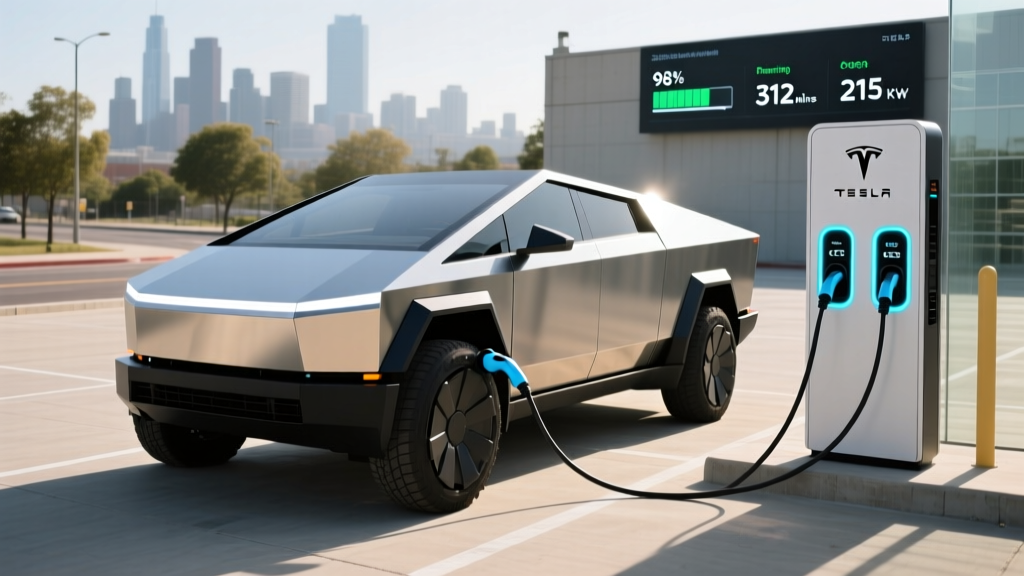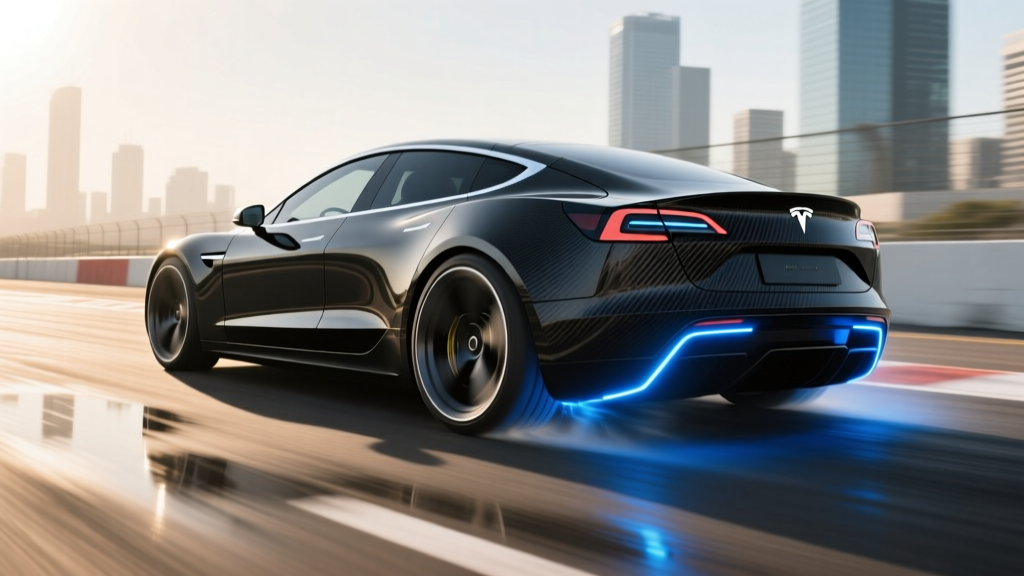
The phrase "Tesla Roadster flying" has circulated in EV forums and YouTube thumbnails for years, fueled by Elon Musk's on-stage promises of hover-capable sports cars and SpaceX cold-gas thrusters. But separating marketing theater from engineering reality is essential before anyone wires a deposit. As of early 2026, the next-generation Tesla Roadster remains an announced, not-yet-delivered vehicle. Production timelines have slipped multiple times since the 2017 unveiling, and the "flying" component specifically refers to a proposed SpaceX Package — not a road-legal aircraft.
This profile treats the Roadster as an announced model. Every spec below is labeled preliminary or claimed until Tesla begins customer deliveries and independent testing (EPA, IIHS, real-world charging validation) can confirm them. If you're researching the Roadster out of curiosity or considering a reservation, here's what the data actually supports today.
What "Tesla Roadster Flying" Actually Means
The "flying" label traces to two Musk statements: a 2018 claim that the Roadster would include "SpaceX cold-gas thrusters" for cornering and braking enhancement, and a later suggestion that a hover mode might be possible. Neither claim has been demonstrated in a production vehicle, and no FAA or NHTSA certification for a road-legal hovercraft exists.
For buyers, this means the Roadster should be evaluated as a high-performance electric sports car first. The thruster package is a speculative add-on that may never reach production, may be track-only, or may be restricted to private property. Treat it as a footnote, not a purchase reason.
Preliminary Specs: Range, Battery, and Performance
Because the Roadster has not entered production, the numbers below reflect Tesla's announced targets and engineering disclosures — not EPA-certified figures. Once production begins, expect EPA testing to revise range downward, as it does for nearly every EV on the market.
| Spec | Claimed / Preliminary |
|---|---|
| EPA Range (est.) | ~620 miles (claimed, not EPA-certified) |
| Battery Capacity | ~200 kWh (claimed), NMC chemistry expected |
| Drivetrain | Tri-motor AWD (1 front, 2 rear) |
| Horsepower | Estimated 1,000+ hp (wheel torque ~10,000 Nm claimed) |
| 0–60 mph | 1.9 seconds (claimed, rollout-adjusted) |
| Top Speed | 250+ mph (claimed) |
| Max DC Fast Charge | Expected 350 kW peak (unconfirmed) |
| 10–80% DC Charge | Estimated ~25–30 min (unconfirmed) |
| Level 2 Home Charge | ~11.5 kW / ~35 mi/hr (est. based on 48A onboard charger) |
| Seating | 2+2 (rear seats very limited) |
| Base MSRP (announced) | $200,000 (Founders Series $250,000) |
| Battery Warranty | Expected 8 yr / 150,000 mi (unconfirmed) |
Charging: What a 200 kWh Battery Actually Means at the Plug
A 200 kWh battery is roughly double the capacity of a Long Range Model S. That creates a charging-time challenge physics can't fully solve: even at a sustained 350 kW peak, filling 160 usable kWh (10–80%) requires managing enormous thermal loads. Expect the charge curve to taper significantly above 60% State of Charge to protect the cells.
| Charging Level | Power (kW) | Miles Added per Hour | Notes |
|---|---|---|---|
| Level 1 (120V) | ~1.4 kW | ~4 mi/hr | Impractical for 200 kWh pack |
| Level 2 (240V, 48A) | ~11.5 kW | ~35 mi/hr | Full charge ~18 hours |
| DC Fast (V4 Supercharger) | Up to 350 kW peak | ~1,000 mi/hr (peak only) | 10–80% est. 25–30 min; taper above 60% |
For context, a 200 kWh pack charging at home on Level 2 would require overnight sessions and then some — roughly 17–18 hours from near-empty. Most Roadster owners will rely on DC fast charging for road trips and top-off Level 2 sessions nightly. Preconditioning the battery before arriving at a Supercharger will be critical; without it, peak charge rates won't be reached, especially in cold climates.
SpaceX Package: Thrusters, Hover Claims, and Legal Limits
The optional SpaceX Package was described as using compressed cold-gas thrusters positioned around the vehicle to improve cornering, braking, and acceleration. Musk has floated the idea of a "hover mode" that lifts the car slightly off the ground.
- It does not enable sustained flight or airborne travel.
- It does not replace tires or eliminate road contact for normal driving.
- It has no FAA certification and is not legal for use on public roads in hover mode (if such a mode ever ships).
- Compressed-gas thrusters require refilling — a consumable, not a free energy source.
- Thruster use likely voids standard insurance policies; specialty track coverage would be required.
From an engineering standpoint, cold-gas thrusters can provide meaningful yaw control and short-burst longitudinal force. Porsche and Rimac have explored active aerodynamics and torque vectoring that achieve similar results without compressed gas. The practical performance benefit, if the package ships, will likely be measured in tenths of a second on a track — not in daily driving.
Pricing, Tax Credits, and Reservation Reality
The Roadster was announced with a $200,000 base price and a $250,000 Founders Series (first 1,000 units). Reservations required a $50,000 deposit — far above the typical $100–$1,000 Tesla holds. Given the price, federal tax credit eligibility is a legitimate question.
| Trim | MSRP (Announced) | §30D Credit Eligibility |
|---|---|---|
| Roadster Base | $200,000 | NOT eligible — exceeds $55,000 sedan / $80,000 SUV MSRP cap |
| Founders Series | $250,000 | NOT eligible — same MSRP cap applies |
Under current IRS §30D rules (source: irs.gov), new EVs must fall under MSRP caps — $55,000 for sedans, $80,000 for SUVs/pickups — to qualify for up to $7,500 in federal credits. The Roadster, classified as a sedan, exceeds the cap by over $140,000. Buyer income caps ($150K single / $300K joint AGI) and critical-mineral/battery-sourcing requirements are also irrelevant here: the MSRP alone disqualifies it. No federal tax credit will apply to the Roadster at its announced pricing.
Buyers should also budget for state registration fees that scale with MSRP, insurance premiums likely exceeding $5,000–$8,000 annually for a 1,000+ hp vehicle, and potential specialty coverage if the SpaceX Package is selected.
Competitor Comparison: Roadster vs. Rimac Nevera, Lucid Air Sapphire, and Model S Plaid
The Roadster doesn't exist in a vacuum. Several production EVs already deliver extreme performance, and they're available today with EPA-certified data.
| Spec | Tesla Roadster (Claimed) | Rimac Nevera | Lucid Air Sapphire | Tesla Model S Plaid |
|---|---|---|---|---|
| Price | $200,000 | $2,200,000 | $249,000 | $89,990 |
| EPA Range | ~620 mi (claimed) | ~300 mi (WLTP ~340) | 427 mi | 396 mi |
| 0–60 mph | 1.9 sec | 1.85 sec | 1.89 sec | 1.99 sec |
| Horsepower | 1,000+ (est.) | 1,914 | 1,234 | 1,020 |
| Availability | Announced, not in production | Limited production (150 units) | On sale now | On sale now |
The Model S Plaid delivers 90% of the claimed Roadster performance for less than half the price and is purchasable today with EPA-certified range and NHTSA safety data. The Lucid Air Sapphire offers comparable acceleration with far more interior space and 427 miles of real, certified range. The Rimac Nevera is a hypercar in a different financial tier entirely.
Who the Roadster Is (and Isn't) For
If and when it ships, the Roadster targets a narrow buyer: someone who wants a halo EV sports car, has $200K+ in discretionary vehicle budget, and values being first over having verified data. It is not suited for:
- Daily commuting — low ground clearance, stiff suspension, limited cargo (estimated ~5 cu ft trunk + small frunk), and 2+2 seating that barely qualifies as rear storage.
- Family use — rear seats are child-sized at best; no LATCH anchors confirmed; minimal cargo.
- Tax-credit-motivated buyers — MSRP disqualifies it entirely from §30D.
- Risk-averse buyers — no crash-test data, no long-term reliability data, and a history of Tesla production delays (original Roadster 2.0 was announced in 2017).
It may suit collectors, Tesla loyalists, and performance-EV enthusiasts who already own a practical daily driver and want a weekend/track car with cutting-edge (if unproven) technology.
Frequently Asked Questions
Can the Tesla Roadster actually fly?
No. The "flying" references describe a proposed SpaceX cold-gas thruster package for attitude control and short-burst performance enhancement — not sustained flight. No FAA certification exists for a road-legal hovering car, and the package has not been demonstrated in a production vehicle.
What is the real-world range of the Tesla Roadster?
Tesla claims ~620 miles, but this is not EPA-certified. Based on how large-battery EVs typically test, expect an EPA sticker closer to 500–560 miles if the 200 kWh pack ships. Real-world highway driving at 75 mph and cold-weather use will reduce that to approximately 400–450 miles.
How fast does the Roadster charge?
Tesla has not published official charge curves. With a 200 kWh pack and expected 350 kW peak DC capability, a 10–80% charge would take roughly 25–30 minutes, with significant taper above 60% SoC. Home Level 2 charging at 11.5 kW adds ~35 miles per hour, requiring ~18 hours for a full charge.
Does the Tesla Roadster qualify for the federal EV tax credit?
No. Under current IRS §30D rules, new sedans must have an MSRP under $55,000 to qualify. The Roadster's announced $200,000 base price exceeds this cap by over $140,000. State-level incentives may vary; check your state's EV rebate program for any high-price exceptions.
Is the Roadster worth buying vs. the Model S Plaid or Lucid Air Sapphire?
On pure performance-per-dollar, no. The Model S Plaid delivers 1,020 hp, a 1.99-second 0–60, and 396 miles of EPA range for $89,990 — available today. The Lucid Air Sapphire matches the Roadster's claimed 0–60 with 427 miles of certified range and far more practicality. The Roadster's value proposition rests on exclusivity and unproven tech, not measurable superiority.
When will the Tesla Roadster actually ship?
Tesla has not confirmed a firm production start date as of early 2026. The vehicle was originally announced in 2017 with a 2020 target, which has slipped repeatedly. Reservation holders should treat any announced timeline as preliminary until VINs are being assigned and deliveries are confirmed.
What are the biggest pros and cons?
- Class-leading claimed range (~620 mi)
- Sub-2-second 0–60 (tri-motor AWD)
- Tesla Supercharger network access (NACS native)
- Exclusive halo-car status
- Not in production; delivery date unknown
- $200K+ with no federal tax credit
- SpaceX "flying" package is unproven and likely track-only
- No EPA, NHTSA, or IIHS data available
- Impractical as a daily driver (cargo, seating, ground clearance)
- Insurance and registration costs will be substantial
Sources: IRS §30D Clean Vehicle Credit, EPA Fuel Economy (for competitor EPA data), Tesla investor presentations. All Roadster specs are preliminary manufacturer claims and subject to change upon production start.