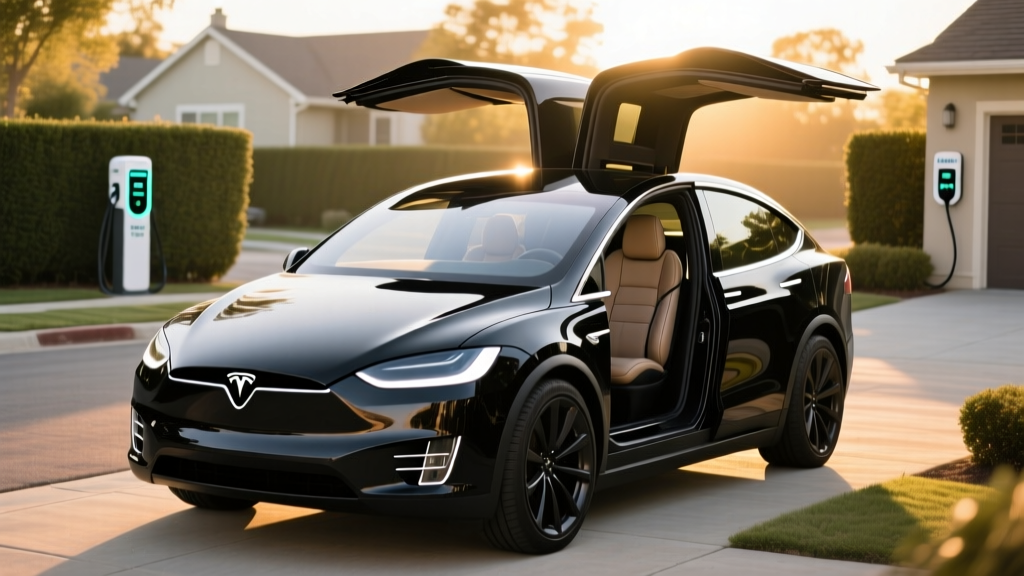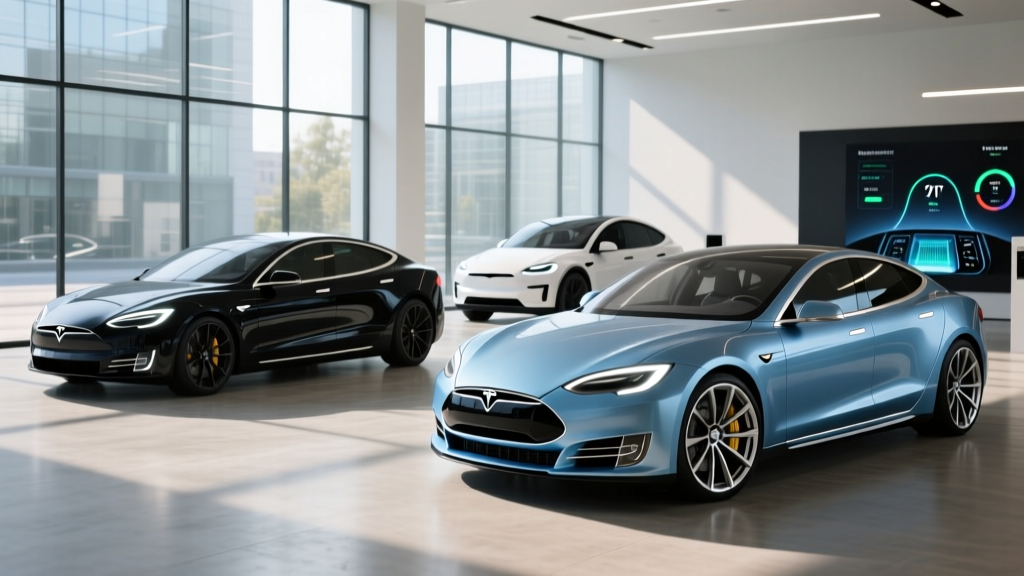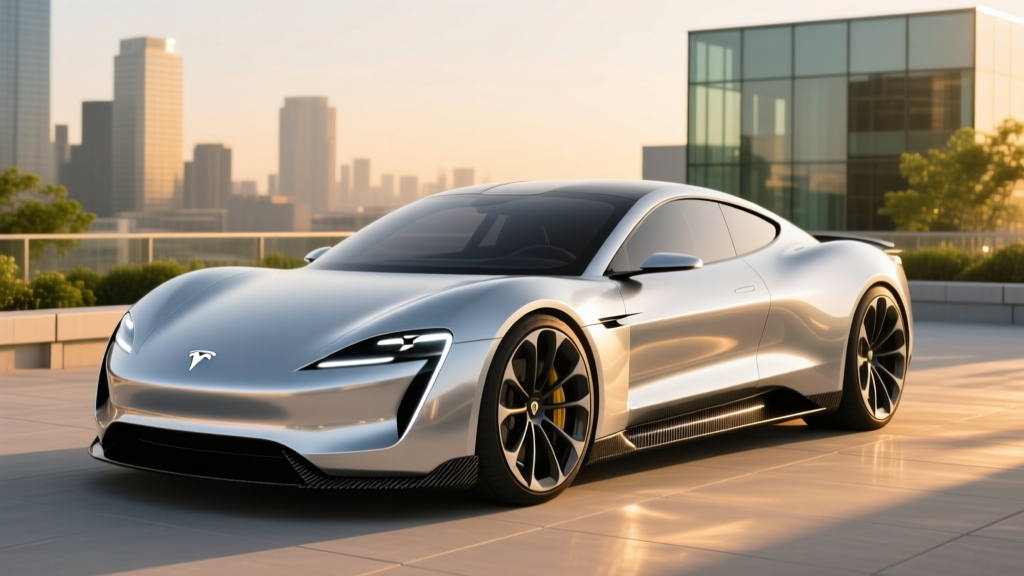
The next-generation Tesla Roadster has been one of the most anticipated — and most delayed — vehicles in automotive history. First teased in 2017 with a $200,000 price tag and a sub-2-second 0-60 time, it has slipped through multiple production timelines. As of early 2026, Tesla has begun limited production deliveries, making the question how much does a Tesla Roadster cost finally answerable with real numbers rather than speculative deposits.
Below, we break down the confirmed and estimated specifications, real-world range expectations, charging performance, federal tax credit eligibility, and whether this six-figure electric sports car is worth the investment compared to rivals like the Rimac Nevera, Lotus Evija, and Porsche Taycan Turbo GT.
2026 Tesla Roadster: Pricing and Trim Breakdown
Tesla has kept the Roadster lineup simple — a single well-equipped model with an optional performance package. Here is the current pricing structure:
| Trim / Configuration | Base MSRP | Destination Fee | §30D Federal Credit | Effective Price |
|---|---|---|---|---|
| Roadster (Standard) | $200,000 | $1,500 | $0 (MSRP cap exceeded) | $201,500 |
| Roadster + SpaceX Package | $250,000 | $1,500 | $0 (MSRP cap exceeded) | $251,500 |
Tax credit reality check: Under current IRS §30D rules, the federal clean vehicle credit is capped at vehicles with an MSRP of $55,000 for sedans and $80,000 for SUVs/pickups/vans. The Roadster, classified as a passenger car, far exceeds the $55,000 MSRP cap. This means no federal tax credit applies, regardless of buyer income or battery sourcing. State incentives may still apply — check your local DMV or energy office for details.
For buyers who placed a $50,000 reservation deposit years ago, Tesla has applied those deposits toward the final purchase price. Early reservation holders who locked in original pricing may see a slightly adjusted final invoice, but Tesla has moved all new orders to the $200,000+ structure.
Range, Battery, and Efficiency: What to Expect
Real-World Expectation: ~420–480 miles at sustained highway speeds (70–80 mph); ~350–400 miles in cold weather (below 32°F) with cabin heating. Aggressive driving in a 1,000+ HP sports car will reduce range significantly — expect 250–300 miles during spirited canyon or track use.
The Roadster is equipped with a massive 200 kWh battery pack — the largest ever put into a Tesla production vehicle. Tesla has not publicly confirmed the cell chemistry, but industry analysis and supply-chain reporting point to a high-nickel NMC (nickel manganese cobalt) formulation optimized for energy density rather than the LFP (lithium iron phosphate) chemistry used in standard-range Model 3 and Model Y vehicles. NMC offers superior energy density, which is essential for fitting 200 kWh into a sports car footprint, though it requires more careful thermal management and typically benefits from staying between 20–80% state of charge for daily use.
| Specification | Value |
|---|---|
| Battery Capacity | 200 kWh (usable, estimated) |
| Cell Chemistry | NMC (nickel manganese cobalt) |
| EPA Range | ~620 miles (preliminary) |
| Efficiency | ~32 kWh/100 mi (est. ~105 MPGe combined) |
| Drivetrain | Tri-motor AWD (1 front, 2 rear) |
| Horsepower | ~1,000+ HP (wheel torque: 10,000 Nm / 7,376 lb-ft) |
| 0–60 mph | 1.9 seconds (base); <1.1 sec (SpaceX Package w/ cold-gas thrusters) |
| Top Speed | 250+ mph |
| Quarter Mile | 8.8 seconds (base, estimated) |
The efficiency figure of roughly 32 kWh per 100 miles sounds high, but context matters: this is a 4,400+ lb vehicle with over 1,000 horsepower. By comparison, the EPA's EV efficiency data shows the Lucid Air Grand Touring achieves about 26 kWh/100mi with 1,050 HP, while the Rimac Nevera sits around 45 kWh/100mi. The Roadster's aerodynamic design and Tesla's powertrain efficiency land it in a reasonable middle ground.
Charging Performance: DC Fast and Home Level 2
A 200 kWh battery is only practical if you can charge it at a reasonable speed. The Roadster leverages Tesla's latest V4 Supercharger architecture with a peak DC fast-charge rate of approximately 250 kW.
| Charging Level | Power / Rate | Speed / Time |
|---|---|---|
| Level 1 (120V household) | ~1.4 kW | ~4 miles per hour |
| Level 2 (240V / 48A Wall Connector) | 11.5 kW | ~33 miles per hour; full charge in ~18 hours |
| DC Fast Charge (V4 Supercharger) | Peak 250 kW | 10–80% in ~50 minutes |
| DC Fast Charge (3rd-party CCS via adapter) | Up to 150–250 kW | 10–80% in ~55–65 minutes |
Charging curve reality: The 250 kW peak rate is not sustained across the entire session. Expect the Roadster to hold near peak speed between 10–40% state of charge, then taper progressively. The 10–80% time of roughly 50 minutes is driven by the sheer battery size — even at 250 kW average, filling 140 kWh (70% of 200) takes close to that duration. This is a fundamental physics constraint, not a Tesla-specific limitation.
For home charging, the Tesla Wall Connector at 48 amps / 11.5 kW is the practical solution. A full 0–100% charge takes approximately 18 hours, meaning most owners will charge incrementally — plugging in overnight to recover 200–300 miles of range in 6–9 hours. Homes with 200-amp electrical panels can typically support the Wall Connector without a panel upgrade, but a licensed electrician should verify available capacity.
The Roadster uses the NACS (North American Charging Standard) connector natively, granting full access to Tesla's Supercharger network — over 25,000 stalls in North America as of 2026. A Tesla-provided CCS adapter enables use of Electrify America, EVgo, and other third-party networks.
Interior, Cargo, and Daily Practicality
The Roadster is a 2+2 sports car, meaning two front seats and two small rear seats best suited for children or extra storage. Tesla has not published full interior dimensions, but based on the vehicle's exterior proportions and comparable sports cars:
- Front legroom: ~42 inches (estimated)
- Rear legroom: ~28 inches (estimated — tight for adults on anything beyond short trips)
- Cargo volume: ~5–7 cu ft total (rear cargo area behind seats + front trunk/frunk)
- Frunk: Small — approximately 2 cu ft, enough for a charging cable kit and a soft bag
This is not a road-trip hauler. Two carry-on bags and a laptop bag will fill the available cargo space. The rear seats fold flat to expand cargo capacity slightly, but the Roadster's mission is performance driving, not practicality.
The interior features a minimalist Tesla design with a 17-inch center touchscreen running Tesla's latest software, a yoke-style steering wheel (conventional wheel available), and a glass roof panel. Notable tech includes:
- Autopilot (SAE Level 2 driver assistance) with adaptive cruise control and lane-keeping
- Full Self-Driving (Supervised) available as a $8,000 add-on — note this remains Level 2 and requires active driver supervision at all times
- Over-the-air software updates
- Track Mode with real-time telemetry, lap timing, and G-force meters
- Customizable drive modes (Acceleration, Handling, Braking, Regen)
Performance and Driving Dynamics
The numbers define the Roadster: a tri-motor all-wheel-drive system producing over 1,000 horsepower and a claimed 1.9-second 0–60 mph time in the base configuration. The optional SpaceX Package adds cold-gas thrusters integrated around the rear bumper, reportedly pushing 0–60 below 1.1 seconds — territory previously reserved for purpose-built drag cars.
Beyond straight-line speed, the Roadster features active aerodynamics including a deployable rear spoiler and adjustable front splitter. Tesla has quoted a target of over 1.0 g of lateral grip, which would place it alongside dedicated track cars. Carbon-ceramic brakes are standard to handle repeated high-speed stops without fade.
The air suspension offers adjustable ride height — lower for track use, higher for speed bumps and driveway clearance. Ground clearance in the highest setting is estimated at approximately 5.5 inches, which is workable for most urban environments but requires attention on steep ramps.
Warranty, Ownership Costs, and Reliability
Tesla has not published final Roadster warranty terms, but based on current Tesla warranty structures for premium vehicles:
- Basic vehicle warranty: 4 years / 50,000 miles
- Battery and drive unit warranty: 8 years / 150,000 miles (with minimum 70% capacity retention)
The 200 kWh NMC battery pack, if it ever requires out-of-warranty replacement, would be extraordinarily expensive. Current Tesla battery replacement costs for a ~100 kWh pack (Model S/X) run $15,000–$22,000; a 200 kWh pack could reasonably be estimated at $30,000–$40,000+ based on current cell pricing trends. However, NMC batteries in Tesla's thermal management systems have shown strong longevity — Tesla's Impact Reports indicate less than 10% degradation at 150,000 miles across their fleet.
Insurance will be a significant ongoing cost. Based on current premiums for high-performance EVs (Lucid Air Sapphire, Porsche Taycan Turbo GT), expect annual insurance costs in the $5,000–$9,000 range depending on your driving record, location, and coverage level. Tesla offers its own insurance product in many states, which uses real-time driving data to calculate premiums — safe drivers may see lower rates.
Maintenance costs are minimal compared to internal-combustion supercars. No oil changes, no transmission fluid, no spark plugs. Budget for tire replacement every 10,000–15,000 miles (high-performance tires for a vehicle of this weight and power wear quickly — expect $1,500–$2,500 per set) and cabin air filter replacement annually.
How the Roadster Compares to Key Competitors
At $200,000+, the Roadster competes in rarefied air. Here is how it stacks up:
| Spec | Tesla Roadster | Rimac Nevera | Lotus Evija | Porsche Taycan Turbo GT |
|---|---|---|---|---|
| Base Price | $200,000 | ~$2,200,000 | ~$2,300,000 | $240,000 |
| Range (EPA/Equiv.) | ~620 mi | ~340 mi | ~250 mi | ~290 mi |
| 0–60 mph | 1.9 sec | 1.85 sec | <2.0 sec | 2.1 sec |
| Horsepower | 1,000+ | 1,914 | 1,972 | 1,019 |
| Battery | 200 kWh | 120 kWh | 70 kWh | 105 kWh |
| Seats | 2+2 | 2 | 2 | 4 |
| Federal Tax Credit | No (MSRP cap) | No | No | No |
The Roadster's primary advantage is range and relative value. At $200,000, it delivers 620 miles of range — nearly double its nearest competitor — and seats four. The Rimac Nevera is faster and more exclusive but costs 11x more. The Taycan Turbo GT is a more practical daily driver but sacrifices range and straight-line performance.
Pros and Cons: The Honest Assessment
- 620-mile estimated range is unmatched in any performance EV
- Sub-2-second 0–60 mph rivals purpose-built hypercars at a fraction of the price
- Full access to Tesla Supercharger network (25,000+ stalls)
- 2+2 seating adds practicality vs. two-seat competitors
- Over-the-air updates continuously add features
- Minimal maintenance costs vs. ICE supercars
- $200,000+ price with zero federal tax credit eligibility
- 50-minute DC fast-charge time (10–80%) due to massive battery
- Limited production — long wait times and uncertain delivery schedules
- Tiny cargo space (~5–7 cu ft) limits practicality
- Insurance premiums likely $5,000–$9,000/year
- SpaceX Package thrusters add cost and regulatory uncertainty
- Many specs remain preliminary pending final EPA certification
Who Should Buy the 2026 Tesla Roadster?
- You want the fastest-accelerating production car available with daily-driver range
- You already own a practical vehicle and want a weekend/track EV
- You value Tesla's Supercharger network for road-trip capability
- You can absorb $200,000+ without relying on tax incentives
- You need a primary daily driver with real cargo and passenger space
- You want guaranteed delivery dates — production timelines remain uncertain
- You're comparing value — a Porsche Taycan Turbo GT or Lucid Air Sapphire offers 80% of the performance at a lower price
- You want a confirmed, EPA-certified vehicle — many Roadster specs are still preliminary
Frequently Asked Questions
How much does a Tesla Roadster cost in 2026?
The 2026 Tesla Roadster starts at $200,000 MSRP plus a $1,500 destination fee. The optional SpaceX Package raises the price to approximately $250,000. The vehicle does not qualify for the $7,500 federal EV tax credit due to the IRS §30D MSRP cap of $55,000 for passenger cars.
Does the Tesla Roadster qualify for the federal EV tax credit?
No. Under current IRS §30D rules, the Roadster's $200,000 MSRP far exceeds the $55,000 cap for sedans/passenger cars. Buyer income, battery sourcing, and point-of-sale transfer provisions do not override the MSRP limit. State incentives may be available separately.
What is the real-world range of the Tesla Roadster?
Tesla estimates approximately 620 miles of range (pending final EPA certification). In real-world highway driving at 70–80 mph, expect 420–480 miles. Cold weather (below 32°F) reduces this to roughly 350–400 miles. Aggressive performance driving will drop range to 250–300 miles per charge.
How fast does the Tesla Roadster charge?
On a V4 Supercharger, the Roadster peaks at 250 kW DC fast charging, with a 10–80% session taking approximately 50 minutes. At home on a Level 2 Tesla Wall Connector (11.5 kW), it adds about 33 miles of range per hour, with a full charge requiring approximately 18 hours.
Is the Tesla Roadster worth buying vs. competitors?
If you want hypercar performance with 600+ miles of range at a (relative) bargain, the Roadster has no direct rival. The Rimac Nevera is faster but costs $2.2 million. The Porsche Taycan Turbo GT is more practical and proven but offers less than half the range. The Roadster's biggest risk is its preliminary status — many specs are not yet EPA-certified, and delivery timelines remain uncertain.
What battery chemistry does the Tesla Roadster use?
The Roadster uses an NMC (nickel manganese cobalt) battery pack at approximately 200 kWh. NMC was chosen for its superior energy density, which is critical for fitting this much capacity into a sports car. Unlike LFP batteries, NMC benefits from staying between 20–80% state of charge for daily storage, charging to 100% only when maximum range is needed.
Is the Roadster's Autopilot self-driving?
No. Tesla's Autopilot and available Full Self-Driving (Supervised) are SAE Level 2 driver-assistance systems. The driver must remain fully attentive, keep hands on the wheel, and be prepared to take over at any moment. These systems assist with steering, acceleration, and braking on highways but do not constitute autonomous driving.