The Real Cost of a Tesla Roadster: What Buyers Need to Know
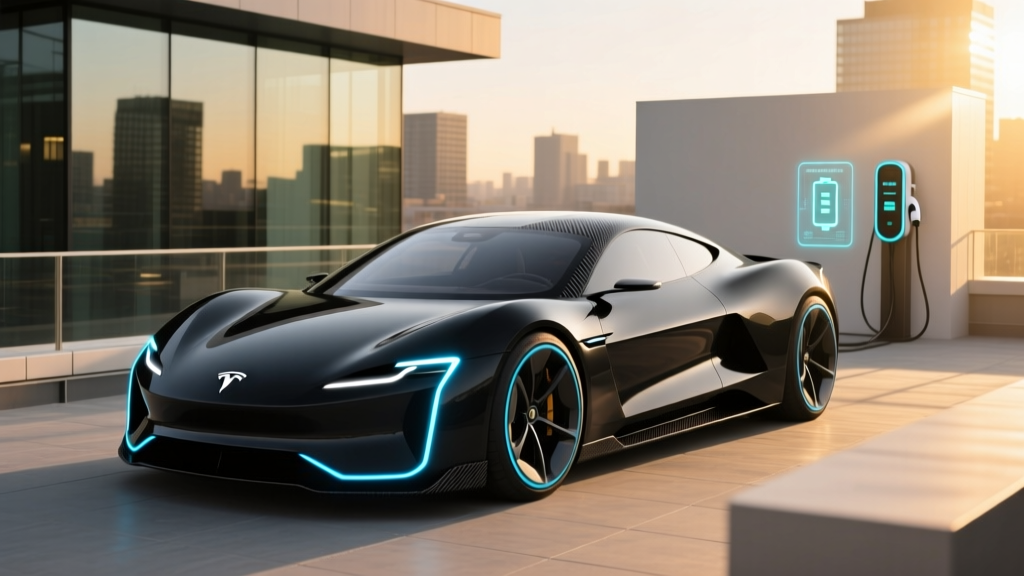
The Tesla Roadster has occupied a strange space in the EV world since Elon Musk first unveiled the second-generation model in November 2017. Promised as a halo car that would shatter performance records — a sub-1.9-second 0-60 mph time, 620 miles of range, and a 250+ mph top speed — it has remained in the announced/preliminary category for years. As of early 2026, Tesla has not confirmed a firm production start date or final pricing, though the company has signaled that the Roadster is expected to enter production sometime in 2026 or 2027.
This guide breaks down everything we know about the cost of a Tesla Roadster, including the expected MSRP, federal tax credit eligibility under current IRS §30D rules, charging specs, range estimates, and whether this hypercar-EV makes financial sense compared to rivals like the Rimac Nevera and Lotus Evija.
Estimated Pricing and Trim Breakdown
When Tesla first announced the Roadster in 2017, the base price was listed at $200,000, with a limited "Founders Series" edition priced at $250,000 (restricted to the first 1,000 reservations). The Founders Series required a full upfront payment of $250,000 to secure a build slot.
Given inflation, supply chain shifts, and Tesla's evolving product strategy, industry analysts expect the base Roadster MSRP to land between $200,000 and $250,000 when production begins, with the Founders Series potentially exceeding $250,000. Tesla has not published an updated window sticker or final trim configuration.
| Trim | Estimated MSRP | Reservation Deposit | Notes |
|---|---|---|---|
| Base Roadster | $200,000–$250,000 | $50,000 (historically) | Standard production model |
| Founders Series | $250,000+ | $250,000 (full prepay) | Limited to first 1,000 units |
| SpaceX Package (rumored) | TBD (add-on) | — | Cold-gas thrusters for enhanced acceleration/handling; Musk referenced this in 2018–2019 but no confirmation |
Federal EV Tax Credit Eligibility (§30D)
The IRS §30D Clean Vehicle Credit offers up to $7,500 for qualifying new EVs, but the Roadster faces several eligibility hurdles under current 2026 rules:
- MSRP Cap: §30D limits the credit to vehicles with an MSRP of $55,000 or less for sedans/coupes, or $80,000 or less for SUVs, vans, and trucks. At $200,000+, the Roadster does not qualify under the MSRP cap for sedans. (Source: IRS §30D guidelines)
- Income Cap: Modified adjusted gross income (MAGI) must not exceed $150,000 (single), $225,000 (head of household), or $300,000 (joint filers).
- Battery Sourcing: Critical minerals and battery components must meet phased-in domestic sourcing thresholds that tighten each year through 2029.
Bottom line: The Tesla Roadster will almost certainly not qualify for the $7,500 federal tax credit due to the MSRP cap. At this price point, the credit is negligible anyway — roughly 3.75% of a $200,000 vehicle.
Range, Battery, and Efficiency
Tesla's announced target for the Roadster is a staggering 620 miles of EPA-estimated range, which would make it the longest-range production EV ever built if achieved. This figure is based on a claimed 200 kWh battery pack.
EPA Estimate (announced): 620 miles
Real-World Highway Expectation: ~450–520 miles at 70–80 mph (high-speed driving increases aerodynamic drag significantly on a low-slung sports car)
Cold-Weather Impact: Expect 20–30% range reduction in freezing temperatures, potentially dropping usable range to ~350–420 miles
Track Use: Aggressive driving will dramatically reduce range — expect under 200 miles at sustained high-speed track use
| Spec | Value |
|---|---|
| Battery Capacity | ~200 kWh (announced) |
| Chemistry | Expected NMC (nickel manganese cobalt) — high energy density required for 620-mi target; LFP unlikely at this energy density |
| EPA Range (target) | 620 miles |
| Efficiency (estimated) | ~32 kWh/100 mi (based on 200 kWh ÷ 620 mi); MPGe TBD |
| Drivetrain | Tri-motor AWD (one front, two rear) |
The 200 kWh pack is roughly double the capacity of a Tesla Model S Plaid's ~100 kWh battery. This raises significant questions about pack weight — likely exceeding 1,800 lbs for the battery alone — and how Tesla manages thermal loads during fast charging and sustained high-speed driving.
Charging Speed: DC Fast Charge and Home Level 2
Tesla has not published official charging specs for the Roadster, but we can make informed projections based on the company's current Supercharger architecture and the physics of charging a 200 kWh pack.
| Charging Level | Power (kW) | Speed / Time | Notes |
|---|---|---|---|
| Level 1 (120V) | ~1.4 kW | ~4–5 mi/hr | Impractical for a 200 kWh pack; full charge would take 40+ hours |
| Level 2 (240V, 48A) | ~11.5 kW | ~35–40 mi/hr; full charge ~15–17 hrs | Standard home Wall Connector setup |
| Level 2 (240V, 80A) | ~19.2 kW | ~60 mi/hr; full charge ~10–12 hrs | Requires high-amperage circuit; possible with dual chargers |
| DC Fast Charge (V4 Supercharger) | Peak ~350 kW (est.) | 10–80% in ~35–45 min (est.) | A 200 kWh pack at 350 kW peak would add ~175 miles in 10 min; charge curve will taper significantly above 60% SoC |
Charging curve reality: Even at a peak of 350 kW, a 200 kWh battery cannot sustain that rate. Expect the charge rate to taper to ~150 kW by 50% SoC and ~50 kW by 80% SoC. This means the 10–80% time will be substantially longer than smaller-battery EVs. For context, a Model S Plaid with its ~100 kWh pack charges 10–80% in roughly 25–30 minutes at a V3 Supercharger; doubling the battery capacity while only moderately increasing peak charge rate means the Roadster's 10–80% session could stretch to 40+ minutes.
Performance: The Numbers That Define the Roadster
The Roadster's performance claims are what generate the most attention — and skepticism. Here's what Tesla has announced:
| Metric | Claimed Value | Context |
|---|---|---|
| 0–60 mph | 1.9 seconds (base); <1.0 sec with SpaceX package (rumored) | Would be the fastest production car ever if achieved; Rimac Nevera does 0–60 in 1.85 sec |
| Top Speed | 250+ mph | Electronically limited; Rimac Nevera tops 258 mph |
| Horsepower | ~1,000+ hp (est.) | Tri-motor setup; exact figure not confirmed |
| Quarter Mile | 8.8 seconds (announced) | Would rival dedicated drag cars |
| Drivetrain | Tri-motor AWD | One front motor, two rear motors; torque vectoring |
If Tesla delivers even 80% of these claims, the Roadster will be a benchmark-setting performance machine. However, the gap between the 2017 announcement and actual production has been nearly a decade, and automotive history is full of concept-car specs that never materialized.
Interior, Cargo, and Daily Usability
The Roadster is a 2+2 sports coupe (two front seats, two small rear seats), though the rear seats are expected to be best suited for children or cargo overflow. Tesla has shown a minimalist interior with a central touchscreen, consistent with the brand's design language.
| Dimension | Estimate | Notes |
|---|---|---|
| Seating | 2+2 | Rear seats extremely limited in legroom; expect ~24–28 inches |
| Front Legroom | ~42–44 in (est.) | Sports car packaging |
| Cargo (trunk + frunk) | ~8–12 cu ft total (est.) | Mid-engine/rear-battery layout limits frunk space; trunk behind seats |
| Curb Weight | ~4,400–4,800 lbs (est.) | 200 kWh battery alone may weigh 1,800+ lbs |
| Removable Roof | Glass roof panel (announced) | Stowable in trunk |
Who this EV suits best: The Roadster is a weekend car, a collector piece, and a technology showcase — not a daily driver for most buyers. It suits enthusiasts who want the ultimate performance EV and can afford a second (or fifth) vehicle. It is not suitable for families, road-trippers who need cargo space, or anyone who prioritizes comfort over lap times.
Warranty and Ownership Costs
Tesla has not published Roadster-specific warranty terms, but based on the company's current warranty structure for high-performance models:
- Basic Vehicle Warranty: 4 years / 50,000 miles (expected)
- Battery & Drive Unit Warranty: 8 years / 150,000 miles with minimum 70% capacity retention (expected, consistent with Model S/X)
- Battery Replacement Cost: At 200 kWh, a full pack replacement would likely cost $25,000–$40,000+ out of warranty — a significant financial risk for second-hand buyers
Insurance premiums for a $200,000+ performance EV will be substantial. Expect annual insurance costs of $5,000–$10,000+ depending on driving record, location, and coverage level. Teslas already carry higher-than-average insurance rates due to repair costs; a low-volume hypercar will amplify this.
Maintenance costs should be lower than an internal-combustion hypercar (no oil changes, fewer moving parts), but tire wear will be extreme given the power output and vehicle weight. Expect to replace high-performance tires every 5,000–10,000 miles at $400–$800 per tire.
Tesla Roadster vs. Competitors: Is It Worth It?
| Spec | Tesla Roadster (announced) | Rimac Nevera | Lotus Evija | Lucid Air Sapphire |
|---|---|---|---|---|
| Price | $200,000–$250,000 | $2,200,000 | $2,100,000+ | $249,000 |
| EPA Range | 620 mi (target) | ~330 mi (WLTP ~340) | ~250 mi (est.) | 427 mi |
| 0–60 mph | 1.9 sec | 1.85 sec | <3.0 sec | 1.89 sec |
| Horsepower | ~1,000+ hp | 1,914 hp | ~2,000 hp | 1,234 hp |
| Availability | Not yet in production | In production (limited) | In production (limited) | In production |
| Practicality | 2+2 coupe, 620-mi range | 2-seat hypercar | 2-seat hypercar | 5-seat sedan, 427-mi range |
- Projected 620-mile range would be unmatched
- Sub-2-second 0–60 mph if delivered
- Significantly cheaper than Rimac/Lotus hypercars
- Tesla Supercharger network access (17,000+ stations)
- Over-the-air updates and tech integration
- Tri-motor AWD with torque vectoring
- Still not in production after 8+ years of announcements
- Specs are preliminary and may change
- 200 kWh pack means extremely long charge times
- No federal tax credit eligibility (MSRP cap)
- Likely 4,400+ lb curb weight impacts handling
- Insurance and tire costs will be extreme
- Resale value uncertain for an unproven model
Decision Framework: Should You Buy the Tesla Roadster?
- You want the longest-range performance EV ever built and are willing to wait for production
- You're a Tesla enthusiast who values the brand ecosystem (Supercharger, OTA updates, app)
- You want hypercar performance at a fraction of Rimac/Lotus pricing
- This will be a weekend/garage car, not your primary vehicle
- You need a car that's actually in production and available now
- You want 427 miles of real, EPA-confirmed range with 1,234 hp
- You need four doors and five seats for daily usability
- You want proven performance (1.89-sec 0–60 mph, confirmed by independent testing)
- Budget is not a constraint and you want the fastest, most proven EV hypercar today
- Exclusivity (150 units) matters more than range or practicality
Frequently Asked Questions
What is the real-world range of the Tesla Roadster?
Tesla targets 620 miles EPA-estimated with a ~200 kWh battery pack. In real-world highway driving at 70–80 mph, expect approximately 450–520 miles due to aerodynamic drag at speed. In freezing temperatures, that could drop to 350–420 miles. These figures remain estimates until the vehicle is in production and independently tested.
How fast does the Tesla Roadster charge?
Official charging specs haven't been published. Based on Tesla's V4 Supercharger architecture (up to 350 kW peak), we estimate a 10–80% DC fast charge in roughly 35–45 minutes. However, a 200 kWh pack will have a significant charge-curve taper, meaning the back half of the charge will be much slower. Home Level 2 charging at 11.5 kW (48A) would take 15–17 hours for a full charge.
How much does the Tesla Roadster cost after tax credits?
The Roadster is expected to cost $200,000–$250,000. It will almost certainly not qualify for the $7,500 federal §30D tax credit because it far exceeds the $55,000 MSRP cap for sedans/coupes. The effective price is essentially the sticker price, plus destination fees and any dealer-installed options.
Is the Tesla Roadster worth buying vs. competitors?
If Tesla delivers on its announced specs, the Roadster offers hypercar performance at a fraction of the Rimac Nevera's $2.2 million price. However, it isn't available yet, and specs may change. If you need a car today, the Lucid Air Sapphire ($249,000, 427 mi range, 1.89-sec 0–60) is a proven alternative that's actually in production.
Does the Tesla Roadster qualify for the federal EV tax credit?
No. Under current IRS §30D rules, the credit is limited to vehicles with an MSRP of $55,000 or less (sedans/coupes) or $80,000 or less (SUVs/vans/trucks). The Roadster's expected $200,000+ price disqualifies it. Additionally, buyer income caps and battery-sourcing requirements apply to qualifying vehicles.
When will the Tesla Roadster actually be available?
Tesla has not confirmed a production start date. Elon Musk has referenced a 2025–2026 timeframe in various public appearances, but Tesla has a history of significant delays (the Roadster was originally promised for 2020). As of early 2026, the vehicle remains in the announced/preliminary stage. Buyers should not make financial plans around an unconfirmed timeline.
What is the battery chemistry of the Tesla Roadster?
Tesla has not officially confirmed the cell chemistry, but a 200 kWh pack targeting 620 miles of range almost certainly requires NMC (nickel manganese cobalt) or a next-generation high-nickel variant to achieve the necessary energy density. LFP (lithium iron phosphate) cells, while cheaper and longer-lasting, are too heavy and voluminous for a performance sports car application at this capacity.
Sources: Tesla Roadster product page, IRS New Clean Vehicle Credit, EPA Fuel Economy