Quick Verdict: The Fastest Car Ever Announced — Still Not on Sale
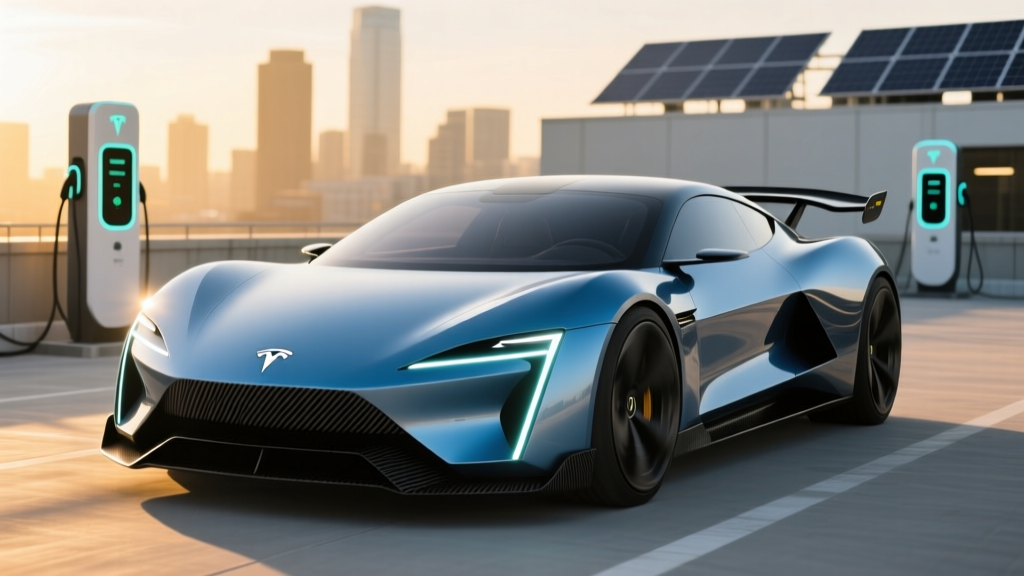
The Tesla Roadster concept remains one of the most talked-about vehicles in the EV world, more than eight years after its 2017 unveiling. As of early 2026, Tesla has not begun production, has not opened a configurator, and has not published finalized EPA-certified specifications. What exists is a set of claimed performance targets from CEO Elon Musk and Tesla's product pages — targets that, if met, would make the Roadster the quickest production car ever built and the longest-range EV on the market.
This profile compiles every confirmed and projected specification available, clearly separating Tesla's announced claims from independently verified data. For buyers researching the Tesla Roadster concept as a potential purchase, the critical takeaway is straightforward: this vehicle is not currently available for delivery, and reservation holders remain in an indefinite queue.
Estimated Range and Battery Specifications
Real-World Expectation: If the 620-mile EPA figure is achieved, expect approximately 500–540 miles on a mixed highway trip at 70 mph, and potentially 400–450 miles in sustained cold-weather driving (below 32°F). High-speed driving and low temperatures consistently reduce EV range by 15–35% relative to EPA stickers.
Tesla has stated the Roadster concept will carry a 200 kWh battery pack. The chemistry has not been officially confirmed, but given the energy-density requirements of a 200 kWh pack in a sports-car footprint, an NMC (nickel manganese cobalt) or next-generation high-nickel NCA formulation is the most likely candidate. LFP chemistry, used in Tesla's standard-range sedans for its lower cost and longer cycle life, is too heavy and energy-dense-limited for an application like this.
A 200 kWh pack is roughly double the usable capacity of a Model S Plaid (approximately 95 kWh usable). The weight implications are significant: if Tesla achieves a pack-level energy density around 250 Wh/kg (consistent with current 4680 cell projections), the battery alone would weigh in the neighborhood of 1,760 lbs. Total curb weight estimates place the Roadster concept between 4,400 and 4,800 lbs — heavy for a sports car, but not unusual for a long-range EV.
| Specification | Claimed / Estimated Value |
|---|---|
| Battery Capacity | 200 kWh (announced) |
| Battery Chemistry | Likely NMC/NCA (unconfirmed) |
| EPA Range | 620 miles (claimed, not certified) |
| Efficiency (projected) | ~32 kWh/100 mi (est. based on 200 kWh / 620 mi) |
| 0–60 mph | 1.9 sec (base) / 1.1 sec (SpaceX package) |
| Top Speed | 250+ mph (claimed) |
| Quarter Mile | 8.8 sec (claimed, base) |
| Drivetrain | Tri-motor AWD |
| Horsepower | ~1,000+ hp (estimated from tri-motor config) |
| Seating | 2+2 (four seats, rear seats minimal) |
| Cargo (est.) | ~5–7 cu ft total (frunk + rear shelf) |
Charging Speed: What 200 kWh Means at the Plug
Tesla has not published official DC fast-charging rates for the Roadster concept, but we can make informed projections based on current Tesla architecture. The Cybertruck, with its ~123 kWh pack, peaks at approximately 250 kW on V3 Superchargers and up to 350 kW on V4 Supercharger stalls equipped with the CCS-compliant Magic Dock.
A 200 kWh pack charging at a sustained 1C rate would theoretically accept 200 kW. However, Tesla's thermal management systems typically allow peak rates above 1C for the lower portion of the state-of-charge curve. A reasonable projection:
| Charging Method | Power / Rate | Time or Miles Added |
|---|---|---|
| DC Fast Charge (V4 Supercharger, projected peak) | ~350 kW peak | 10–80% in est. 25–35 minutes |
| DC Fast Charge (V3 Supercharger) | ~250 kW peak | 10–80% in est. 35–45 minutes |
| Level 2 Home Charging (48A / 11.5 kW) | 11.5 kW | ~36 miles of range per hour; full charge in ~18 hours |
| Level 2 Home Charging (80A / 19.2 kW, if supported) | 19.2 kW | ~60 miles of range per hour; full charge in ~11 hours |
| Level 1 (120V / 12A) | 1.4 kW | ~4 miles per hour; full charge in ~140+ hours |
The charge curve taper above 80% state of charge will be pronounced with a pack this large. Owners planning road trips should plan charging stops around the 10–80% window, where the bulk of energy is accepted most rapidly. Above 80%, charge rates typically drop to under 50 kW to protect cell longevity.
Home charging a 200 kWh battery is a multi-day affair on a standard Level 2 wall connector. Buyers will want a 60-amp or higher dedicated circuit (providing up to 48 amps continuous to the vehicle). A full overnight charge will not replenish the entire pack — expect roughly 60–65% replenishment over a 10-hour overnight session at 11.5 kW.
Performance: Tri-Motor AWD and the SpaceX Package
The base Tesla Roadster concept uses a tri-motor all-wheel-drive layout — one motor on the front axle and two on the rear — a configuration shared with the Model S Plaid. Tesla claims a 1.9-second 0–60 mph time for the standard Roadster, which would already place it among the quickest production cars ever made.
The optional SpaceX package, announced in 2019, adds cold-gas thrusters positioned around the vehicle to improve cornering grip, braking, and acceleration. Tesla claims this package drops the 0–60 time to 1.1 seconds. These thrusters use compressed air (not combustion) and would require periodic refilling of onboard tanks. No independent testing body has verified these claims.
For context on the 1.1-second claim: the current quickest verified production car 0–60 time belongs to the Rimac Nevera at approximately 1.74 seconds, and the Pininfarina Battista at 1.79 seconds. A 1.1-second 0–60 would require approximately 1.7g of longitudinal acceleration — a figure that approaches the limits of tire adhesion on standard road surfaces.
Pricing, Tax Credits, and Ownership Economics
Tesla originally announced the Roadster concept with a base price of $200,000, with a $50,000 reservation deposit required to hold a place in line. A limited "Founders Series" of the first 1,000 units was priced at $250,000, requiring full payment upfront. These prices were announced in 2017–2018 and have not been updated. Given inflation, supply-chain shifts, and Tesla's pricing patterns with other vehicles, a 2026 production price — if the car enters production — could reasonably be higher.
| Item | Amount / Status |
|---|---|
| Announced Base MSRP (2017) | $200,000 |
| Founders Series MSRP | $250,000 |
| Current Production Price | Not published (vehicle not in production) |
| Federal §30D Tax Credit Eligibility | Does NOT qualify — MSRP exceeds $55,000 sedan / $80,000 SUV/truck cap |
| Income Cap (if it did qualify) | $150K single / $300K joint filers (IRS §30D, 2026 rules) |
| Battery Sourcing Requirement | Unlikely to meet critical-mineral and battery-component thresholds at this price tier |
The federal EV tax credit under IRS §30D imposes an MSRP cap of $55,000 for sedans and $80,000 for SUVs, vans, and pickup trucks. The Roadster concept, classified as a sedan/sports car, would fall under the $55,000 cap — making it categorically ineligible regardless of the buyer's income or the vehicle's battery sourcing. Buyers should not factor any federal tax credit into their purchase planning for this vehicle.
Warranty, Technology, and Practical Considerations
Tesla's current battery and drive-unit warranty across its lineup is 8 years or 120,000–150,000 miles (varies by model), with a guaranteed minimum 70% battery capacity retention over that period. It is reasonable to project the Roadster would receive similar coverage, though Tesla has not confirmed warranty terms for the vehicle.
On the technology front, the Roadster concept is expected to ship with Tesla's latest hardware suite, including:
- Infotainment: 17-inch center touchscreen, gaming-capable processor, Tesla app ecosystem
- Driver Assistance: Tesla Autopilot standard; Full Self-Driving (Supervised) available as an add-on. Per SAE classification, this remains Level 2 automation — the driver must remain fully engaged at all times.
- Removable glass roof panel (announced feature, stored in the trunk area)
- Torque vectoring across the tri-motor setup for cornering agility
Practical drawbacks are substantial. The 2+2 seating configuration means the rear seats are suitable only for small children or cargo overflow. Estimated cargo space is minimal — roughly 5–7 cubic feet split between a shallow front trunk (frunk) and a rear shelf area. Ground clearance is expected to be low, typical of a sports car, making speed bumps and steep driveways a concern. Insurance premiums for a $200,000+ tri-motor EV will be significant, likely exceeding $5,000–$8,000 annually depending on the driver's profile and location.
Who the Tesla Roadster Concept Is For
- You want a halo-performance EV and budget is not a primary constraint
- You prioritize acceleration and top speed above all other vehicle attributes
- You already own a practical daily driver and want a weekend/track-capable second vehicle
- You are willing to wait an indeterminate period for delivery
- You need a vehicle in 2026 — the Roadster is not available
- You need rear-seat passenger space, cargo utility, or daily-driver practicality
- You want a verified, independently tested vehicle with published EPA data
- You are counting on a federal tax credit to offset cost
Competitors Worth Considering Today
For buyers who want extreme-performance EVs that are actually purchasable in 2026, several alternatives exist:
- Rimac Nevera: 1,914 hp, 1.74-sec 0–60 (verified), ~550-mile WLTP range, ~$2.2 million. Limited to 150 units, most allocated.
- Lotus Evija: 1,972 hp, sub-3-sec 0–60, ~215-mile WLTP range, ~$2.3 million. Production has begun.
- Porsche Taycan Turbo GT: 1,019 hp (with Launch Control), 2.1-sec 0–60, EPA 269-mile range, ~$230,000 MSRP. Available now, EPA-certified, and eligible for no federal credit (MSRP cap).
- Tesla Model S Plaid: 1,020 hp, 1.99-sec 0–60, EPA 396-mile range, ~$89,990 MSRP. Available now and the closest in-house Tesla alternative.
Each of these vehicles has published, independently verified specifications — a critical advantage over the Roadster concept's projected-only figures. For a detailed look at verified performance EVs, see the EPA's EV comparison tool on fueleconomy.gov.
- Class-leading claimed range (620 mi) if certified
- Record-breaking acceleration targets (1.1–1.9 sec 0–60)
- Tri-motor AWD with torque vectoring
- Access to Tesla Supercharger network (17,000+ stalls in North America)
- Removable roof panel for open-air driving
- Not in production — no delivery date announced as of 2026
- All specifications are unverified manufacturer claims
- $200,000+ price eliminates federal tax credit eligibility
- Minimal cargo and rear-seat utility
- Extremely high projected insurance costs
- SpaceX thruster package raises regulatory and safety questions
Frequently Asked Questions
What is the real-world range of the Tesla Roadster concept?
Tesla claims 620 miles from a 200 kWh pack, but this has not been EPA-certified. Real-world highway driving at 70 mph typically reduces EPA range by 15–20%, and cold weather can reduce it by 25–35%. A realistic expectation, if the EPA figure holds, would be 500–540 miles on a warm-weather highway trip and 400–450 miles in freezing conditions.
How fast does the Roadster concept charge?
Tesla has not published official figures. Based on current Supercharger architecture, projected peak DC fast-charge rates are approximately 350 kW on V4 stalls, with a 10–80% charge in roughly 25–35 minutes. Home Level 2 charging at 11.5 kW would add about 36 miles per hour, requiring approximately 18 hours for a full charge.
How much does the Tesla Roadster concept cost after tax credits?
The announced base price is $200,000, with the Founders Series at $250,000. The vehicle does not qualify for the federal §30D tax credit because its MSRP far exceeds the $55,000 cap for sedans. No state incentives are likely to meaningfully offset the price. The effective purchase price is the full MSRP plus destination fees, taxes, and registration.
Is the Tesla Roadster concept worth buying vs. competitors?
If and when it ships with the claimed specifications, the Roadster would offer unmatched range and acceleration for its price tier. However, the Rimac Nevera and Lotus Evija offer verified, delivered hypercar performance today (albeit at 10x the price). The Tesla Model S Plaid delivers 90% of the Roadster's claimed acceleration at less than half the price and is available now with full EPA certification.
What are the biggest pros and cons?
The projected pros are record-breaking range and acceleration plus Supercharger network access. The confirmed cons are that the car isn't available, all specs are unverified, the tax credit is unavailable, and practicality is extremely limited.
Does the Tesla Roadster concept qualify for the federal EV tax credit?
No. Under current IRS §30D rules, the credit is limited to new EVs with an MSRP at or below $55,000 for sedans (or $80,000 for SUVs/trucks/vans). The Roadster's announced $200,000 base price disqualifies it entirely, regardless of the buyer's income or the vehicle's battery sourcing.
When will the Tesla Roadster concept enter production?
Tesla has not announced a production start date. Elon Musk has referenced potential production timelines multiple times since 2017, with the most recent public references suggesting a reveal of "final" production specs at a future date. As of early 2026, no deliveries have occurred and no firm timeline has been provided. Reservation holders should treat any projected date with significant caution.