If you've been searching for a definitive answer to how much is the Tesla Roadster, you're not alone — and you're probably frustrated. Since Elon Musk first unveiled the second-generation Roadster in November 2017, the car has become one of the most anticipated and most delayed vehicles in automotive history. As of early 2026, Tesla still lists the Roadster on its website with a reservation option, but the car has not entered production and cannot be purchased or delivered today.
What we can do is break down every confirmed and estimated specification Tesla has published, contextualize the pricing against real competitors, explain the federal tax credit situation, and help you decide whether holding a $50,000 reservation is a smart financial move or an expensive lottery ticket. This profile treats the Roadster as an announced, unreleased vehicle — all specs below are preliminary and subject to change before production begins.
Tesla Roadster Announced Specs at a Glance
| Specification | Tesla Estimate (Preliminary) |
|---|---|
| Base MSRP (Founders Series) | $200,000 (est.) |
| Base MSRP (Standard) | $200,000 (est.) |
| Reservation Deposit | $50,000 (fully refundable historically) |
| EPA Range (Target) | 620 miles (unconfirmed) |
| Battery Capacity | ~200 kWh (announced, chemistry unconfirmed) |
| Drivetrain | Tri-motor AWD |
| 0–60 mph | 1.9 seconds (base) / 1.1 sec (with SpaceX package) |
| Top Speed | 250+ mph |
| Horsepower | ~1,000+ hp (estimated from tri-motor config) |
| Seating | 2+2 (four seats, rear largely symbolic) |
| Body Style | 2-door convertible (removable glass roof) |
| Federal Tax Credit (§30D) | Not eligible — exceeds MSRP cap |
How Much Does the Tesla Roadster Actually Cost?
The short answer: we don't know the final production price, because Tesla hasn't finalized it. What we do know from Tesla's own website and historical statements:
- Base price: Tesla originally announced a $200,000 base price in 2017. Adjusted for inflation, battery cost increases, and seven+ years of delays, most analysts expect the production Roadster to start between $200,000 and $250,000 when orders finally open.
- Founders Series: An early "Founders Series" was offered at $250,000 (with $50,000 down and $200,000 at delivery). This tier was limited and is likely closed to new reservations.
- SpaceX Package: Musk has teased an optional cold-gas thruster package developed with SpaceX that would push 0–60 to 1.1 seconds. Pricing for this option has never been disclosed.
- Reservation deposit: $50,000, historically refundable. This is not a purchase — it's a place in line.
Federal Tax Credit: Not Applicable
The Tesla Roadster will not qualify for the IRS §30D federal clean vehicle credit. The law imposes a hard MSRP cap of $80,000 for SUVs, vans, and pickup trucks, and $55,000 for all other vehicles — including sports cars. At any price above $55,000, the Roadster is categorically ineligible regardless of battery sourcing, buyer income, or point-of-sale transfer rules. Buyers should also verify current-year income caps (adjusted gross income limits of $150,000 single / $300,000 joint) on the IRS site, though the MSRP cap alone disqualifies this vehicle.
Battery, Range, and the 200 kWh Question
Tesla announced a 200 kWh battery pack for the Roadster — a figure that would make it the largest pack ever put in a production passenger car. For comparison:
- GMC Hummer EV: ~212 kWh (but it's a 9,000-lb truck)
- Lucid Air Grand Touring: 112 kWh (516 EPA miles)
- Tesla Model S Long Range: ~100 kWh (402 EPA miles)
Fitting 200 kWh into a sports car chassis presents enormous packaging, weight, and thermal-management challenges. At current NMC (nickel manganese cobalt) energy densities of roughly 250–300 Wh/kg at the cell level, a 200 kWh pack would weigh approximately 1,500–1,800 lbs just for cells — before cooling, structure, and enclosures. Tesla has not confirmed the battery chemistry, though an NMC variant is virtually certain given the energy-density requirements; LFP (lithium iron phosphate) cells are too heavy and low-density for this application.
The 620-mile target implies an efficiency of roughly 32 kWh/100 mi (or 3.1 mi/kWh). For a high-performance AWD sports car, that would be exceptional. The Lucid Air achieves similar efficiency through obsessive aerodynamic optimization (Cd of 0.197) and a lightweight platform — benchmarks the Roadster would need to match or exceed.
Charging Speed: What We Know (and Don't)
Tesla has not published official DC fast-charging specs for the Roadster. Based on Tesla's current Supercharger V4 architecture (up to 350 kW for compatible vehicles) and the physics of a 200 kWh pack, here are informed estimates:
| Charging Level | Power | Estimated Speed | Notes |
|---|---|---|---|
| Level 1 (120V) | ~1.4 kW | ~3–4 mi/hr | Not practical for a 200 kWh pack (50+ hours) |
| Level 2 (240V/48A) | 11.5 kW | ~30–35 mi/hr | Full charge in ~18 hours |
| DC Fast (V4 Supercharger) | ~350 kW (est. peak) | 10–80% in ~30 min (est.) | Charge curve taper above 80% likely significant |
Charging-curve reality: Peak kW is never sustained across the full session. Even if the Roadster peaks at 350 kW, expect the average rate from 10–80% to be closer to 200–250 kW as the battery management system tapers current to protect cell health. A 200 kWh pack charging at an average of 225 kW would need roughly 37 minutes for a 10–80% session — fast for the capacity, but slower than smaller-pack vehicles like the Model 3 or Ioniq 5.
One advantage: the Roadster will use Tesla's NACS (North American Charging Standard) connector natively and have full access to the Supercharger network, which remains the most reliable DC fast-charging infrastructure in the U.S. according to J.D. Power charging satisfaction studies.
Performance: The Numbers That Define This Car
The Roadster's performance targets are the reason people hold $50,000 reservations. Even by 2026 hypercar standards, these figures are extreme:
- 0–60 mph: 1.9 seconds (base tri-motor) — faster than any production car ever sold at the time of the 2017 announcement. The Rimac Nevera has since matched this at 1.85 seconds, but at a $2.2 million price point.
- 0–60 mph (SpaceX package): 1.1 seconds — using cold-gas thrusters for additional traction and acceleration force. This is unproven in any road-legal production vehicle.
- Top speed: 250+ mph
- Quarter mile: 8.8 seconds (Tesla's 2017 claim)
- Drivetrain: Tri-motor AWD — one motor front, two rear, enabling torque vectoring across all four wheels.
These numbers, if achieved, would place the Roadster in a performance category occupied only by the Rimac Nevera (~$2.2M), Pininfarina Battista (~$2.0M), and Lotus Evija (~$2.1M) — all at 5–10× the Roadster's projected price. That price-to-performance ratio is the core value proposition, assuming Tesla can deliver.
Design, Interior, and Practical Ownership Considerations
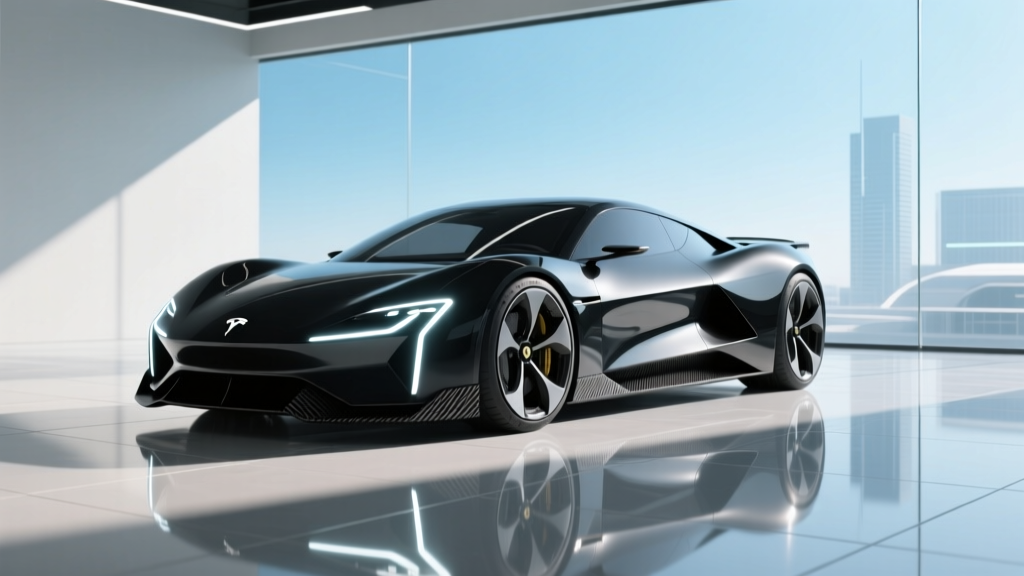
The Roadster is a 2+2 convertible with a removable glass roof panel that stores in the trunk. Based on Tesla's prototype showings and the design language established in 2017 (with incremental updates since):
- Seating: Four seats, though the rear pair are best suited for children or cargo. Expect minimal rear legroom — this is a sports car, not a grand tourer in the traditional sense.
- Cargo: Tesla has not published official cargo volume. Given the mid-rear battery/motor layout and convertible mechanism, expect a modest trunk (estimated 5–8 cu ft) and a small frunk.
- Infotainment: Likely a 17-inch touchscreen running Tesla's current software stack, including navigation, Supercharger routing, streaming media, and over-the-air updates.
- Driver assistance: Tesla's Autopilot (SAE Level 2) is expected, with FSD (Supervised) likely available as an option. Neither system is self-driving — the driver must remain fully engaged at all times. This is a critical distinction from Level 4 robotaxi services like Waymo.
- Notable drawback: The removable glass roof adds weight and complexity. Convertible sports cars historically suffer from reduced structural rigidity compared to fixed-roof counterparts, potentially affecting handling precision at the performance envelope Tesla is targeting.
Who Should (and Shouldn't) Consider the Roadster
- You want a sub-2-second 0–60 EV and are willing to wait for an unproven production timeline
- You already own a practical daily driver and want a weekend/collector car
- You value Tesla's Supercharger network and OTA update ecosystem
- $200,000–$250,000 is within your discretionary vehicle budget
- You need a car you can actually take delivery of in 2026
- You want verified EPA range and charging data before committing
- You need practical cargo space, rear-seat usability, or daily-driver comfort
- You want federal tax credit eligibility (impossible above $55,000 MSRP for cars)
Key Competitors Available Today
If you want a high-performance EV you can actually buy right now:
- Lucid Air Sapphire: 1,234 hp, 0–60 in 1.89 sec, 427 EPA mi, ~$250,000. The closest real-world analog.
- Tesla Model S Plaid: 1,020 hp, 0–60 in 1.99 sec, 396 EPA mi, ~$90,000. A fraction of the Roadster's price with 90% of the acceleration.
- Porsche Taycan Turbo GT: 1,092 hp, 0–60 in 2.1 sec, 269 EPA mi, ~$230,000. Superior build quality and handling dynamics.
- Rimac Nevera: 1,914 hp, 0–60 in 1.85 sec, 340 WLTP mi, ~$2.2M. The current hypercar benchmark — at 10× the price.
Warranty and Long-Term Ownership
Tesla has not published warranty specifics for the Roadster. Using current Tesla warranty structures as a baseline:
- Battery & Drive Unit: Likely 8 years / 150,000 miles (Tesla's standard for Model S/X). Expect a minimum 70% capacity retention threshold over the warranty period.
- Vehicle Limited Warranty: Likely 4 years / 50,000 miles (bumper-to-bumper).
- Replacement cost: A 200 kWh NMC pack replacement out of warranty would be extraordinarily expensive — potentially $30,000–$50,000+ based on current cell pricing and labor. This is a significant long-term ownership risk for a car at this price point.
For more on battery degradation science and what to expect over 100,000+ miles, see fueleconomy.gov's EV technology overview.
- Sub-2-second 0–60 would be record-setting for a production car under $1M
- 620-mile range target, if achieved, would be class-leading
- Full Supercharger network access with NACS connector
- Tesla OTA updates and software ecosystem
- Price-to-performance ratio unmatched in the hypercar segment
- Not available for purchase — no confirmed production date after 7+ years of delays
- All specs are preliminary and unverified by EPA or independent testing
- No federal tax credit eligibility (MSRP far exceeds $55,000 cap)
- 200 kWh pack means extremely long Level 2 home charging times
- 2+2 seating and convertible design limit practicality
- Massive battery replacement cost risk out of warranty
Frequently Asked Questions
Can I buy the Tesla Roadster right now?
No. As of 2026, the Tesla Roadster is an announced but unreleased vehicle. You can place a $50,000 refundable reservation on Tesla's website, but there is no confirmed production start date, no EPA certification, and no delivery timeline. Tesla has delayed the Roadster repeatedly since its 2017 unveiling.
How much is the Tesla Roadster after tax credits?
The Roadster will not qualify for the $7,500 federal EV tax credit under IRS §30D rules. The credit is capped at vehicles with an MSRP of $55,000 or less for cars (not SUVs/trucks). At an estimated $200,000+ base price, the Roadster is categorically ineligible. The price you see is the price you pay — no federal incentive applies. Some states may offer separate incentives, but these typically have even lower price caps. Consult a tax professional for your specific situation.
What is the real-world range of the Tesla Roadster?
There is no EPA-certified range figure because the car doesn't exist in production form. Tesla's target is 620 miles from a ~200 kWh pack. If achieved, real-world highway driving at 70–80 mph would likely yield 465–530 miles, and cold-weather (below 32°F) driving could reduce that to 370–430 miles. These are estimates based on typical EV efficiency losses — not measured data.
How fast does the Roadster charge?
Tesla has not published official charging specs. Based on Tesla's V4 Supercharger architecture (up to 350 kW), an estimated 10–80% DC fast-charge time of roughly 30–40 minutes is plausible for a 200 kWh pack. Home Level 2 charging at 11.5 kW would add roughly 30–35 miles per hour, requiring about 18 hours for a full charge — meaning daily top-ups, not full charges, would be the practical norm.
Is the Roadster worth the $50,000 reservation deposit?
That depends entirely on your risk tolerance and timeline. The deposit has historically been refundable, which reduces financial risk — but you're locking up $50,000 in what amounts to an interest-free loan to Tesla for an indeterminate period. If you want a high-performance EV you can drive today, the Lucid Air Sapphire ($250K), Tesla Model S Plaid ($90K), or Porsche Taycan Turbo GT ($230K) are all available, tested, and EPA-certified right now.
Does the Roadster have self-driving capability?
The Roadster is expected to offer Tesla's Autopilot and FSD (Supervised) systems, both of which are SAE Level 2 driver-assistance features. The driver must remain fully attentive, keep hands on the wheel, and be prepared to take over at any moment. These systems are not autonomous and should not be confused with Level 4 driverless services like Waymo, which operate in geofenced areas without a human driver.
Editorial note: This article will be updated when Tesla provides a confirmed production timeline, EPA certification, or final pricing. All specifications cited are based on Tesla's public announcements and are preliminary. Verify current federal and state incentive rules at irs.gov before making any purchase decision.