Tesla Roadster 2026: The $200,000 Question
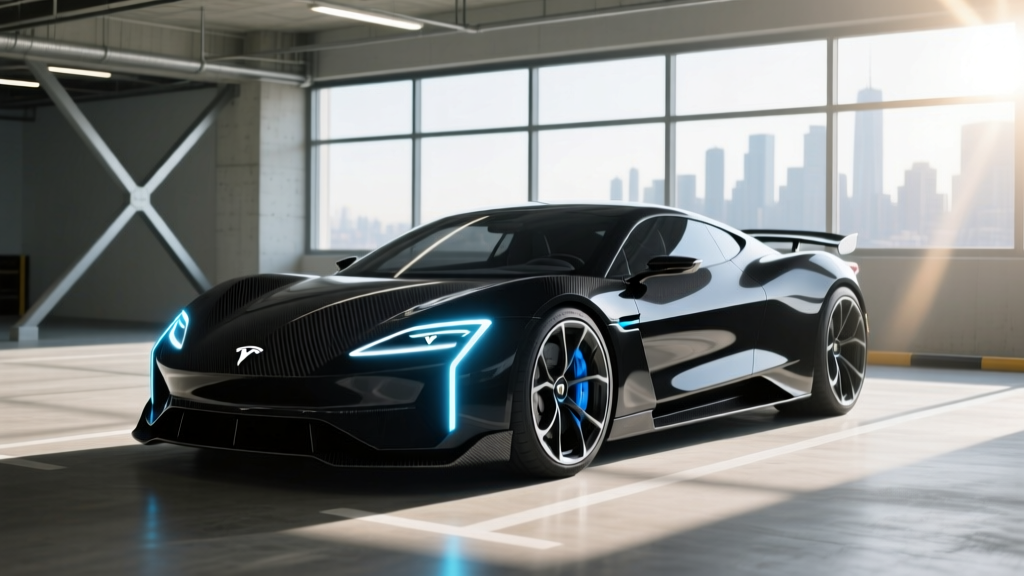
If you've been searching "how much do Tesla Roadsters cost," the answer depends on which generation you mean — and whether you can actually buy one. As of early 2026, the next-generation Tesla Roadster remains in announced/prototype status, with Tesla CEO Elon Musk confirming production has slipped yet again. The original 2008–2012 Roadster is long discontinued and available only on the used market. This review covers everything we know about the upcoming model's projected pricing, alongside hard data on the original — because understanding both is essential before putting down a deposit or shopping the secondary market.
| Specification | Projected / Announced |
|---|---|
| Base MSRP (announced) | ~$200,000 |
| Founders Series (limited) | $250,000 (sold out) |
| Reservation deposit | $50,000 (fully refundable historically) |
| EPA Range (claimed) | 620 miles (unverified by EPA) |
| Battery capacity | ~200 kWh (announced) |
| Battery chemistry | Not confirmed; likely NMC/NCA high-nickel |
| 0–60 mph | 1.9 seconds (claimed, w/ SpaceX package) |
| Top speed | 250+ mph (claimed) |
| Drivetrain | Tri-motor AWD |
| Horsepower | Estimated 1,000+ HP |
| Max DC fast charge | Not published; expected 250–350 kW |
| Seating | 2+2 (tiny rear seats) |
| Body style | Removable glass roof, convertible |
Note: All specs above are based on Tesla announcements and are subject to change. The EPA has not certified this vehicle. Production timing remains unconfirmed as of Q1 2026.
The Original Roadster: What Used Examples Actually Cost
The first-generation Tesla Roadster (2008–2012) was the car that proved electric vehicles could be fast, desirable, and viable. Built on a Lotus Elise chassis, it featured a 53 kWh battery pack and an EPA-rated 244-mile range — remarkable for its era. Only about 2,450 were produced worldwide.
As of 2026, used Roadster prices typically fall between $75,000 and $150,000, depending on mileage, condition, and whether the battery has been replaced or refurbished. Low-mile collector examples have exceeded $175,000 at auction. Battery replacement for the original Roadster costs roughly $30,000–$40,000 if available through Tesla's service network, and parts availability is increasingly limited.
| Specification | Value |
|---|---|
| Original MSRP | $109,000–$128,000 |
| Current used market (2026) | $75,000–$150,000+ |
| EPA range (original) | 244 miles |
| Battery capacity | 53 kWh (usable ~48 kWh) |
| Battery chemistry | NMC (lithium-cobalt blend) |
| 0–60 mph | 3.7 seconds (Sport: 3.4s) |
| Horsepower | 288 HP |
| Drivetrain | RWD, single motor |
| Max DC charge | ~70 kW (via proprietary connector) |
| Level 2 charge rate | ~16 kW (J1772 adapter) |
| Warranty (original) | 3 yr/36,000 mi (expired) |
Range Reality: 620 Miles or Marketing?
Tesla has claimed the next-gen Roadster will achieve 620 miles of range on a single charge, powered by a massive ~200 kWh battery pack. For context, that's roughly double the capacity of a Model S Long Range and would make it the largest battery ever put in a production passenger car.
Claimed range: 620 miles (unverified by EPA)
Likely EPA estimate (if produced): 500–580 miles based on battery size and weight
Highway driving at 75 mph: Expect 400–480 miles (high speeds reduce efficiency ~20–25%)
Cold weather (below 32°F): Expect 350–450 miles (battery chemistry loses 15–30% in freezing temps)
Track use: Aggressive driving could cut range to 200–250 miles per session
No independent testing exists. These projections are based on Tesla's historical EPA vs. claimed ratios and known physics of a ~200 kWh pack in a sports car weighing an estimated 4,400+ lbs.
For the original Roadster, real-world range from its aged 53 kWh pack is typically 150–200 miles today, given natural battery degradation of 15–25% over 12–18 years. Owners who've had battery replacements report closer to the original 244-mile figure.
Charging Speed: What to Expect at the Plug
Charging a 200 kWh battery is a fundamentally different challenge than topping off a 75 kWh Model 3. Even at Tesla's current Supercharger V4 peak of 350 kW, filling a 200 kWh pack from 10–80% would take approximately 40–50 minutes under ideal conditions. The charge curve — the rate at which charging slows as the battery fills — means the last 20% takes disproportionately longer.
| Charging Level | Power (kW) | Estimated Time / Rate |
|---|---|---|
| Level 1 (120V household) | ~1.4 kW | ~5 mi/hr — full charge in 100+ hours |
| Level 2 (240V home, 48A) | 11.5 kW | ~40 mi/hr — full charge in ~18 hours |
| Level 2 (240V, 80A Wall Connector) | 19.2 kW | ~65 mi/hr — full charge in ~11 hours |
| DC Fast Charge (Supercharger V4) | 250–350 kW (est.) | 10–80% in ~40–50 min (projected) |
For the original Roadster, DC fast charging was never a strong suit. Its proprietary connector and ~70 kW peak charge rate mean a 20–80% fill takes roughly 45 minutes at a compatible station — and finding CHAdeMO or proprietary Tesla connectors at modern public stations is increasingly difficult. Most original Roadster owners rely on Level 2 home charging overnight.
Home charging reality: If you're installing a Level 2 charger for either Roadster generation, expect to pay $800–$2,500 for a Tesla Wall Connector plus professional installation, assuming your electrical panel has capacity. A panel upgrade (to 200A service) can add $1,500–$4,000. Consult a licensed electrician for your specific situation.
Federal Tax Credit: Does the Roadster Qualify?
This is where the math gets painful for Roadster buyers. Under current IRS §30D rules for 2026, the federal EV tax credit of up to $7,500 has strict eligibility requirements:
- MSRP cap: Vans, SUVs, and pickup trucks are capped at $80,000. All other vehicles (sedans, sports cars, coupes) are capped at $55,000.
- Buyer income cap: Modified AGI must not exceed $150,000 (single), $225,000 (head of household), or $300,000 (joint filers).
- Battery sourcing: Critical minerals and battery components must meet phased-in domestic/free-trade-partner sourcing thresholds.
- Point-of-sale transfer: Eligible buyers can transfer the credit to the dealer for an instant price reduction.
| Model | MSRP | MSRP Cap (Sports Car) | Eligible for §30D Credit? |
|---|---|---|---|
| Next-Gen Roadster (projected) | ~$200,000 | $55,000 | No — far exceeds cap |
| Original Roadster (used) | $75,000–$150,000 | $25,000 (used EV cap) | Unlikely — exceeds used cap |
The next-generation Roadster, at its projected ~$200,000 price, will not qualify for the §30D new-vehicle credit. The used-vehicle credit (up to $4,000 or 30% of sale price, capped at $25,000 MSRP) also won't apply to original Roadsters trading well above that threshold. For the latest rules, always check IRS.gov §30D guidance or consult a tax professional.
Performance & Driving: The Numbers Behind the Hype
Tesla has claimed the next-gen Roadster will achieve a 1.9-second 0–60 mph time with the optional SpaceX package (which includes cold-gas thrusters for traction). Without that package, the standard tri-motor setup is expected to deliver roughly 2.0–2.5 seconds to 60 mph. For reference, that would make it one of the quickest production cars ever built, rivaling the Rimac Nevera and surpassing the Tesla Model S Plaid's verified 1.99-second run.
The tri-motor AWD layout — one motor front, two rear — mirrors the Model S Plaid architecture but is expected to produce even more power, likely exceeding 1,000 horsepower. Top speed is claimed at 250+ mph.
The original Roadster delivers a still-respectable 3.7 seconds to 60 mph (3.4 for the Sport variant) with 288 HP from a single rear motor. It's raw, analog by modern standards, with minimal sound insulation and direct steering that enthusiasts love. However, its age shows in tech — no over-the-air updates, no Autopilot, no modern ADAS features.
Interior, Tech & Practicality
Both Roadster generations prioritize speed over space. The next-gen model is expected to feature:
- Minimalist Tesla interior with a large central touchscreen (likely 15–17 inches)
- Autopilot / FSD (Supervised) — SAE Level 2 driver-assist, not self-driving
- Removable glass roof panel stored in the trunk
- 2+2 seating (rear seats suitable for small children or cargo only)
- Estimated cargo space: ~5–8 cu ft (frunk + rear trunk combined)
The original Roadster offers virtually no cargo space beyond a tiny rear trunk (~4 cu ft), a single touchscreen (upgraded from the original radio), and zero driver-assistance systems. It's a weekend toy, not a daily driver.
- Projected 620-mile range would crush range anxiety
- Sub-2-second 0–60 mph (with SpaceX package)
- Tri-motor AWD with 1,000+ HP
- Tesla Supercharger network access (NACS native)
- Removable roof for open-air driving
- $200,000+ price with no federal tax credit
- Not yet in production — delivery date unknown
- Massive 200 kWh battery = long charge times and heavy weight
- Limited cargo and rear-seat practicality
- Unproven at scale; first-year production risk
Who Should Buy a Tesla Roadster?
Choose the Next-Gen Roadster (when available) if:
- You want a hypercar-rivaling EV with daily-driver range
- Budget is not a primary concern ($200K+ with no tax credit)
- You already own a practical daily and want a weekend/collector car
- You're willing to wait for production and accept first-year risks
Choose the Original Roadster (used) if:
- You want a piece of EV history at a lower entry price ($75K–$150K)
- You enjoy analog, lightweight sports car dynamics
- You accept limited range (~150–200 mi), aging tech, and parts scarcity
Look elsewhere if:
- You need back-seat space, cargo room, or daily practicality → Model S, Lucid Air, Porsche Taycan
- You want a tax-credit-eligible EV → Model 3, Model Y, Chevrolet Equinox EV
- You need confirmed availability now → Any currently-produced Tesla or competitor
Frequently Asked Questions
How much do Tesla Roadsters cost in 2026?
The next-generation Tesla Roadster is projected to start at approximately $200,000, with the limited Founders Series at $250,000 (sold out). The original 2008–2012 Roadster trades on the used market for $75,000–$150,000+. Neither qualifies for the federal EV tax credit due to MSRP caps.
Can I buy a new Tesla Roadster right now?
No. As of early 2026, the next-gen Roadster is not in production. Tesla has accepted $50,000 deposits in the past, but delivery timing remains unconfirmed. The original Roadster is available only through the used/collector market.
Does the Tesla Roadster qualify for the $7,500 federal tax credit?
No. Under IRS §30D rules, sports cars and sedans must have an MSRP of $55,000 or less to qualify. At ~$200,000, the next-gen Roadster far exceeds this cap. The used-EV credit (up to $4,000) also has a $25,000 MSRP cap that original Roadsters exceed.
What is the real-world range of the Tesla Roadster?
For the next-gen model: Tesla claims 620 miles, but no EPA certification exists. Real-world highway driving at 75 mph would likely yield 400–480 miles; cold weather could reduce that to 350–450 miles. For the original Roadster: expect 150–200 miles today given battery age and degradation.
How fast does the Tesla Roadster charge?
The next-gen Roadster's charging specs are unconfirmed. With a projected 200 kWh battery and an estimated 250–350 kW DC fast-charge capability, a 10–80% session would take roughly 40–50 minutes. Home Level 2 charging at 11.5 kW would require ~18 hours for a full charge. The original Roadster peaks at ~70 kW DC with a 45-minute 20–80% charge.
Is the Tesla Roadster worth it vs. competitors?
At $200,000+, the Roadster competes with the Rimac Nevera (~$2.4M), Lotus Evija (~$2.3M), and Pininfarina Battista (~$2.2M) — all of which cost 10x more. Among more accessible performance EVs, the Tesla Model S Plaid ($89,990) offers 1,020 HP and a 1.99-second 0–60 with verified availability. The Roadster's value proposition hinges on its unique combination of hypercar performance with 600+ mile range — if and when it ships.
What battery does the Tesla Roadster use?
The next-gen Roadster is expected to use a ~200 kWh pack, likely with NMC or NCA high-nickel chemistry to maximize energy density. Tesla has not confirmed specifics. The original Roadster used a 53 kWh NMC/lithium-cobalt pack.
What warranty coverage does the Roadster include?
Tesla's current battery and drive unit warranty for high-end models is 8 years/150,000 miles with a minimum 70% capacity retention threshold. The next-gen Roadster is expected to carry similar or better coverage. The original Roadster's warranty expired years ago; any remaining coverage is through third-party extended warranties.
Sources: Tesla.com announcements, IRS §30D Clean Vehicle Credits, EPA Fuel Economy (original Roadster data). All next-gen Roadster specifications are preliminary and subject to change. Consult a tax professional for credit eligibility.