Tesla Roadster 2025: The Hypercar That Keeps Moving the Goalposts
First teased in 2017, the next-generation Tesla Roadster has become one of the most anticipated — and most delayed — vehicles in automotive history. As of early 2026, Tesla has not yet begun production, and the model is not currently available for purchase. What follows is a comprehensive breakdown of every confirmed and estimated specification Tesla has released, paired with the real-world context buyers need before placing a reservation or planning a budget.
This profile treats the Roadster as an announced/upcoming model. All specifications are labeled as preliminary or confirmed based on Tesla's public statements, and we flag where real-world physics will inevitably temper marketing claims.
| Specification | Value / Estimate |
|---|---|
| Status | Announced — not yet in production as of 2026 |
| EPA Range (claimed) | 620 miles (Tesla estimate; not EPA-certified) |
| Battery Capacity | ~200 kWh (NMC chemistry expected) |
| Drivetrain | Tri-motor AWD (1 front, 2 rear) |
| Horsepower | Estimated 1,000+ hp (wheel torque: 10,000 Nm) |
| 0–60 mph | 1.9 seconds (base); <1.0 sec with SpaceX package (claimed) |
| Top Speed | 250+ mph |
| Quarter Mile | 8.8 seconds (claimed) |
| DC Fast Charge (peak) | Estimated 250–350 kW (unconfirmed) |
| Level 2 Home Charge | Estimated 11.5 kW / 48A (Tesla Wall Connector) |
| Seating | 2+2 (two front, two small rear) |
| Cargo (trunk + frunk) | Not officially disclosed; expected <10 cu ft combined |
| Base MSRP (announced) | $200,000 (Founders Series: $250,000) |
| Reservation Deposit | $50,000 (fully refundable historically) |
| Federal Tax Credit (§30D) | Ineligible — exceeds MSRP cap |
| Battery Warranty | Expected 8 yr / 150,000 mi (Tesla standard for premium models) |
Range & Efficiency: 620 Miles Claimed, but Real-World Physics Apply
Tesla CEO Elon Musk has stated the Roadster will deliver 620 miles of range on a single charge. This figure is a manufacturer claim, not an EPA-certified number. For context, the highest EPA-rated EV currently on sale (as of 2026) tops out around 400–516 miles, making a 620-mile EPA sticker unprecedented.
Tesla claim: 620 miles
Expected EPA rating: Likely 500–580 miles (if/when certified — Tesla's claims historically overstate EPA results by 5–15%)
Highway driving (75 mph sustained): Expect ~380–450 miles (aerodynamic drag dominates at speed; sports-car tire compounds add rolling resistance)
Cold weather (below 32°F): Expect 30–40% reduction → ~310–400 miles usable
Spirited driving: Aggressive acceleration and track use will drastically cut range — potentially below 200 miles
The ~200 kWh battery pack is expected to use NMC (nickel manganese cobalt) chemistry rather than LFP. NMC offers higher energy density — essential for packaging 200 kWh into a low-slung sports car — but it is heavier and more expensive than LFP. For reference, the Lucid Air Grand Touring achieves 516 EPA miles from a 118 kWh pack; the Roadster would need roughly 70% more battery to hit 620 miles, which explains the massive pack size and likely 4,400+ lb curb weight.
Efficiency will likely land around 120–135 MPGe (roughly 25–30 kWh/100 mi) in mixed driving — respectable for a 1,000+ hp hypercar but well below efficient sedans like the Tesla Model 3 (132 MPGe combined per fueleconomy.gov).
Charging Speed: Massive Battery, Long Charge Times
Charging a 200 kWh battery is fundamentally different from topping off a 75 kWh pack. Even at peak DC fast-charge rates, the sheer energy volume means longer sessions.
| Charging Level | Power (kW) | Miles Added per Hour | 10–80% Time (est.) |
|---|---|---|---|
| Level 1 (120V / 12A) | 1.4 kW | ~4 mi/hr | Not practical (~100+ hours) |
| Level 2 (240V / 48A) | 11.5 kW | ~35 mi/hr | ~14–16 hours |
| DC Fast (V3 Supercharger) | 250 kW (peak) | ~750 mi/hr (peak) | ~45–55 minutes |
| DC Fast (V4 / future 350 kW) | 350 kW (peak) | ~1,000 mi/hr (peak) | ~35–45 minutes |
Charging-curve reality: Peak kW is never sustained for the full session. A 250 kW peak will taper significantly above 50–60% State of Charge (SoC). Expect a 10–80% session on a V3 Supercharger to take roughly 45–55 minutes — substantially longer than a Model 3 Long Range (~25 minutes). At home on a Level 2 Tesla Wall Connector, a full charge will require an overnight session and then some. Owners without home charging access will find this vehicle impractical for daily use.
Tesla has not confirmed whether the Roadster will support the newer NACS connector natively or require adapters for legacy CCS stations, but given Tesla's proprietary Supercharger network, native NACS is virtually certain.
Performance: Sub-2-Second 0–60 and the SpaceX Package
The base Roadster's tri-motor AWD layout targets 1.9 seconds 0–60 mph, which would make it the quickest production car ever sold. The optional SpaceX package — which reportedly uses cold-gas thrusters positioned around the vehicle — claims a sub-1.0-second 0–60 time. This package has not been demonstrated publicly in a production-ready form.
For context, the current quickest production cars:
- Pininfarina Battista: ~1.8 sec (claimed)
- Rimac Nevera: 1.85 sec (verified)
- Tesla Model S Plaid: 1.99 sec (verified by multiple outlets)
- Dodge Challenger SRT Demon 170: 1.66 sec (with rollout, drag radials, prepped surface)
The Roadster's claimed 10,000 Nm of wheel torque (not motor torque — an important distinction) would be achieved through extreme gear reduction. Top speed is claimed at 250+ mph, though sustaining that speed would drain the 200 kWh battery in roughly 20–25 minutes.
Pricing, Trims & Federal Tax Credit Eligibility
Tesla announced the Roadster with two tiers:
| Trim | Announced MSRP | §30D Federal Credit | Effective Price |
|---|---|---|---|
| Roadster (base) | $200,000 | $0 (exceeds MSRP cap) | $200,000 |
| Founders Series | $250,000 | $0 (exceeds MSRP cap) | $250,000 |
Federal tax credit rules (IRS §30D): Under current IRS guidelines, the new clean vehicle credit is capped at vehicles with an MSRP of $55,000 for sedans and $80,000 for SUVs, trucks, and vans. The Roadster, at $200,000+, is categorically ineligible regardless of battery sourcing or buyer income. Additionally, §30D imposes adjusted gross income caps ($150,000 single / $300,000 married filing jointly). Even if the MSRP cap didn't apply, many buyers in this price bracket would exceed income limits.
State-level incentives vary by jurisdiction and may offer partial rebates — consult your state's energy or environmental agency for specifics. Consult a tax professional for personalized guidance.
Interior, Tech & Practicality
Tesla has released minimal interior details. Based on the prototype shown:
- Seating: 2+2 configuration. Rear seats are extremely small — suitable for children or cargo only, similar to a Porsche 911's rear seats
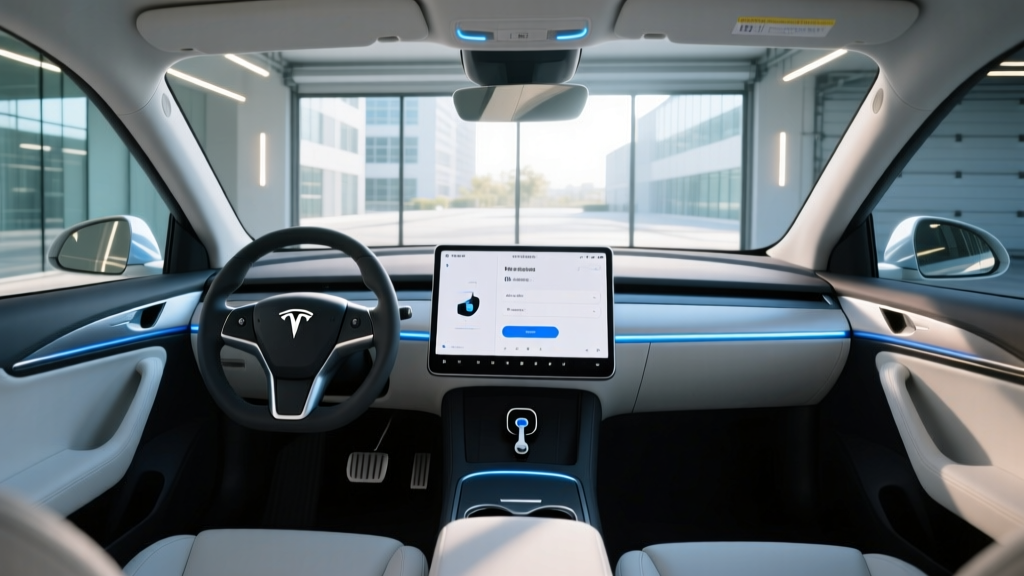
- Infotainment: Expected to use a next-generation Tesla touchscreen (likely 17"+ horizontal), running Tesla's current software suite with streaming, navigation, and over-the-air updates
- Driver assistance: Expected to ship with Tesla Autopilot (SAE Level 2). Full Self-Driving (Supervised) will likely be available as a paid add-on. Neither system is "self-driving" — the driver must remain fully engaged at all times
- Glass roof: Removable glass panel (confirmed in prototype), storable in the trunk
- Cargo: No official figures released. Given the mid/rear battery placement and sports-car proportions, expect a small front trunk (frunk) and a modest rear cargo area — combined likely under 10 cubic feet
Tesla Autopilot and FSD (Supervised) are SAE Level 2 driver-assistance systems. The driver must keep hands on or near the wheel, monitor the road, and be prepared to take over instantly. These are not autonomous driving systems. Level 4 robotaxi services (like Waymo) operate without a driver in geofenced areas — the Roadster will not offer this capability.
Who Should Consider the Roadster — and Who Shouldn't
- You want a halo electric sports car with unmatched straight-line acceleration
- You have access to home Level 2 charging (essential for a 200 kWh battery)
- You view this as a weekend/collector vehicle, not a daily commuter
- You're comfortable with a $200,000+ purchase with no federal tax credit offset
- You accept the risk of buying a first-production-year vehicle from a low-volume program
- You need practical cargo space, rear passenger comfort, or daily usability
- You lack reliable home charging — public DC charging a 200 kWh pack is time-intensive
- You want a proven, high-volume vehicle with established service infrastructure
- You prioritize real-world range efficiency over peak performance
- You need a vehicle now — the Roadster's production timeline remains uncertain
Key competitors to cross-shop:
- Rimac Nevera ($2.2M, 1,914 hp, 1.85s 0–60, 340-mile range) — proven, delivered, but 10× the price
- Lotus Evija ($2.3M, 1,972 hp, ~2.0s 0–60, 250-mile range) — limited production, track-focused
- Tesla Model S Plaid ($89,990, 1,020 hp, 1.99s 0–60, 396-mile EPA range) — available now, practical, and one-twentieth the Roadster's price
- Porsche Taycan Turbo GT ($230,000, 1,019 hp, 2.1s 0–60, 269-mile EPA range) — available now, world-class handling and build quality
Pros, Cons & the Bottom Line
- Unprecedented claimed performance (1.9s 0–60, 620-mile range)
- Massive 200 kWh battery — longest range of any announced EV
- Removable glass roof — genuine open-air sports car experience
- Access to Tesla Supercharger network (20,000+ stations in North America)
- Over-the-air updates and Tesla's software ecosystem
- Tri-motor AWD provides exceptional traction and torque vectoring
- Not yet in production — years of delays, no firm delivery date
- $200,000+ with zero federal tax credit eligibility
- 200 kWh battery means very long charge times (45–55 min DC, 14+ hr Level 2)
- 2+2 seating — rear seats are essentially decorative
- Expected curb weight over 4,400 lbs — physics limits cornering vs lighter sports cars
- SpaceX thruster package unproven and may face regulatory hurdles
- First-year production risk — low-volume Tesla programs (original Roadster, Cybertruck) have had significant build-quality issues
Frequently Asked Questions
What is the real-world range of the Tesla Roadster?
Tesla claims 620 miles, but this is not EPA-certified. Expect an EPA rating closer to 500–580 miles if and when certified. In real-world highway driving at 75 mph, anticipate 380–450 miles. In cold weather below freezing, expect a 30–40% reduction, bringing usable range to roughly 310–400 miles. Aggressive driving will reduce range far more dramatically.
How fast does the Roadster charge at home and on the road?
At home on a Level 2 Tesla Wall Connector (11.5 kW), expect roughly 35 miles of range per hour of charging — a full 10–80% charge will take approximately 14–16 hours. On a 250 kW V3 Supercharger, a 10–80% session should take roughly 45–55 minutes, with significant taper above 60% SoC. The 200 kWh battery makes every charge session longer than a typical EV.
How much does the Tesla Roadster cost after tax credits?
The Roadster does not qualify for the federal §30D clean vehicle credit because its $200,000 MSRP far exceeds the $55,000 sedan cap. The effective price is the full MSRP: $200,000 for the base model, $250,000 for the Founders Series. State incentives may apply depending on your jurisdiction.
Is the Tesla Roadster worth buying vs competitors?
At $200,000, the Roadster competes with the Porsche Taycan Turbo GT ($230,000, available now, proven build quality) and is far cheaper than the Rimac Nevera ($2.2M). If Tesla delivers on its performance and range claims, it could offer supercar performance at a relative bargain. However, the production timeline is uncertain, and buyers are essentially funding a development program. The Model S Plaid ($89,990) delivers 90% of the acceleration for one-twentieth the price and is available today.
Does the Tesla Roadster qualify for the federal EV tax credit?
No. Under current IRS §30D rules, the credit is limited to vehicles with an MSRP of $55,000 or less (sedans). The Roadster at $200,000 is ineligible regardless of battery sourcing, buyer income, or point-of-sale election. Always verify current rules with a tax professional before making purchase decisions.
When will the Tesla Roadster actually be available?
Tesla has repeatedly delayed the Roadster since its 2017 unveiling. As of early 2026, no firm production start date has been announced. Elon Musk suggested a potential 2025 reveal of the final production design, but volume production has not commenced. Reservation holders should treat any timeline as preliminary until Tesla confirms a delivery schedule.
What battery chemistry will the Roadster use?
The Roadster is expected to use NMC (nickel manganese cobalt) lithium-ion cells, likely in Tesla's 4680 form factor. NMC offers the energy density required to package ~200 kWh into a sports-car chassis. LFP (lithium iron phosphate) is too heavy and bulky for this application. Tesla's battery warranty is expected to cover 8 years or 150,000 miles with a minimum 70% capacity retention threshold, consistent with their premium vehicle warranty terms.