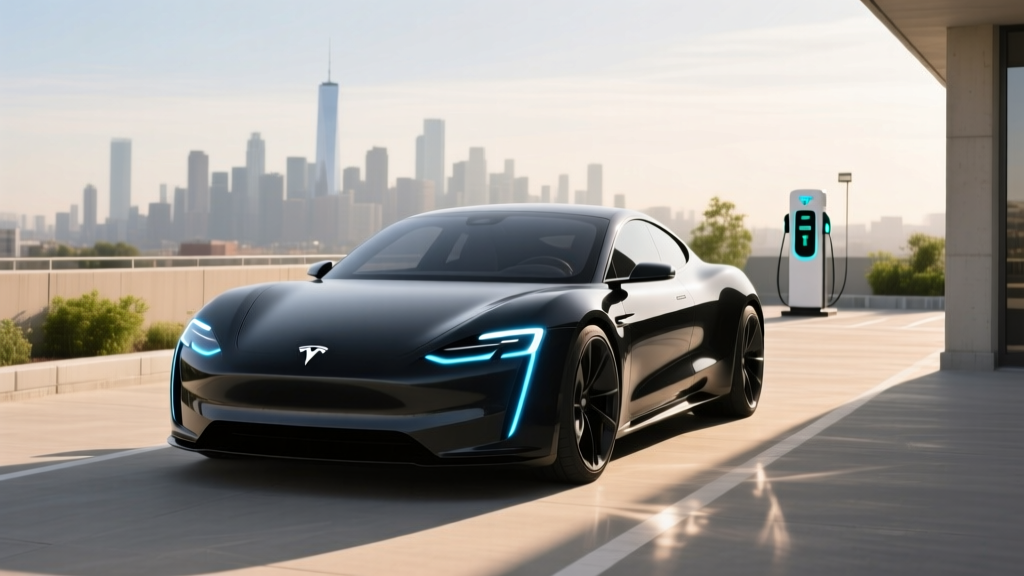
The original Tesla Roadster put the company on the map in 2008. More than a decade later, the second-generation Roadster remains one of the most anticipated — and most delayed — vehicles in automotive history. First teased in 2017 with a 2020 target, the Tesla Roadster 2 (2027) is now expected to enter production no earlier than late 2026 or 2027, according to Tesla's recent earnings calls and Elon Musk's public statements. This preview synthesizes every confirmed and estimated specification available as of early 2026, separates marketing claims from engineering reality, and explains what prospective buyers should actually expect.
Important: The Tesla Roadster 2 is not yet available for purchase. All specifications below are based on Tesla's official announcements, engineering disclosures, and industry analysis. Final EPA certification, pricing, and production timelines may differ. Reservations have been available at $50,000 (fully refundable) since the 2017 unveiling.
Preliminary Specifications at a Glance
| Attribute | Tesla Claim / Estimate | Status |
|---|---|---|
| Base MSRP | $200,000 (est. Founders Series $250,000) | Estimated |
| Battery Capacity | ~200 kWh (NMC chemistry) | Announced |
| EPA Range (Claimed) | 620 miles | Unverified by EPA |
| 0–60 mph | 1.9 seconds (base), <1s with SpaceX package | Announced |
| Top Speed | 250+ mph | Announced |
| Drivetrain | Tri-motor AWD (1 front, 2 rear) | Announced |
| Horsepower | ~1,000+ hp (estimated) | Estimated |
| Quarter Mile | 8.8 seconds (claimed) | Unverified |
| Seating | 2+2 (4 seats, rear extremely limited) | Announced |
| Roof | Removable glass panel | Announced |
| Federal Tax Credit | Not eligible (exceeds MSRP cap) | Per IRS §30D rules |
Range and Efficiency: The 620-Mile Claim Examined
Tesla has repeatedly stated a target of 620 miles of range for the Roadster 2, which would make it the longest-range production EV ever built by a massive margin. This figure would require the ~200 kWh battery pack Tesla has referenced in engineering presentations.
EPA estimated (claimed): 620 miles
Real-world highway expectation: ~480–530 miles at 70–75 mph
Cold-weather expectation (20°F): ~370–430 miles (30–40% reduction typical for high-speed, low-temperature driving)
City/mixed driving: ~550–590 miles
At 620 miles EPA, the Roadster 2 would need to achieve roughly 32.3 kWh/100mi — an extraordinarily low figure for a car with a 200 kWh pack. For context, the Lucid Air Grand Touring achieves ~26 kWh/100mi with a 112 kWh pack. A 200 kWh pack at similar efficiency would yield ~770 miles, so Tesla's 620-mile claim implies an efficiency of ~32.3 kWh/100mi, which is plausible given the Roadster's wider tires, sportier aerodynamics, and higher performance tuning.
The 200 kWh pack almost certainly uses NMC (nickel manganese cobalt) chemistry. Tesla reserves LFP (lithium iron phosphate) for its Standard Range vehicles where energy density is less critical. The Roadster demands maximum energy density to fit 200 kWh into a sports car chassis, and NMC's superior volumetric and gravimetric energy density makes it the only viable choice. Expect roughly 250–260 Wh/kg at the cell level, consistent with Tesla's latest 4680-cell NMC chemistry.
For MPGe context, if the Roadster achieves 32.3 kWh/100mi, that translates to approximately 104 MPGe combined (using the EPA conversion of 33.705 kWh = 1 gallon of gasoline). This is lower than efficiency-focused EVs like the Lucid Air (~131 MPGe) but exceptional for a 1,000+ hp hypercar.
Charging: How Fast Can a 200 kWh Pack Replenish?
Charging a 200 kWh battery presents a physics challenge. Tesla has not published official DC fast-charging specs for the Roadster 2, but we can make informed projections based on the Cybertruck's architecture and Tesla's V4 Supercharger capabilities.
| Charging Method | Power (kW) | Rate / Time | Notes |
|---|---|---|---|
| Level 1 (120V / 12A) | 1.4 kW | ~4 mi/hr added | Emergency/trickle only — a full charge would take ~6 days |
| Level 2 (240V / 48A) | 11.5 kW | ~33 mi/hr added | Full 0–100% in ~17–18 hours |
| Level 2 (240V / 80A) | 19.2 kW | ~55 mi/hr added | Requires 100A circuit; full charge in ~10–11 hours |
| DC Fast Charge (V4 Supercharger, projected peak) | ~350 kW | 10–80% in ~40–50 min | Charge curve will taper significantly above 60% SoC |
| DC Fast Charge (sustained average 10–80%) | ~250–280 kW avg | ~140 kWh added in 30 min | Realistic expectation for highway stops |
The critical insight here is that peak charge rate is not sustained charge rate. A 200 kWh pack charging at a peak of 350 kW (a C-rate of ~1.75C) will see significant taper above 50–60% state of charge. Expect the Roadster 2 to charge at or near peak rate only between roughly 10–40% SoC, then taper progressively. A 10–80% session will likely take 40–50 minutes at a V4 Supercharger — not the ~15 minutes some have speculated.
Home charging on a standard Level 2 setup (48A / 11.5 kW) will require overnight sessions of 17+ hours for a full charge. Most owners will charge from 20–80% daily, which takes roughly 10 hours at 48A — feasible for overnight charging. An 80A Level 2 circuit (19.2 kW) cuts this meaningfully but requires a dedicated 100-amp breaker and likely a panel upgrade for many homes. According to Tesla's home charging guide, electrical upgrades can add $1,500–$4,000+ to installation costs.
Performance: Tri-Motor AWD and Sub-2-Second Acceleration
The Roadster 2 uses a tri-motor all-wheel-drive layout: one motor on the front axle and two on the rear. This enables torque vectoring across the rear wheels and aggressive front-axle pull for launch control.
Tesla's claimed 1.9-second 0–60 mph time for the base model would make it the quickest-accelerating production car ever built. The optional "SpaceX package" — which Tesla has described as including cold-gas thrusters for additional downforce and launch grip — targets a sub-1-second 0–60 time, though this remains unverified and may not be street-legal in all jurisdictions.
Horsepower has not been officially published, but based on the tri-motor configuration and Tesla's latest drive unit technology (similar to the Plaid powertrain in the Model S), a reasonable estimate is 1,000–1,200 hp combined. The claimed 250+ mph top speed and 8.8-second quarter mile are consistent with this power output given the vehicle's estimated 4,400–4,800 lb curb weight.
For comparison, the Rivian R1T Quad-Motor produces 1,025 hp with a 0–60 of ~3.0 seconds. The Roadster 2's lower weight and more aggressive torque delivery account for the substantial gap.
Pricing, Trims, and Federal Tax Credit Eligibility
| Trim / Configuration | Est. MSRP | Federal Tax Credit | Effective Price |
|---|---|---|---|
| Base Roadster 2 | $200,000 | $0 | $200,000 |
| Founders Series (first 1,000 units) | $250,000 | $0 | $250,000 |
| With SpaceX Package (add-on) | +$50,000 (est.) | $0 | $250,000–$300,000 |
Federal tax credit status: The Tesla Roadster 2 does not qualify for the IRS §30D Clean Vehicle Credit. The law caps eligible vehicles at an MSRP of $80,000 for SUVs/pickups/vans and $55,000 for sedans/sports cars. At an estimated $200,000+ base price, the Roadster 2 exceeds every MSRP threshold by a factor of three or more. Buyer income caps ($150,000 single / $300,000 joint for modified AGI) are irrelevant here since the vehicle fails the MSRP test regardless.
Additionally, the §30D credit requires battery components and critical minerals to meet phased domestic-sourcing thresholds. Even if the Roadster 2 were under the MSRP cap, its large 200 kWh pack would face extreme difficulty meeting the critical-minerals and battery-component sourcing requirements in effect for 2027 model-year vehicles.
Bottom line: buyers should budget the full MSRP with no federal credit offset. State-level incentives (California's CVRP, for example, typically caps at $70,000–$80,000 MSRP) will also exclude the Roadster. Consult a tax professional for any applicable state or local programs.
Interior, Cargo, and Practicality
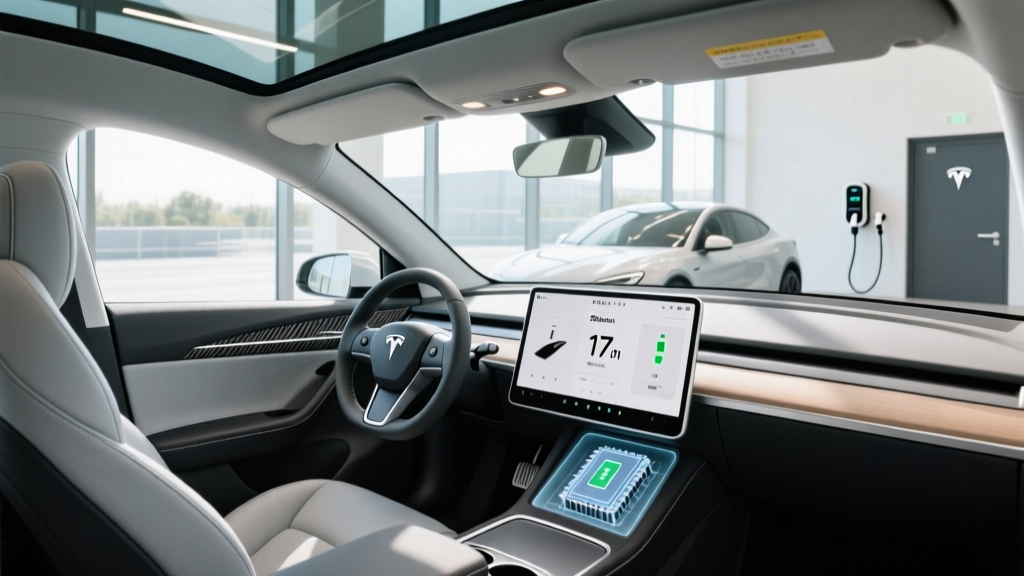
The Roadster 2 is a 2+2 sports car, meaning two front seats and two extremely small rear seats suitable only for children or cargo overflow. Tesla has shown a minimalist interior with a central touchscreen (likely 17-inch, similar to the refreshed Model S/X), a yoke-style steering wheel, and a removable glass roof panel that stores in the trunk.
Concrete interior dimensions have not been published, but based on the vehicle's exterior proportions (approximately 175 inches long, 78 inches wide, comparable to a Porsche 911 in footprint):
- Front legroom: ~42 inches (estimated, sports car typical)
- Rear legroom: ~24–28 inches (estimated — effectively token seating)
- Cargo (trunk/frunk combined): ~8–12 cu ft (estimated)
- Roof panel storage: consumes a significant portion of trunk space when stowed
This is not a practical daily driver for families. The Roadster 2 is a weekend car, a track-day companion, and a statement vehicle. If you need cargo space or regular rear-seat usability, the Tesla Model S or Lucid Air serve those needs while still offering exceptional performance.
Battery Warranty, Degradation, and Long-Term Ownership
Tesla has not published Roadster 2-specific warranty terms, but based on current Tesla policy for performance vehicles:
- Battery & Drive Unit Warranty: Expected 8 years / 150,000 miles (matching Model S Plaid), with a minimum 70% capacity retention threshold
- Vehicle Limited Warranty: 4 years / 50,000 miles (standard Tesla)
With a 200 kWh NMC pack, degradation management will be critical. NMC chemistry at high energy density typically loses 8–12% capacity over the first 100,000 miles under normal use. The Roadster's massive pack is an advantage here: most owners will rarely cycle the full 0–100% range, meaning typical daily use of 20–80% SoC will significantly extend battery life. Keeping the pack between 20–80% and avoiding repeated DC fast-charging to 100% should result in 90%+ capacity retention at 100,000 miles.
Replacement cost for a 200 kWh NMC pack is substantial. At current cell pricing (~$100–$120/kWh at the pack level), a full battery replacement out of warranty could cost $25,000–$35,000 including labor. This is a long-term ownership consideration that buyers at this price point should factor into total cost of ownership.
Driver Assistance and Technology
The Roadster 2 will ship with Tesla's latest hardware suite (HW4 or later), including:
- Autopilot: Standard — adaptive cruise control, lane centering, automatic emergency braking (SAE Level 2)
- Full Self-Driving (Supervised): Available as an add-on ($8,000–$12,000 estimated) — adds Navigate on Autopilot, Auto Lane Change, Autopark, Summon, and traffic light/stop sign control
- Infotainment: 17-inch touchscreen, over-the-air updates, gaming-capable processor, premium audio
- Unique features: Removable glass roof, configurable drive modes (Track, Sport, Range), torque-vectoring rear axle
Tesla Autopilot and FSD (Supervised) are SAE Level 2 driver-assistance systems. The driver must remain fully engaged, hands on or near the wheel, and eyes on the road at all times. These are not self-driving systems. Tesla's naming conventions ("Full Self-Driving") have been the subject of regulatory scrutiny by NHTSA. Never treat any current consumer vehicle as capable of unsupervised autonomous operation.
Pros, Cons, and Who Should Consider the Roadster 2
- 620-mile claimed range — eliminates range anxiety entirely
- Sub-2-second 0–60 mph — fastest production car ever, if verified
- Tri-motor AWD with torque vectoring
- Tesla Supercharger network access (17,000+ stalls in North America)
- Removable glass roof for open-air driving
- OTA updates and Tesla's software ecosystem
- $200,000+ price with zero federal or state incentive eligibility
- Not yet in production — delivery timeline remains uncertain
- 50-minute 10–80% DC fast charge due to massive pack
- Impractical 2+2 seating and minimal cargo
- $25,000–$35,000 battery replacement risk out of warranty
- Insurance costs will be extreme (likely $8,000–$15,000/year)
- Tesla's history of significant production delays
Who this EV suits best: The Roadster 2 is for affluent enthusiasts who want a halo electric sports car and can absorb a $200,000+ purchase without tax incentives. It's a weekend/track car, not a primary commuter. Buyers who prioritize practicality, charging speed, or value should consider the Tesla Model S Plaid ($89,990, 396-mile range, 1.99s 0–60) or the Lucid Air Sapphire ($249,000, 427-mile range, 1.89s 0–60) — both are available today.
Frequently Asked Questions
What is the real-world range of the Tesla Roadster 2?
Tesla claims 620 miles EPA, but this has not been verified by the EPA. In real-world highway driving at 70–75 mph, expect approximately 480–530 miles. In cold weather (20°F), that could drop to 370–430 miles. City and mixed driving should yield closer to the sticker figure, around 550–590 miles.
How fast does the Roadster 2 charge at home and on DC fast chargers?
On a standard 48A Level 2 home charger (11.5 kW), expect roughly 33 miles of range per hour and a full charge in 17–18 hours. On a Tesla V4 Supercharger, we project a peak rate around 350 kW, with a 10–80% session taking approximately 40–50 minutes due to the enormous 200 kWh pack and charge-curve taper above 60% SoC.
How much does the Tesla Roadster 2 cost after tax credits?
The estimated base price is $200,000, with the Founders Series at $250,000. The Roadster 2 does not qualify for the $7,500 federal §30D tax credit because it far exceeds the $55,000 MSRP cap for non-SUV vehicles. State incentives also typically exclude vehicles above $70,000–$80,000 MSRP. Budget the full MSRP.
Is the Roadster 2 worth buying vs. the Lucid Air Sapphire or Model S Plaid?
If you want a car you can take delivery of today, the Lucid Air Sapphire ($249,000, 1.89s 0–60, 427-mile range) and Tesla Model S Plaid ($89,990, 1.99s 0–60, 396-mile range) are both extraordinary performance EVs available now. The Roadster 2's primary advantage is its 620-mile range claim and exotic sports-car form factor, but it remains unproven and undelivered. Reserve only if you're comfortable with an indefinite wait and a non-refundable opportunity cost on your $50,000 deposit.
Does the Tesla Roadster 2 qualify for the federal EV tax credit?
No. Under current IRS §30D rules, new clean vehicle credits are limited to vehicles with an MSRP of $55,000 or less (sedans/sports cars) or $80,000 or less (SUVs/trucks/vans). The Roadster 2's estimated $200,000+ price disqualifies it entirely, regardless of buyer income or battery sourcing compliance.
When will the Tesla Roadster 2 actually ship?
Tesla has delayed the Roadster 2 repeatedly since its 2017 announcement. Originally targeted for 2020, then 2022, then 2025, the most recent guidance suggests production could begin in late 2026 or 2027. Tesla has a well-documented history of missing production timelines, so buyers should treat any announced date with caution and have a backup plan for their transportation needs.