The Car That Proved Electric Vehicles Could Be Desirable
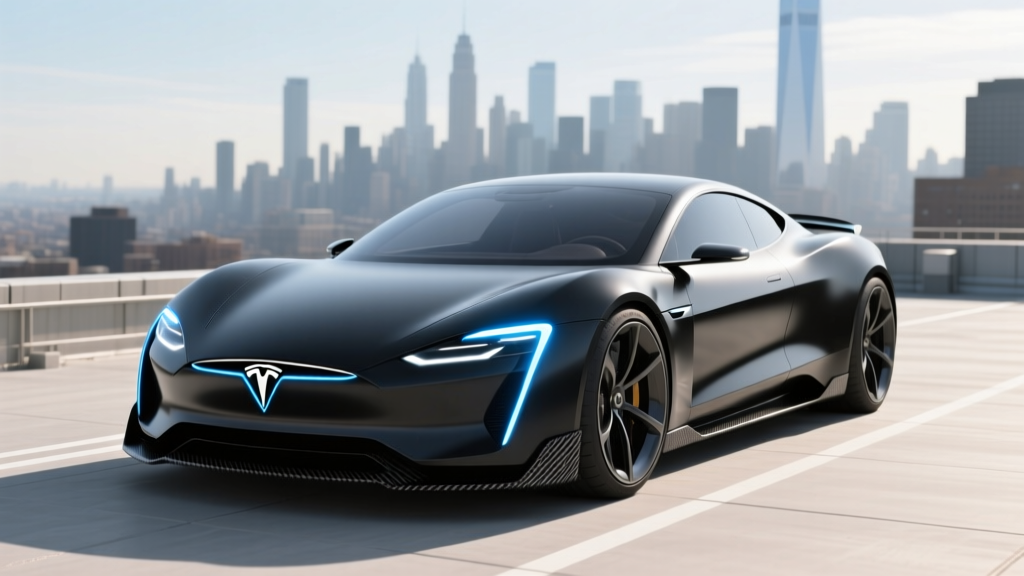
Before the Model S redefined the luxury sedan and the Model 3 democratized electric transport, there was the Tesla Roadster 1st generation — the low-volume, Lotus Elise-based sports car that shattered the golf-cart stereotype of EVs. Produced between 2008 and 2012, fewer than 2,450 units were built, making it one of the rarest and most historically significant electric vehicles ever sold. In 2026, the original Roadster exists in a unique space: part collector piece, part daily-drivable classic, and part cautionary tale about early battery technology.
This review examines what it's actually like to own and drive a first-generation Tesla Roadster today — real-world range, charging realities, maintenance costs, and whether this pioneering EV makes sense as a purchase in the modern market.
| Specification | Value |
|---|---|
| EPA Estimated Range | 244 miles (ideal); ~220 mi (combined adjusted) |
| Battery Capacity | 53 kWh (usable ~48 kWh), NMC lithium-ion |
| Motor / Drivetrain | Single AC induction motor, RWD |
| Horsepower / Torque | 288 hp / 273 lb-ft (Sport: 288 hp / 295 lb-ft) |
| 0–60 mph | 3.7 seconds (Sport model) |
| Top Speed | 125 mph (electronically limited) |
| Efficiency | 135 MPGe combined / 28 kWh per 100 mi |
| Cargo Space | ~4.0 cu ft (rear trunk, minimal) |
| Curb Weight | 2,723 lbs |
| Original MSRP | $109,000 (base); $128,500 (Sport) |
| Production Run | 2008–2012 (~2,450 units) |
| Battery Warranty (Original) | 5 years / 100,000 miles |
Real-World Range: What 53 kWh Delivers in 2026
The Tesla Roadster 1st generation carries a 53 kWh battery pack composed of 6,831 individual 18650-format lithium-ion cells — the same cell form factor Tesla would later scale into the Model S and Model 3, but arranged here in an early, hand-assembled configuration. The pack chemistry is nickel-manganese-cobalt (NMC), optimized for energy density over cycle life, which matters significantly for a 14-year-old vehicle.
The Roadster's battery management system (BMS) was sophisticated for its era but primitive compared to modern thermal management. The pack is air-cooled with active heating for cold-weather preconditioning, but it lacks the liquid cooling loops found in every Tesla since the Model S. This means sustained high-speed driving or fast charging generates heat that the system manages by limiting power — a constraint owners feel directly.
According to fueleconomy.gov, the Roadster's combined efficiency of approximately 28 kWh per 100 miles was class-leading in 2010 and remains respectable. For context, a 2026 Tesla Model 3 Long Range achieves roughly 25 kWh/100mi — only marginally better despite 14 years of advancement.
Charging: The Roadster's Biggest 2026 Limitation
Charging infrastructure has transformed dramatically since the Roadster was designed, and not entirely in this car's favor. The first-generation Roadster uses Tesla's proprietary early connector (pre-NACS), which is physically incompatible with modern Tesla Superchargers, CCS stations, or NACS-equipped chargers without an adapter — and even with adapters, DC fast charging is extremely limited.
| Charging Method | Power (kW) | Rate (miles/hour) | 0–Full Time |
|---|---|---|---|
| Level 1 (120V, 12A) | ~1.4 kW | ~5 mi/hr | ~35 hours |
| Level 2 — Standard (240V, 30A) | ~7.2 kW | ~25 mi/hr | ~9 hours |
| Level 2 — High Power Connector (240V, 70A) | ~16.8 kW | ~56 mi/hr | ~3.5 hours |
| DC Fast Charging | Not natively supported | N/A | N/A |
The Roadster's original High Power Connector (HPC) was a 240V, 70-amp wall unit that delivered up to 16.8 kW — remarkably fast for Level 2 in 2008. However, the car's onboard charger maxes at approximately 16.8 kW, and most modern public Level 2 stations deliver 7–11 kW through J1772 (with a Tesla adapter). This means a practical Level 2 charge from near-empty takes 6–9 hours at most public stations.
The DC fast-charging gap is the single biggest practical limitation. The Roadster 1st generation has no DC fast-charge port. There is no 10–80% fast-charge time to quote because the car physically cannot accept DC fast charging. Road trips require overnight stops with Level 2 access, making cross-country travel a multi-day commitment. For a sports car that was always positioned as a weekend vehicle, this is manageable — but it eliminates any pretense of spontaneous long-distance driving.
Tesla's proprietary Roadster connector adapter for J1772 Level 2 stations is available on the secondary market ($150–$300), and is essential for any owner planning to charge away from home.
Performance: Still Thrilling, Still Rear-Wheel Drive
The driving experience of the Tesla Roadster 1st generation remains genuinely compelling in 2026. The single rear-mounted AC induction motor produces 288 horsepower and 273 lb-ft of torque (295 lb-ft in the Sport variant), delivered through a single-speed gearbox. The 0–60 mph time of 3.7 seconds in the Sport model was supercar territory in 2009 and still feels urgent today — though it's now eclipsed by a $55,000 Tesla Model 3 Performance (3.1 seconds) and thoroughly humiliated by the $200,000+ Model S Plaid (1.99 seconds).
What the numbers don't convey is the character of the acceleration. The Roadster is a 2,723-pound, mid-engine-balanced, Lotus-derived chassis with instant electric torque hitting the rear wheels. There is no stability control in the earliest models (2008–2009), and even the 2010+ models with added traction control feel raw compared to modern EVs. The steering is unassisted and heavy at low speeds but communicative in a way that no current electric vehicle replicates. This is a driver's car in the analog tradition — the EV powertrain is almost secondary to the chassis dynamics.
Regenerative braking in the Roadster is aggressive by modern standards, with a single setting that provides strong deceleration upon lift-off. Tesla's early implementation of one-pedal driving was a revelation in 2008; today, it feels comparable to the standard regen modes offered by most EVs, though without the adjustability of modern systems.
Interior, Tech, and Daily Livability
The Roadster's cabin is essentially a Lotus Elise interior with minor Tesla modifications — which means it is cramped, spartan, and built to a sports-car standard rather than a luxury one. The 7-inch touchscreen infotainment system was impressive in 2008 but is functionally obsolete by 2026 standards: no navigation updates, no streaming, no over-the-air software updates, no app ecosystem. Bluetooth phone connectivity exists but is unreliable with modern smartphones.
Cargo capacity is approximately 4.0 cubic feet in the rear trunk — enough for a weekend bag or a set of groceries, but not both simultaneously. There is no frunk (the front trunk space is occupied by power electronics and the 12V battery). Legroom is adequate for drivers under 6'2", but taller occupants will find the fixed-seat, adjustable-pedal arrangement limiting.
Notable drawbacks:
- No driver-assistance features whatsoever — no cruise control, no lane-keeping, no automatic emergency braking (SAE Level 0)
- The convertible soft top is manually operated and prone to leaks in heavy rain
- The HVAC system is weak by modern standards; cabin heating draws significantly from the battery
- No backup camera (not federally required until 2018)
- The touchscreen is resistive (not capacitive), requiring firm presses
Standout features for its era:
- The first production EV with a 200+ mile range
- Carbon fiber body panels over a bonded aluminum chassis
- Vehicle diagnostics accessible via the touchscreen, including individual battery cell monitoring
- Over-the-air updates (now discontinued, but pioneering at the time)
Pricing, Collector Value, and Tax Credit Reality
The Tesla Roadster 1st generation is no longer sold new and does not qualify for the federal §30D new EV tax credit (which applies only to new vehicles meeting current battery-sourcing, MSRP, and income requirements per IRS guidelines). The used clean vehicle credit (up to $4,000 or 30% of sale price, whichever is less) requires the vehicle to be sold for $25,000 or less through a licensed dealer — a threshold that no Roadster 1st generation meets in 2026.
| Category | Details |
|---|---|
| Original MSRP (2008) | $109,000 (base) / $128,500 (Sport) |
| 2026 Collector Market Value | $90,000 – $180,000+ (auction/private sale) |
| Federal New EV Credit (§30D) | Not eligible (discontinued) |
| Federal Used EV Credit | Not eligible (sale price exceeds $25,000 cap) |
| State/Local Incentives | Varies by jurisdiction; most age-restricted |
On the collector market, Roadster values have stabilized and, in some cases, appreciated. Low-mileage examples (under 30,000 miles) with original batteries and documented service history command $120,000–$180,000 at auction, according to Bring a Trailer and Hagerty valuation data. Higher-mileage examples or those requiring battery replacement sell in the $80,000–$100,000 range. The Roadster's status as the first production Tesla — and the car that launched the modern EV movement — provides a floor under values that few 15-year-old vehicles enjoy.
Battery Degradation and Replacement: The Critical Ownership Question
The 53 kWh NMC battery pack is the defining variable in Roadster ownership. Tesla's original warranty covered the pack for 5 years / 100,000 miles, and nearly all Roadsters are well past both thresholds in 2026. Battery degradation on these early packs is significant and varies widely based on charging habits, climate, and whether the car was regularly stored at high state of charge.
Data from the Tesla Roadster community and owner surveys suggest typical capacity retention of 65–80% after 10–14 years and 50,000–100,000 miles. A pack that began with ~48 kWh usable capacity may now deliver 32–38 kWh, directly reducing real-world range to the 140–180 mile band under normal conditions.
Tesla offered a battery replacement program for the Roadster, but official replacement packs are no longer readily available through Tesla service centers. Third-party battery refurbishment services exist (notably from specialty EV shops), with replacement costs ranging from $25,000 to $40,000 depending on cell sourcing and labor. Some owners have pursued individual cell-level repairs, which can address specific failed modules for $5,000–$10,000 but require specialized expertise.
The original powertrain warranty of 5 years / 100,000 miles has long expired on all examples. The AC induction motor itself is remarkably durable and rarely requires service; the power electronics (inverter, charger) are more common failure points, with repairs ranging from $3,000–$8,000.
Who Should Buy a 1st Generation Tesla Roadster in 2026?
- Historically significant — the car that launched Tesla and the modern EV era
- Lotus-derived chassis with exceptional handling and steering feel
- Strong collector value retention and potential appreciation
- 3.7-second 0–60 mph remains exciting
- Lightweight (2,723 lbs) — a rarity among EVs
- Active owner community with parts and knowledge sharing
- No DC fast charging — road trips require overnight Level 2 stops
- Significant battery degradation; replacement costs $25K–$40K
- Obsolete infotainment and zero driver-assistance technology
- Limited cargo (4 cu ft) and cramped cabin
- Proprietary charging connector requires adapters
- No federal tax credit eligibility
- Poor cold-weather range (25–35% loss below 40°F)
- Parts availability declining; Tesla no longer actively supports the model
This EV suits: Collectors, EV historians, and driving enthusiasts who want the origin story of the electric revolution and understand they are buying a weekend sports car, not a daily driver. The Roadster makes sense as a garage companion to a modern EV — driven on sunny days, charged overnight on Level 2, and appreciated for what it represents.
This EV does not suit: Anyone seeking a practical daily commuter, a road-trip vehicle, a tech-forward experience, or a financially rational EV purchase. A 2026 Tesla Model 3, Hyundai Ioniq 5, or Chevrolet Bolt offers more range, faster charging, modern safety features, and full tax credit eligibility at a fraction of the Roadster's collector price.
Frequently Asked Questions
What is the real-world range of the Tesla Roadster 1st generation?
With a healthy battery in moderate temperatures, expect 160–200 miles on mixed driving. Highway-only range drops to 140–170 miles. Cold weather can reduce range by 25–35%. Battery degradation is the primary variable — a degraded pack may deliver only 120–150 miles.
How fast does the Roadster charge at home and in public?
On a 240V Level 2 charger at 30 amps (~7.2 kW), the Roadster gains approximately 25 miles of range per hour, reaching a full charge in about 9 hours. Tesla's original High Power Connector (70A, 16.8 kW) can fully charge in ~3.5 hours, but these units are rare. There is no DC fast-charging capability.
Does the Tesla Roadster 1st generation qualify for any federal EV tax credit?
No. The §30D new clean vehicle credit applies only to new vehicles. The used clean vehicle credit requires a sale price of $25,000 or less through a licensed dealer — far below the Roadster's collector market value of $80,000–$180,000+. State incentives vary; consult your local revenue department.
How much does a battery replacement cost?
Third-party battery replacement or refurbishment typically costs $25,000–$40,000. Module-level repairs for specific failed cells can be done for $5,000–$10,000 by specialized shops. Tesla no longer offers official replacement packs for the 1st generation Roadster.
Is the 1st generation Roadster worth buying versus a modern EV?
As a collector piece and driving experience, yes — if you value historical significance and Lotus chassis dynamics. As a practical EV purchase, no. Modern EVs offer superior range, charging speed, safety, technology, and warranty coverage at lower prices with tax credit eligibility. The Roadster is a collectible, not a competitor to current production vehicles.
Can I use Tesla Superchargers with a 1st generation Roadster?
No. The Roadster uses Tesla's original proprietary connector, which predates both the current NACS standard and the Supercharger network. Even with adapters, the Roadster's electrical architecture does not support DC fast charging. You are limited to Level 1 and Level 2 AC charging.
What should I look for when buying a used 1st gen Roadster?
Prioritize: (1) battery health report showing capacity retention above 70%, (2) complete service records, (3) PEM (Power Electronics Module) replacement history, (4) mileage under 60,000, and (5) garage-kept examples from mild climates. Avoid cars that were regularly charged to 100% and stored at high state of charge.