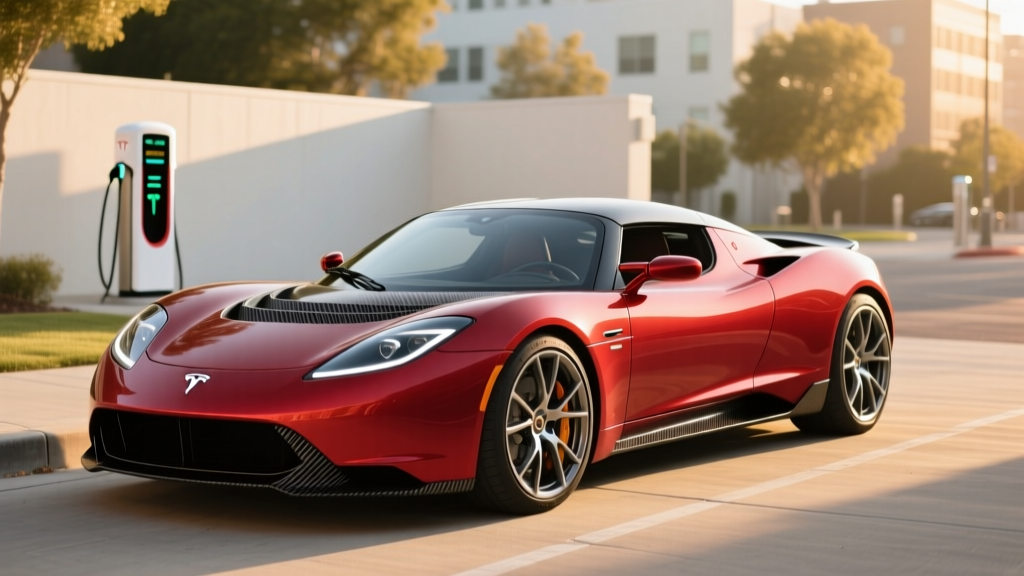
The Tesla Roadster 1st Gen isn't just a car — it's the vehicle that proved battery-electric performance was viable, launching Tesla from a Silicon Valley startup into a global automaker. Produced between 2008 and 2012 with roughly 2,450 units built, the original Roadster remains a milestone machine. But in 2026, the question for collectors and EV enthusiasts isn't historical significance — it's whether this pioneering sports car is actually ownable, drivable, and worth its premium on the used market.
This profile covers every spec that matters for a prospective buyer or current owner: real-world range expectations, the unique battery architecture, charging limitations, maintenance realities, and where the 1st-gen Roadster stands against modern EVs and its own successor.
Quick Verdict: The Roadster That Started It All
The 1st-gen Tesla Roadster delivers a raw, analog-meets-electric driving experience that no modern EV replicates. Its 244-mile EPA range was extraordinary for 2008 and remains usable for weekend drives today. However, prospective owners must understand this is a collector-grade, low-volume sports car — not a daily driver. Parts scarcity, aging battery packs, and the absence of DC fast charging define the ownership experience. If you're buying for history and weekend enjoyment, it rewards. If you need practicality, look elsewhere.
Range, Battery, and Efficiency
| Spec | Value |
|---|---|
| EPA Range (original) | 244 miles (Sport: 236 mi) |
| Battery Capacity (usable) | ~53 kWh (6,831 cells) |
| Battery Chemistry | Lithium-cobalt-oxide (NMC-type) |
| Energy Consumption | ~280 Wh/mi (EPA combined) |
| MPGe (EPA combined) | 119 MPGe |
| Drivetrain | Rear-wheel drive (RWD) |
| Motor Output | 288 hp (Sport: 288 hp, more torque) |
| 0–60 mph | 3.9 sec (Sport: 3.7 sec) |
| Top Speed | 125 mph (electronically limited) |
| Curb Weight | ~2,690 lbs |
| Cargo Volume | ~3.0 cu ft (rear trunk) |
Battery Chemistry and Architecture
The Roadster's battery pack was radical for its time: 6,831 commodity 18650-format lithium-ion cells (the same form factor used in laptops) arranged into 11 modules. The chemistry is a lithium-cobalt-oxide (LCO/NMC) cathode — chosen for high energy density at the expense of thermal stability and cycle life compared to modern LFP or NMC 811 chemistries.
This pack was never designed for a 15-year service life. Original packs have experienced significant degradation, with many retaining 60–75% of original capacity by 2026. Tesla offered an ESS 3.0 and later ESS 4.0 replacement program, with the ESS 4.0 (introduced around 2020) providing new cells and slightly improved capacity (~62 kWh usable). Replacement cost through Tesla was approximately $29,000–$35,000, though availability has become limited as Tesla prioritizes current-production vehicles.
Efficiency in Context
At roughly 280 Wh/mile, the Roadster is less efficient than modern EVs — a Tesla Model 3 RWD achieves about 240 Wh/mi. The difference comes from the Roadster's older power electronics, lack of a heat pump (cabin heating uses resistive elements, drawing heavily from the pack), and a heavier, less aerodynamic body relative to its battery size. For a weekend car, the efficiency penalty is negligible; for daily use, it adds up.
Charging: The Roadster's Biggest 2026 Limitation
Charging is where the 1st-gen Roadster shows its age most acutely. This car predates modern DC fast-charging standards entirely.
| Charging Level | Power (kW) | Speed | Notes |
|---|---|---|---|
| Level 1 (120V) | ~1.4 kW | ~5 mi/hr | Emergency/trickle only |
| Level 2 (240V, HPWC) | ~16.8 kW (70A) | ~56 mi/hr | Tesla High Power Wall Connector required; full charge in ~3.5 hrs |
| Level 2 (240V, standard) | ~6.6 kW (28A) | ~22 mi/hr | Using mobile connector or J1772 adapter; full charge in ~8 hrs |
| DC Fast Charging | N/A | N/A | No CCS, CHAdeMO, or NACS DC port. No Supercharger access. |
The critical takeaway: There is no DC fast charging on the 1st-gen Roadster. Period. The car uses a proprietary AC inlet (a precursor to Tesla's later connectors) and requires Tesla's High Power Wall Connector (HPWC) for its maximum 16.8 kW Level 2 rate. Standard J1772 adapters work but are limited to ~6.6 kW. You cannot pull into a Supercharger or Electrify America station and charge. Every trip must begin and end at a Level 2 charger, and road trips require meticulous planning around overnight stops with 240V access.
For context, a modern Tesla Model 3 charges at up to 250 kW on DC fast chargers, adding ~200 miles in 15 minutes. The Roadster's charging profile is fundamentally incompatible with road-trip-style EV travel as it exists in 2026.
Performance and Driving Experience
The Roadster's performance remains genuinely thrilling. The single rear-mounted AC induction motor delivers 288 horsepower and instant torque with zero gear shifts (the production car uses a single-speed fixed-gear transmission after Tesla abandoned the original two-speed concept). The 3.7-second 0–60 time in Sport trim still holds up against many modern sports cars.
What distinguishes the Roadster from contemporary EVs is its rawness. There is no adaptive cruise control, no lane-keeping assist, no Autopilot, no regenerative one-pedal driving mode (regen is present but mild by 2026 standards). The steering is unassisted at low speeds and heavy. The cabin is loud — road noise, motor whine, and wind all compete. The Lotus Elise-derived chassis gives it go-kart handling with a stiff, unforgiving ride. This is a driver's car in the most analog sense, with an electric powertrain bolted into a minimalist sports-car body.
What It Lacks vs. Modern EVs
- No driver-assistance features (ADAS) — SAE Level 0
- No over-the-air software updates
- No mobile app connectivity (remote pre-conditioning, status checks)
- No heat pump — cabin heat draws directly from the traction battery
- Limited regenerative braking — cannot truly one-pedal drive
- No frunk — front trunk space is occupied by power electronics
Interior, Cargo, and Practicality
The Roadster is a strict two-seater with a cabin derived from the Lotus Elise. Interior materials are sparse: exposed carbon fiber, basic leather seats, and a small 3.5-inch instrument cluster screen that was added for the 2010 model year (earlier 2008 models used a simpler display). There is no center infotainment screen, no navigation system, no Bluetooth audio streaming, and no backup camera.
Cargo space is limited to a shallow rear trunk of approximately 3.0 cubic feet — enough for a weekend bag or two. There is no rear seat, no frunk, and minimal door-pocket storage. Legroom is adequate for occupants under 6'2", but the fixed seat position and low roofline make entry and exit challenging for taller drivers.
This car was never designed for practicality. It's a weekend toy, a showpiece, and a conversation starter. Judge it on those terms.
Pricing, Collector Value, and Tax Credit Eligibility
The original MSRP of the Tesla Roadster was $109,000 (base) to $128,500 (Sport/Signature trims) when new. In 2026, the used collector market tells a different story:
| Condition / Spec | Typical Price Range |
|---|---|
| Original pack, high miles (>60k) | $80,000 – $110,000 |
| Original pack, low miles (<25k) | $120,000 – $160,000 |
| ESS 4.0 battery replacement | $140,000 – $200,000 |
| Signature Series / ultra-low mileage | $180,000 – $250,000+ |
Federal Tax Credit: Not Applicable
The IRS §30D federal EV tax credit applies only to new clean vehicles purchased from a dealer. The 1st-gen Roadster has been out of production since 2012 and is available exclusively on the used/collector market. The used clean vehicle credit (up to $4,000 or 30% of sale price, whichever is less) has its own constraints:
- Vehicle MSRP when new must not exceed $25,000 (the Roadster was $109,000+)
- Vehicle must be at least two model years old (met)
- Buyer income caps apply ($75,000 single / $150,000 joint)
- Sale price must be $25,000 or less
The Roadster does not qualify for any federal EV tax credit under current rules. The original MSRP and current collector pricing both exceed all credit thresholds. Budget accordingly — the purchase price is the purchase price.
Battery Longevity, Warranty, and Maintenance
The original Tesla Roadster warranty provided 3 years / 36,000 miles on the vehicle and 5 years / 100,000 miles on the battery pack and powertrain. All factory warranties expired years ago. There is no remaining manufacturer warranty coverage on any 1st-gen Roadster unless an extended third-party policy was purchased.
Battery Replacement Reality
The battery pack is the single largest financial risk in Roadster ownership. Original ESS (Energy Storage System) packs are now 14–18 years old. Lithium-cobalt chemistry degrades with both cycle count and calendar age, even when the car is garaged. Key facts:
- Original ESS pack remaining capacity: Typically 60–75% State of Health (SoH) in 2026, translating to ~145–180 miles of real-world range
- ESS 4.0 replacement: ~62 kWh usable, restores 200+ mile range, costs $29,000–$35,000 (when available through Tesla)
- Third-party rebuilds: Some specialty shops offer cell-level rebuilds for $15,000–$22,000, but quality and warranty vary significantly
- Wait times: Tesla's Roadster battery replacement program has experienced multi-month backlogs; plan accordingly
Other Maintenance Considerations
Beyond the battery, the Roadster's Lotus-derived chassis requires attention to suspension bushings, brake components, and the PEM (Power Electronics Module) cooling system. The PEM coolant should be flushed per the original service schedule — neglected units have failed, and replacements are expensive and scarce. Tires are a non-standard size and can be difficult to source. Annual insurance for a collector Roadster typically runs $2,500–$5,000 depending on agreed-value coverage.
Pros and Cons
Pros
- Historic significance — the car that launched Tesla and the modern EV movement
- Genuine sports-car performance: 3.7s 0–60, RWD, Lotus chassis dynamics
- Appreciating collector asset — values have trended upward since 2020
- 244-mile EPA range remains adequate for weekend and show-car use
- Lightweight (2,690 lbs) by modern EV standards — engaging, analog feel
- Exclusive ownership — only ~2,450 built worldwide
Cons
- No DC fast charging — road trips are impractical
- Aging battery packs with $30k+ replacement cost and uncertain availability
- No driver-assistance features, modern infotainment, or OTA updates
- Parts scarcity for body panels, PEM, and drivetrain components
- No federal tax credit eligibility at any price point
- Minimal cargo (3 cu ft) and challenging entry/exit for taller drivers
- Insurance and maintenance costs exceed typical EV ownership
Who Should Buy the 1st-Gen Roadster?
This car suits a very specific buyer:
- EV history collectors who want the founding vehicle of the electric revolution in their garage
- Weekend drivers who plan 100–150 mile loops with home charging at both ends
- Investors who view low-production EVs as appreciating assets (the Roadster has outperformed many contemporary sports cars in value retention)
- Lotus enthusiasts who appreciate the Elise chassis with an electric twist
It does not suit daily commuters, road-trippers, families, or anyone who needs modern convenience features. If you want a usable electric sports car for regular driving, the Porsche Taycan, BMW i4 M50, or even a used Tesla Model 3 Performance offer dramatically more practicality with modern charging infrastructure access.
Frequently Asked Questions
What is the real-world range of the Tesla Roadster 1st Gen in 2026?
With an original battery at ~65–75% State of Health, expect 145–180 miles in mixed driving. An ESS 4.0 replacement pack restores 200–220 miles in mild conditions. Highway driving at 75+ mph and cold weather (below 40°F) will reduce these figures by 20–35%.
How fast does the 1st-gen Roadster charge?
Maximum Level 2 charging is 16.8 kW using Tesla's High Power Wall Connector, adding roughly 56 miles of range per hour and fully charging the pack in about 3.5 hours. Standard 240V outlets deliver ~6.6 kW (~22 mi/hr). There is no DC fast charging capability.
Does the Tesla Roadster 1st Gen qualify for any federal EV tax credit?
No. The IRS §30D new vehicle credit doesn't apply (out of production since 2012). The used EV credit requires a sale price under $25,000 and an original MSRP under $25,000 — the Roadster fails both tests at its $109,000+ original MSRP and $80,000+ current collector pricing.
Is it worth buying a 1st-gen Roadster vs. the upcoming Tesla Roadster 2?
These are fundamentally different purchases. The 1st-gen is a proven, available collector car with known (if expensive) maintenance needs. The next-gen Roadster has been announced since 2017 but remains unreleased as of 2026 with no firm delivery date. If you want a drivable piece of EV history now, the 1st-gen is the only option.
What are the biggest risks of owning a 1st-gen Roadster?
Battery degradation and replacement cost ($29,000–$35,000 for an ESS 4.0, if available) is the primary risk. Secondary concerns include PEM cooling system failure, parts scarcity for body and suspension components, and the total absence of DC fast charging for any trip beyond your Level 2 charger's radius.
Can I charge a 1st-gen Roadster at a Tesla Supercharger?
No. The 1st-gen Roadster uses a proprietary AC inlet that predates the Tesla NACS DC connector. It is physically and electrically incompatible with Supercharger stations, CCS chargers, and CHAdeMO stations. Charging is limited to Level 1 and Level 2 AC sources only.
Sources: EPA Fuel Economy — 2011 Tesla Roadster; IRS §30D Clean Vehicle Credit; Tesla Roadster Support.