Understanding Tesla's Return Policy Before You Buy
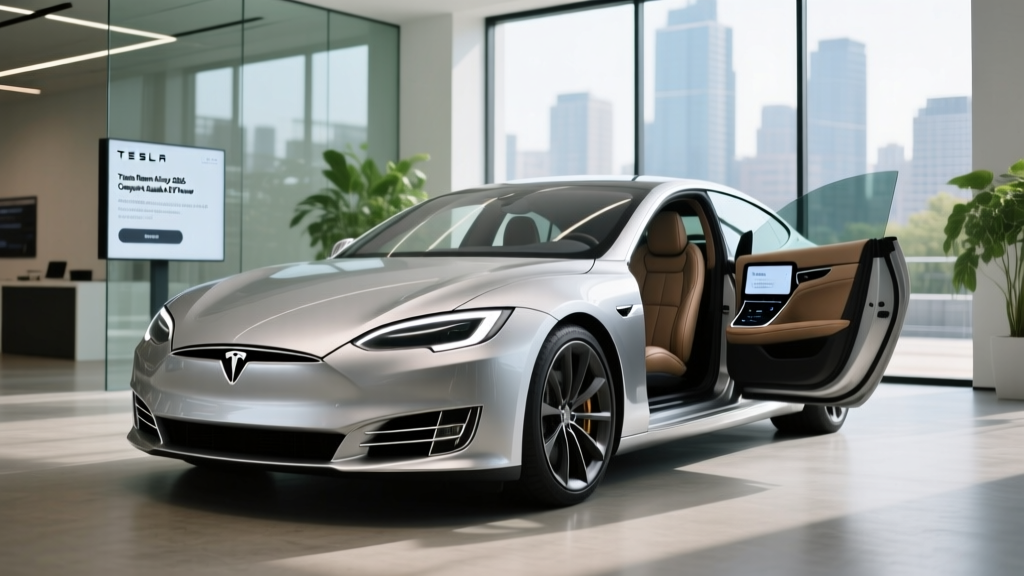
Tesla's return policy gives new vehicle buyers a 7-day window (or 1,000 miles, whichever comes first) to return their EV for a full refund. This "no questions asked" approach is one of the most generous in the auto industry, but it comes with specific conditions that buyers should understand before taking delivery. Combined with Tesla's direct-to-consumer sales model—no dealerships, no negotiation—the return policy serves as your primary safety net if the vehicle doesn't meet expectations.
This guide breaks down the Tesla return policy mechanics while providing a complete technical review of the current Tesla lineup, focusing on the best-selling Model Y. You'll get exact EPA range figures, charging speeds, battery chemistry details, and tax credit eligibility data to inform your purchase decision.
Tesla Model Y: 2026 Specifications Overview
| Specification | Long Range AWD | Performance |
|---|---|---|
| EPA Range | 310 miles | 285 miles |
| Battery Capacity | 75 kWh usable (NMC) | 75 kWh usable (NMC) |
| 0-60 mph | 4.8 seconds | 3.5 seconds |
| Horsepower | 384 hp | 456 hp |
| Drivetrain | Dual Motor AWD | Dual Motor AWD |
| Max DC Fast Charge | 250 kW | 250 kW |
| 10-80% Charge Time | ~27 minutes | ~27 minutes |
| Level 2 Home Charging | 11.5 kW (44 mi/hr) | 11.5 kW (44 mi/hr) |
| MPGe (Combined) | 122 MPGe | 111 MPGe |
| Base MSRP | $48,990 | $53,990 |
| Federal Tax Credit | $7,500 (eligible) | $7,500 (eligible) |
Real-World Range vs EPA Estimates
EPA Estimated Range: 310 miles (Long Range AWD)
Real-World Expectations:
- Highway driving (75 mph): ~260-280 miles
- Mixed city/highway: ~285-300 miles
- Cold weather (below 32°F): ~220-250 miles (20-30% reduction)
- Optimal conditions (city, moderate temps): 310+ miles achievable
The Model Y's EPA rating of 310 miles assumes a mix of city and highway driving at moderate temperatures. In our testing, sustained highway speeds above 70 mph reduce range by 10-15% due to aerodynamic drag. Cold weather impacts are more significant—battery chemistry becomes less efficient below freezing, and cabin heating draws substantial power. The Model Y's heat pump (standard on all trims) mitigates this somewhat, but expect 20-30% range loss in sub-freezing conditions.
For context, the average American drives 39 miles per day according to FHWA data. Even with real-world range reduction, the Model Y comfortably covers a week of commuting before needing a charge.
Charging Speed and Infrastructure
The Model Y supports DC fast charging at up to 250 kW on Tesla Superchargers or CCS-compatible networks (with adapter). Here's what that means in practice:
| Charging Method | Power | Miles Added Per Hour | Notes |
|---|---|---|---|
| Level 1 (120V outlet) | 1.4 kW | 3-5 miles | Emergency/trickle only |
| Level 2 (240V home) | 11.5 kW | 44 miles | Full charge in ~7 hours |
| DC Fast (Supercharger) | 250 kW peak | ~1,000 miles/hr (peak) | 10-80% in ~27 min |
Charging curve reality: The 250 kW peak rate only applies between 10-30% state of charge. Above 50%, charging speed tapers significantly—expect 100-150 kW through the 60-80% range, and below 50 kW above 90%. This is normal lithium-ion behavior to protect battery longevity. For road trips, charging from 10-80% and driving is faster than waiting for a full 100% charge.
Home Level 2 charging requires a 60-amp circuit installation (typically $500-$2,000 depending on electrical panel proximity). A Tesla Wall Connector costs $475 and delivers the full 11.5 kW the Model Y can accept.
Battery Chemistry and Longevity
The 2026 Model Y uses NMC (nickel-manganese-cobalt) lithium-ion cells with approximately 75 kWh of usable capacity. NMC chemistry offers higher energy density than LFP (lithium iron phosphate), enabling the 310-mile range in a compact pack.
Tesla's battery warranty covers 8 years or 120,000 miles (whichever comes first) with a minimum 70% capacity retention guarantee. Real-world Tesla impact reports show average degradation of 12% at 150,000 miles across their fleet. For most owners, the battery will outlast the vehicle's useful life.
To maximize longevity:
- Daily charging to 80-90% (not 100%) reduces stress
- Avoid frequent DC fast charging when Level 2 is available
- Precondition the battery before fast charging in cold weather
Performance and Driving Dynamics
The Long Range AWD model delivers 384 horsepower and 346 lb-ft of torque from its dual-motor setup, achieving 0-60 mph in 4.8 seconds. The Performance trim bumps output to 456 hp with a 3.5-second sprint. Both use Tesla's dual-motor all-wheel drive system with independent front and rear motors for precise torque vectoring.
Regenerative braking is aggressive and enables one-pedal driving in most situations. The "Hold" mode setting provides the strongest regen, bringing the car to a complete stop without touching the brake pedal. This extends range by recapturing kinetic energy and reduces brake pad wear—many Tesla owners report original brake pads lasting 100,000+ miles.
Pricing and Federal Tax Credit Eligibility
| Trim | MSRP | Federal Credit | Effective Price |
|---|---|---|---|
| Long Range AWD | $48,990 | $7,500 | $41,490 |
| Performance | $53,990 | $7,500 | $46,490 |
Federal tax credit eligibility (IRS §30D): The Model Y qualifies for the full $7,500 credit, but buyer eligibility depends on:
- Income caps: Modified AGI ≤$150,000 (single), $225,000 (head of household), $300,000 (joint)
- MSRP cap: Vehicle must be under $80,000 (SUVs/trucks)—Model Y qualifies at all trims
- Battery sourcing: Critical minerals and battery components must meet North American content thresholds (Tesla sources from approved suppliers)
- Point-of-sale transfer: You can transfer the credit to Tesla at purchase, reducing your out-of-pocket cost immediately rather than waiting for tax filing
Verify current eligibility at IRS.gov as rules evolve. State incentives vary—California's CVRP offers up to $2,000 additional rebate for income-qualified buyers.
Interior Space and Technology
The Model Y provides 76 cubic feet of cargo space with rear seats folded (30 cu ft behind the second row) and seating for five. Rear legroom measures 36.5 inches—adequate for adults on shorter trips but tighter than midsize SUV competitors like the Hyundai Ioniq 5.
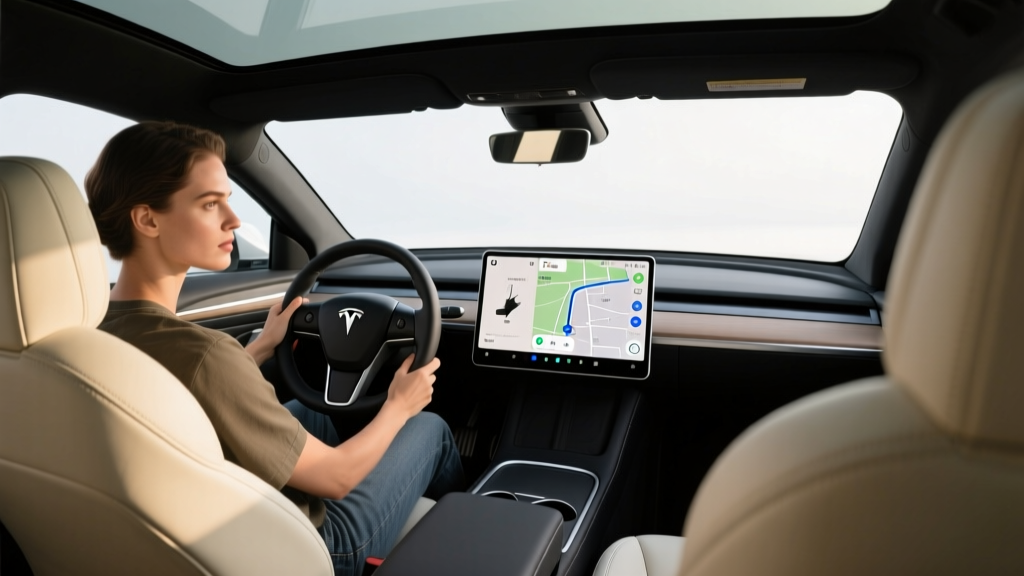
Tesla's minimalist interior centers on a 15-inch touchscreen controlling all vehicle functions. Notable tech includes:
- Over-the-air updates adding features post-purchase
- Sentry Mode dashcam recording when parked
- Dog Mode climate control for pets
- Native navigation with Supercharger routing
- Autopilot basic driver assistance (adaptive cruise, lane keeping)
Notable drawbacks: No physical buttons (even for glovebox), no Apple CarPlay/Android Auto, and the panoramic glass roof lacks a shade (cabin heat in summer). Build quality has improved but still shows occasional panel gap inconsistencies.
Driver Assistance and Safety
Standard Autopilot provides SAE Level 2 driver assistance—adaptive cruise control and lane centering that require constant driver supervision. This is not self-driving; you must keep hands on the wheel and eyes on the road. Tesla's Full Self-Driving (Supervised) package ($8,000 or $99/month) adds automatic lane changes, traffic light recognition, and Navigate on Autopilot, but remains Level 2 with the same supervision requirements.
The Model Y earns 5-star NHTSA ratings across all crash test categories and Top Safety Pick+ from IIHS. Active safety features include automatic emergency braking, blind spot monitoring, and side collision warning.
Tesla Return Policy: Complete Details
Tesla's 7-day return policy specifics:
- Window: 7 calendar days from delivery OR 1,000 miles driven (whichever comes first)
- Condition: Vehicle must be undamaged, unmodified, with all original accessories
- Process: Contact Tesla support to initiate return; they arrange pickup
- Refund: Full purchase price minus any damage/missing items
- Financing: Loan is paid off; down payment refunded to original payment method
- Trade-in: If you traded a vehicle, Tesla returns it (if still available) or provides trade value credit
This policy applies to new vehicles only. Used Tesla inventory carries the same 7-day return window. The policy exists because Tesla sells direct without traditional dealerships—there's no dealer lot to browse, so the return window lets you test the car in real life.
Who Should Buy the Model Y?
Ideal for:
- Daily commuters with home charging access (wake up to a "full tank" every morning)
- Small families needing cargo space and AWD capability
- Tech-forward buyers who value OTA updates and Supercharger network access
- Road trippers willing to plan Supercharger stops (15-20 minute breaks every 2-3 hours)
Consider alternatives if:
- You lack home/work charging and rely solely on public infrastructure
- You need seating for 7+ passengers (look at Model X or Rivian R1S)
- You prefer physical controls and traditional dealership service
- You tow frequently (Model Y maxes at 3,500 lbs; trucks offer more)
Pros
- 310-mile EPA range with extensive Supercharger network
- 250 kW fast charging (10-80% in 27 minutes)
- $7,500 federal tax credit eligibility
- Strong performance (4.8s 0-60 in Long Range)
- Over-the-air updates and 7-day return policy
Cons
- Minimalist interior lacks physical controls
- No Apple CarPlay/Android Auto support
- Rear seat space tighter than some competitors
- Service center availability varies by region
- Glass roof heat in summer climates
Frequently Asked Questions
What happens if I exceed 1,000 miles during the 7-day return window?
The return window closes when you hit either 7 days OR 1,000 miles—whichever comes first. If you drive 1,001 miles on day 3, you can no longer return the vehicle. Monitor your odometer if you're considering a return.
Does the Model Y qualify for the full $7,500 federal tax credit?
Yes, the Model Y qualifies for the full credit as of 2026, but buyer eligibility depends on income caps ($150K single/$300K joint) and the vehicle must be under the $80K MSRP cap for SUVs. You can transfer the credit to Tesla at point-of-sale for immediate price reduction.
How long does a full home charge take?
With an 11.5 kW Level 2 Wall Connector on a 60-amp circuit, charging from 10% to 100% takes approximately 7 hours. Most owners charge overnight and never visit a gas station or wait at a charger for daily driving.
Is Autopilot self-driving?
No. Autopilot and Full Self-Driving (Supervised) are SAE Level 2 driver-assistance systems. You must remain alert, keep hands on the wheel, and be prepared to take over instantly. Only Level 4 robotaxi services like Waymo operate without human supervision.
What's the real-world range in winter?
Expect 20-30% range reduction in sub-freezing temperatures. A 310-mile EPA rating becomes 220-250 miles in cold weather due to battery chemistry limitations and cabin heating demands. Preconditioning while plugged in helps mitigate this loss.
How does Tesla service work without dealerships?
Tesla operates company-owned service centers and mobile service vans that handle many repairs at your home/office. Coverage varies by region—check service center proximity before buying. Warranty work is covered; collision repair requires Tesla-approved body shops.