What Is the Tesla Reserve and Why It Matters
When EV shoppers research a Tesla Model Y or Model 3, they often encounter the term Tesla reserve — a portion of the battery's total energy that the vehicle's battery management system (BMS) intentionally keeps off-limits to the driver. Understanding this reserve is critical for anyone trying to reconcile Tesla's advertised EPA range with what they actually see on the dashboard, or wondering why their 82 kWh battery never seems to deliver a full 82 kWh of usable energy.
The Tesla reserve isn't a flaw — it's a deliberate engineering choice. Lithium-ion cells degrade faster when regularly cycled to their absolute voltage limits (0% and 100% state of charge). By buffering the top and bottom of the battery's capacity, Tesla protects long-term cell health, maintains warranty compliance, and ensures the vehicle still performs safely even when the range display reads zero miles.
Tesla Battery Capacity: Gross vs. Usable kWh
Every Tesla battery pack has two numbers that matter: gross capacity (the total physical energy stored in the cells) and usable capacity (what the driver can actually access). The difference between these two figures is the reserve — sometimes called the buffer or brick.
| Model / Trim | Gross kWh | Usable kWh | Reserve (~kWh) | Chemistry |
|---|---|---|---|---|
| Model 3 RWD | ~60 | ~57.5 | ~2.5 | LFP |
| Model 3 Long Range AWD | ~82 | ~78 | ~4.0 | NMC |
| Model Y Long Range AWD | ~82 | ~78 | ~4.0 | NMC |
| Model Y RWD | ~60 | ~57.5 | ~2.5 | LFP |
| Model S Long Range | ~100 | ~95 | ~5.0 | NMC |
| Model X Long Range | ~100 | ~95 | ~5.0 | NMC |
The reserve is typically split into two components: a top buffer (above 100% displayed SoC) and a bottom buffer (below 0% displayed SoC). The top buffer is very small on most Teslas — often less than 1 kWh — because the battery is already limited to a safe maximum voltage. The bottom buffer is larger, usually 2-4 kWh, and exists to prevent the cells from dropping below their minimum safe voltage, which can cause irreversible damage.
EPA Range vs. Real-World Miles: How the Reserve Plays In
Tesla's EPA range figures are calculated using the full usable capacity — meaning the energy between 0% and 100% as displayed to the driver. The reserve is not counted. This is why a Model 3 Long Range with a 78 kWh usable battery and an EPA rating of 363 miles (fueleconomy.gov) achieves roughly 4.66 miles per kWh under EPA test conditions.
EPA estimates assume a mix of city and highway driving at moderate temperatures. In real-world conditions:
• Highway driving at 75 mph: Expect 10-15% less range than EPA (~310-325 mi for Model 3 LR)
• Cold weather (below 32°F): Range can drop 20-30% due to cabin heating and increased cell resistance (~250-290 mi)
• City / stop-and-go: Often matches or exceeds EPA thanks to regenerative braking
• Mountain driving: Significant range loss uphill, partial recovery on descent
The reserve also explains a phenomenon many Tesla owners notice: when the car displays 0 miles of range, the vehicle can still drive for roughly 10-20 miles. That's the bottom buffer being consumed. Tesla does not advertise this, and relying on it regularly will accelerate battery degradation. It's an emergency safety margin, not a hidden range bonus.
Charging Speed and the Tesla Reserve Buffer
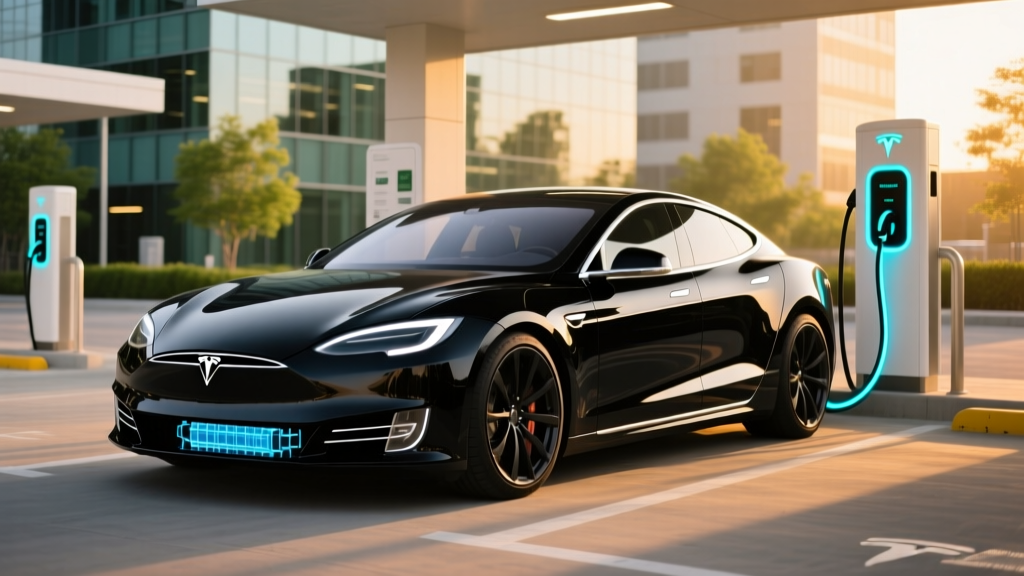
The reserve directly affects how you experience charging, particularly on DC fast chargers. Tesla's V3 and V4 Superchargers deliver peak power to the battery, but the BMS carefully manages the charge curve to protect cells — and the reserve zones play a role here.
| Model / Trim | Max DC kW | 10-80% Time | Level 2 (kW) | Level 2 Miles/Hr |
|---|---|---|---|---|
| Model 3 RWD (LFP) | 170 kW | ~25 min | 11.5 kW | ~44 mi/hr |
| Model 3 Long Range | 250 kW | ~18 min | 11.5 kW | ~48 mi/hr |
| Model Y Long Range | 250 kW | ~20 min | 11.5 kW | ~44 mi/hr |
| Model S Long Range | 250 kW | ~22 min | 11.5 kW | ~41 mi/hr |
When charging past 80% SoC, the charge rate tapers significantly. This taper isn't just about the reserve — it's about cell-level voltage management. As cells approach their maximum voltage, the BMS reduces current to prevent lithium plating and thermal stress. Charging from 80% to 100% can take as long as charging from 10% to 80%, which is why Tesla and most EV experts recommend daily charging to 80% for NMC batteries.
LFP-equipped Teslas (Model 3 RWD, Model Y RWD) are an exception. Tesla recommends charging LFP batteries to 100% at least once per week because LFP chemistry tolerates full-charge states better and needs periodic full charges for the BMS to accurately calibrate state of charge.
How the Reserve Affects Long-Term Battery Health
The Tesla reserve is one of the primary reasons Tesla battery packs show some of the lowest degradation rates in the industry. According to Tesla's 2024 Impact Report, Model 3 and Model Y battery packs retain approximately 85% of their original capacity after 200,000 miles — a figure made possible in part by the buffers preventing deep discharge and overcharge stress.
• LFP (Lithium Iron Phosphate): Used in RWD trims. Flatter voltage curve, longer cycle life (~3,000+ cycles), tolerates 100% SoC better. Smaller reserve needed.
• NMC (Nickel Manganese Cobalt): Used in Long Range and Performance trims. Higher energy density, steeper voltage curve, more sensitive to high SoC. Larger reserve and stricter 80% daily recommendation.
• Both chemistries benefit from the bottom buffer preventing voltage below ~2.5V per cell.
Tesla's battery warranty covers 8 years / 100,000 miles for RWD models and 8 years / 120,000 miles for Long Range and Performance models, guaranteeing at least 70% capacity retention (tesla.com/support/battery-warranty). The reserve buffer is a key engineering tool that helps Tesla meet this warranty threshold without excessive replacement costs.
Pricing, Tax Credits, and Total Cost Context
Understanding the reserve also matters when evaluating value. You're paying for gross battery capacity but only accessing a portion of it. Here's how current Tesla pricing breaks down for 2025-2026 model-year vehicles:
| Model / Trim | Base MSRP | §30D Credit | Effective Price | Credit Eligible? |
|---|---|---|---|---|
| Model 3 RWD | $38,990 | Up to $7,500 | ~$31,490 | Yes (if income/sourcing qualify) |
| Model 3 Long Range AWD | $47,740 | Up to $7,500 | ~$40,240 | Yes (MSRP under $55K cap) |
| Model Y Long Range AWD | $44,990 | Up to $7,500 | ~$37,490 | Yes (MSRP under $80K cap) |
| Model S Long Range | $79,990 | $0 | $79,990 | No (exceeds $55K sedan cap) |
| Model X Long Range | $84,990 | $0 | $84,990 | No (exceeds $80K SUV cap) |
Federal tax credit eligibility under IRS §30D (irs.gov) depends on several factors beyond MSRP caps:
- Buyer income limits: Modified AGI must not exceed $150,000 (single), $225,000 (head of household), or $300,000 (joint)
- Battery sourcing: Increasing percentages of critical minerals and battery components must be sourced from the U.S. or FTA partners — the credit splits into two $3,750 halves based on these requirements
- Point-of-sale transfer: As of 2024, buyers can transfer the credit to the dealer for an immediate price reduction at purchase
- VIN verification: The vehicle must be assembled in North America — all U.S.-market Teslas qualify (Fremont and Austin plants)
Always verify current-year eligibility on the IRS website and consult a tax professional, as sourcing requirements tighten annually and can change mid-year.
Performance, Efficiency, and Interior Specs
Beyond the battery, here are the numbers that define the Tesla ownership experience across the most popular models:
| Spec | Model 3 LR AWD | Model Y LR AWD | Model 3 RWD |
|---|---|---|---|
| 0-60 mph | 4.2 sec | 4.8 sec | 5.8 sec |
| Horsepower | ~384 hp | ~384 hp | ~271 hp |
| Drivetrain | Dual-motor AWD | Dual-motor AWD | Single-motor RWD |
| EPA MPGe (combined) | 131 MPGe | 122 MPGe | 132 MPGe |
| kWh/100 mi | 26 | 28 | 25 |
| Cargo volume | 23 cu ft (trunk) + 3.1 cu ft (frunk) | 30 cu ft (rear seats up) + 4.1 cu ft (frunk) | 23 cu ft + 3.1 cu ft |
| Rear legroom | 35.2 in | 37.0 in | 35.2 in |
Tesla's efficiency figures remain among the best in the industry. The Model 3 RWD's 132 MPGe combined is a benchmark that few competitors match, largely due to Tesla's heat pump (standard on all models since 2021), aerodynamic design, and powertrain efficiency. The heat pump alone can improve cold-weather range by 10-15% compared to resistive cabin heating, a meaningful advantage in northern climates.
Pros, Cons, and Who the Tesla Is Best For
- Best-in-class Supercharger network reliability
- Industry-leading efficiency (kWh/100 mi)
- Over-the-air updates add features post-purchase
- Strong resale value relative to most EVs
- LFP option for buyers who want maximum cycle life
- Minimal reserve = high usable-to-gross ratio (~95%)
- No physical instrument cluster or traditional controls
- Panel gap and build quality inconsistencies persist
- Autopilot/FSD is Level 2 — requires full driver attention
- Repair costs and insurance premiums above segment average
- No Apple CarPlay or Android Auto integration
- Phantom braking reported by some NHTSA complainants
- Commuters: Model 3 RWD at ~$31,500 after credit is a cost-effective daily driver with low running costs
- Families: Model Y Long Range offers the best balance of space (76 cu ft cargo with seats folded), range, and AWD capability
- Road trippers: Tesla's Supercharger network (20,000+ stalls in North America) makes long-distance travel the least stressful of any EV brand
- Tech-forward buyers: OTA updates, app integration, and the 15.4" touchscreen define the Tesla experience
- Not ideal for: Buyers who want dealer service centers, traditional controls, or maximum luxury refinement at this price point
Frequently Asked Questions
What is the real-world range of a Tesla?
Real-world range depends heavily on driving style, temperature, and terrain. A Model 3 Long Range rated at 363 miles EPA typically delivers 310-325 miles at highway speeds (75 mph) in mild weather, and 250-290 miles in freezing temperatures. City driving with regenerative braking often matches or slightly exceeds the EPA figure.
How fast does a Tesla charge at home and on DC fast chargers?
On a Level 2 home charger (11.5 kW / 48A), a Model 3 Long Range gains roughly 48 miles of range per hour, fully charging overnight in about 8 hours. On a V3 Supercharger (250 kW peak), the 10-80% charge takes approximately 18 minutes. Charging past 80% tapers significantly — plan for 30+ additional minutes if you need a full charge.
Does the Tesla reserve mean I'm not getting the battery I paid for?
The reserve is a protective measure that extends battery lifespan and maintains warranty coverage. You're paying for gross capacity, but the ~5% held in reserve is what allows your battery to retain 85%+ capacity after 200,000 miles. Without this buffer, degradation would be significantly faster, and warranty claims would increase. Every EV manufacturer uses a similar buffer strategy — Tesla's is simply well-documented by the owner community.
Does a Tesla qualify for the $7,500 federal EV tax credit?
The Model 3 RWD, Model 3 Long Range, and Model Y Long Range all qualify for up to $7,500 under IRS §30D, provided the buyer meets income limits ($150K single / $300K joint) and the vehicle's battery meets critical-mineral and component-sourcing thresholds. The Model S and Model X do not qualify because they exceed the MSRP caps ($55,000 for sedans, $80,000 for SUVs/vans/pickups). Credit availability can change as sourcing rules tighten — always verify at irs.gov.
Is a Tesla worth buying vs. competitors like the Hyundai Ioniq 5 or BMW i4?
The Tesla's strongest advantages are the Supercharger network, efficiency, and software ecosystem. The Hyundai Ioniq 5 offers 800V architecture (faster peak charging), a more conventional interior, and similar range at competitive pricing. The BMW i4 provides superior build quality and driving dynamics but at a higher price point. If reliable road-trip charging and lowest cost-per-mile matter most, Tesla still leads. If interior refinement or physical controls are priorities, the competitors deserve a serious look.
Can I access the Tesla reserve in an emergency?
Yes — when the displayed range reaches zero, the bottom buffer still contains roughly 10-20 miles of energy depending on the model. The car will continue to drive, but with progressively limited power. Tesla does not advertise this capability, and regularly draining into the buffer accelerates cell degradation. Treat it as a safety margin, not extra range.