The Short Answer: Tesla Resale Value Has Normalized
For years, Teslas held their value like no other EV — and better than most gas cars. That era has ended. Between aggressive price cuts on new models, intensifying competition from Hyundai, Ford, and BMW, and a maturing used-EV market, Tesla depreciation has accelerated sharply since 2023. As of early 2026, a three-year-old Model Y retains roughly 48–53% of its original transaction price, while a three-year-old Model 3 holds about 45–50%. That's competitive with the broader EV segment but no longer class-leading.
If you're asking does Tesla have good resale value, the honest answer is: it depends on which model, which year, and what you paid. Buyers who purchased a Model Y Long Range in 2022 at $65,000+ have taken significant depreciation hits. Buyers picking up a 2026 Model 3 RWD at $38,990 (before incentives) face a much shallower curve because the starting price is already compressed.
This guide breaks down the data behind Tesla's current resale performance, what's driving depreciation, and how Models 3 and Y stack up in total cost of ownership against key rivals.
Current Tesla Lineup: 2026 Specs at a Glance
To understand resale value, you first need to know what a new Tesla costs today — because yesterday's inflated prices are the primary reason used values dropped. Here's where the 2026 lineup stands:
| Spec | Model 3 RWD | Model 3 Long Range AWD | Model Y Long Range AWD | Model Y Performance |
|---|---|---|---|---|
| Base MSRP | $38,990 | $45,990 | $46,990 | $51,490 |
| EPA Range | 272 mi | 341 mi | 320 mi | 293 mi |
| Battery (usable) | ~57.5 kWh (LFP) | ~75 kWh (NMC) | ~75 kWh (NMC) | ~75 kWh (NMC) |
| Drivetrain | RWD, single motor | AWD, dual motor | AWD, dual motor | AWD, dual motor |
| Horsepower | 271 hp | 346 hp | 384 hp | 456 hp |
| 0–60 mph | 5.8 sec | 4.2 sec | 4.8 sec | 3.5 sec |
| Efficiency | 132 MPGe / 25 kWh/100mi | 134 MPGe / 25 kWh/100mi | 122 MPGe / 28 kWh/100mi | 117 MPGe / 29 kWh/100mi |
| Max DC Fast Charge | 170 kW | 250 kW | 250 kW | 250 kW |
| 10–80% DC Time | ~30 min | ~25 min | ~25 min | ~25 min |
| Level 2 Home Rate | 11.5 kW (~44 mi/hr) | 11.5 kW (~44 mi/hr) | 11.5 kW (~44 mi/hr) | 11.5 kW (~44 mi/hr) |
| Battery Warranty | 8 yr / 100,000 mi | 8 yr / 120,000 mi | 8 yr / 120,000 mi | 8 yr / 120,000 mi |
Sources: fueleconomy.gov, Tesla specifications. Specs reflect 2026 model year.
Real-World Range: What the EPA Sticker Doesn't Tell You
EPA estimate: 341 miles
Real-world highway (70–75 mph, moderate weather): ~280–300 miles
Real-world cold weather (below 30°F, mixed driving): ~230–260 miles
Worst-case (highway + sub-20°F + cabin heat): ~210–230 miles
Tesla's efficiency remains among the best in the industry. The Model 3 Long Range achieves 134 MPGe combined — competitive with the Hyundai Ioniq 6 and slightly better than the BMW i4 eDrive40. But EPA range is measured on a dynamometer cycle that doesn't replicate sustained highway speeds or extreme temperatures.
In real-world highway testing at 70–75 mph in 65–75°F conditions, expect to use about 280–300 of the Model 3 LR's 341 EPA miles before needing a charge. In winter, lithium-ion batteries lose efficiency and the cabin heater draws significant energy even with Tesla's standard heat pump. Plan for 25–35% range reduction in sustained cold. The LFP battery in the Model 3 RWD is slightly more resilient to cold-weather degradation over time but offers less total range to begin with.
EPA estimate: 320 miles
Real-world highway: ~260–280 miles
Real-world cold weather: ~215–245 miles
The Model Y's taller, less aerodynamic profile and heavier curb weight (4,398 lbs vs. 3,862 lbs for the Model 3 LR) account for its lower real-world efficiency. If you regularly drive above 75 mph or live in a cold climate, budget accordingly.
Depreciation Data: Where Tesla Stands in 2026
According to iSeeCars and Kelley Blue Book data through late 2025, here's how Tesla depreciation compares to the broader EV market and key competitors:
| Vehicle | Avg. 3-Yr Depreciation | Key Factor |
|---|---|---|
| Tesla Model Y | 47–52% | Price cuts, high used supply |
| Tesla Model 3 | 50–55% | Highland refresh disrupted used values |
| Hyundai Ioniq 5 | 48–53% | Strong lease residuals, NACS adapter |
| Ford Mustang Mach-E | 52–58% | Slower charging, brand perception |
| BMW i4 eDrive40 | 44–49% | Luxury badge, lower volume |
| Toyota Camry (gas, baseline) | 32–38% | Strong ICE demand, proven reliability |
| Average EV (all brands) | 49–54% | Rapid tech turnover, price wars |
Several factors explain Tesla's depreciation trajectory:
- Aggressive new-vehicle price cuts: Between 2022 and 2024, Tesla slashed Model Y prices by over $15,000 in some configurations. Every dollar cut from a new car erases value from every used equivalent.
- Fleet and rental saturation: Hertz and other fleets dumped tens of thousands of used Model 3s into the market in 2024, depressing prices.
- Highland refresh (2024+): The redesigned Model 3 made 2021–2023 models look dated overnight, accelerating trade-in depreciation on older units.
- Juniper refresh (2025+): Similarly, the updated Model Y (interior, suspension, sound insulation) reset expectations, making pre-refresh models less desirable.
- Increased competition: The Hyundai Ioniq 5, Kia EV6, BMW i4, and Chevrolet Equinox EV all offer compelling alternatives at competitive prices.
Charging Speed and Infrastructure: A Resale Advantage
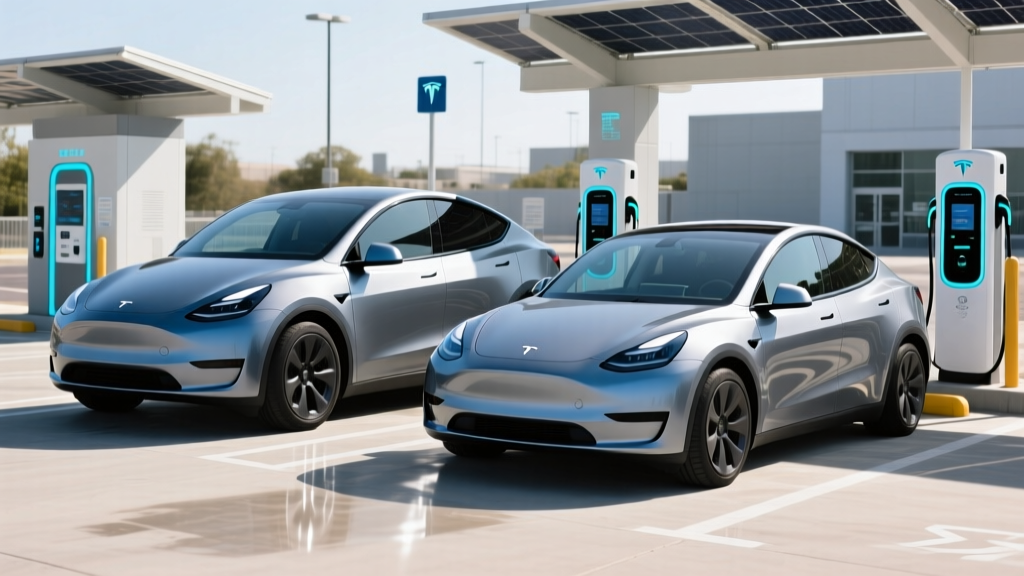
One factor that supports Tesla's residual value is the Supercharger network. As of 2026, Tesla operates over 6,500 Supercharger stations in North America with 70,000+ stalls. While other networks (Electrify America, EVgo, ChargePoint) have expanded, Tesla's reliability and seamless plug-and-charge experience remain a differentiator — and it shows in buyer surveys.
| Level | Power | Miles Added per Hour | Notes |
|---|---|---|---|
| Level 1 (120V household) | ~1.4 kW | ~3–5 mi/hr | Emergency/trickle only |
| Level 2 (240V home) | 11.5 kW | ~44 mi/hr | Full overnight charge in 7–9 hrs |
| DC Fast (V3 Supercharger) | Up to 250 kW | ~170 mi in 15 min | Peak rate; tapers above 60% SoC |
| DC Fast (V4 Supercharger) | Up to 350 kW (compatible models) | ~200+ mi in 15 min | 2026 Model 3/Y support via CCS2 architecture |
The 2026 Model 3 and Model Y Long Range peak at 250 kW on V3 Superchargers, delivering a 10–80% charge in roughly 25 minutes. The charge curve tapers meaningfully above 60% state of charge — a 10–90% session takes closer to 38–40 minutes. Plan road-trip stops around 10–80% to maximize time efficiency.
With the NACS connector now the industry standard (adopted by Ford, GM, Rivian, Hyundai, and others), Tesla's proprietary charging advantage is fading. Non-Tesla EVs increasingly access Superchargers via adapters or native NACS ports, reducing one of Tesla's historical resale-value moats.
Federal Tax Credit and Total Cost of Ownership
Tax credits directly affect the effective purchase price, which in turn affects depreciation calculations. Under current IRS §30D rules for 2026:
| Model/Trim | MSRP | §30D Credit Eligibility | Effective Price (if eligible) |
|---|---|---|---|
| Model 3 RWD | $38,990 | $7,500 (meets MSRP, sourcing, and income caps) | ~$31,490 |
| Model 3 Long Range AWD | $45,990 | $7,500 (meets MSRP cap for sedans: $55,000) | ~$38,490 |
| Model Y Long Range AWD | $46,990 | $7,500 (meets MSRP cap for SUVs: $80,000) | ~$39,490 |
| Model Y Performance | $51,490 | $7,500 (meets MSRP cap for SUVs) | ~$43,990 |
- MSRP cap: Sedans ≤ $55,000; SUVs/trucks/vans ≤ $80,000
- Income cap: AGI ≤ $150,000 (single) / $225,000 (head of household) / $300,000 (married filing jointly)
- Battery sourcing: Critical minerals and battery components must meet escalating domestic-sourcing thresholds (phased annually through 2032)
- Point-of-sale transfer: Eligible buyers can apply the credit at purchase, reducing the financed amount
- Verification: Check current eligibility at IRS.gov §30D — rules change annually
All current Model 3 and Model Y trims fall under their respective MSRP caps. However, battery-sourcing requirements have tightened each year. Tesla's Fremont and Austin factories use a mix of domestic and imported cells. As of 2026, Tesla reports compliance with critical-mineral thresholds for most trims, but buyers should verify VIN-level eligibility with their tax professional before assuming the full $7,500.
5-Year Total Cost of Ownership: Tesla vs. Competitors
| Cost Factor | Model 3 LR AWD | Hyundai Ioniq 5 SEL AWD | BMW i4 eDrive40 | Toyota Camry SE (gas) |
|---|---|---|---|---|
| Purchase (after credit) | $38,490 | $42,500 | $52,750 | $30,000 |
| Fuel/Energy | $3,200 | $3,400 | $3,300 | $7,800 |
| Maintenance | $1,800 | $2,000 | $3,500 | $3,200 |
| Insurance (avg.) | $9,500 | $8,200 | $8,800 | $6,500 |
| Depreciation (est.) | $19,200 | $21,200 | $23,700 | $10,800 |
| 5-Year Total | $72,190 | $77,300 | $92,050 | $58,300 |
Tesla's TCO advantage over other EVs comes primarily from lower purchase price and slightly better efficiency. However, insurance costs remain a pain point — Teslas consistently carry higher premiums than equivalent Hyundais or Fords due to repair-cost data. The Toyota Camry, while lacking EV benefits, wins on pure depreciation because gas sedans still depreciate more slowly in percentage terms.
Pros, Cons, and Who Should Buy
- Best-in-class Supercharger network (70,000+ stalls, high reliability)
- Over-the-air updates continuously add features
- Strong efficiency (132–134 MPGe on Model 3)
- Spacious interior — Model 3: 23 cu ft trunk + 3.1 cu ft frunk; Model Y: 34 cu ft cargo + 4.1 cu ft frunk
- Competitive pricing after §30D credit
- Autopilot standard; FSD Supervised available ($8,000 or $99/mo)
- Minimal scheduled maintenance (no oil, filters, spark plugs)
- Depreciation accelerated significantly since 2023
- No Apple CarPlay or Android Auto
- Insurance premiums 20–40% higher than segment average
- Minimalist interior not for everyone (no instrument cluster, no stalks on refreshed models)
- FSD Supervised is SAE Level 2 — requires full driver attention at all times
- Service center wait times can stretch weeks in some markets
- Build-quality inconsistency still reported by some owners
Tesla's Autopilot and Full Self-Driving (Supervised) are SAE Level 2 driver-assistance systems. The driver must remain fully engaged, hands on the wheel (or applying torque), and eyes on the road at all times. These systems do not make the vehicle autonomous. Only Level 4 services like Waymo operate without a driver.
Who This EV Suits Best
- Commuters with home charging: The Model 3 RWD at ~$31,500 after credit is one of the cheapest ways into a 272-mile EV with low running costs.
- Road-trip families: The Model Y Long Range offers 320 miles of range, AWD, and Supercharger access for cross-country travel with minimal planning friction.
- Tech-forward buyers: OTA updates, integrated navigation with live Supercharger routing, and the Tesla app ecosystem appeal to those who value software integration.
- Not ideal for: Buyers who prioritize resale-value certainty (consider a Toyota hybrid), those who need Apple CarPlay, or anyone uncomfortable with a touchscreen-only interface.
Is Tesla Still Worth Buying vs. Key Competitors?
The answer depends on your priorities:
Choose Tesla Model 3 if: You want the lowest entry price into a long-range EV, value Supercharger convenience, and plan to keep the car 5+ years (reducing depreciation impact).
Choose Tesla Model Y if: You need crossover cargo space, AWD, and family-friendly range with the most reliable public charging network.
Choose Hyundai Ioniq 5 if: You want faster 800V charging (10–80% in ~18 min at 350 kW), a more conventional interior with physical buttons, and slightly lower insurance costs.
Choose BMW i4 if: You want a luxury badge, quieter cabin, and better long-term residual value from lower production volume.
Choose Toyota Camry Hybrid if: Resale value is your top priority and you're not ready for full EV ownership (no charging infrastructure at home).
Frequently Asked Questions
Does Tesla have good resale value compared to other EVs?
Tesla's resale value is average for the EV segment as of 2026 — roughly 48–55% retention after three years. It's no longer the resale-value leader it was in 2021–2022 due to aggressive price cuts and increased competition. However, it holds value comparably to the Hyundai Ioniq 5 and better than the Ford Mach-E.
Why did Tesla resale values drop so much?
Three primary factors: (1) Tesla cut new-vehicle prices by $10,000–$18,000 between 2022 and 2024, directly erasing used-car values; (2) fleet companies like Hertz sold tens of thousands of used Model 3s simultaneously, flooding the market; (3) the Highland and Juniper refreshes made older models visually and technologically dated.
Will Tesla resale values recover?
A full recovery to 2021–2022 levels is unlikely — those residuals were inflated by supply shortages and minimal competition. However, depreciation should stabilize now that Tesla's pricing has settled and the used market has absorbed the fleet-vehicle glut. Expect 3-year retention in the 48–55% range going forward.
Does the federal tax credit affect Tesla's resale value?
Yes, indirectly. The $7,500 §30D credit lowers the effective new-car purchase price, which compresses the gap between new and used pricing. A buyer who pays $31,490 for a new Model 3 RWD (after credit) has less depreciation exposure than someone who paid $44,000 for the same car in 2022 with no credit available.
Is a used Tesla a good buy in 2026?
A 2–3-year-old Model 3 or Model Y can be an excellent value — you're buying someone else's depreciation. Look for 2024+ Highland Model 3s or 2025+ Juniper Model Ys for the latest hardware. Verify battery health via the Tesla app (check rated range at 100% SoC vs. original EPA figure) and confirm the 8-year battery warranty hasn't been voided by aftermarket modifications.
How long do Tesla batteries last?
Tesla warranties its batteries for 8 years / 100,000–120,000 miles (depending on trim) with a minimum 70% capacity retention threshold. Real-world data from high-mileage owners shows most Model 3/Y batteries retain 85–92% capacity at 100,000 miles. LFP batteries (Model 3 RWD) tolerate daily 100% charging and tend to degrade more slowly than NMC packs.
What's the biggest risk to Tesla's future resale value?
Continued price wars, the introduction of a lower-cost Tesla platform (the rumored sub-$30,000 model), and rapid battery-technology advances (solid-state, 4680 cell improvements) could all accelerate depreciation on current-generation vehicles. Buying near the bottom of a price cycle — as now — reduces this risk.