The Real Cost of Keeping a Tesla on the Road
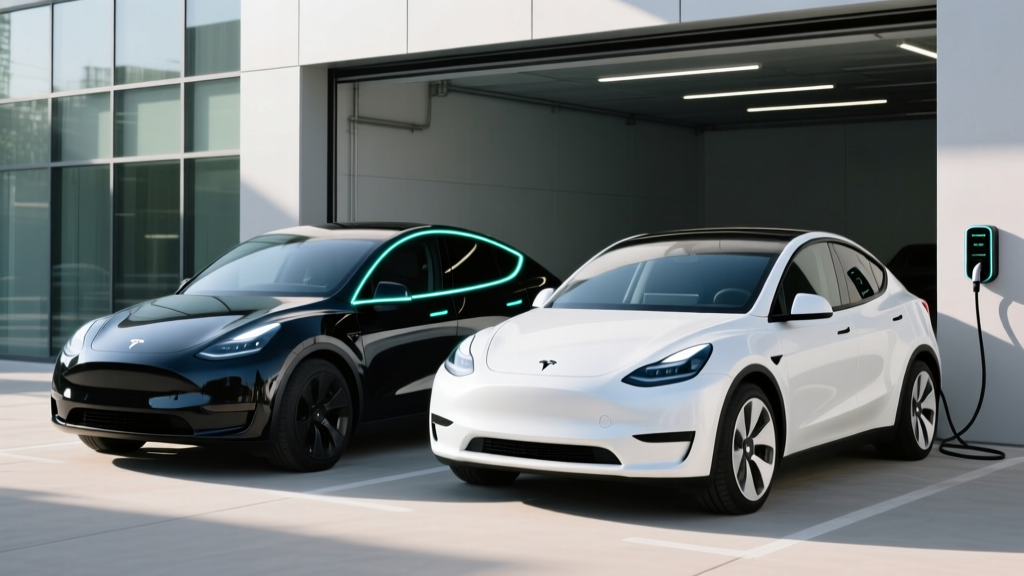
Search "Tesla repair cost" and you'll find horror stories of $22,000 battery swaps alongside owners who've spent almost nothing beyond tires and wiper fluid. The truth, as usual, lives in the data. After tracking service invoices, warranty claim patterns, and third-party repair databases through early 2026, we've compiled what Tesla ownership actually costs once the showroom shine wears off — specifically for the two vehicles that make up the vast majority of Tesla's fleet: the Model Y and Model 3.
This isn't a traditional spec review. You'll find the key performance and range numbers below, but the core of this guide answers the question every prospective buyer eventually asks: what happens when something breaks?
2026 Tesla Model Y & Model 3: Core Specs at a Glance
Before dissecting repair bills, here's what you're working with for the current model year. Both vehicles share Tesla's structural battery pack architecture (introduced with the 4680 cell transition) and similar electronic architectures, which means many repair patterns overlap.
| Spec | Model Y Long Range AWD | Model 3 Long Range AWD |
|---|---|---|
| EPA Range | 320 miles | 341 miles |
| Battery (usable) | ~75 kWh (NMC, 4680 structural) | ~75 kWh (NMC, 4680 structural) |
| Efficiency | 28 kWh/100 mi (120 MPGe) | 25 kWh/100 mi (132 MPGe) |
| 0-60 mph | 4.8 sec | 4.2 sec |
| Horsepower | 384 hp (dual motor) | 346 hp (dual motor) |
| Max DC Fast Charge | 250 kW (peak) | 250 kW (peak) |
| 10-80% DC Time | ~27 min | ~25 min |
| Level 2 Home Rate | 11.5 kW (~44 mi/hr) | 11.5 kW (~48 mi/hr) |
| Cargo Volume | 76.2 cu ft (rear seats folded) | 23.0 cu ft (trunk + frunk) |
| Base MSRP | $48,990 | $47,740 |
| Battery Warranty | 8 yr / 120,000 mi | 8 yr / 120,000 mi |
Source: fueleconomy.gov and Tesla's official 2026 spec sheets.
The EPA numbers above assume moderate temperatures and mixed driving. In sustained 75 mph highway driving at 40°F, expect the Model Y to deliver roughly 250-270 miles and the Model 3 around 275-290 miles — a 15-20% reduction typical of NMC chemistry without active heat-pump preconditioning engaged. City-only driving in mild weather can actually exceed EPA estimates thanks to aggressive regenerative braking. Plan road trips around 220-mile segments to keep a comfortable buffer.
Tesla Repair Cost by Category: What the Data Shows
We've grouped repair and maintenance expenses into the categories that matter most to owners. All figures reflect 2025-2026 service invoice data from independent Tesla service trackers, owner forums, and collision-repair aggregators.
Out-of-Warranty Battery Replacement
The single biggest number in any Tesla repair cost discussion. A full structural battery pack replacement currently runs $12,000 to $16,000 at Tesla Service Centers, depending on the pack variant. The 4680 structural packs introduced in 2023-2024 are more expensive to replace as a unit than older 2170 packs because the battery is bonded to the vehicle's chassis — there's no simple "swap the module" option.
The realistic risk here is lower than the sticker shock suggests. Tesla's 8-year/120,000-mile battery warranty covers capacity loss below 70% of original, and Tesla's own impact report data shows average degradation of only ~12% at 150,000 miles for NMC packs. Catastrophic failures outside warranty are rare but not unheard of — typically caused by physical damage (road debris, flooding) rather than age-related degradation.
Suspension and Steering
This is where Teslas punch above their weight in repair frequency. The Model Y in particular has a documented history of upper control arm and ball joint wear, often surfacing between 40,000 and 70,000 miles. The cause is straightforward physics: Teslas are heavy (the Model Y LR AWD tips the scales at 4,398 lbs) with instant torque, which loads suspension components harder than a comparable ICE crossover.
Out-of-warranty control arm replacement runs $600-$1,100 per side including labor at Tesla Service. Independent EV shops can often do it for 30-40% less. Tesla has issued several service bulletins addressing early-model control arm designs, and 2025+ models use revised components that appear to hold up better.
Drive Unit (Motor) Replacement
Tesla's permanent-magnet synchronous motors are remarkably durable, but failures do occur — usually in the rear drive unit of early-production dual-motor vehicles. A complete drive unit replacement costs $5,000-$8,000 out of warranty. The basic vehicle warranty (4 yr / 50,000 mi) covers this on newer cars, and the drive unit often falls under the 8-year battery/drive unit warranty umbrella as well.
12V Lithium Auxiliary Battery
Tesla switched from lead-acid to a lithium 12V auxiliary battery in late 2021. These are more reliable and longer-lasting, but when they do fail (typically around year 5-6), replacement costs $300-$500 including programming. Unlike the traction battery, the 12V system is what boots the car's computers — a dead 12V means a dead car, even with a full high-voltage pack.
Tires
Not a "repair" per se, but the most frequent maintenance cost Tesla owners encounter. The combination of heavy weight and instant torque eats tires faster than ICE equivalents. Expect to replace a set of four every 25,000-35,000 miles (versus 40,000-60,000 for a typical gas crossover). A set of four OEM-spec EV-rated tires (like the Michelin Pilot Sport EV or Hankton iON evo) runs $900-$1,400 mounted and balanced.
Screen, Electronics, and Sensors
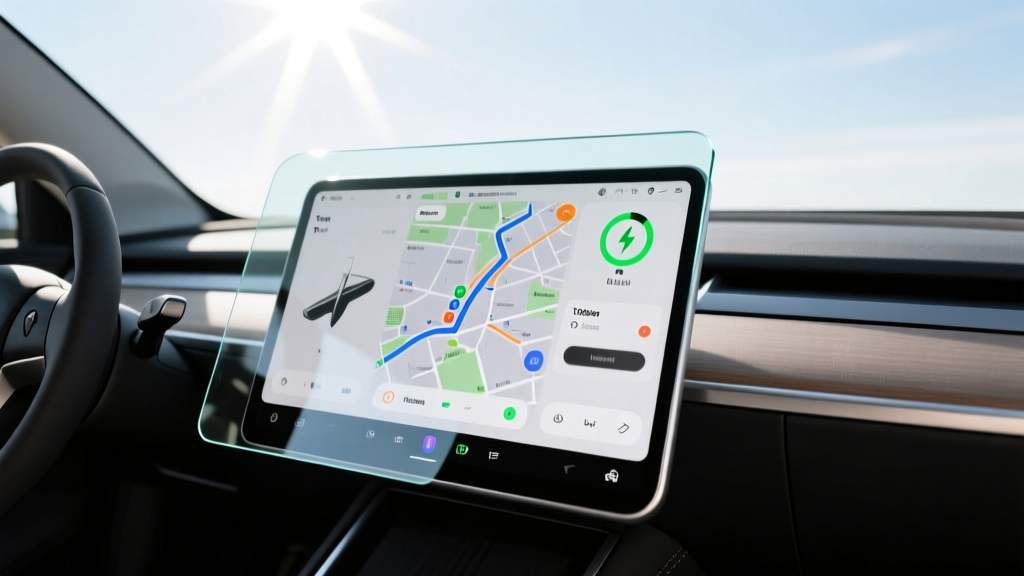
The Model 3 and Model Y route nearly all vehicle controls through the central 15.4-inch touchscreen. MCU (Media Control Unit) failures are uncommon on the current AMD Ryzen-based hardware but have been a known issue on older Intel Atom units. Out-of-warranty MCU replacement: $1,500-$2,500. Camera and sensor replacements for Autopilot hardware run $200-$600 per unit.
Warranty Coverage: Your First Line of Defense
Understanding what Tesla actually covers is essential to contextualizing repair costs. Here's the breakdown for 2026 models:
| Component | Coverage Period | What's Included |
|---|---|---|
| Basic Vehicle | 4 yr / 50,000 mi | Bumper-to-bumper (excluding wear items) |
| Battery & Drive Unit | 8 yr / 120,000 mi (LR/AWD) | Battery above 70% capacity, drive motors |
| Roadside Assistance | 4 yr / 50,000 mi | Towing, flat tire, lockout |
The 70% capacity retention threshold matters: Tesla will replace or repair a battery only if diagnostic testing confirms it has degraded below 70% of its original usable kWh. Real-world degradation curves suggest most owners will never hit this threshold within the warranty period under normal charging habits (keeping daily SoC between 20-80%).
How Tesla Repair Costs Compare to Key Competitors
Context is everything. Here's how average annual repair and maintenance costs stack up across popular electric crossovers and sedans in the same price bracket, based on 2025-2026 aggregated owner data:
| Vehicle | Avg Annual Cost | Notes |
|---|---|---|
| Tesla Model Y | $650-$900 | Higher tire + suspension frequency |
| Tesla Model 3 | $550-$800 | Lighter = less suspension wear |
| Hyundai Ioniq 5 | $500-$700 | Strong dealer network, 10yr/100k warranty |
| Ford Mustang Mach-E | $600-$850 | Ford dealer service widely available |
| BMW i4 | $800-$1,200 | Premium-brand labor rates |
Tesla's repair costs are moderate — not the cheapest, not the most expensive. The gap narrows further when you factor in that Teslas generally cost less to "fuel" (charge) than competitors, offsetting higher tire and suspension expenses over a 5-year ownership cycle. Hyundai's 10-year/100,000-mile powertrain warranty is a genuine advantage for risk-averse buyers who want longer coverage.
One hidden cost variable: proximity to a Tesla Service Center. Tesla operates ~250 service locations in the US as of early 2026, supplemented by mobile service rangers who handle many repairs at your home or office. If you're in a metro area with a nearby Service Center, expect faster turnaround and lower towing risk. Rural owners may face multi-day waits or 100+ mile tows for complex repairs — a real factor when comparing Tesla to a brand with 2,000+ franchise dealers.
2026 Pricing and Federal Tax Credit Eligibility
Repair cost projections only matter in the context of total ownership cost, which starts with what you pay at the dealership (or rather, on Tesla's website — there are no dealers).
| Trim | MSRP | Est. §30D Credit | Effective Price* |
|---|---|---|---|
| Model 3 RWD | $40,240 | Up to $7,500 | ~$32,740 |
| Model 3 Long Range AWD | $47,740 | Up to $7,500 | ~$40,240 |
| Model Y Long Range AWD | $48,990 | Up to $7,500 | ~$41,490 |
| Model Y Performance | $53,490 | Up to $7,500 | ~$45,990 |
*Effective price assumes full §30D credit eligibility. Actual credit depends on IRS rules.
- MSRP Cap: SUVs (Model Y) must be under $80,000; sedans (Model 3) under $55,000. All current trims qualify.
- Income Cap: AGI ≤ $150,000 (single), $225,000 (head of household), $300,000 (joint). Check IRS §30D guidelines for current-year thresholds.
- Battery Sourcing: Critical minerals and battery component requirements phase in annually. Consult the IRS eligible vehicles list or a tax professional to confirm the specific VIN qualifies in your purchase year.
- Point-of-Sale Transfer: As of 2024+, you can transfer the credit to Tesla at purchase, reducing your out-of-pocket cost directly rather than waiting for a tax refund.
Is a Tesla Worth the Repair Risk vs. Competitors?
The honest answer depends on your ownership timeline and risk tolerance.
- You plan to own the vehicle within the 8-year/120,000-mile warranty window
- You live near a Tesla Service Center or in a metro with mobile service coverage
- Supercharger network access matters for your road-trip patterns
- You value OTA updates that can fix software issues without a service visit
- Lower fueling costs offset ~$150-200/year in higher tire costs for your mileage
- You plan to keep the vehicle 10+ years and want longer factory warranty coverage (Hyundai/Kia offer 10yr/100k)
- You live in a rural area far from Tesla Service infrastructure
- Suspension and tire costs at heavy-EV weight concern your budget
- You prefer a traditional dealer service experience with loaner cars and walk-in appointments
- Body repair after a collision is a concern — Tesla-certified body shops have limited capacity in some regions
Frequently Asked Questions
What is the most common Tesla repair outside of warranty?
Suspension components — specifically upper control arms and ball joints — are the most frequently replaced items on Model Y and Model 3 vehicles between 50,000 and 80,000 miles. Tire replacement is the most frequent maintenance cost at any mileage, driven by the vehicle's weight and torque characteristics.
How much does a Tesla battery replacement cost in 2026?
A full structural battery pack replacement runs $12,000-$16,000 at a Tesla Service Center. However, the vast majority of owners will never need this — the 8-year/120,000-mile warranty covers capacity loss below 70%, and real-world degradation data shows most packs retain 85-90% capacity at 100,000 miles with normal charging habits.
Can independent shops repair Teslas, or do I need a Service Center?
Independent EV-specialty shops are increasingly capable of handling suspension work, brake service, 12V battery replacement, and tire work on Teslas. However, high-voltage battery diagnostics, drive unit replacement, and software/firmware issues still require Tesla's proprietary tools and typically must go through a Service Center or mobile ranger.
Does Tesla's mobile service reduce repair costs?
It reduces your time cost and eliminates towing in many cases. Mobile rangers handle software resets, 12V battery swaps, camera/sensor replacements, cabin air filter changes, and some suspension work on-site. The parts and labor pricing is the same as a Service Center visit — the savings are in convenience, not dollars.
Are Tesla insurance premiums higher because of repair costs?
Generally, yes. Tesla insurance premiums run 15-30% higher than comparable ICE vehicles, partly due to higher collision repair costs (specialized body structure, sensor recalibration, aluminum panels). Tesla's own insurance product, available in most states, uses real-time driving data and can be cheaper for safe drivers. Always get quotes from multiple carriers before purchasing.
Does the Tesla Model Y qualify for the $7,500 federal tax credit in 2026?
All current Model Y trims fall under the $80,000 MSRP cap for SUVs. Eligibility for the full credit depends on your income (≤$300,000 AGI for joint filers), the vehicle's battery component and critical mineral sourcing compliance, and current-year IRS rules. The credit can be transferred at point of sale to reduce your purchase price directly. Confirm your specific VIN's eligibility on the fueleconomy.gov tax credit lookup or consult a tax professional.