Why Renting a Tesla in Minneapolis Is a Smart Move
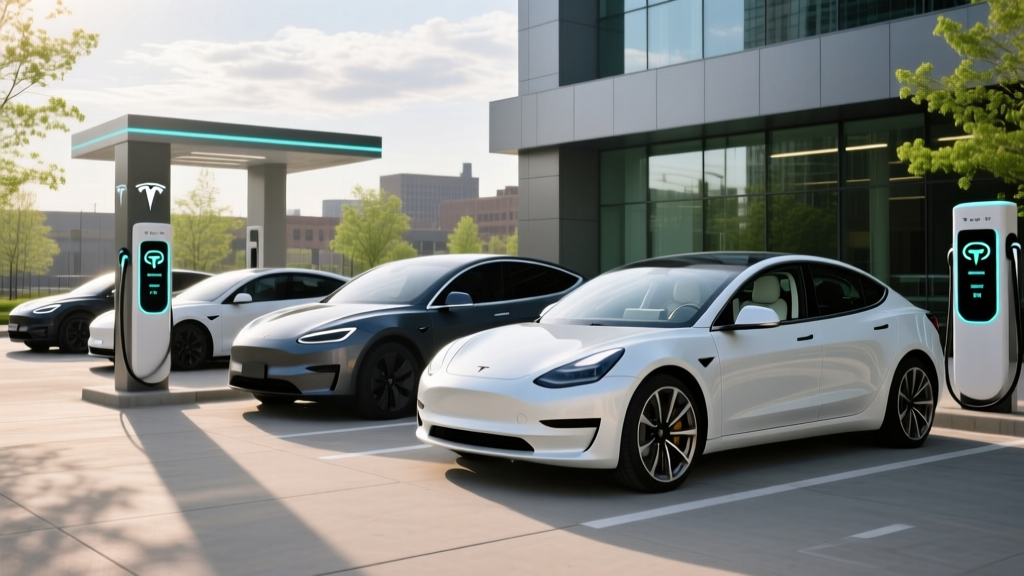
Minneapolis is one of the best U.S. cities to experience a Tesla as a renter. The Twin Cities metro has dense Supercharger coverage, flat-to-rolling terrain that preserves efficiency, and a growing network of destination chargers at hotels and restaurants. Whether you're visiting for business, testing the EV lifestyle before buying, or planning a road trip to the North Shore or the Black Hills, a Tesla rental gives you access to the most reliable public fast-charging network in the country.
But Minneapolis also presents unique challenges: sub-zero winter temperatures, highway-heavy driving patterns, and the need to understand real-world range versus EPA stickers. This guide breaks down the three Tesla models most commonly available through Minneapolis rental platforms (Turo, Hertz, and specialty EV fleets) so you can pick the right one for your trip.
Which Tesla Models Can You Rent in Minneapolis?
The Minneapolis rental market in 2026 is dominated by three models: the Model 3 Long Range AWD, the Model Y Long Range AWD, and occasionally the Model X. The Cybertruck appears on Turo occasionally but remains niche and expensive. The base Model 3 RWD is rare in rental fleets because its lower range and lack of all-wheel drive make it less desirable in Minnesota winters.
| Model | Typical Rental Source | Avg. Daily Rate (2026) | Best For |
|---|---|---|---|
| Model 3 Long Range AWD | Turo, Hertz | $85–$130 | Couples, commuters, road trips |
| Model Y Long Range AWD | Turo, Hertz, specialty fleets | $110–$175 | Families, cargo-heavy trips |
| Model X | Turo (limited) | $180–$280 | Premium experience, 6-passenger trips |
Model 3 Long Range AWD: The Default Rental Pick
The Model 3 Long Range is the most abundant Tesla rental in Minneapolis for good reason. It balances range, performance, and price better than any other Tesla in the fleet. The 2026 model year (Highland refresh) brings a quieter cabin, ventilated seats, and ambient lighting — meaningful upgrades if you're comparing against older 2023 units still circulating on Turo.
| Spec | Value |
|---|---|
| EPA Range | 341 miles |
| Battery (usable) | ~79 kWh, NMC chemistry |
| Peak DC Fast Charge | 250 kW (Supercharger V3/V4) |
| 10–80% DC Charge Time | ~27 minutes |
| Level 2 Home Charge Rate | 11.5 kW (~44 mi/hr) |
| 0–60 mph | 4.2 seconds |
| Horsepower | 346 hp (dual motor) |
| Drivetrain | AWD (dual motor) |
| MPGe (combined) | 134 MPGe |
| Efficiency | 25 kWh/100 mi |
| Cargo Volume | 23 cu ft (rear trunk + frunk) |
| Rear Legroom | 35.2 in |
| Base MSRP (2026) | $47,740 |
| Battery Warranty | 8 years / 120,000 miles (70% retention) |
Model Y Long Range AWD: The Family Road-Tripper
If you need space for kids, luggage, or ski gear, the Model Y Long Range is the rental to target. It shares the Model 3's powertrain architecture but wraps it in a crossover body with significantly more cargo volume. The 2026 Juniper refresh adds a rear touchscreen, power-folding second row, and improved suspension tuning.
| Spec | Value |
|---|---|
| EPA Range | 320 miles |
| Battery (usable) | ~79 kWh, NMC chemistry |
| Peak DC Fast Charge | 250 kW |
| 10–80% DC Charge Time | ~28 minutes |
| Level 2 Home Charge Rate | 11.5 kW (~37 mi/hr) |
| 0–60 mph | 4.8 seconds |
| Horsepower | 384 hp (dual motor) |
| Drivetrain | AWD (dual motor) |
| MPGe (combined) | 123 MPGe |
| Efficiency | 27 kWh/100 mi |
| Cargo Volume (rear seats up) | 30 cu ft |
| Cargo Volume (rear seats folded) | 72 cu ft |
| Rear Legroom | 36.5 in |
| Base MSRP (2026) | $49,990 |
| Battery Warranty | 8 years / 120,000 miles (70% retention) |
Charging on a Minneapolis Tesla Rental: What You Need to Know
Charging is the single biggest adjustment for first-time EV renters. Here's what the three charging levels mean in practice:
| Level | Power | Speed (Model Y) | Where You'll Find It |
|---|---|---|---|
| Level 1 (120V) | ~1.4 kW | ~3–4 mi/hr | Standard household outlet (emergency only) |
| Level 2 (240V) | 11.5 kW | ~37 mi/hr | Home Wall Connector, hotel chargers, mall parking |
| DC Fast (Supercharger) | Up to 250 kW | ~170 mi in 15 min | Tesla Supercharger stations |
Supercharger network advantage: Minneapolis has Supercharger clusters at Ridgedale Center, Maple Grove, the airport (MSP), and along I-35 and I-94 corridors heading to Duluth, Fargo, and Chicago. As of 2026, Tesla Superchargers remain the most reliable public charging network in the U.S., with uptime consistently above 98%.
Charging curve reality: The 250 kW peak rate only applies between roughly 10–30% State of Charge. From 30–60%, expect ~150–180 kW. Above 80%, the rate tapers sharply to ~50 kW or less. This is why Tesla and fueleconomy.gov quote 10–80% times rather than 0–100%.
Minneapolis Winter: Cold-Weather Range and Preconditioning
Minnesota winters are the ultimate EV stress test. At 0°F, lithium-ion cells experience higher internal resistance, and cabin heating draws significant energy. Here's how to minimize range loss on a Minneapolis winter rental:
- Precondition while plugged in: Set your departure time in the Tesla app. The car warms the battery and cabin using grid power, not battery energy.
- Use seat heaters over cabin air: Seat heaters draw ~60W per seat versus 2,000–4,000W for the heat pump/resistive cabin heater.
- Plan for 30–40% range reduction: If your route requires 200 miles, treat the car's usable winter range as ~220 miles to maintain a safety buffer.
- Keep the battery above 20%: Cold batteries charge slower and deliver less power at low State of Charge. Plug in whenever possible.
The Model 3 and Model Y both use a heat pump (standard since 2021), which is roughly 3x more efficient than resistive heating. This is a significant advantage over older EVs that rely on resistive cabin heaters.
Autopilot and FSD: What Renters Get
For renters, Basic Autopilot is excellent for highway cruising on I-94 or I-35. FSD (Supervised) can be impressive in city traffic but requires active monitoring. Don't treat either as a substitute for attentive driving.
Cost Breakdown: Renting vs. Buying a Tesla in Minneapolis
If you're renting to test-drive before buying, here's how the purchase economics look in 2026:
| Model | Base MSRP | Federal §30D Credit | Effective Price | Credit Eligibility |
|---|---|---|---|---|
| Model 3 LR AWD | $47,740 | $7,500 (if eligible) | ~$40,240 | MSRP under $55K ✓; income caps apply |
| Model Y LR AWD | $49,990 | $7,500 (if eligible) | ~$42,490 | MSRP under $80K ✓; income caps apply |
| Model X | $79,990 | $7,500 (if eligible) | ~$72,490 | MSRP under $80K ✓; income caps apply |
§30D tax credit rules (2026): The IRS §30D credit has three key gates: (1) buyer adjusted gross income must not exceed $150K single / $300K joint; (2) vehicle MSRP must be under $55K for sedans (Model 3) or $80K for SUVs/trucks (Model Y, Model X); (3) battery components and critical minerals must meet escalating domestic-sourcing thresholds. As of 2026, the Model 3 and Model Y built at Giga Texas generally qualify, but always verify at fueleconomy.gov before purchase. The credit can now be transferred to the dealer as a point-of-sale discount.
Pros of Renting a Tesla in Minneapolis
- Access to the Supercharger network — the most reliable public DC charging in the U.S.
- Over-the-air updates mean even a 2023 rental may have current software
- One-pedal driving and regen braking reduce brake wear and simplify city driving
- Low center of gravity = confident handling in rain and light snow
- Minimal pre-trip maintenance (no oil, no warmup idle)
Cons to Watch For
- Winter range loss of 30–40% requires route planning on long trips
- No physical buttons — everything runs through the 15.4" touchscreen
- Rental insurance may not cover charging cable theft or Supercharger parking fees
- No spare tire — Tesla provides a tire repair kit and roadside assistance
- FSD (Supervised) is Level 2 assist, not a chauffeur — liability stays with you
Who Should Rent a Tesla in Minneapolis?
Choose a Model 3 Long Range rental if: You're traveling solo or as a couple, prioritize range and efficiency, and want the lowest daily rate.
Choose a Model Y Long Range rental if: You need cargo space for luggage, skis, or kids' gear, or you're a family of 4–5 taking a road trip.
Choose a Model X rental if: You want falcon-wing doors, up to 6 seats, and a premium experience — and budget isn't the primary concern.
Skip the Tesla rental if: You're heading deep into rural Minnesota or Wisconsin where Supercharger coverage is sparse, or you need to tow (the Model Y can tow 3,500 lbs, but rental agreements often prohibit towing).
Frequently Asked Questions
What is the real-world range of a Tesla rental in Minneapolis?
In summer, expect 280–300 miles from the Model 3 Long Range and 265–285 miles from the Model Y Long Range at highway speeds. In Minnesota winter (0–20°F), subtract 30–40%: roughly 220–250 miles for the Model 3 and 200–230 miles for the Model Y. Always plan with a 20% buffer.
How fast does a Tesla charge at a Supercharger?
At a V3 or V4 Supercharger (250 kW capable), the Model 3 and Model Y charge from 10–80% in approximately 27–28 minutes. Peak rate of 250 kW applies only at low State of Charge; the rate tapers significantly above 60%. A typical 15-minute stop adds ~150–170 miles of range.
Can I charge a Tesla rental at home or at my hotel?
Yes, if you have access to a 240V Level 2 charger (NACS connector or with a J1772-to-NACS adapter). Level 2 adds ~37–44 miles per hour of charging — enough to fully replenish overnight. A standard 120V outlet adds only ~3–4 miles per hour and is suitable only for emergency top-ups.
Does the Tesla I rent qualify for the federal EV tax credit if I decide to buy?
The tax credit applies to new vehicle purchases, not rentals. If your rental experience convinces you to buy, the §30D credit offers up to $7,500 for eligible buyers. Income caps ($150K single / $300K joint AGI), MSRP caps ($55K sedans / $80K SUVs), and battery-sourcing requirements all apply. Verify current eligibility at fueleconomy.gov.
Is Autopilot included with a Tesla rental?
Basic Autopilot (adaptive cruise + lane centering) is standard on every Tesla. Full Self-Driving (Supervised) may or may not be enabled on your rental — it depends on whether the owner subscribes. Ask the host before booking if FSD is important to you.
What happens if I run out of charge on the road?
Tesla's navigation system routes you through Superchargers and warns you if your destination exceeds your charge. If you do strand the vehicle, Tesla Roadside Assistance (included for the warranty period) provides tow to the nearest charger. Rental platforms like Turo and Hertz have their own roadside policies — confirm before departure.