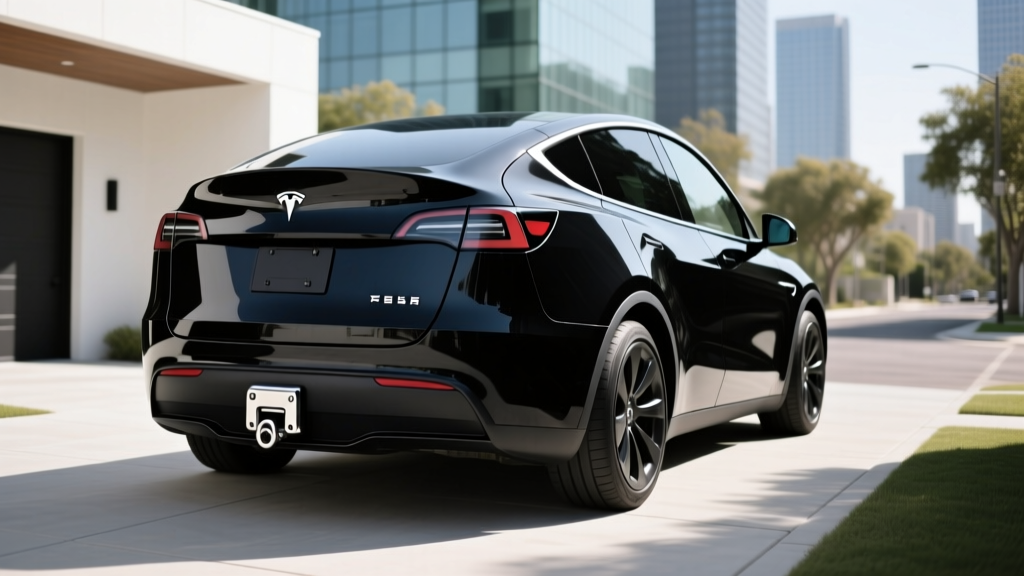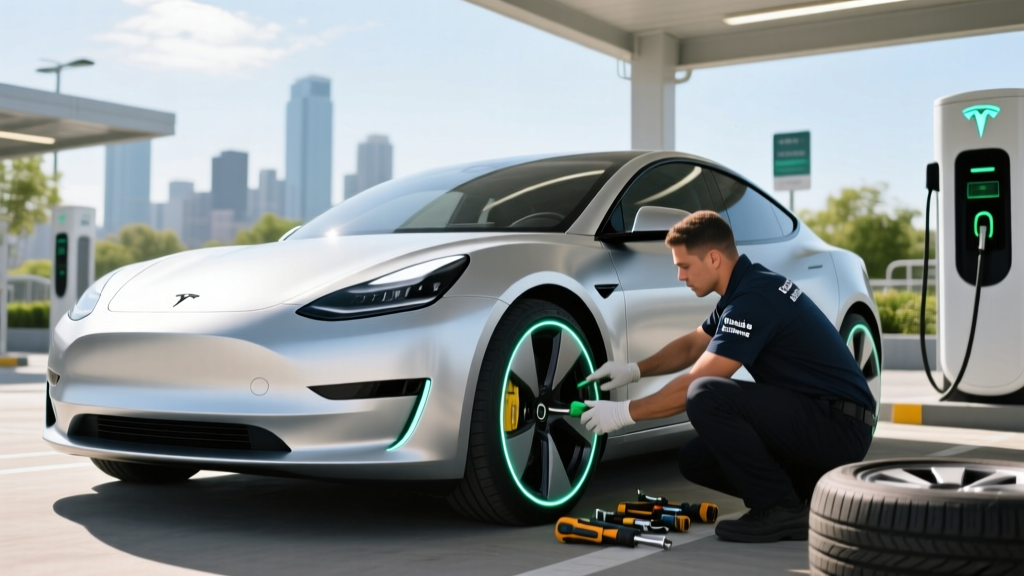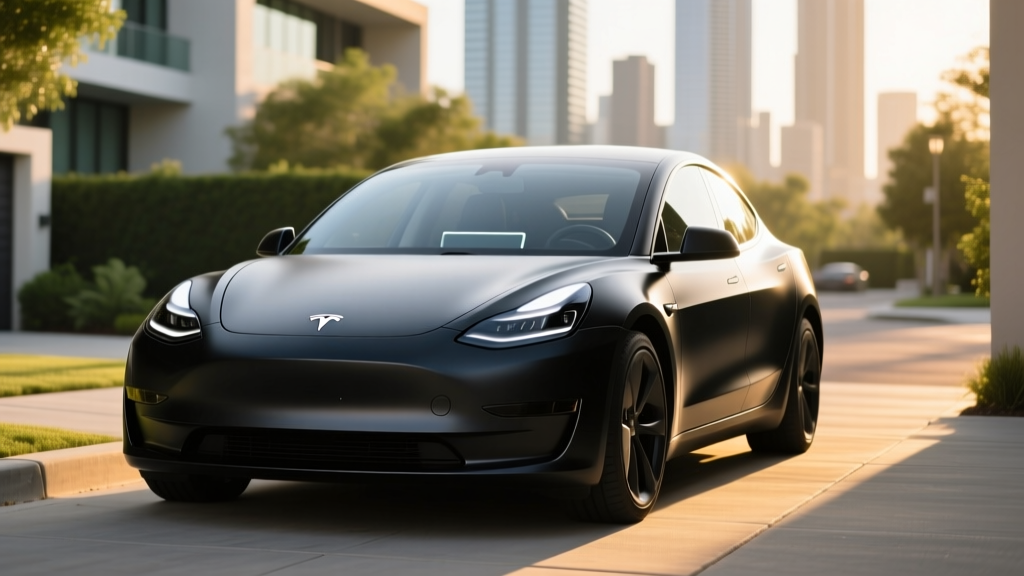
The headline that every Tesla shopper is typing into search engines this year is blunt: Tesla removes safety monitors. Specifically, the automaker has continued its transition away from ultrasonic parking sensors and radar-assisted redundancy, relying almost exclusively on its camera-only Tesla Vision architecture across the 2026 Model 3 lineup. For buyers, that decision collides with a car that is otherwise one of the most efficient, best-charging, and most tech-forward sedans on the market. This review puts the 2026 Tesla Model 3 on the test bench — range, charging curve, ADAS reality, and total cost — so you can decide whether the sensor trade-off matters for your driveway.
2026 Tesla Model 3: The Quick Verdict
The 2026 Model 3 remains the benchmark compact electric sedan for efficiency and DC fast-charge speed, with a Long Range AWD version that delivers an EPA-estimated 363 miles and a 0-60 mph time near 4.2 seconds. The cabin is quieter and more refined than pre-refresh cars, and the NACS-native charge port means plug-and-charge access to the Supercharger network without adapters. The catch is the ADAS story: with Tesla removing ultrasonic and radar sensors in favor of cameras-only, features like Autopark, Summon, and low-speed obstacle detection behave differently than buyers expect, and they remain SAE Level 2 driver-assist — not self-driving.
| Spec | RWD (Base) | Long Range AWD | Performance AWD |
|---|---|---|---|
| EPA Range | 341 mi | 363 mi | 315 mi |
| Battery (usable) | ~60 kWh LFP | ~79 kWh NMC | ~79 kWh NMC |
| Drivetrain | Rear-Wheel Drive | Dual-Motor AWD | Dual-Motor AWD |
| Horsepower | 271 hp | 346 hp | ~510 hp |
| 0-60 mph | 5.8 s | 4.2 s | 2.9 s |
| MPGe (combined) | 132 MPGe | 125 MPGe | 115 MPGe |
| Efficiency | 25 kWh/100 mi | 27 kWh/100 mi | 30 kWh/100 mi |
| Peak DC Charge | 170 kW | 250 kW | 250 kW |
| 10-80% DC Time | ~28 min | ~25 min | ~25 min |
| Level 2 Home Rate | ~44 mi/hr @ 11.5 kW | ~44 mi/hr @ 11.5 kW | ~44 mi/hr @ 11.5 kW |
| Cargo (rear + frunk) | 23 + 3 cu ft | 23 + 3 cu ft | 23 + 3 cu ft |
| Rear Legroom | 35.3 in | 35.3 in | 35.3 in |
| Base MSRP | $38,990 | $44,990 | $52,990 |
| Battery Warranty | 8 yr / 100,000 mi | 8 yr / 120,000 mi | 8 yr / 120,000 mi |
Range Reality: EPA Sticker vs. the Real World
The Long Range AWD's EPA-estimated 363 miles is among the highest of any sedan under $50,000, but the EPA test cycle blends low-speed city and moderate highway driving. Real-world behavior is different.
EPA Sticker: 363 mi (Long Range AWD) / 341 mi (RWD)
Real-World Expectation: 70-75 mph highway driving typically yields 300-325 miles on the Long Range; the RWD lands closer to 280-300 miles. In sub-freezing weather with cabin heat, expect a 15-25% reduction — roughly 240-270 miles on the Long Range before you're hunting for a plug.
Two factors matter here. First, the Model 3's heat pump is standard and effective, which mitigates cold-weather loss compared to resistive-heater EVs. Second, the LFP battery in the RWD trim tolerates daily 100% charging, so the usable range day-to-day is closer to the sticker than in NMC trims where Tesla recommends an 80% daily limit.
Charging Speed: Where the Model 3 Still Wins
Charging is where the refreshed Model 3 separates itself from rivals like the Hyundai Ioniq 6 and BMW i4. The Long Range and Performance trims accept up to 250 kW on V3 Superchargers and equivalent CCS/NACS DC stations, with a 10-80% session taking roughly 25 minutes when the pack is preconditioned.
| Charging Level | Power | Miles Added per Hour | Typical Use |
|---|---|---|---|
| Level 1 (120V) | ~1.4 kW | ~5 mi/hr | Emergency / trickle |
| Level 2 (240V, 48A) | 11.5 kW | ~44 mi/hr | Home overnight |
| DC Fast (V3 Supercharger) | 250 kW peak | ~175 mi in 15 min | Road trips |
Two ownership notes. First, the charge curve tapers meaningfully above ~80% state of charge — the last 20% can add 15-20 minutes to a session, so plan stops around the 80% mark on road trips. Second, preconditioning is non-negotiable in cold weather; without it, peak kW can be cut in half for the first 10 minutes. Per Tesla's home charging guide, a Wall Connector on a 60A circuit delivers the full 48A/11.5 kW, which refills the Long Range pack in roughly 7-8 hours from near-empty.
Tesla Removes Safety Monitors: The Vision-Only Trade-Off
This is the heart of the keyword that brought you here. Since 2022, Tesla has progressively removed ultrasonic parking sensors (USS) and radar from Model 3 production, replacing them with Tesla Vision — a camera-and-neural-network system. In the 2026 Model 3, there is no radar backup and no ultrasonic bumper array. Tesla argues the camera stack is higher-resolution and more consistent than mixed-sensor fusion; critics, including NHTSA investigators reviewing Autopilot-related incidents, have raised concerns about edge cases in low light, heavy rain, and close-range parking.
ADAS Reality Check: Autopilot, Enhanced Autopilot, and FSD (Supervised) are all SAE Level 2 driver-assist systems. The driver must remain attentive, keep hands available, and be prepared to take over instantly. None of these systems make the Model 3 self-driving. The removal of radar and ultrasonic sensors shifts more of the perception burden onto cameras, which can struggle with stationary objects at high speed, low-contrast obstacles, and close-in parking measurements that USS used to handle with centimeter precision.
For day-to-day driving, the vision-based parking assist and automatic emergency braking perform well in normal conditions. Where owners notice the change is tight garage parking, narrow drive-throughs, and low-speed obstacle detection — scenarios where the old ultrasonic chirp gave you centimeter-level feedback that the current system approximates visually. If you regularly park in tight urban garages, plan to rely on the cameras and your own eyes more than the car's proximity alerts.
Performance, Ride, and Interior Quality
The post-refresh Model 3 (sometimes called "Highland") is a meaningfully better car to drive than the 2017-2023 versions. Acoustic glass, improved suspension damping, and a retuned steering rack make it a credible rival to the BMW i4 and Mercedes EQB on refinement. The Performance AWD's 2.9-second 0-60 mph is supercar territory, and even the RWD's 5.8 seconds is quick for a commuter sedan.
Inside, the 15.4-inch center touchscreen handles every vehicle function — there are no physical stalks for turn signals (they're on the steering wheel) and no PRNDL lever (gear selection is on the screen with a backup overhead panel). Cargo space is practical at 23 cubic feet behind the rear seats plus a 3-cubic-foot frunk, though the trunk opening is narrower than a hatchback rival like the Ioniq 6 or Polestar 2. Rear legroom at 35.3 inches is adequate for adults on shorter trips but tight for six-footers on long hauls.
Pricing, Trims, and the Federal Tax Credit
The 2026 Model 3 lineup spans three trims, with destination charges adding roughly $1,390 to the MSRP figures below. The federal EV tax credit under IRS §30D remains available, but eligibility depends on MSRP caps, buyer income, and battery-component/critical-mineral sourcing rules that shift annually.
| Trim | Base MSRP | Under MSRP Cap? | Max §30D Credit | Effective Price* |
|---|---|---|---|---|
| RWD | $38,990 | Yes (sedan cap $55k) | Up to $7,500 | ~$31,490 |
| Long Range AWD | $44,990 | Yes (sedan cap $55k) | Up to $7,500 | ~$37,490 |
| Performance AWD | $52,990 | Yes (sedan cap $55k) | Up to $7,500 | ~$45,490 |
*Effective price assumes full $7,500 credit and buyer eligibility. Actual credit depends on AGI limits ($150k single / $300k MFJ), battery sourcing, and point-of-sale transfer election. Confirm with a tax professional and the IRS before purchase.
- Buyer AGI must not exceed $150,000 (single), $225,000 (head of household), or $300,000 (married filing jointly).
- Vehicle MSRP must be at or below $55,000 for sedans — all three Model 3 trims qualify on sticker price.
- Battery components and critical minerals must meet annual domestic-sourcing thresholds that tighten each year through 2030.
- Credit can be transferred to the dealer at point of sale as a purchase-price reduction, subject to IRS registration requirements.
Who the 2026 Model 3 Is Actually For
The Model 3 is the right buy for tech-forward commuters and two-adult households who prioritize efficiency, DC charge speed, and access to the Supercharger network over plush rear-seat space or traditional control layouts. It is less ideal for families who need easy-to-reach door handles and physical buttons, for drivers who regularly park in tight urban garages (where the vision-only parking assist is a step back from ultrasonic sensors), or for buyers who want a proven hands-off-eyes-off Level 3/4 system — no production Tesla offers that today.
Pros
- Class-leading efficiency (132 MPGe combined on RWD)
- 250 kW peak DC charging on Long Range/Performance
- NACS-native access to the Supercharger network
- Strong real-world highway range (300+ mi on Long Range)
- Refined cabin vs. pre-2024 Model 3
- LFP battery on RWD allows daily 100% charging
Cons
- Tesla removes safety monitors (no USS, no radar) — vision-only parking assist is less precise at low speeds
- Turn signals on the steering wheel, not a stalk — learning curve
- Rear seat is snug for tall adults on long trips
- FSD (Supervised) is expensive and still SAE Level 2
- Trunk opening is narrow vs. hatchback rivals
- Insurance premiums run higher than segment average
Model 3 vs. Rivals: Is It Still the Default Buy?
Against the Hyundai Ioniq 6 (EPA 361 mi SE, ~300 mi real-world highway, 235 kW peak charge), the Model 3 wins on Supercharger access and efficiency, but the Ioniq 6 retains ultrasonic parking sensors and a more traditional control layout. The BMW i4 eDrive40 (EPA 307 mi, ~205 kW DC) is more luxurious and keeps radar-assisted ADAS, but costs more and charges slower. The Polestar 2 long-range single motor (EPA 320 mi) offers Google Automotive and a hatchback cargo opening, with slower DC charging (~200 kW). If ADAS redundancy and parking precision matter to you, the Ioniq 6 and i4 are strong alternatives. If charge speed, network access, and efficiency top your list, the Model 3 still sets the pace.
Frequently Asked Questions
What is the real-world range of the 2026 Tesla Model 3?
EPA-estimated 363 miles on the Long Range AWD and 341 miles on the RWD. Expect roughly 300-325 miles at sustained 70-75 mph highway speeds on the Long Range, and 240-270 miles in sub-freezing conditions with cabin heat.
How fast does the Model 3 charge at home and on the road?
Up to 250 kW DC fast charging on Long Range/Performance trims, with a 10-80% session in about 25 minutes when preconditioned. On a 48A Level 2 home charger (11.5 kW), the car adds roughly 44 miles per hour, fully recharging overnight.
Does the 2026 Model 3 qualify for the $7,500 federal EV tax credit?
All three trims sit under the $55,000 sedan MSRP cap, but buyer AGI limits ($150k single / $300k MFJ) and annual battery-sourcing rules determine the actual credit. The credit can be applied at point of sale. Verify current-year sourcing eligibility on IRS.gov before signing.
Why does the search "Tesla removes safety monitors" keep coming up?
Tesla eliminated ultrasonic parking sensors and radar across Model 3 production in favor of camera-only Tesla Vision. This affects parking-assist precision and low-speed obstacle detection compared to earlier sensor-fused cars, and it remains a point of debate among owners and safety investigators.
Is FSD (Supervised) self-driving?
No. FSD (Supervised) is an SAE Level 2 driver-assist system. The driver must remain attentive and ready to take over at any time. Tesla has not released a Level 3 or Level 4 consumer system.
How does the battery warranty work?
Tesla covers the battery and drive unit for 8 years / 100,000 miles on the RWD and 8 years / 120,000 miles on Long Range/Performance, with a minimum 70% capacity retention threshold over the warranty period.
Is the 2026 Model 3 worth buying vs. competitors?
If Supercharger access, efficiency, and DC charge speed are your priorities, yes — it's still the segment benchmark. If you want ADAS sensor redundancy, a traditional control layout, or a more spacious rear seat, cross-shop the Hyundai Ioniq 6 and BMW i4 before committing.
Bottom line: the 2026 Tesla Model 3 is a sharper, quieter, and more efficient sedan than its predecessors, with real-world range and charging speed that make road trips genuinely easy. The trade-off is explicit — Tesla removes safety monitors in favor of a camera-only stack, and buyers who rely on precise parking assist or want radar-backed ADAS redundancy should test-drive the car in their own garage and commute before signing. For everyone else, it remains the default compact EV sedan for a reason.