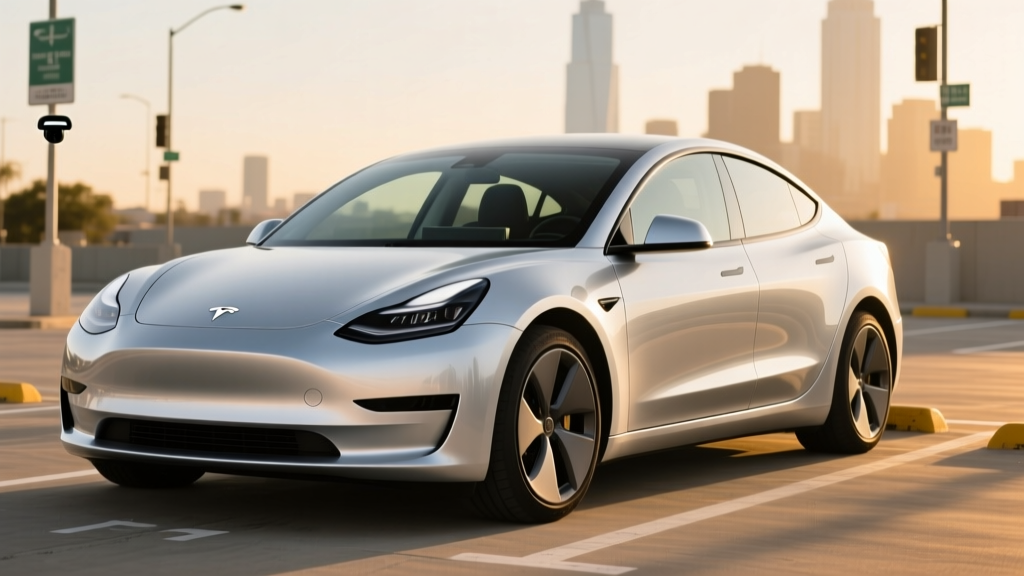
For years, Tesla bundled its basic Autopilot lane-keeping feature — branded Autosteer — into every vehicle at no extra cost. In early 2026, Tesla made a controversial move: the company quietly removed Autosteer from the base trim of the 2026 Tesla Model 3 in certain markets, reserving it for vehicles equipped with the optional Enhanced Autopilot or Full Self-Driving (Supervised) packages. The headline "Tesla removes Autosteer" sent shockwaves through EV forums and Reddit threads, but the reality is more nuanced than the clickbait suggests.
This review breaks down exactly what changed, what the 2026 Model 3 still delivers as a daily-driver EV, and whether the loss of bundled Autosteer should change your buying decision. We'll cover range, charging, pricing, tax-credit eligibility, and real-world ownership — with the exact numbers you need.
What "Tesla Removes Autosteer" Actually Means for 2026
Let's clarify the terminology first, because Tesla's naming conventions remain one of the most confusing aspects of EV ownership.
Here's what Tesla changed for 2026:
- Standard (base) Model 3: Now ships with Traffic-Aware Cruise Control only. Autosteer (lane-centering) is no longer included in the base price.
- Enhanced Autopilot ($6,000 option): Includes Autosteer, Auto Lane Change, Autopark, Summon, and Navigate on Autopilot.
- FSD Supervised ($8,000 option or $99/mo subscription): Everything in Enhanced Autopilot plus traffic-light/stop-sign recognition and city-street autosteering (still Level 2, driver-supervised).
The base Model 3 still includes Tesla's active safety suite — automatic emergency braking, forward collision warning, blind-spot monitoring, and lane-departure warning. Those are not affected. What's gone is the convenience of hands-assisted lane centering on highways unless you pay extra.
2026 Tesla Model 3: Core Specifications
| Spec | Model 3 RWD (Base) | Model 3 Long Range AWD | Model 3 Performance |
|---|---|---|---|
| EPA Range | 272 mi | 341 mi | 315 mi |
| Battery (usable) | ~57.5 kWh (LFP) | ~75 kWh (NMC) | ~75 kWh (NMC) |
| Drivetrain | RWD, single motor | AWD, dual motor | AWD, dual motor |
| Horsepower | 271 hp | 346 hp | 510 hp |
| 0–60 mph | 5.8 sec | 4.2 sec | 2.9 sec |
| Max DC Fast Charge | 170 kW | 250 kW | 250 kW |
| 10–80% DC Time | ~25 min | ~22 min | ~22 min |
| Level 2 Home Charge | 11.5 kW (~37 mi/hr) | 11.5 kW (~44 mi/hr) | 11.5 kW (~44 mi/hr) |
| MPGe (combined) | 132 MPGe | 130 MPGe | 119 MPGe |
| Efficiency | 25 kWh/100 mi | 26 kWh/100 mi | 28 kWh/100 mi |
| Base MSRP | $38,990 | $45,990 | $52,990 |
Sources: fueleconomy.gov, Tesla Model 3 configurator. Specs reflect 2026 model year. Prices before destination fee ($1,390).
Real-World Range: What the EPA Sticker Doesn't Tell You
EPA estimate: 341 miles
Expect on highway road trips (70–80 mph): ~270–295 miles
Expect in cold weather (below 32°F): ~220–260 miles
City/stop-and-go with regen: ~310–340 miles
Tesla's efficiency engineering remains best-in-class. The Model 3 Long Range's 26 kWh/100mi is remarkably low for a dual-motor AWD sedan. But physics still applies:
- Highway driving at 75+ mph increases aerodynamic drag substantially. Expect a 15–20% reduction from the EPA combined figure.
- Cold weather is the Model 3's Achilles heel. The LFP battery in the base RWD model is especially vulnerable — LFP chemistry suffers more internal resistance at low temperatures than NMC. Tesla's heat pump helps, but preconditioning is essential. Budget 20–35% range loss in sub-freezing conditions.
- The LFP advantage: The base Model 3's lithium iron phosphate battery can (and should) be charged to 100% daily without accelerated degradation concerns, unlike the NMC packs in Long Range and Performance trims, where Tesla recommends 80% for daily use. This partially offsets the LFP pack's smaller capacity.
Charging Speed: DC Fast, Home, and the NACS Advantage
The 2026 Model 3 uses the NACS (North American Charging Standard) connector natively — no adapter needed. This gives Tesla owners seamless access to the Supercharger network, which now hosts over 25,000 stalls in North America, including an increasing number of V4 Superchargers capable of higher sustained power delivery.
| Charging Level | Power (kW) | Miles Added per Hour | Notes |
|---|---|---|---|
| Level 1 (120V household) | ~1.4 kW | ~4–5 mi/hr | Emergency/top-up only |
| Level 2 (240V, 48A Wall Connector) | 11.5 kW | 37–44 mi/hr | Full charge overnight (~7–9 hrs) |
| DC Fast (V3 Supercharger, LR/Perf) | Peak 250 kW | ~175 mi in 15 min | Tapers significantly above 80% SoC |
| DC Fast (V3 Supercharger, RWD) | Peak 170 kW | ~130 mi in 15 min | LFP charges more linearly but at lower peak |
Charging curve reality check: The Long Range and Performance trims peak at 250 kW but only sustain that rate between roughly 10–30% State of Charge. By 50% SoC, power drops to ~150 kW, and above 80%, it falls below 50 kW. That's why Tesla quotes 10–80% times rather than 0–100%. Always precondition the battery (navigate to a Supercharger in the car's nav, and it warms the pack automatically) to achieve peak rates.
Non-Tesla charger access: With the industry-wide shift to NACS, Electrify America, EVgo, and ChargePoint have begun deploying NACS connectors at new stations. However, many legacy CCS1 stations still require a CCS-to-NACS adapter (Tesla sells one for ~$175). Verify connector availability in your area before relying on third-party networks.
Pricing, Trims, and Federal Tax Credit Eligibility
| Trim | MSRP (incl. dest.) | §30D Credit | Effective Price* |
|---|---|---|---|
| Model 3 RWD | $40,380 | $3,750 (partial) | ~$36,630 |
| Model 3 Long Range AWD | $47,380 | $3,750 (partial) | ~$43,630 |
| Model 3 Performance | $54,380 | $3,750 (partial) | ~$50,630 |
*Effective price assumes full buyer eligibility. Actual credit depends on battery sourcing compliance, income caps, and MSRP limits. Consult IRS §30D guidelines or a tax professional.
- ✅ MSRP cap: Sedans must be ≤$55,000 — the RWD and Long Range qualify; the Performance at $54,380 (with destination) barely clears the cap.
- ✅ Buyer income cap: AGI ≤$150,000 (single) / ≤$300,000 (joint filing).
- ⚠️ Battery sourcing: Tesla's partial credit ($3,750) reflects that some Model 3 battery cells meet critical-mineral requirements but not all component-sourcing thresholds. The full $7,500 is not currently available for any Model 3 trim.
- ✅ Point-of-sale transfer: You can transfer the credit to Tesla at purchase for an immediate price reduction, rather than claiming it on your tax return.
The removal of bundled Autosteer from the base trim is a cost-saving measure by Tesla, but it effectively pushes buyers toward the $6,000 Enhanced Autopilot or $8,000 FSD package. Factor that into your budget if highway lane-centering is important to your commute.
Interior, Cargo, and Daily Practicality
The 2026 Model 3 "Highland" refresh interior carries forward with incremental material improvements. The minimalist cabin centers on a 15.4-inch touchscreen that controls everything — there are still no physical buttons for climate, mirrors, or glovebox.
Passenger and cargo dimensions:
- Front legroom: 42.7 inches
- Rear legroom: 35.2 inches (adequate for adults on shorter trips, tight for taller passengers)
- Cargo (trunk): 23 cu ft
- Frunk (front trunk): 3.1 cu ft — enough for a charging cable bag or small backpack
- Total cargo: ~26 cu ft with rear seats up; ~64 cu ft with 60/40 rear seats folded
Standout tech features:
- 15.4" central touchscreen with Tesla's latest UI (snappy, responsive)
- 8" rear passenger screen for climate and entertainment
- Ambient lighting with customizable color zones
- Ventilated front seats (new for Highland generation)
- Acoustic glass all around — dramatically quieter than pre-2024 Model 3
- Over-the-air updates continue to add features post-purchase
Notable drawbacks:
- Turn signals are on the steering wheel (no stalk) — divisive and takes weeks to adapt
- Gear selector is on the touchscreen (backup buttons on overhead console) — also divisive
- No Apple CarPlay or Android Auto — Tesla's ecosystem only
- Rear visibility is compromised by the sloping roofline; no rear wiper
- Build quality, while improved, still shows occasional panel-gap inconsistencies
Warranty, Battery Longevity, and Ownership Costs
Tesla's warranty structure is straightforward:
- Basic vehicle: 4 years / 50,000 miles
- Battery & drive unit (RWD, LFP): 8 years / 100,000 miles, minimum 70% capacity retention
- Battery & drive unit (Long Range/Performance, NMC): 8 years / 120,000 miles, minimum 70% capacity retention
The LFP battery in the base RWD Model 3 is a longevity play. LFP chemistry typically degrades more slowly than NMC over thousands of charge cycles, and Tesla's LFP packs have shown strong State of Health (SoH) retention in fleet data. Real-world degradation for the Model 3 is typically 8–12% over the first 100,000 miles — well within warranty thresholds. Per NHTSA, the Model 3 continues to earn 5-star overall safety ratings.
Insurance note: Model 3 insurance premiums remain above segment average. Expect $1,800–$2,600/year depending on your state, age, and driving record. Tesla's own insurance product is available in many states and can be competitive for clean-record drivers.
Pros, Cons, and the Verdict
- Best-in-class efficiency (25–28 kWh/100 mi)
- Supercharger network access (NACS native)
- LFP battery option: daily 100% charging, slower degradation
- Exceptional performance even in base trim (5.8s 0–60)
- Quiet, refined cabin post-Highland refresh
- Strong OTA update pipeline
- Autosteer removed from base trim — $6,000+ upsell
- Only partial $3,750 federal tax credit (not $7,500)
- No Apple CarPlay / Android Auto
- Stalkless steering wheel and screen-based gear selector are polarizing
- LFP range suffers more in extreme cold
- Rear seat space is tighter than Hyundai Ioniq 6 or BMW i4
Is the 2026 Model 3 Still Worth It Without Bundled Autosteer?
- Choose the Model 3 RWD if: You commute under 40 miles daily, can charge at home, live in a mild climate, and don't need highway lane-centering. At ~$36,600 after credit, it's one of the most efficient EVs on the market.
- Choose the Model 3 Long Range if: You take regular road trips, need AWD for snow, or want the NMC battery's better cold-weather performance. The 341-mile EPA range (270+ real-world highway) eliminates most range anxiety.
- Look at the Hyundai Ioniq 6 or BMW i4 if: You want bundled driver-assist features without a $6,000 upcharge, prefer physical controls, or need CarPlay. The Ioniq 6 SE offers 361 miles EPA and includes Highway Driving Assist standard, starting at ~$42,000.
- Skip the Model 3 if: You rely on Autosteer for daily highway commuting and refuse to pay $6,000+ for it. The removal of bundled Autosteer is a real loss for the base trim's value proposition.
The 2026 Model 3 remains an outstanding electric sedan in terms of efficiency, charging infrastructure access, and driving dynamics. The "Tesla removes Autosteer" change is frustrating from a value standpoint — it's a feature that competitors include at no extra cost — but it doesn't fundamentally break the car. If lane-centering matters to you, budget for Enhanced Autopilot or consider the Ioniq 6. If you're a hands-on driver who uses cruise control without lane assist, the base Model 3 RWD at under $37,000 after credit is still a compelling buy.
Frequently Asked Questions
Does the 2026 Model 3 still have any driver-assist features without Autosteer?
Yes. The base Model 3 retains Traffic-Aware Cruise Control (maintains set speed and following distance), automatic emergency braking, blind-spot monitoring, lane-departure warning, and rear cross-traffic alert. What's missing is Autosteer — the lane-centering function that actively keeps the car centered in its lane. You still get warnings if you drift, but the car won't correct your steering unless you pay for Enhanced Autopilot or FSD.
How fast does the Model 3 charge at home?
With a Tesla Wall Connector on a 60-amp circuit (48A continuous), all 2026 Model 3 trims accept up to 11.5 kW on Level 2, adding roughly 37–44 miles of range per hour. A full overnight charge from 20% to 100% takes about 7–9 hours depending on the trim's battery size. Installation typically costs $800–$2,000 depending on your electrical panel's capacity and the run distance from panel to charger location.
Is the LFP battery in the base Model 3 worse than NMC?
Not worse — different. LFP (lithium iron phosphate) has lower energy density, which is why the RWD has 272 miles of range versus 341 for the NMC Long Range. But LFP offers key advantages: you can charge to 100% daily without degradation concerns, it has a longer cycle life (more charge/discharge cycles before meaningful capacity loss), and it uses no cobalt or nickel. The trade-off is worse cold-weather performance and lower range per kWh.
Does the 2026 Model 3 qualify for the full $7,500 federal tax credit?
No. As of 2026, the Model 3 qualifies for a partial $3,750 federal tax credit under IRS §30D rules. The reduced amount is due to battery-component and critical-mineral sourcing requirements that Tesla's supply chain does not fully meet. Buyer income caps ($150K single / $300K joint) and the $55,000 MSRP cap for sedans also apply. The credit can be transferred to Tesla at point of sale for an immediate price reduction. Always verify current eligibility at irs.gov before purchasing.
What's the real-world range of the Model 3 Long Range on a road trip?
On a highway road trip at 70–80 mph in moderate temperatures (60–80°F), expect approximately 270–295 miles from the 341-mile EPA-rated Long Range AWD. In cold weather (below freezing), that drops to roughly 220–260 miles. City driving with frequent regenerative braking opportunities can push range back toward the EPA estimate or slightly above it. Preconditioning and moderate speeds are the two biggest levers for maximizing real-world range.