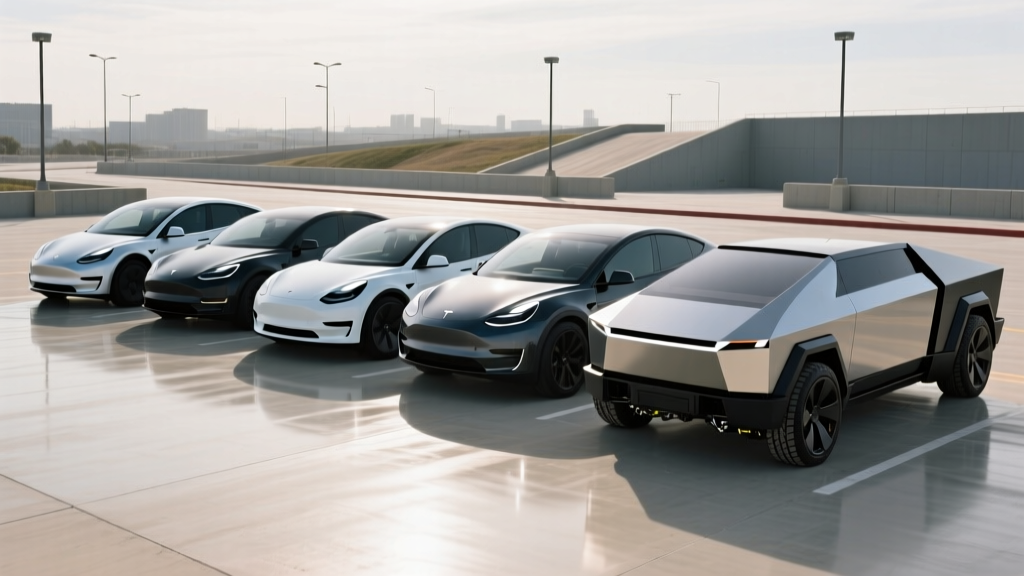
The Reliability Question Every Tesla Buyer Asks
Tesla dominates EV sales, but Tesla reliability ratings tell a complicated story. Surveys from Consumer Reports and J.D. Power consistently rank Tesla below average in predicted reliability, yet the brand scores at or near the top in owner satisfaction. For buyers weighing a 2025 or 2026 Tesla purchase, understanding this gap—between mechanical trouble frequency and the ownership experience—is essential.
This review dissects reliability data across the current Tesla lineup (Model 3, Model Y, Model S, Model X), pairs it with hard performance and charging specs, and gives you the framework to decide whether a Tesla is the right EV for your garage.
2026 Tesla Lineup: Spec Table at a Glance
| Model / Trim | EPA Range | Battery (kWh / Chemistry) | 0-60 mph | Drivetrain | Base MSRP |
|---|---|---|---|---|---|
| Model 3 RWD | 272 mi | ~57.5 kWh / LFP | 5.8 s | RWD | $38,990 |
| Model 3 Long Range AWD | 341 mi | ~78 kWh / NMC | 4.2 s | Dual-Motor AWD | $44,990 |
| Model 3 Performance | 315 mi | ~78 kWh / NMC | 2.9 s | Dual-Motor AWD | $52,990 |
| Model Y Long Range AWD | 308 mi | ~78 kWh / NMC | 4.8 s | Dual-Motor AWD | $44,990 |
| Model Y Performance | 285 mi | ~78 kWh / NMC | 3.5 s | Dual-Motor AWD | $50,990 |
| Model S Long Range | 402 mi | ~95 kWh / NMC | 3.1 s | Dual-Motor AWD | $74,990 |
| Model X Long Range | 335 mi | ~95 kWh / NMC | 3.8 s | Dual-Motor AWD | $79,990 |
Sources: fueleconomy.gov, Tesla spec sheets. Prices reflect 2025 model year MSRP before destination fees and incentives.
What the Major Reliability Surveys Say About Tesla
Three major organizations publish reliability data that Tesla buyers should cross-reference:
Consumer Reports Predicted Reliability
In its most recent annual auto survey, Consumer Reports placed Tesla in the lower third of all brands for predicted reliability. The Model Y and Model 3 have shown improvement year-over-year, but both still trail competitors like the Toyota bZ4X and Hyundai Ioniq 5 in trouble-free ownership reports. Common problem areas flagged include body hardware (panel gaps, trim rattles), paint quality, and in-car electronics glitches.
J.D. Power Vehicle Dependability Study
The J.D. Power Vehicle Dependability Study (VDS), which surveys original owners after three years, has consistently ranked Tesla below the industry average in problems per 100 vehicles (PP100). Tesla's PP100 has historically hovered around 200-240 versus the industry average of roughly 180-190. Build quality and exterior trim remain the most frequently cited complaint categories.
NHTSA Recalls and Complaints
The NHTSA database shows Tesla has issued a high volume of recalls—many addressed via over-the-air (OTA) software updates rather than dealer visits. While OTA fixes are convenient, the sheer number of recalls (often 15-20+ per model year across the fleet) signals that Tesla ships vehicles with software and hardware issues it intends to patch later. This "beta-in-production" approach is polarizing: some owners appreciate rapid iteration, while others see it as quality control deferred to the customer.
Real-World Range vs. EPA Estimates
EPA estimates assume a blended city/highway cycle at moderate temperatures. In practice:
Model 3 Long Range (EPA 341 mi): Expect ~280-300 mi on sustained 75 mph highway driving in 70°F weather. In sub-30°F winter conditions, range can drop to 220-250 mi due to battery resistance and cabin heating demand.
Model Y Long Range (EPA 308 mi): Real-world highway: ~250-270 mi. Winter: ~200-230 mi. The taller, less aerodynamic SUV profile costs ~10% efficiency vs. the Model 3 at speed.
Model S Long Range (EPA 402 mi): One of the longest-range EVs sold. Highway realistic: ~330-350 mi. Winter: ~275-310 mi. The larger 95 kWh pack provides a meaningful buffer.
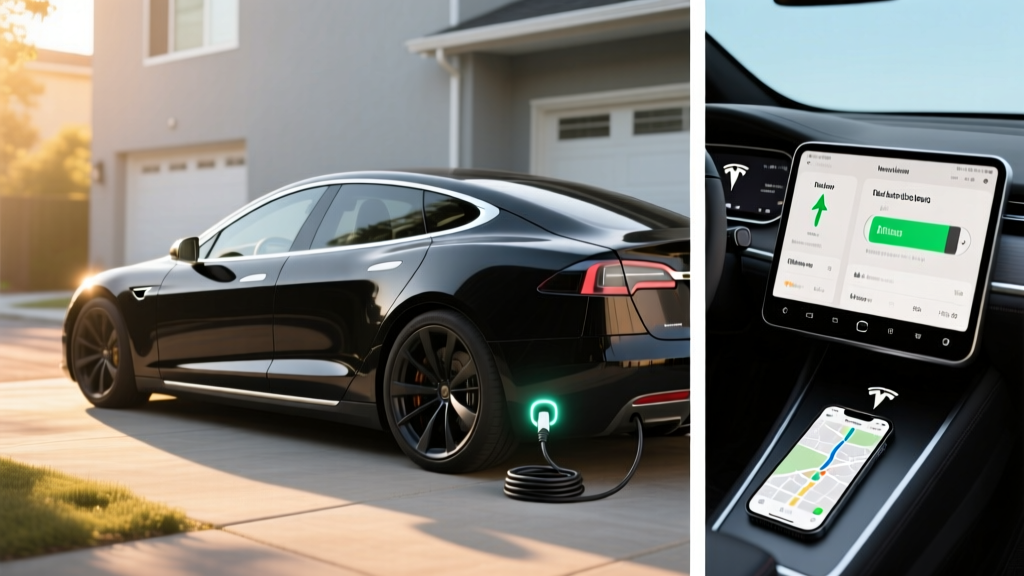
Tip: Use Tesla's built-in trip planner and precondition the battery before Supercharger stops to minimize range shortfall.
Charging Speed: DC Fast, Level 2, and the Supercharger Advantage
| Model | Max DC Fast Charge (kW) | 10-80% Time | Level 2 Home Rate (kW / mi per hr) |
|---|---|---|---|
| Model 3 RWD (LFP) | 170 kW | ~30 min | 11.5 kW / ~44 mi/hr |
| Model 3 Long Range / Performance | 250 kW | ~22 min | 11.5 kW / ~44 mi/hr |
| Model Y Long Range / Performance | 250 kW | ~25 min | 11.5 kW / ~38 mi/hr |
| Model S / X | 250 kW | ~27 min | 11.5 kW / ~34 mi/hr |
Key nuance — kW vs. kWh: Kilowatts (kW) measure charging power—how fast energy flows into the battery. Kilowatt-hours (kWh) measure battery capacity—how much energy the pack stores. A 250 kW peak charge rate doesn't sustain for the entire session. Tesla's charge curve tapers significantly above 60% state of charge (SoC), and especially above 80%, which is why 10-80% time is the standard metric.
The Supercharger network remains Tesla's strongest competitive moat. With 60,000+ global connectors and near-universal uptime, it delivers a plug-and-charge experience that public CCS networks still struggle to match consistently. Tesla has opened Superchargers to non-Tesla EVs via NACS adapters, but Tesla owners retain native routing and preconditioning integration that cuts real charging time by 5-10 minutes per stop versus un-preconditioned CCS charging.
Federal Tax Credit: What You'll Actually Pay
Tesla's eligibility for the IRS §30D federal EV tax credit depends on your income, the vehicle's MSRP, and battery component/critical-mineral sourcing requirements that tighten annually.
| Model | Base MSRP | MSRP Cap (§30D) | Max Credit (if eligible) | Est. After-Credit Price |
|---|---|---|---|---|
| Model 3 RWD | $38,990 | $55,000 (sedan) | $7,500 | ~$31,490 |
| Model 3 Long Range AWD | $44,990 | $55,000 (sedan) | $7,500 | ~$37,490 |
| Model Y Long Range AWD | $44,990 | $80,000 (SUV) | $7,500 | ~$37,490 |
| Model S Long Range | $74,990 | $55,000 (sedan) | $0 | $74,990 |
| Model X Long Range | $79,990 | $80,000 (SUV) | $7,500 | ~$72,490 |
§30D eligibility checklist (2025-2026 rules):
- Income caps: AGI ≤ $150,000 (single), ≤ $225,000 (head of household), ≤ $300,000 (joint)
- MSRP caps: $55,000 for sedans; $80,000 for SUVs/pickups/vans
- Battery sourcing: Increasingly strict critical-mineral and battery-component requirements sourced from the U.S. or FTA partners — check IRS.gov for the current qualifying list before purchase
- Point-of-sale transfer: You can transfer the credit to the dealer at purchase to reduce your out-of-pocket cost immediately
Critical: The Model S exceeds the $55,000 sedan MSRP cap and does not qualify. The Model X qualifies only because it is classified as an SUV. Verify current-year eligibility on IRS.gov before committing — battery sourcing rules change frequently.
Efficiency, Cargo, and Daily Livability
Efficiency (MPGe and kWh/100 mi)
The Model 3 RWD achieves an EPA-rated 132 MPGe combined (25 kWh/100 mi), making it one of the most efficient EVs on the market. The Model Y Long Rate returns 117 MPGe combined (29 kWh/100 mi). The Model S Long Range lands at 120 MPGe combined (28 kWh/100 mi). These figures translate directly to lower per-mile charging costs—roughly $0.04-$0.05/mile on residential electricity versus $0.12-$0.15/mile for a comparable gas sedan.
Cargo and Passenger Space
- Model 3: 23 cu ft trunk + rear-seat cargo area; 43.0 in front legroom, 35.2 in rear. Frunk adds ~3 cu ft.
- Model Y: 30 cu ft behind rear seats (76 cu ft with seats folded); 41.8 in front legroom, 41.6 in rear. Optional third row (not recommended for adults).
- Model S: 28 cu ft rear cargo + 5.3 cu ft frunk; 42.4 in front legroom, 35.4 in rear.
- Model X: 42 cu ft behind third row (88 cu ft max); falcon-wing doors ease third-row access but add mechanical complexity (a known reliability concern).
Warranty Coverage and Battery Longevity
Tesla's warranty structure is straightforward:
- Basic vehicle: 4 years / 50,000 miles
- Battery and drive unit (Model 3 RWD — LFP): 8 years / 100,000 miles, minimum 70% capacity retention
- Battery and drive unit (Model 3 LR, Model Y, Model S, Model X — NMC): 8 years / 120,000 miles (150,000 mi for S/X), minimum 70% capacity retention
LFP (lithium iron phosphate) packs in the Model 3 RWD trade lower energy density for superior cycle life and thermal stability. Tesla recommends charging LFP packs to 100% regularly—unlike NMC packs, which benefit from an 80% daily charge limit for longevity. Real-world data from high-mileage Tesla owners shows NMC packs retaining ~88-92% capacity at 100,000 miles with proper charging habits, while LFP packs show even slower degradation curves.
Out-of-warranty battery replacement costs remain a concern: approximately $12,000-$16,000 for Model 3/Y packs and $18,000-$22,000 for Model S/X, though third-party repair shops are increasingly offering module-level repairs at 40-60% lower cost.
Tech, Autopilot, and the Interior Experience
Every Tesla ships with Basic Autopilot (SAE Level 2 driver assist), which includes adaptive cruise control and lane-keeping. Full Self-Driving (Supervised) remains a $8,000 add-on—or $99/month subscription—and despite its name, it is still an SAE Level 2 system requiring active driver supervision at all times. Only Waymo-style robotaxi services operate at SAE Level 4 (no driver needed). Tesla's FSD has improved markedly on highways but still struggles with construction zones, unprotected left turns, and edge-case urban scenarios.
Autopilot and FSD (Supervised) are SAE Level 2 systems. You must keep your hands on the wheel and eyes on the road at all times. These systems do NOT make the vehicle self-driving. Tesla's cabin camera monitors attention, but the driver remains legally responsible for all vehicle operation.
The interior is minimalist by design: a single 15.4-inch center touchscreen controls everything—climate, mirrors, glovebox, navigation. There are no physical buttons. This appeals to tech-forward buyers but frustrates those who want tactile controls for frequently used functions. Build quality has improved in 2024-2025 Highland/Juniper refreshes (better materials, ventilated seats, ambient lighting, rear passenger screen in Model 3), but panel-gap variance and occasional paint imperfections still appear in delivery inspections.
Pros, Cons, and the Verdict
✅ Pros
- Best-in-class Supercharger network (60,000+ connectors, native plug-and-charge)
- Industry-leading efficiency (Model 3 RWD: 25 kWh/100 mi)
- OTA updates continuously add features post-purchase
- Strong resale value relative to non-Tesla EVs
- LFP battery option offers excellent longevity at lower price
- Class-leading 0-60 performance across all trims
❌ Cons
- Below-average predicted reliability (Consumer Reports, J.D. Power)
- Build quality inconsistency: panel gaps, paint defects at delivery
- No physical controls—everything through the touchscreen
- High recall volume (mitigated by OTA but signals QC issues)
- FSD is expensive and still requires full driver attention
- Model S exceeds §30D MSRP cap — no federal tax credit
Who Should Buy a Tesla—and Who Shouldn't
🎯 Decision Framework
Choose Tesla if:
- You road-trip frequently and want the most reliable public charging experience (Supercharger network)
- You can charge at home (Level 2) and want the lowest per-mile fuel cost in the EV segment
- You value performance and tech-forward minimalism
- You want an EV that holds value better than most competitors
Look elsewhere if:
- Build quality and predicted reliability are your top priorities (consider Hyundai Ioniq 5/6, Toyota bZ4X)
- You prefer physical buttons and a traditional cockpit layout
- You need a luxury sedan over $55,000 and want the federal tax credit (Model S doesn't qualify)
- You want hands-free highway driving from a validated Level 2+ system (GM Super Cruise and Ford BlueCruise offer eyes-off capability on mapped roads)
Frequently Asked Questions
What is the real-world range of a Tesla?
Real-world range is typically 80-90% of the EPA estimate in mild highway driving and 65-75% in cold winter conditions. A Model 3 Long Range rated at 341 mi EPA will deliver roughly 280-300 mi at 75 mph in summer and 220-250 mi in freezing temperatures. Preconditioning and moderate speeds narrow the gap.
How fast does a Tesla charge at home and on the road?
At home on a 48-amp Level 2 circuit (11.5 kW), a Model 3 Long Range adds approximately 44 miles of range per hour—a full overnight charge from 20% to 80% takes about 6-7 hours. On a 250 kW Supercharger, 10-80% takes 22-27 minutes depending on the model, with the charge curve tapering sharply above 80%.
Does Tesla qualify for the $7,500 federal tax credit?
It depends on the model, your income, and current battery-sourcing rules. The Model 3 (all trims under $55,000), Model Y, and Model X can qualify for up to $7,500 under §30D if your AGI falls within IRS caps. The Model S exceeds the $55,000 sedan MSRP cap and does not qualify. Always verify on IRS.gov before purchase, as critical-mineral sourcing rules change annually.
Is Tesla worth buying vs. competitors?
If charging infrastructure reliability and efficiency are your top priorities, Tesla still leads. If you prioritize build quality, interior luxury, or hands-free highway driving, competitors like the Hyundai Ioniq 5, BMW i4, or vehicles equipped with GM Super Cruise may be better fits. Cross-shop based on your specific use case, not brand loyalty.
Are Teslas expensive to maintain?
Annual maintenance costs are low—no oil changes, fewer brake replacements (regenerative braking extends pad life), and minimal scheduled service. However, out-of-warranty repairs (especially battery, drive unit, or screen) can be costly. Tesla's mobile service and OTA updates reduce dealer-visit frequency, but body and paint repairs through Tesla-certified shops can be slow and expensive due to parts availability.