Buying a Tesla in 2026 means agreeing to one of the most discussed terms in the EV industry: a mandatory arbitration clause that governs disputes, including refund requests. While the Model 3 and Model Y remain benchmark electric vehicles for efficiency, charging infrastructure, and software, buyers increasingly search for Tesla refund arbitration details before signing a purchase agreement. This guide breaks down what the clause means for you, then delivers the full spec-by-spec review of the current Tesla lineup so you can weigh the vehicle's merits against its contractual fine print.
What Tesla Refund Arbitration Actually Means for Buyers
When you order a Tesla online or in-store, the purchase agreement includes a binding arbitration clause. This means that if you have a dispute — whether it involves a refund request for a defective vehicle, a canceled order, a service issue, or a misrepresentation claim — you generally cannot file a lawsuit in court or join a class action. Instead, the dispute is resolved through a private arbitrator.
Key points Tesla buyers should understand:
- Opt-out window: Tesla has historically offered a 30-day opt-out period from arbitration. Buyers must send a written notice to Tesla's legal department within 30 days of taking delivery. Missing this window locks you into arbitration.
- Scope: The clause typically covers disputes about vehicle quality, refund/return requests, warranty claims, Autopilot/FSD feature performance, and order cancellations.
- Costs: Arbitration filing fees vary, but Tesla has historically agreed to cover certain arbitration costs for claims below specific thresholds.
- State exceptions: Some states have consumer-protection laws that may limit or override certain arbitration terms. Consult a consumer-rights attorney in your jurisdiction before assuming the clause is absolute.
2026 Tesla Model 3 and Model Y: The Vehicles at the Center
Most Tesla refund arbitration searches relate to the brand's two highest-volume vehicles. Here is a spec-for-spec breakdown of what you're actually buying in 2026.
| Spec | 2026 Model 3 Long Range AWD | 2026 Model Y Long Range AWD |
|---|---|---|
| EPA Range | 341 miles | 320 miles |
| Battery (usable) | ~75 kWh (NMC) | ~75 kWh (NMC) |
| Drivetrain | Dual-Motor AWD | Dual-Motor AWD |
| Horsepower | ~346 hp | ~384 hp |
| 0–60 mph | 4.2 seconds | 4.8 seconds |
| Peak DC Fast Charge | 250 kW | 250 kW |
| 10–80% DC Time | ~25 min | ~27 min |
| Level 2 Rate | 11.5 kW (~44 mi/hr) | 11.5 kW (~44 mi/hr) |
| Efficiency | 132 MPGe / 25 kWh/100mi | 122 MPGe / 28 kWh/100mi |
| Cargo Volume | 23 cu ft (trunk + frunk) | 76 cu ft (seats folded + frunk) |
| Rear Legroom | 35.2 in | 40.5 in |
| Battery Warranty | 8 yr / 120,000 mi | 8 yr / 120,000 mi |
| Base MSRP | $47,740 | $52,490 |
Source: EPA fueleconomy.gov and Tesla official specifications.
Real-World Range vs. EPA Estimates
Real-World Highway (70 mph, mild weather): Expect ~280–305 mi (Model 3) and ~260–285 mi (Model Y)
Cold Weather (below 32°F, highway): Expect 20–30% reduction — roughly 220–250 mi (Model 3) and 200–230 mi (Model Y)
City / Stop-and-Go with Regen: Close to or slightly above EPA, especially in moderate temps
Tesla's NMC (nickel manganese cobalt) battery chemistry delivers strong energy density, which is why these vehicles achieve top-tier EPA range figures. However, NMC batteries are more sensitive to extreme cold than LFP (lithium iron phosphate) packs found in the RWD trims. Tesla's heat pump — standard on all 2026 models — helps recover some cold-weather range by scavenging waste heat from the drivetrain, but physics still wins: a 75 kWh battery simply holds less usable energy when the cells are cold.
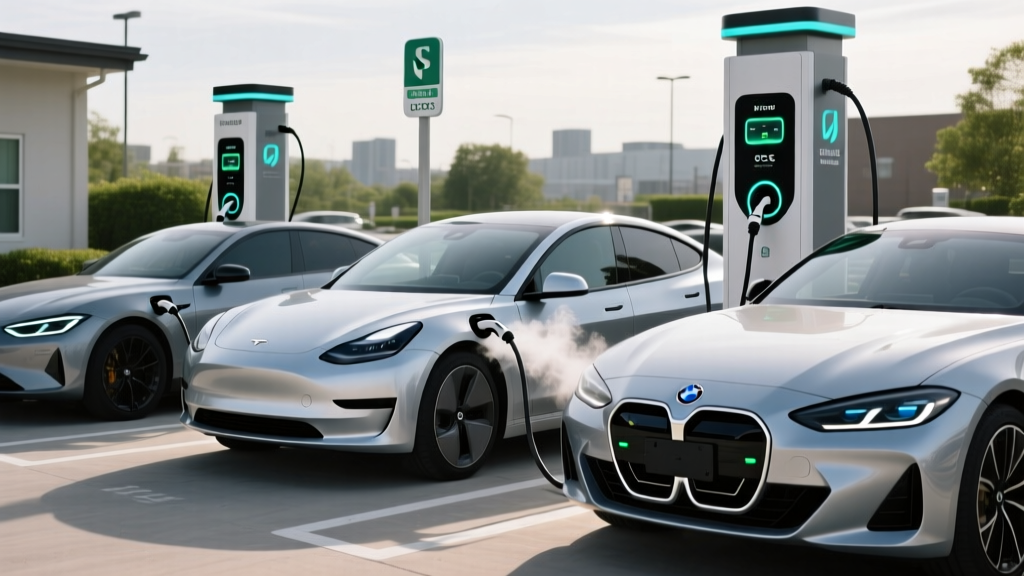
For road-trippers: Tesla's Supercharger network remains the most reliable DC fast-charging ecosystem in the US, with 250 kW V3 stalls widespread and V4 stalls rolling out. Plan charging stops around 200–220 miles apart in winter to keep a safe buffer.
Charging Speed: DC Fast, Level 2, and Home Setup
| Charging Level | Power | Speed (approx.) | Use Case |
|---|---|---|---|
| Level 1 (120V household) | ~1.4 kW | ~5 mi/hr | Overnight trickle; emergency top-ups |
| Level 2 (240V home) | 11.5 kW max | ~44 mi/hr | Daily home charging; full overnight fill |
| DC Fast (Supercharger V3) | 250 kW peak | 10–80% in ~25 min | Road trips; rapid top-ups |
Charging curve reality: The 250 kW peak rate applies only when the battery is preconditioned (the car does this automatically when you navigate to a Supercharger) and at a low state of charge (roughly 10–30%). Above 50% SoC, the rate tapers significantly — expect ~100 kW at 60% and ~50 kW at 80%. This is why Tesla (and the industry) quote 10–80% times rather than 0–100%.
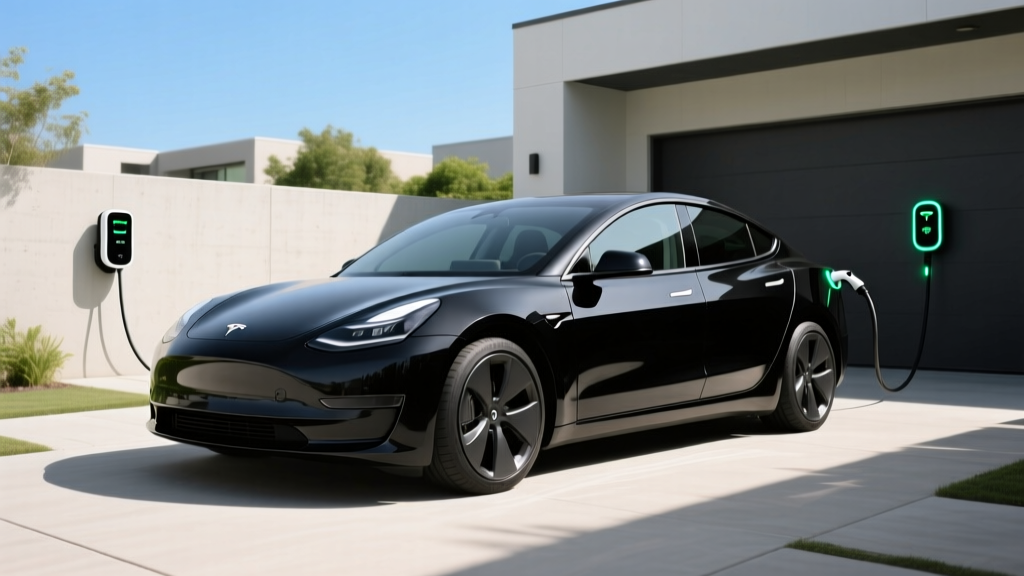
For home charging, a Tesla Wall Connector on a 60-amp circuit delivers the full 11.5 kW (48 amps continuous). Installation costs typically range from $800–$2,500 depending on panel capacity and conduit runs. If your home has a 100-amp main panel, you may need a $1,500–$3,000 panel upgrade — factor this into your purchase budget.
Pricing, Trim Levels, and Federal Tax Credit Eligibility
| Model / Trim | Base MSRP | §30D Credit (if eligible) | Effective Price |
|---|---|---|---|
| Model 3 RWD | $38,990 | Up to $7,500 (point-of-sale) | ~$31,490 |
| Model 3 Long Range AWD | $47,740 | Up to $7,500 | ~$40,240 |
| Model Y Long Range AWD | $52,490 | Up to $7,500 | ~$44,990 |
| Model Y Performance | $57,490 | Up to $7,500 | ~$49,990 |
IRS §30D eligibility is not guaranteed. To qualify for the full $7,500 federal tax credit (available as a point-of-sale transfer to the dealer in 2026), you must meet all of the following:
- Income caps: Modified AGI ≤ $150,000 (single), $225,000 (head of household), $300,000 (joint)
- MSRP caps: ≤ $55,000 for sedans (Model 3); ≤ $80,000 for SUVs/trucks (Model Y qualifies)
- Battery sourcing: Critical minerals and battery components must meet phased-in domestic/free-trade-agreement sourcing thresholds — these tighten annually. Verify current-year compliance on IRS.gov
- Vehicle assembly: Must be assembled in North America (Tesla's Fremont and Austin plants qualify)
Tesla's eligibility has fluctuated as sourcing rules tighten. Always confirm the specific VIN's credit status on the IRS qualified-vehicles list before finalizing your order.
Performance, Tech, and Driver Assistance
Both the Model 3 and Model Y deliver instant torque and confident acceleration that outpaces most gas-powered competitors in their price range. The dual-motor AWD system provides excellent traction in rain and light snow, and Tesla's low center of gravity (battery pack mounted under the floor) keeps body roll minimal in corners.
Standout tech:
- 15.4-inch center touchscreen (Model 3 Highland refresh / Model Y Juniper) with responsive UI
- Over-the-air updates that add features post-purchase
- Native navigation with real-time Supercharger routing and preconditioning
- Sentry Mode dashcam recording and remote climate control via app
- Vehicle-to-load (V2L) adapter availability for powering devices from the traction battery
Autopilot and FSD (Supervised):
FSD (Supervised) costs $8,000 upfront or $99/month as of 2026. Whether it's worth the investment remains debated — it's impressive on highways but can make unpredictable decisions in complex urban environments.
Pros and Cons
Pros
- Best-in-class Supercharger network — 250 kW V3 stalls nationwide
- Top-tier efficiency (Model 3: 132 MPGe combined)
- Strong real-world range, especially in moderate climates
- Responsive OTA updates that improve the car over time
- Excellent safety ratings (IIHS Top Safety Pick+, 5-star NHTSA)
- Low running costs: ~$0.04–0.06/mi on home Level 2
Cons
- Mandatory arbitration clause limits legal recourse
- Service center wait times can stretch weeks in some markets
- Phantom braking incidents reported with Autopilot
- NMC battery more cold-sensitive than competitors' LFP options
- No Apple CarPlay or Android Auto integration
- Insurance premiums often 15–30% higher than comparable gas sedans
Who Should Buy a Tesla in 2026?
Choose the Model Y if: You need family-friendly rear-seat space, regularly carry cargo or pets, want crossover ride height, and are willing to trade ~20 miles of range for practicality.
Consider a competitor (Hyundai Ioniq 5, Chevrolet Equinox EV, Ford Mustang Mach-E) if: You prefer dealer-based service networks, want Apple CarPlay, or are uncomfortable with arbitration clauses and prefer traditional consumer-protection litigation rights.
Frequently Asked Questions
What is Tesla refund arbitration?
Tesla refund arbitration is a clause in Tesla's purchase agreement that requires disputes — including refund requests, warranty disagreements, and order cancellations — to be resolved through private arbitration rather than court litigation or class-action lawsuits. You may be able to opt out within 30 days of delivery by sending written notice to Tesla.
Can I opt out of Tesla's arbitration clause?
Historically, yes — Tesla has included a 30-day opt-out window. You must send a signed written notice to Tesla's legal department (address specified in your purchase agreement) within 30 days of taking delivery. After that window closes, you are generally bound to arbitration. Check your specific contract for current terms.
Does the 2026 Tesla Model 3 qualify for the $7,500 federal tax credit?
It may, but eligibility depends on your income (AGI caps apply), the specific VIN's battery sourcing compliance, and MSRP limits ($55,000 for sedans). Verify the vehicle's status on the IRS clean vehicle credits page before purchasing.
What is the real-world range of a 2026 Tesla Model Y Long Range?
The EPA rates it at 320 miles. In real-world highway driving at 70 mph in moderate temperatures, expect 260–285 miles. In cold weather (below 32°F), plan for 200–230 miles. City driving with regenerative braking can approach or slightly exceed the EPA estimate.
How fast does a Tesla charge at home?
On a Level 2 Tesla Wall Connector (240V, 60-amp circuit), both the Model 3 and Model Y charge at up to 11.5 kW, adding approximately 44 miles of range per hour. A full charge from 10% to 100% takes roughly 7–8 hours, easily completed overnight.
Is Tesla's arbitration clause enforceable in every state?
Arbitration clauses are broadly enforceable under the Federal Arbitration Act, but some states have consumer-protection statutes that may limit certain provisions. If you're concerned, consult a consumer-rights attorney in your state before signing.
Should I buy a Tesla or a competitor if I'm worried about arbitration?
If the arbitration clause is a dealbreaker, consider competitors like Hyundai (Ioniq 5/6), Ford (Mach-E), or Chevrolet (Equinox EV), which use traditional dealer purchase agreements without mandatory arbitration. However, weigh this against Tesla's charging network advantage, efficiency, and software ecosystem.
Sources: EPA fueleconomy.gov, Tesla.com official specifications, IRS.gov Clean Vehicle Credits, IIHS safety ratings.