If you’ve been considering a Tesla purchase—or know someone who has—you’ve likely heard about the Tesla referral program. Over the years, Tesla has used referrals as a primary marketing tool, offering everything from free Supercharger miles to exclusive vehicle accessories. As of 2026, the program has evolved, and understanding its current mechanics is essential for maximizing value on your next EV purchase.
This guide breaks down exactly how the Tesla referral program works in 2026, which vehicles are eligible, and what you need to know about range, charging, pricing, and federal tax credits before placing an order. We’ll also profile the current Tesla lineup so you can make an informed decision.
How the Tesla Referral Program Works in 2026
Tesla’s referral program rewards both the referrer (existing owner) and the referee (new buyer). In 2026, the program operates through Tesla’s app and website, where existing owners share a unique referral link. When a new buyer uses that link to place an order, both parties receive benefits.
The current reward structure includes:
- Referrer: Tesla Credits (typically 1,000–5,000 points depending on the promotion cycle) redeemable for merchandise, Supercharger miles, or vehicle accessories.
- Referee (New Buyer): Discounts on vehicle purchase, free Supercharger credits, or reduced pricing on FSD (Full Self-Driving) Supervised.
Tesla periodically adjusts the program, so always verify current terms on the official Tesla referral page before ordering. Promotions can change monthly, and some rewards are limited-time offers.
Which Tesla Models Qualify for the Referral Program?
As of 2026, all new Tesla vehicles ordered through the referral link are eligible, including:
- Model 3 (Standard Range, Long Range, Performance)
- Model Y (Long Range, Performance)
- Model S (Long Range, Plaid)
- Model X (Long Range, Plaid)
- Cybertruck (AWD, Cyberbeast)
Used Tesla vehicles purchased through Tesla’s inventory do not typically qualify for referral rewards, though Tesla occasionally runs separate used-vehicle promotions.
2026 Tesla Model 3: Specs, Range, and Real-World Performance
The Model 3 remains Tesla’s most accessible vehicle and a popular choice for referral buyers. Here’s what you need to know about the 2026 lineup.
| Spec | Standard Range RWD | Long Range AWD | Performance |
|---|---|---|---|
| EPA Range | 272 mi | 341 mi | 315 mi |
| Battery (usable) | ~60 kWh (LFP) | ~82 kWh (NMC) | ~82 kWh (NMC) |
| 0-60 mph | 5.8 sec | 4.2 sec | 2.9 sec |
| Horsepower | 283 hp | 346 hp | 510 hp |
| Drivetrain | RWD | AWD (Dual Motor) | AWD (Dual Motor) |
| MPGe (combined) | 132 MPGe | 134 MPGe | 125 MPGe |
| Efficiency | 25 kWh/100mi | 25 kWh/100mi | 27 kWh/100mi |
Real-World Range Note: The EPA estimates are based on mixed driving. Expect ~230–250 miles on the Standard Range at highway speeds (70+ mph), and ~280–300 miles on the Long Range. Cold weather (below 32°F) can reduce range by 20–30%, especially on LFP-equipped Standard Range models, which are more sensitive to low temperatures.
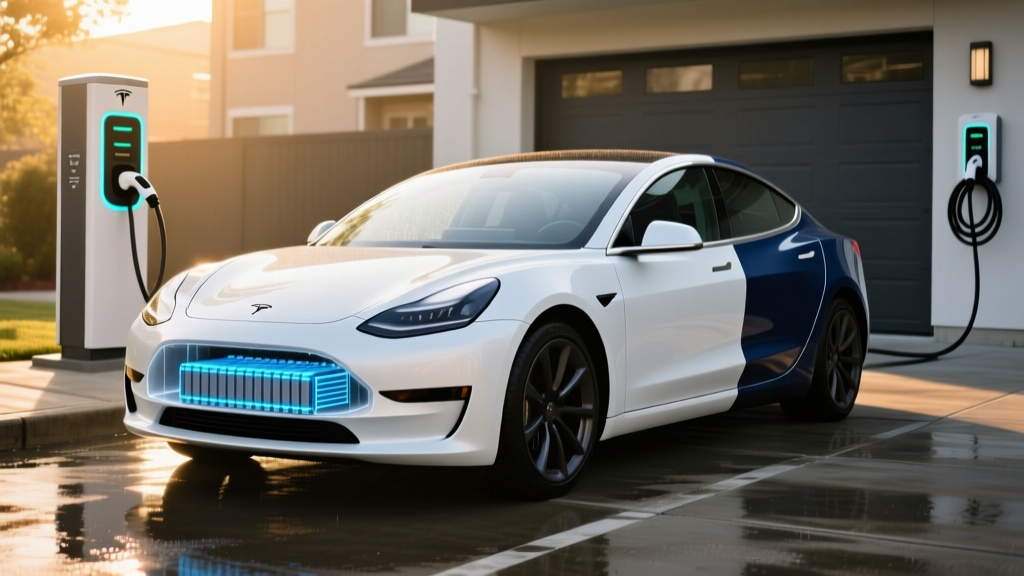
Charging Speed: DC Fast Charging and Home Level 2
Charging speed is a critical factor for EV buyers, and Tesla’s Supercharger network remains one of the most reliable in the U.S.
| Charging Level | Standard Range (LFP) | Long Range / Performance (NMC) |
|---|---|---|
| DC Fast Charge (Peak kW) | ~170 kW | ~250 kW |
| 10-80% Time | ~25 min | ~18 min |
| Level 2 Home (11.5 kW / 48A) | ~30 mi/hr | ~44 mi/hr |
| Level 1 (120V) | ~3-4 mi/hr | ~3-4 mi/hr |
The LFP battery in the Standard Range model charges slower at DC fast chargers and tapers more aggressively above 60% SoC. NMC-equipped Long Range and Performance models sustain higher charge rates longer, making them better for frequent road trippers.
For home charging, Tesla’s Wall Connector at 48 amps (11.5 kW) is the recommended setup. Installation costs vary but typically range from $500–$1,500 depending on electrical panel proximity and local permitting. Always consult a licensed electrician for a site assessment.
Pricing, Trims, and Federal Tax Credit Eligibility
Tesla’s pricing fluctuates frequently, but here are the base MSRP figures for the 2026 Model 3 lineup:
| Trim | Base MSRP | Est. After §30D Credit* |
|---|---|---|
| Standard Range RWD | $38,990 | $31,490 |
| Long Range AWD | $47,740 | $40,240 |
| Performance | $52,990 | $45,490 |
*Federal tax credit eligibility depends on multiple factors. The §30D credit is up to $7,500, but you must meet income caps ($150k single / $300k joint), the vehicle must be under the MSRP cap ($55,000 for sedans), and battery components/critical minerals must meet sourcing requirements. As of 2026, the Model 3 Long Range and Standard Range typically qualify, but always verify on IRS.gov before purchasing. The credit can now be transferred at the point of sale, reducing your purchase price directly.
Interior, Cargo, and Tech Features
The 2026 Model 3 (Highland refresh) features a minimalist interior with a 15.4-inch touchscreen, ventilated front seats, ambient lighting, and a rear-seat entertainment screen. Cargo space is 23 cu ft (trunk + frunk combined), which is competitive for the segment.
Notable tech features include:
- Tesla Vision-based Autopilot (Level 2 driver assist)
- FSD (Supervised) available as a $8,000 add-on or $99/month subscription
- Over-the-air updates continuously adding features
- Sentry Mode, Dog Mode, and Camp Mode
- Phone-as-key with BLE and UWB
Important: Autopilot and FSD (Supervised) are SAE Level 2 systems. The driver must remain fully engaged, with hands on the wheel and eyes on the road. These are not self-driving systems.
Warranty and Long-Term Ownership
Tesla’s warranty coverage includes:
- Basic Vehicle: 4 years / 50,000 miles
- Battery & Drive Unit: 8 years / 100,000 miles (Standard Range) or 8 years / 120,000 miles (Long Range/Performance), with minimum 70% capacity retention
LFP batteries in the Standard Range model tend to degrade more slowly than NMC, though they are more sensitive to extreme cold. Real-world data suggests Tesla batteries retain 85–90% capacity after 100,000 miles under normal use.
Pros and Cons of Buying a Tesla via the Referral Program
Pros
- Referral rewards reduce effective purchase price
- Access to the Supercharger network (most reliable in the U.S.)
- Strong resale value and brand recognition
- Over-the-air updates keep the vehicle current
- Point-of-sale tax credit transfer simplifies purchase
Cons
- Referral rewards fluctuate—timing matters
- No traditional dealership network for service
- FSD (Supervised) is expensive and still Level 2
- LFP Standard Range has slower DC charging and cold-weather range loss
- Insurance costs can be higher than competitors
Is a Tesla Worth Buying vs. Key Competitors?
The Model 3 competes with the Hyundai Ioniq 6, BMW i4, and Polestar 2. Tesla’s advantages include the Supercharger network, software ecosystem, and strong efficiency. However, competitors like the Ioniq 6 offer faster 800V charging (10-80% in ~18 min) and more traditional service networks.
If you prioritize software, charging infrastructure, and brand cachet, Tesla remains a strong choice. If you prefer conventional service centers or faster DC charging, consider the Ioniq 6 or i4.
Frequently Asked Questions
What is the real-world range of the 2026 Tesla Model 3?
Expect ~230–250 miles on the Standard Range at highway speeds, and ~280–300 miles on the Long Range. Cold weather can reduce these figures by 20–30%.
How fast does the Model 3 charge?
DC fast charging peaks at ~170 kW (Standard Range) or ~250 kW (Long Range), with 10-80% in ~25 or ~18 minutes respectively. Home Level 2 at 11.5 kW adds ~30–44 miles per hour.
How much does the Model 3 cost after tax credits?
After the $7,500 §30D credit (if eligible), the Standard Range drops to ~$31,490, the Long Range to ~$40,240, and the Performance to ~$45,490. Verify eligibility on IRS.gov.
Does the Model 3 qualify for the federal EV tax credit?
Yes, as of 2026, the Model 3 typically qualifies for up to $7,500 under §30D, subject to income caps, MSRP limits, and battery sourcing rules. The credit can be transferred at point of sale.
Is it worth buying vs. key competitors?
Tesla’s Supercharger network, software, and efficiency are strong advantages. However, competitors like the Hyundai Ioniq 6 offer faster charging and traditional service networks. Your choice depends on priorities.
What are the biggest pros and cons?
Pros: Supercharger access, software updates, efficiency, referral rewards. Cons: Service network limitations, FSD cost, LFP cold-weather performance, insurance costs.