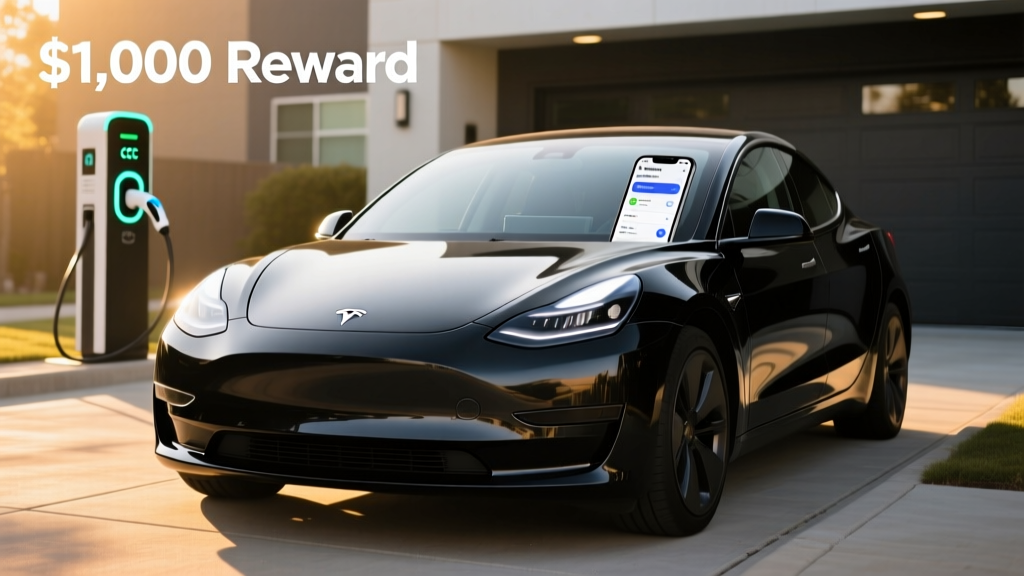
If you're shopping for a Tesla in 2026, you've likely seen mentions of a Tesla referral program $1,000 discount. Tesla periodically reactivates its referral incentive — typically offering $1,000 off the purchase price of a new Tesla when you order through an existing owner's referral link. But before you chase that discount, you need to know whether the car itself earns your money. This review breaks down the 2026 Tesla Model 3 Long Range AWD with exact specs, real-world range expectations, charging performance, and the true cost after federal tax credits and potential referral savings.
2026 Tesla Model 3 Long Range: Quick Verdict
The 2026 Model 3 Long Range AWD remains the sweet spot of Tesla's sedan lineup. It delivers over 330 miles of EPA range, access to Tesla's Supercharger network (now with NACS-native charging), and class-leading efficiency. The Highland refresh that debuted for the 2024 model year matured into the current generation with improved ride quality, ventilated front seats, and a quieter cabin. The $1,000 referral discount, when active, stacks on top of existing pricing — but it's not guaranteed year-round. Tesla has historically toggled referral incentives on and off, so check Tesla's referral page for current status before ordering.
Range, Efficiency, and Real-World Expectations
Real-World Expectation: ~290–310 miles highway at 70 mph; ~250–270 miles in freezing temperatures with cabin heat. City/regenerative driving can match or slightly exceed EPA figures.
The Model 3 Long Range AWD carries an EPA-rated 341 miles on a full charge, one of the highest figures in its price class. The EPA combined efficiency rating sits at 132 MPGe, translating to roughly 25 kWh per 100 miles — a benchmark few competitors match.
But the EPA sticker assumes a mix of city and highway driving at moderate temperatures. On a 70-mph highway run at 75°F, expect roughly 290–310 miles before you're hunting for a charger. Drop the ambient temperature to 30°F, and cold-soak effects on the battery plus resistive cabin heating can push real-world range down to 250–270 miles. Tesla's heat pump (standard since the 2021 refresh) mitigates some of this loss, but physics still wins in deep cold.
For daily commuting with regenerative braking and lower average speeds, many owners report matching or even exceeding the EPA figure — especially in mild climates.
Battery Chemistry and Capacity
The 2026 Model 3 Long Range uses an NMC (nickel manganese cobalt) battery pack with approximately 79 kWh of usable capacity (roughly 82 kWh gross). NMC chemistry provides higher energy density than LFP, which is why the Long Range variant achieves its 341-mile rating in a relatively compact sedan platform.
The base Model 3 RWD, by contrast, uses an LFP (lithium iron phosphate) pack — approximately 60 kWh usable. LFP sacrifices range but offers superior cycle life, lower degradation over time, and Tesla recommends charging LFP packs to 100% regularly. For the Long Range NMC pack, Tesla recommends daily charging to 80–90% and reserving 100% for road trips.
| Spec | Value |
|---|---|
| EPA Range | 341 miles |
| Battery (Usable) | ~79 kWh, NMC |
| Efficiency | 132 MPGe / 25 kWh/100mi |
| Drivetrain | Dual-Motor AWD |
| Horsepower | ~346 hp (combined) |
| 0-60 mph | 4.2 seconds |
| Max DC Fast Charge | 250 kW (peak) |
| 10-80% DC Charge | ~27 minutes |
| Level 2 Home Charge | 11.5 kW (~44 mi/hr) |
| Cargo Volume | 23 cu ft (trunk + frunk) |
| Rear Legroom | 35.3 inches |
| Battery Warranty | 8 years / 120,000 miles |
| Base MSRP | $47,740 (incl. destination) |
Charging Performance: DC Fast, Level 2, and the Supercharger Advantage
Charging speed is where the Model 3 Long Range holds a practical edge over many competitors — not because of peak numbers alone, but because of Tesla's integrated ecosystem.
| Level | Power / Rate | Speed | Notes |
|---|---|---|---|
| Level 1 (120V) | ~1.4 kW | ~5 mi/hr | Emergency/trickle only |
| Level 2 (240V, 48A) | 11.5 kW | ~44 mi/hr | Full charge in ~7.5 hrs |
| DC Fast (Supercharger V3/V4) | 250 kW peak | 10-80% in ~27 min | Tapers above 80%; precondition via nav |
At a V3 or V4 Supercharger, the Model 3 Long Range peaks at 250 kW, adding roughly 175 miles in 15 minutes under ideal conditions. However, like all EVs, the charge curve tapers significantly above 80% State of Charge (SoC). A 10-80% session takes approximately 27 minutes; pushing from 80-100% can add another 20+ minutes. Plan road-trip stops to 80% and move on — it's faster overall.
At home on a Tesla Wall Connector (or any 240V/48A Level 2 charger with NACS connector), the onboard charger accepts up to 11.5 kW, adding about 44 miles of range per hour. An overnight charge from 20% to 80% takes roughly 4-5 hours — more than adequate for daily use.
One critical advantage: the Model 3 charges on the NACS (North American Charging Standard) connector natively. With Tesla opening the Supercharger network to other brands via adapters, Tesla owners still enjoy the most seamless plug-and-charge experience — no app fumbling, no adapter required at Tesla stalls.
Performance and Driving Dynamics
The dual-motor AWD powertrain produces approximately 346 horsepower and launches the Model 3 Long Range from 0-60 mph in 4.2 seconds. That's sports-sedan acceleration from a vehicle rated at 132 MPGe. The instant torque delivery makes highway merging effortless, and the low center of gravity (battery pack under the floor) keeps body roll minimal through corners.
The Highland-generation suspension tuning improved ride compliance substantially over pre-2024 models. Road noise is better isolated, and the cabin is noticeably quieter at highway speeds. The steering remains precise, though some enthusiasts find it artificially weighted compared to a BMW 3 Series.
Pricing, Tax Credits, and the Referral Discount
Here's where the math gets interesting — and where the Tesla referral program $1,000 discount enters the equation.
| Item | Amount |
|---|---|
| Base MSRP (incl. destination) | $47,740 |
| Typical As-Tested (FSD, paint, wheels) | $53,000–$56,000 |
| Tesla Referral Discount (when active) | -$1,000 |
| Federal §30D Tax Credit (if eligible) | Up to -$7,500 |
| Effective Price After Credit + Referral | ~$39,240–$47,500 |
The base Model 3 Long Range AWD starts at $47,740 including destination. Add metallic paint ($1,500–$2,500), 19-inch wheels ($1,500), and Full Self-Driving (Supervised) capability ($8,000), and as-tested prices land between $53,000 and $56,000.
The $1,000 referral discount, when Tesla activates the program, applies at order time through a referral link from an existing Tesla owner. This discount typically reduces the purchase price directly — it's not a rebate you wait for. However, Tesla has historically paused and restarted the referral program without notice, so verify availability on Tesla's official referral page before relying on it in your budget.
Does the Model 3 Qualify for the Federal EV Tax Credit?
The 2026 Model 3 Long Range does qualify for the federal §30D Clean Vehicle Credit — up to $7,500 — but eligibility depends on several factors per current IRS rules:
- MSRP Cap: Sedan MSRP must not exceed $55,000. The base Long Range at $47,740 qualifies; loaded configurations with FSD may push above this threshold (FSD is classified as software and may or may not count toward the cap — consult a tax professional).
- Buyer Income Limits: AGI must not exceed $150,000 (single), $225,000 (head of household), or $300,000 (joint filers).
- Battery Sourcing: Critical minerals and battery component sourcing requirements apply and are subject to annual tightening. Tesla's Fremont-built Model 3 has historically met these requirements, but verify the specific VIN on the IRS qualified vehicles list before purchase.
- Point-of-Sale Transfer: As of 2024, the credit can be transferred to the dealer at purchase, reducing your out-of-pocket cost immediately rather than waiting for a tax refund.
Combined — the $7,500 federal credit plus a $1,000 referral discount — a qualifying buyer could bring the effective price of a base Model 3 Long Range down to approximately $39,240. That's competitive with a loaded Toyota Camry XSE, with dramatically lower running costs.
Interior, Tech, and Daily Livability
The Model 3 cabin follows Tesla's minimalist philosophy: a single 15.4-inch touchscreen handles all infotainment, climate, and vehicle settings. There's no instrument cluster — speed and navigation appear in the upper-left corner of the main display. The 2024+ Highland refresh added ambient lighting, ventilated front seats, a rear-seat touchscreen for passengers, and improved material quality.
Cargo space totals approximately 23 cubic feet (trunk plus front trunk/frunk). The trunk opening is a conventional sedan design rather than a hatchback, which limits utility for bulky items compared to the Model Y. Rear legroom measures 35.3 inches — adequate for adults on shorter trips but snug for tall passengers on long drives.
Tesla Autopilot comes standard with adaptive cruise control, lane-centering, and automatic emergency braking. Full Self-Driving (Supervised) adds automated lane changes, traffic-light recognition, and city-street navigation — but this remains a SAE Level 2 driver-assistance system. You must keep your hands on the wheel and eyes on the road at all times. It is not self-driving.
Pros, Cons, and Who Should Buy
Pros
- 341-mile EPA range — class-leading at this price point
- 250 kW DC fast charging with Supercharger network access
- 132 MPGe efficiency keeps per-mile charging costs low
- 4.2-second 0-60 mph with dual-motor AWD
- Over-the-air updates continuously add features
- Strong resale value relative to EV competitors
- $7,500 federal tax credit eligibility (with caveats)
Cons
- Sedan trunk limits cargo versatility vs. hatchback/SUV
- Rear seat is tighter than midsize competitors
- Touchscreen-only controls frustrate some drivers
- FSD (Supervised) is expensive and still Level 2
- Referral program availability is inconsistent
- No Apple CarPlay or Android Auto
Who Is the Model 3 Long Range For?
Choose the Model 3 Long Range if: You're a commuter or couple who values range, efficiency, and fast charging above cargo space. You want access to the most reliable DC fast-charging network. You qualify for the federal tax credit and want the lowest total cost of ownership in a premium electric sedan.
Look elsewhere if: You regularly carry rear-seat passengers or need hatchback cargo versatility (consider the Model Y or Hyundai Ioniq 5). You prefer physical buttons and Apple CarPlay. You live in an area with limited home-charging options and rely solely on public infrastructure.
How Does It Compare to Key Competitors?
Against the Hyundai Ioniq 6 Long Range AWD (EPA 316 miles, ~$49,000), the Model 3 holds a 25-mile range advantage and faster Supercharger access, though the Ioniq 6 offers a more conventional interior with physical climate controls and standard CarPlay.
The BMW i4 eDrive40 (EPA 301 miles, ~$57,000) delivers superior build quality and driving refinement but at a significant price premium and without access to the Supercharger network without an adapter.
For buyers prioritizing value and real-world efficiency, the Model 3 Long Range remains difficult to beat — especially with the combined effect of the federal tax credit and a potential $1,000 referral discount bringing the effective price below $40,000.
Frequently Asked Questions
How does the Tesla referral program $1,000 discount work?
When Tesla activates the referral program, an existing Tesla owner shares their referral link. You place your order through that link, and a $1,000 discount is applied to your purchase price at delivery. The program is not always active — Tesla turns it on and off periodically. Always verify current availability on Tesla's website before counting it in your budget.
What is the real-world range of the Model 3 Long Range?
The EPA rates it at 341 miles. In real-world highway driving at 70 mph, expect approximately 290–310 miles. In freezing temperatures with cabin heating, that drops to roughly 250–270 miles. City driving with regenerative braking can match or slightly exceed the EPA figure.
How fast does the Model 3 Long Range charge?
On a V3/V4 Supercharger, it peaks at 250 kW and charges from 10-80% in approximately 27 minutes. At home on a 240V/48A Level 2 charger, it accepts 11.5 kW, adding about 44 miles per hour — a full overnight charge is straightforward.
Does the 2026 Model 3 qualify for the $7,500 federal tax credit?
The base Model 3 Long Range at $47,740 MSRP falls under the $55,000 sedan cap and has historically qualified. However, buyer income limits, battery-sourcing requirements, and VIN-specific eligibility apply. Check the IRS qualified vehicle list and consult a tax professional before relying on the credit.
Is the Model 3 Long Range worth it vs. the competition?
If range, charging speed, and efficiency are your priorities, the Model 3 Long Range is among the best electric sedans available. Its Supercharger network access and potential sub-$40,000 effective price (after tax credit and referral discount) make it compelling. If you need more cargo space or a conventional interior, consider the Model Y or Hyundai Ioniq 5 instead.
What is the battery warranty?
Tesla covers the Model 3 Long Range battery and drive unit for 8 years or 120,000 miles, whichever comes first, with a minimum 70% capacity retention threshold. Real-world degradation data from Tesla's fleet suggests most packs retain 85-90% capacity at 100,000 miles.