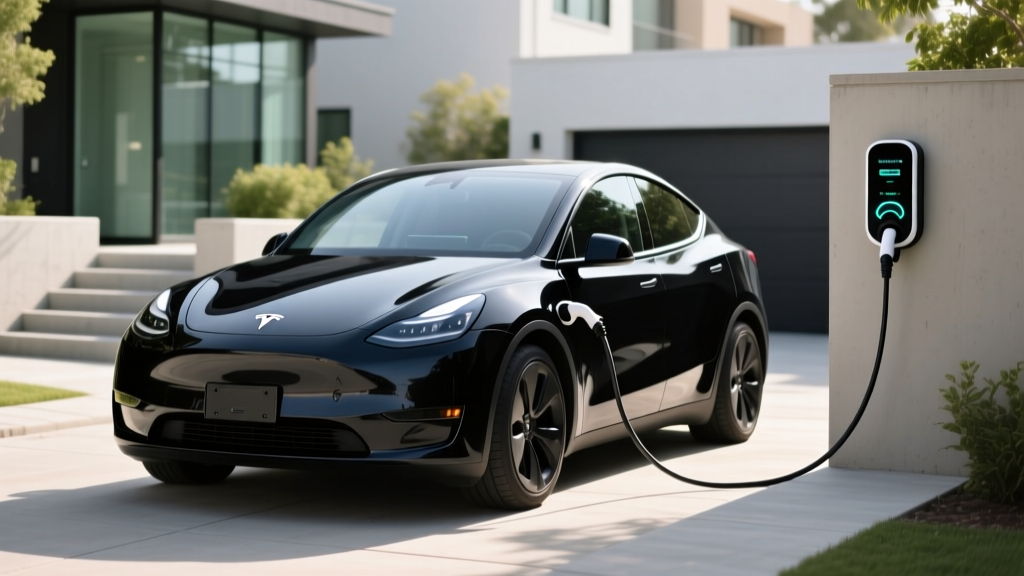
If you've been shopping for a Tesla, you've likely encountered Tesla referral codes shared by owners on forums, social media, and EV communities. Unlike traditional dealer incentives, Tesla's referral program operates entirely through existing owners, offering modest credits or rewards rather than direct cash discounts. But how do these codes actually affect your purchase in 2026, and how do they stack up against the far more impactful federal §30D tax credit?
This guide breaks down the current state of Tesla referral codes while delivering a comprehensive, data-driven review of the vehicle most referral buyers are eyeing: the 2026 Tesla Model Y Long Range AWD. We'll cover real-world range, charging curves, pricing, tax credit eligibility, and whether the Model Y still earns its spot as America's best-selling EV.
How Tesla Referral Codes Work in 2026
Tesla's referral program has evolved significantly since its early days of offering free Supercharging or lottery entries for Founders Series vehicles. As of 2026, the program operates on a simpler, more modest structure:
- Referrer (existing owner): Earns Tesla Credits (typically 1,000–5,000 credits per successful referral, depending on the current program cycle) redeemable for Supercharging miles, accessories, or vehicle service.
- Referred buyer: May receive a small benefit such as 1,000 miles of free Supercharging or a minor credit applied at delivery — though Tesla frequently adjusts or pauses the buyer-side benefit.
- How to apply: The referral link or code must be entered at the time of order on Tesla's website. It cannot be added retroactively after purchase.
2026 Tesla Model Y Long Range AWD: Quick Verdict
The 2026 Model Y Long Range AWD remains the volume seller in Tesla's lineup for good reason: 320 miles of EPA-estimated range, a mature Supercharger network advantage, practical crossover packaging, and competitive efficiency. The refreshed "Juniper" styling introduced in 2025 carries forward with minor software and efficiency tweaks for 2026. It's the default choice for buyers who want maximum range in a mid-size electric SUV without stepping up to the larger Model X or sacrificing cargo versatility.
| EPA Range | 320 miles |
| Battery (usable) | ~75 kWh, NMC (nickel manganese cobalt) |
| Max DC Fast Charge | 250 kW peak (CCS via NACS adapter or native NACS at V3/V4 Superchargers) |
| 10–80% DC Charge Time | ~25 minutes (with battery preconditioning) |
| Level 2 Home Charging | 11.5 kW (44 mi/hr at 48A on a Wall Connector) |
| 0–60 mph | 4.8 seconds |
| Horsepower | 384 hp (dual motor) |
| Drivetrain | Dual-motor AWD |
| Efficiency | 122 MPGe combined / 28 kWh/100mi |
| Cargo Volume | 30.2 cu ft (rear seats up) / 72.1 cu ft (rear seats folded) |
| Front Trunk (Frunk) | 4.1 cu ft |
| Rear Legroom | 41.6 inches |
| Base MSRP | $47,990 (before destination) |
| Battery/Drive Unit Warranty | 8 years / 120,000 miles (min 70% retention) |
Real-World Range: What 320 EPA Miles Actually Means
Real-World Highway (70–80 mph): ~265–285 miles
Real-World City/Suburban: ~295–315 miles (regen-friendly driving)
Cold Weather (below 32°F): ~220–260 miles depending on cabin heating and battery preconditioning
The Model Y's 320-mile EPA figure is achievable in mild weather with mixed driving, but EV range is highly context-dependent. On a 75°F day at 65 mph with minimal climate load, owners consistently report 290–310 miles before needing to charge. Push speeds to 80 mph on the interstate and expect that to drop to 265–280 miles — aerodynamic drag is the dominant range killer at highway speeds in any EV.
Cold weather remains the great equalizer. In sustained sub-freezing temperatures, the NMC battery's internal resistance increases and cabin heating draws significant energy (the Model Y uses a heat pump, which helps, but resistive heating still dominates at very low temperatures). Plan for 220–260 miles of usable range in deep winter conditions. If you live in the upper Midwest or Northeast, this 20–30% cold-weather reduction should factor into your route planning.
Tesla's navigation system is among the best at predicting actual energy consumption on a given route, accounting for elevation changes, speed limits, and weather — a genuine advantage over competitors whose range estimators rely more heavily on recent driving averages.
Charging Speed: DC Fast, Level 2, and the Curve Reality
Charging speed is where Tesla continues to hold a practical advantage, not because of peak kW numbers alone, but because of the integrated ecosystem: Supercharger availability, automatic battery preconditioning, and plug-and-charge simplicity.
| Level | Power | Miles Added/Hour | Typical Use Case |
|---|---|---|---|
| Level 1 (120V) | ~1.4 kW | ~4 mi/hr | Emergency / overnight trickle |
| Level 2 (240V, 48A) | 11.5 kW | ~44 mi/hr | Home daily charging (full charge in ~7 hrs) |
| DC Fast (V3 Supercharger) | 250 kW peak | ~1,000 mi/hr (at peak) | Road trips: 10–80% in ~25 min |
| DC Fast (V4 Supercharger) | Up to 250 kW (cab-integrated) | Similar to V3 | Newer stations with CCS-native cabinets |
The charge curve matters more than peak kW. The Model Y hits 250 kW only at a low state of charge (roughly 5–15% SoC) and with proper battery preconditioning — which the car initiates automatically when you navigate to a Supercharger. Above 50% SoC, the charge rate tapers to roughly 100–120 kW, and above 80% it drops further to under 50 kW. This is normal lithium-ion battery management to prevent lithium plating and excessive heat.
On a non-Tesla DC fast charger (Electrify America, EVgo, etc.) using a NACS-to-CCS adapter, expect slightly lower peak speeds — typically 150–175 kW — because third-party chargers may not handshake as efficiently with Tesla's battery management system. The gap has narrowed as more networks support NACS natively, but Superchargers still deliver the most consistent real-world experience.
For home charging, Tesla's Wall Connector at 48 amps on a 60A circuit delivers the full 11.5 kW the Model Y's onboard charger can accept. This adds roughly 44 miles of range per hour — more than enough to fully replenish overnight. Budget $500–$1,200 for a professional installation depending on your panel capacity and run length; a 200-amp panel upgrade may be needed in older homes, adding $1,500–$3,000.
Performance, Efficiency, and Daily Drivability
The dual-motor AWD powertrain produces 384 horsepower and launches the Model Y to 60 mph in 4.8 seconds — genuinely quick for a family crossover. The instant torque delivery means real-world acceleration feels even faster than the number suggests, particularly in the 0–40 mph range where most merging and city driving happens.
Efficiency is a Tesla strong suit. At 122 MPGe combined (28 kWh/100 miles), the Model Y Long Range is among the most efficient vehicles in its class. For context, that translates to roughly $0.04–$0.06 per mile when charging at home on a national average electricity rate of $0.16/kWh — compared to $0.12–$0.15 per mile for a 28 MPG gas crossover at $3.50/gallon. Over 15,000 annual miles, that's a fuel savings of roughly $1,200–$1,500 per year before any maintenance differences.
Ride quality in the Juniper-refreshed Model Y is noticeably improved over pre-2025 models, with revised damper tuning and acoustic glass reducing road noise. It's still firm by luxury-crossover standards — you'll feel expansion joints and rough pavement — but it's no longer the harsh ride that drew criticism in earlier model years.
Pricing, Trims, and Federal Tax Credit Eligibility
| Trim | MSRP | Est. §30D Credit | Effective Price* |
|---|---|---|---|
| Long Range AWD | $47,990 | Up to $7,500 | ~$40,490 |
| Long Range AWD (w/ Enhanced Autopilot) | $55,490 | Up to $7,500 | ~$47,990 |
| Performance | $52,490 | Up to $7,500 | ~$44,990 |
*Effective price assumes full §30D credit eligibility. Actual credit depends on battery sourcing, buyer income, and MSRP cap compliance. Tesla referral codes may add a minor credit (typically $100–$250 equivalent in Supercharging) on top.
Federal §30D Tax Credit: Do You Qualify?
The IRS §30D clean vehicle credit can reduce your federal tax liability by up to $7,500 — or, as of 2024 onward, be transferred to the dealer as a point-of-sale discount. But eligibility is conditional on three interlocking requirements:
- MSRP Cap: The vehicle's base MSRP must not exceed $80,000 for SUVs (the Model Y qualifies easily at $47,990–$52,490).
- Buyer Income Cap: Modified adjusted gross income must not exceed $150,000 (single), $225,000 (head of household), or $300,000 (joint filers).
- Battery Sourcing: The $7,500 credit splits into two $3,750 halves — one for critical minerals sourcing and one for battery component manufacturing. As of 2026, the sourcing requirements are stringent, and Tesla's supply chain partially qualifies. The exact credit amount available for the Model Y can vary by production batch and quarter. Always verify current eligibility on the fueleconomy.gov tax credit lookup before purchasing.
Tech, Safety, and Driver Assistance
The Model Y's interior is minimalist by design — a 15.4-inch center touchscreen handles virtually all vehicle functions, navigation, media, and climate controls. There's no traditional instrument cluster; speed and range information appear in the upper-left corner of the main display. Build quality in the 2026 Juniper model is the best Tesla has produced, with consistent panel gaps, ventilated front seats, ambient lighting, and a rear-seat entertainment screen.
Autopilot and FSD (Supervised): Every Model Y ships with basic Autopilot (lane centering + adaptive cruise). Enhanced Autopilot ($6,000) adds automatic lane changes, navigate-on-Autopilot, and smart summon. Full Self-Driving (Supervised) at $8,000 adds traffic light and stop sign recognition, and city street steering assistance.
Safety ratings are strong: the Model Y earns a 5-star overall rating from NHTSA and Top Safety Pick+ from IIHS (when equipped with acceptable headlights). Standard active safety features include automatic emergency braking, blind-spot monitoring, and lane departure warning.
Pros, Cons, and Who Should Buy
Pros
- 320-mile EPA range — class-leading for the segment
- 250 kW Supercharger network with plug-and-charge reliability
- 122 MPGe efficiency keeps per-mile cost very low
- 72.1 cu ft cargo with seats folded — genuine SUV utility
- Strong safety ratings (NHTSA 5-star, IIHS TSP+)
- Over-the-air updates add features post-purchase
Cons
- No physical buttons — all climate/mirror/vent adjustments via screen
- FSD is expensive ($8,000) and remains Level 2, not autonomous
- Ride quality improved but still firm over rough pavement
- Cold-weather range loss of 20–30% is significant in northern climates
- Insurance premiums often 15–30% higher than comparable gas crossovers
- Tax credit amount uncertain — depends on battery sourcing per VIN
Who the Model Y Suits Best
Ideal for: Two-adult households or small families who want a single-vehicle solution for commuting, road trips, and daily errands. The 320-mile range and Supercharger network make it viable as a primary car even for 300+ mile trips. Home charging access is strongly recommended — public-only charging is viable but adds time and cost.
Less ideal for: Large families needing three-row seating (look at the Model X or Kia EV9), heavy towing needs (the Model Y is rated for 3,500 lbs — adequate for a small trailer, not a boat), or buyers in extreme cold climates without a garage for battery preconditioning.
Model Y vs. Key Competitors: Is It Still Worth It?
The mid-size electric SUV segment has matured considerably. Here's how the Model Y stacks up on the metrics that matter:
| Metric | Tesla Model Y LR AWD | Hyundai Ioniq 5 Limited AWD | Ford Mustang Mach-E Extended Range AWD |
|---|---|---|---|
| EPA Range | 320 mi | 290 mi | 312 mi |
| Max DC Charge | 250 kW | 238 kW | 150 kW |
| 10–80% Time | ~25 min | ~20 min | ~38 min |
| Cargo (rear up) | 30.2 cu ft | 27.2 cu ft | 29.7 cu ft |
| Base MSRP | $47,990 | $53,500 | $48,995 |
The Model Y's combination of range, charging infrastructure, and efficiency remains difficult to beat. The Ioniq 5 charges slightly faster (thanks to its 800V architecture) and offers a more conventional interior with physical buttons. The Mach-E provides a more engaging driving experience but charges significantly slower on DC. If Supercharger reliability and maximum range are your priorities, the Model Y holds its edge.
Frequently Asked Questions
What is the real-world range of the 2026 Tesla Model Y?
The EPA estimates 320 miles. In real-world mixed driving at moderate temperatures, expect 285–310 miles. Highway driving at 75–80 mph reduces this to roughly 265–285 miles, and cold weather (below freezing) can drop range to 220–260 miles due to battery resistance and cabin heating demands.
How fast does the Model Y charge at home and on road trips?
On a Level 2 home charger (Tesla Wall Connector at 48A/11.5 kW), the Model Y adds roughly 44 miles of range per hour — a full charge takes about 7 hours. On a V3 Supercharger at 250 kW peak, a 10–80% charge takes approximately 25 minutes with battery preconditioning enabled. Charging above 80% slows significantly to protect battery health.
How much does the Model Y cost after federal tax credits?
The Long Range AWD starts at $47,990. If you qualify for the full $7,500 §30D credit (based on income, MSRP cap, and battery sourcing requirements), the effective price drops to approximately $40,490. However, the exact credit amount depends on current IRS battery sourcing rules and your tax situation. Verify eligibility on fueleconomy.gov and consult a tax professional.
Do Tesla referral codes give you a discount on the car?
Not directly. Tesla referral codes in 2026 typically provide a modest benefit to the referred buyer — such as 1,000 miles of free Supercharging or a small credit (roughly $100–$250 in value). The referrer earns Tesla Credits. These are nice perks but not meaningful price reductions compared to the federal tax credit.
Is the Model Y worth buying over competitors in 2026?
It depends on your priorities. If maximum range, Supercharger network access, and efficiency are paramount, the Model Y remains the segment leader. If you prefer a more traditional interior with physical controls, the Hyundai Ioniq 5 is a strong alternative. For driving engagement, the Mach-E is compelling but charges slower. Test-drive all three and compare real-world charging access in your area.
Does the Model Y qualify for the federal EV tax credit?
The Model Y's MSRP falls well under the $80,000 SUV cap, so it clears that hurdle. However, the full $7,500 credit depends on battery critical-mineral sourcing and component manufacturing requirements that are subject to change. Some Model Y VINs qualify for the full amount, others for $3,750, depending on the production batch. Always check the specific VIN on fueleconomy.gov before committing to a purchase.