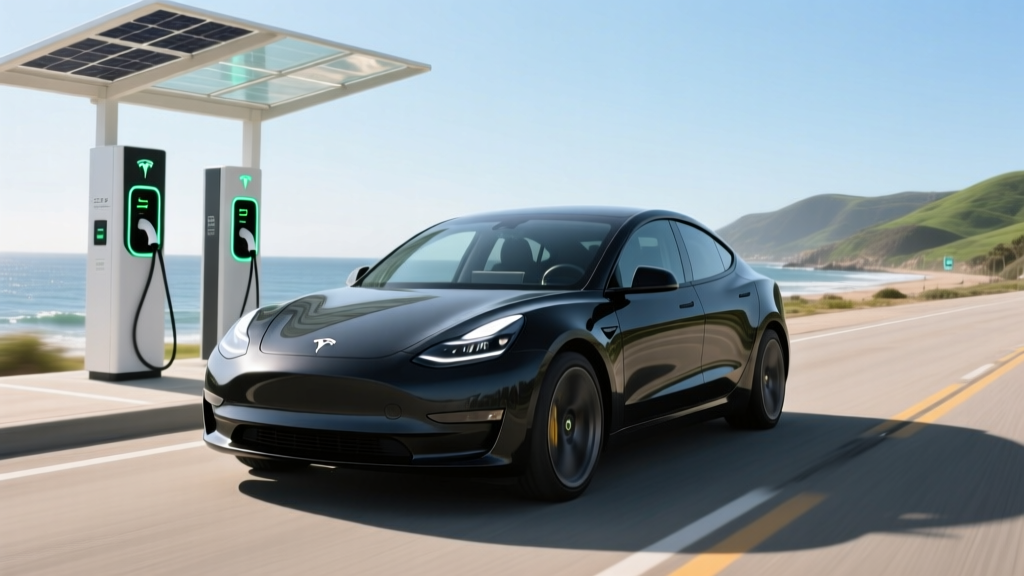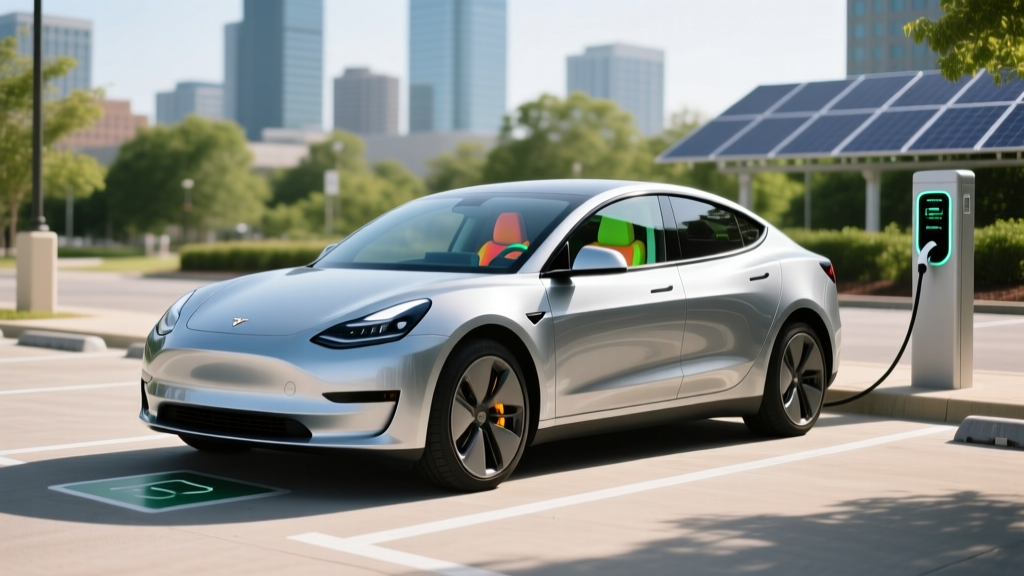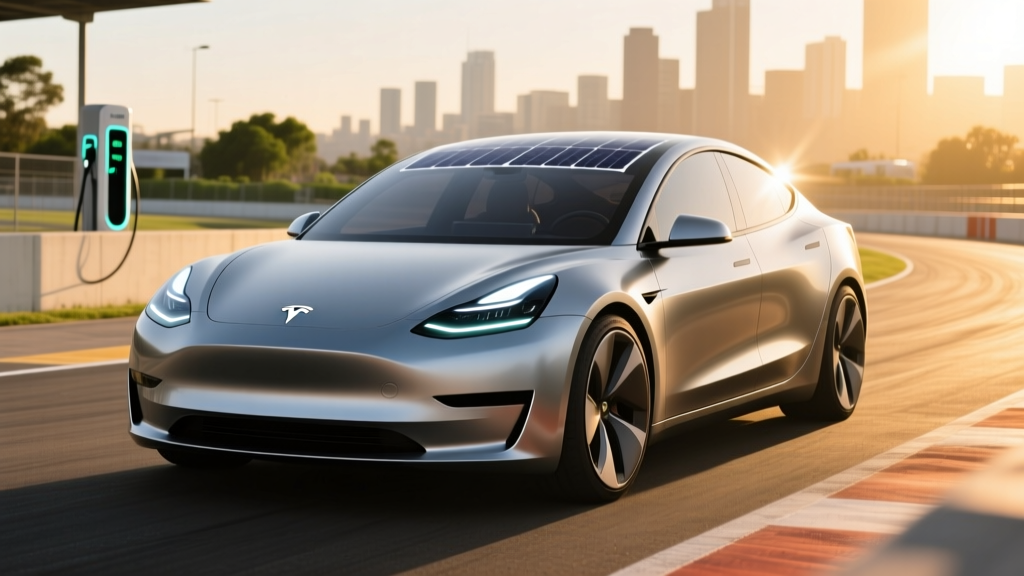
Tesla's most anticipated vehicle since the Model Y finally has a production timeline. Internally codenamed Redwood — and widely expected to launch under the name Model 2 or a refreshed Model Q badge — Tesla's compact, sub-$30,000 electric vehicle is slated to begin production at Giga Texas in the first half of 2026. If it hits its targeted MSRP, it would become the cheapest new EV sold in the United States and the first serious rival to the aging Nissan Leaf and Chevrolet Bolt EV in the budget segment.
Because the Tesla Redwood is not yet available for purchase as of early 2026, every figure in this preview is based on Tesla's investor-day disclosures, supply-chain reports, patent filings, and statements made on recent earnings calls. Consider these numbers preliminary — we will update this profile with verified EPA data the moment it's published.
What the Tesla Redwood Is — and Isn't
The Redwood is a compact crossover roughly sized between the Chevrolet Bolt EUV and the Hyundai Kona Electric. Tesla has confirmed it will ride on a heavily re-engineered version of the Model 3/Y platform, with a shorter wheelbase and a unboxed manufacturing process designed to cut assembly cost by roughly 50%. The goal: a base MSRP near $25,000 before incentives, making it roughly $13,000 cheaper than a base Model 3 RWD.
Do not mistake the Redwood for a stripped-down city car. Early supply-chain data indicates Tesla will offer two battery chemistries — an LFP (lithium iron phosphate) pack for the base RWD trim and an NMC (nickel manganese cobalt) pack for an optional Long Range AWD variant. Both will support Tesla's latest 4680-format cells, which trade some energy density for lower cost and faster manufacturing.
Preliminary Specs: Range, Battery, and Efficiency
| Attribute | Base RWD (LFP) | Long Range AWD (NMC) |
|---|---|---|
| EPA Range (est.) | ~265–280 mi | ~320–340 mi |
| Battery Capacity (usable) | ~52 kWh | ~68 kWh |
| Chemistry | LFP (4680) | NMC (4680) |
| Drivetrain | Rear-Wheel Drive | Dual-Motor AWD |
| Power | ~235 hp | ~340 hp |
| 0–60 mph (est.) | ~6.2 sec | ~4.8 sec |
| Efficiency (est.) | ~120 MPGe / 28 kWh/100mi | ~115 MPGe / 29 kWh/100mi |
| Base MSRP (target) | $25,000 | ~$32,000 |
| Battery Warranty (expected) | 8 yr / 100,000 mi (min 70% retention) | |
Real-World Range Reality Check
The preliminary EPA target of ~265–280 miles for the base LFP Redwood assumes mild conditions. In real-world highway driving at 70 mph, expect roughly 230–250 miles before needing a stop. In sub-freezing winter weather (below 32°F), LFP chemistry typically loses 25–35% of its rated range without preconditioning, which could drop usable range to 180–200 miles on cold highway trips. The NMC Long Range variant should fare better in cold weather (15–25% loss), holding closer to 260–280 miles in winter highway use.
Charging Speed and Home Power
Tesla has not published a final charge curve for the Redwood, but the 4680 cell architecture used in the refreshed Model Y already peaks near 250 kW on V3 Superchargers. Expect similar — if slightly capped — performance here.
| Charging Level | Power / Rate | Time or Miles Added |
|---|---|---|
| Level 1 (120V household) | ~1.4 kW | ~4 miles per hour |
| Level 2 (240V home, 48A) | ~11.5 kW | ~38 miles per hour |
| DC Fast Charge (peak) | ~175–200 kW | 10–80% in ~22–26 min |
| DC Fast Charge (sustained avg.) | ~120 kW | ~180 miles added in 30 min |
The Redwood will ship with a NACS (North American Charging Standard) port natively, giving it plug-and-charge access to the entire Tesla Supercharger network — currently the most reliable DC fast-charging system in North America, with over 25,000 stalls in the U.S. alone per the Tesla Supercharger map. This is a decisive advantage over rivals still using CCS1 that must rely on Electrify America or EVgo adapters.
For home charging, Tesla's Wall Connector ($420) or any NACS-compatible Level 2 unit on a 60A circuit will replenish the base pack overnight in roughly 5–6 hours from near-empty. Note that kW measures power (how fast energy flows), while kWh measures energy (battery capacity) — a distinction that matters when sizing your home charger.
Performance, Interior, and Cargo
The base RWD Redwood targets around 235 hp from a single rear motor — adequate for commuting and confident for highway merging, if not thrilling. The dual-motor AWD variant bumps output to an estimated 340 hp, which would slot it between the Model 3 RWD and Model 3 Long Range in straight-line performance.
Interior dimensions remain unconfirmed, but the Redwood's exterior footprint suggests a cabin similar in volume to the Hyundai Kona Electric:
- Seating: 5 passengers (2+3 layout)
- Rear legroom (est.): ~36–37 inches
- Cargo behind rear seats (est.): ~22–25 cu ft
- Cargo with seats folded (est.): ~55–60 cu ft
- Frunk: Yes, ~2–3 cu ft (compact, for charging cables)
Expect Tesla's minimalist interior: a single 15.4-inch center touchscreen running Tesla OS, no physical instrument cluster, and the same column-mounted shifter as the refreshed Model 3. Apple CarPlay and Android Auto will almost certainly remain absent — Tesla continues to rely on its native infotainment stack.
Tech, Safety, and Driver Assistance
The Redwood will ship with Basic Autopilot standard — Tesla's SAE Level 2 driver-assistance suite including Traffic-Aware Cruise Control and Autosteer lane-centering. The optional Full Self-Driving (Supervised) package ($8,000 or $99/month) adds Navigate on Autopilot, Auto Lane Change, Autopark, and the controversial "City Streets" capability.
⚠️ Not Self-Driving
Despite the "FSD" branding, Tesla's system remains SAE Level 2. The driver must keep hands on the wheel, eyes on the road, and is legally responsible for the vehicle at all times. Only Level 4 robotaxi services like Waymo operate without an attentive human driver.
Standard safety equipment should include automatic emergency braking, blind-spot monitoring, lane-departure prevention, and a 360° camera suite. NHTSA and IIHS crash-test ratings will not be available until after production begins.
Pricing, Tax Credits, and Total Cost
| Trim | Base MSRP | Potential §30D Credit | Effective Price |
|---|---|---|---|
| Base RWD (LFP) | $25,000 | Up to $7,500 | ~$17,500 |
| Long Range AWD (NMC) | $32,000 | Up to $7,500 | ~$24,500 |
| Long Range + FSD | $40,000 | Up to $7,500 | ~$32,500 |
Federal tax credit eligibility under IRS §30D depends on several moving targets:
- MSRP cap: SUVs/crossovers must be priced under $80,000; sedans under $55,000. All Redwood trims should clear this easily.
- Buyer income cap: Modified AGI must not exceed $150,000 (single), $225,000 (head of household), or $300,000 (joint).
- Battery sourcing: Critical minerals and battery components must meet escalating domestic-content thresholds each year. The LFP base pack — likely using CATL-sourced cells refined in China — faces the highest risk of partial or full credit disqualification under current rules.
- Point-of-sale transfer: Eligible buyers can apply the credit as an instant rebate at the dealership rather than waiting for tax filing.
Because battery-sourcing rules tighten annually, we cannot guarantee the Redwood will qualify for the full $7,500 at launch. Tesla will likely optimize NMC pack sourcing for the U.S. market, making the Long Range variant more likely to secure the full credit than the LFP base model. Consult a tax professional before assuming credit eligibility.
Pros, Cons, and Competition
✓ Pros
- Lowest-priced new Tesla ever, targeting $25,000 base
- Native NACS port with full Supercharger access
- Strong real-world efficiency (~120 MPGe target)
- Tesla's best-in-class software and OTA update cadence
- Compact footprint ideal for urban parking
✗ Cons
- LFP base pack will suffer significant cold-weather range loss
- No Apple CarPlay or Android Auto
- Minimalist interior lacks physical controls (climate via screen)
- Tax credit for LFP variant uncertain due to sourcing rules
- No confirmed towing rating (likely 1,000 lb or none)
- Release date has slipped multiple times since 2020 announcement
The Redwood's closest rivals include the Chevrolet Bolt EV/EUV (discontinued 2023, returning on Ultium in 2026), the Hyundai Kona Electric (~$33,000, 261-mi range), and the Kia Niro EV (~$40,000, 239-mi range). If Tesla hits $25,000, none of these match it on price — but all offer more conventional interiors with physical buttons and standard smartphone mirroring.
Who Should Wait for the Tesla Redwood?
Wait for the Redwood if:
- You want the most affordable new EV on the market and can delay your purchase until late 2026 or 2027
- You already use the Tesla Supercharger network and value seamless plug-and-charge
- Your daily commute is under 80 miles round-trip (base LFP range is ample)
- You prefer a minimalist, software-first cabin
Look elsewhere now if:
- You need a vehicle today — the Redwood is still months from deliveries
- You live in a cold climate and refuse to compromise on winter range (consider the Ioniq 5 or Model 3 Long Range)
- You want CarPlay, physical buttons, or a proven dealer service network
- You plan to tow — the Redwood is not a hauler
Frequently Asked Questions
When will the Tesla Redwood actually go on sale?
Tesla has targeted first-half 2026 for Giga Texas production start, with customer deliveries likely in Q3–Q4 2026. However, Tesla has a history of delaying new-model timelines by 6–18 months. Treat this as a best-case window.
Will the Tesla Redwood qualify for the $7,500 federal tax credit?
It's likely but not guaranteed. The MSRP and buyer-income thresholds should be easy to meet. The wildcard is battery sourcing: LFP cells refined in China may fail the critical-minerals requirement under §30D, while the NMC Long Range pack has a better shot at full eligibility. Check fueleconomy.gov for the official list once the vehicle is certified.
What is the real-world range of the Tesla Redwood?
For the base LFP RWD variant, expect roughly 230–250 miles on the highway in mild weather and 180–200 miles in freezing temperatures. The NMC Long Range AWD should deliver 270–290 miles highway in mild weather and 260–280 miles in winter.
How fast does the Tesla Redwood charge?
Estimated peak DC fast-charge rate is 175–200 kW, achieving a 10–80% charge in roughly 22–26 minutes on a V3 Supercharger. At home on a 240V/48A Level 2 circuit, expect about 38 miles of range per hour of charging.
Is the Tesla Redwood worth waiting for vs. buying a Model 3 now?
If your budget is firmly under $30,000 and you can wait, the Redwood will likely offer more range per dollar than a base Model 3. If you need a vehicle now, or want proven reliability data, a discounted 2025 Model 3 RWD (~$38,000 before credit) remains the safer, immediately-available choice.
Will the Redwood have a frunk?
Yes, though it's expected to be small (~2–3 cu ft), suitable for storing charging cables and a small bag — not a full grocery run.
Does the Redwood support vehicle-to-home (V2H) or vehicle-to-load (V2L)?
Tesla has not confirmed V2L or V2H for the Redwood. The Cybertruck supports Powershare (V2L/V2H), but Tesla has not extended this to its passenger-car lineup as of early 2026.