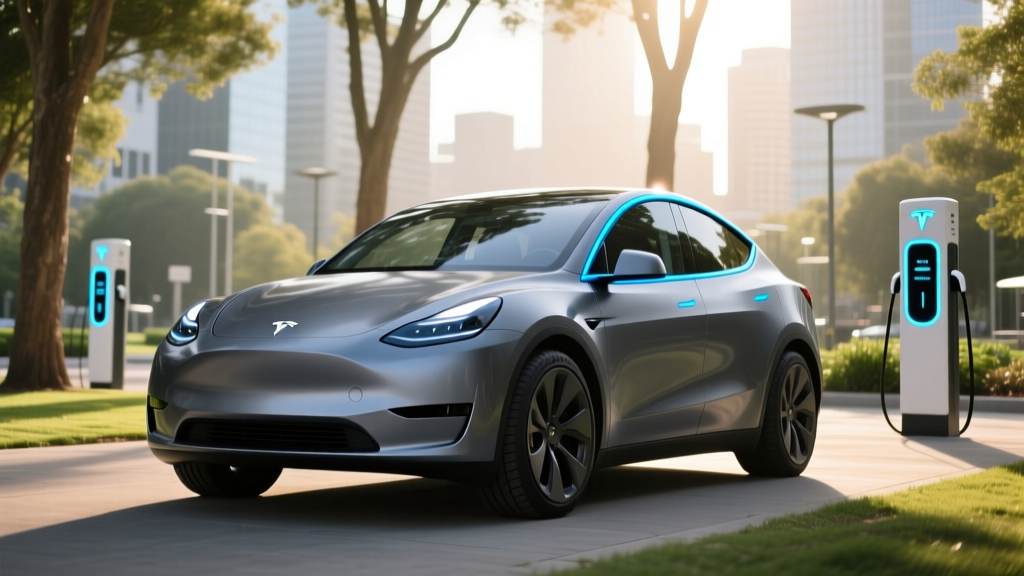
Tesla's "Redwood" project has been one of the most anticipated entries in the compact electric crossover segment. First referenced in internal roadmaps and earnings calls as a next-generation, lower-cost vehicle built on Tesla's upcoming platform, the Redwood aims to undercut the Model Y in price while retaining the technology and charging infrastructure advantages that define the Tesla ecosystem. As of early 2026, Tesla has confirmed the vehicle is in pre-production, with volume manufacturing targeted for late 2026 or early 2027 at Gigafactory Texas.
This profile compiles every confirmed and credibly estimated specification available, separates fact from speculation, and benchmarks the Redwood against the compact EV crossovers it will compete with. Because the vehicle is not yet available for purchase, all specs below are labeled as confirmed, estimated, or preliminary. We will update this review with final EPA-certified figures once Tesla releases them.
What Is the Tesla Redwood?
The Redwood is Tesla's codename for a compact crossover built on the company's next-generation platform — a manufacturing architecture Tesla has described as combining elements of the Model Y's unboxed assembly process with further reductions in part count, wiring harness length, and factory floor space. The strategic goal is straightforward: produce a Tesla-badged EV with a starting MSRP near or below $30,000, making it competitive with the Chevrolet Equinox EV, Hyundai Kona Electric, and Volvo EX30.
Physically, the Redwood is expected to slot below the Model Y in Tesla's lineup, with a wheelbase and overall length closer to the Hyundai Kona Electric or Kia Niro EV than the larger Model Y. Think of it as Tesla's answer to the sub-$35,000 electric crossover segment — a segment that has exploded in volume since 2024 as legacy automakers finally brought compelling products to market.
Estimated Range, Battery, and Efficiency
Real-World Expectation: Highway driving at 70+ mph typically reduces EV range by 10–15% versus the EPA combined cycle. In freezing temperatures (below 32°F), expect an additional 15–25% reduction due to cabin heating and battery thermal management demands. A Redwood with a 280-mile EPA rating would realistically deliver ~230–250 miles on a cold-weather highway trip.
Tesla has not published final battery specifications for the Redwood, but supply chain reporting and Tesla's own statements about the next-generation platform point to two likely battery configurations:
- Standard Range: ~50–55 kWh usable capacity, likely using LFP (lithium iron phosphate) chemistry supplied by CATL or a Tesla in-house cell line. LFP offers excellent cycle life (3,000+ cycles with minimal degradation), lower cost, and no cobalt or nickel — but trades off energy density and cold-weather performance versus NMC.
- Long Range (if offered): ~65–75 kWh usable capacity, likely using NMC (nickel manganese cobalt) or Tesla's 4680 NMC cells. Higher energy density supports the upper end of the range estimate but at greater cost.
| Specification | Standard Range (Est.) | Long Range (Est.) |
|---|---|---|
| Battery Chemistry | LFP | NMC / 4680 |
| Usable Capacity | ~50–55 kWh | ~65–75 kWh |
| EPA Range (Est.) | ~250 mi | ~280–300 mi |
| Efficiency (Est.) | ~120 MPGe / 28 kWh/100mi | ~125 MPGe / 27 kWh/100mi |
Tesla's vehicles have historically been among the most efficient in their class — the Model Y achieves roughly 28–30 kWh/100 miles depending on trim. If the Redwood is lighter and more aerodynamically optimized for its smaller footprint, efficiency could match or slightly beat the Model Y, which is factored into the estimates above.
Charging Speed: DC Fast Charging and Home Level 2
Charging speed is where Tesla's next-generation platform needs to deliver. The Model Y on the current platform peaks around 250 kW on V3 Superchargers but sustains that rate only briefly before tapering. For the Redwood, Tesla is expected to support the V4 Supercharger architecture, which can deliver up to 350 kW at the cabinet level (though individual vehicle acceptance rates depend on battery thermal management and cell chemistry).
| Charging Level | Power / Rate | Speed / Time |
|---|---|---|
| DC Fast Charge (Peak) | ~200–250 kW (est.) | 10–80% in ~22–28 min (est.) |
| Level 2 Home (240V, 48A) | ~11.5 kW | ~35–40 mi/hr of range |
| Level 2 Home (240V, 32A) | ~7.7 kW | ~24–28 mi/hr of range |
| Level 1 (120V, 12A) | ~1.4 kW | ~3–5 mi/hr of range |
Charging curve reality check: Peak kW figures are not sustained across the entire charging session. A 250 kW peak typically holds from roughly 10% to 35% State of Charge (SoC), then tapers progressively. The 10–80% time is the practical metric that matters for road trips — it captures the taper. LFP batteries in the Standard Range model may accept charge differently than NMC, sometimes allowing higher sustained rates at higher SoC, which could compress the 10–80% time despite a lower peak kW.
All Tesla vehicles sold in North America now use the NACS (North American Charging Standard) connector natively. This gives Redwood owners direct access to the entire Tesla Supercharger network — currently over 6,000 stations and 65,000+ stalls in North America — without adapters. Non-Tesla networks (Electrify America, EVgo) are also accessible via NACS-to-CCS adapters if needed, though the Supercharger network remains the most reliable DC fast-charging ecosystem in the U.S., per Tesla's Supercharger page.
Performance and Drivetrain
Tesla has not confirmed powertrain details, but based on the segment positioning and Tesla's historical approach to trim differentiation, we expect:
- Base (RWD): Single rear motor, ~250–280 horsepower, 0–60 mph in approximately 6.0–6.5 seconds. This is the volume trim aimed at affordability.
- Dual-Motor AWD (if offered): Front and rear motors, ~350+ horsepower combined, 0–60 mph in approximately 4.5–5.0 seconds. AWD adds traction for snow-belt buyers and modestly improves acceleration.
- Performance variant: Unlikely at launch given the Redwood's cost-reduction mandate, but Tesla has a history of adding performance trims 12–18 months after initial production.
For context, the Hyundai Kona Electric (FWD, 201 hp) hits 0–60 in about 7.5 seconds, while the Chevrolet Equinox EV RS (AWD, 315 hp) manages roughly 5.9 seconds. A base Redwood RWD at ~6.0–6.5 seconds would be competitive or class-leading in the sub-$35K segment.
Pricing, Trims, and Federal Tax Credit Eligibility
Tesla CEO Elon Musk has stated a target starting price of approximately $25,000 for the next-generation platform vehicle, though industry analysts and supply chain cost modeling suggest a more realistic base MSRP of $27,000–$32,000 at launch, depending on battery size, trim, and market conditions. A Long Range AWD variant, if offered, would likely push into the $35,000–$40,000 range.
| Trim (Est.) | Est. Base MSRP | §30D Credit Eligibility | Est. Net Price |
|---|---|---|---|
| Standard Range RWD | $27,000–$30,000 | Likely eligible (up to $7,500) | $19,500–$22,500 |
| Long Range RWD | $33,000–$36,000 | Eligibility depends on battery sourcing | $25,500–$36,000 |
| Dual-Motor AWD | $37,000–$40,000 | Eligibility depends on battery sourcing | $29,500–$40,000 |
Federal Tax Credit Rules (§30D) — Key Caveats
- MSRP Cap: SUVs, crossovers, and vans must have an MSRP at or below $80,000; sedans at or below $55,000. The Redwood, as a compact crossover, falls under the $80,000 cap — comfortably within range.
- Buyer Income Cap: Modified adjusted gross income (MAGI) must not exceed $150,000 (single), $225,000 (head of household), or $300,000 (joint filers).
- Battery Sourcing Requirements: To receive the full $7,500, the vehicle must meet both critical minerals and battery component sourcing thresholds that tighten annually. If the Redwood uses CATL-sourced LFP cells manufactured in China, it may qualify for only $3,750 (critical minerals only) or potentially $0 if it triggers the Foreign Entity of Concern (FEOC) exclusion. Tesla's move toward in-house 4680 cell production in Texas is partly aimed at ensuring full credit eligibility.
- Point-of-Sale Transfer: Under current IRS rules, buyers can transfer the credit to the dealer at purchase, effectively reducing the out-of-pocket price immediately rather than waiting for a tax refund. See IRS §30D eligibility details.
Bottom line: Do not assume a flat $7,500 credit. Eligibility hinges on battery sourcing, your income, and the specific trim's MSRP. Consult a tax professional and verify current-year rules on the IRS website before purchasing.
Interior, Cargo, and Technology
Detailed interior dimensions have not been published, but based on the Redwood's compact crossover positioning (smaller than Model Y, competing with Kona Electric and Equinox EV), reasonable estimates include:
- Seating: 5 passengers (2-row configuration)
- Cargo volume (behind rear seats): ~22–28 cu ft (est.)
- Cargo volume (rear seats folded): ~55–63 cu ft (est.)
- Front trunk (frunk): Likely present but modest — ~2–4 cu ft, consistent with Tesla's next-gen platform emphasis on manufacturing efficiency over storage volume
- Rear legroom: ~36–38 inches (est.), competitive with Kona Electric (38.0 in) and tighter than Equinox EV
Tech and Driver Assistance
Expect the Redwood to ship with Tesla's current-generation infotainment system, including:
- A single central touchscreen (likely 15-inch landscape or a smaller cost-optimized panel)
- Tesla's app-based navigation with real-time Supercharger routing and battery preconditioning
- Over-the-air (OTA) software updates for feature additions and performance improvements
- Autopilot (standard): Adaptive cruise control, lane centering, automatic emergency braking, blind-spot monitoring. This is an SAE Level 2 driver-assistance system — the driver must remain fully engaged and supervising at all times.
- Full Self-Driving (Supervised): Available as a paid add-on, adding automated lane changes, navigate-on-autopilot, traffic light/stop sign recognition, and city street driving assist. Despite the name, FSD is also SAE Level 2 and requires continuous driver supervision. It is not autonomous driving.
How the Redwood Compares to Key Competitors
| Attribute | Tesla Redwood (Est.) | Chevy Equinox EV | Hyundai Kona Electric | Volvo EX30 |
|---|---|---|---|---|
| EPA Range | 250–300 mi | 319 mi (3RS) | 261 mi | 265 mi |
| Base MSRP | $27K–$32K | ~$33,000 | ~$32,975 | ~$36,145 |
| Peak DC Charge | ~200–250 kW | 150 kW | 100 kW | 153 kW |
| 10–80% DCFC Time | ~22–28 min | ~35 min | ~43 min | ~27 min |
| Charging Network | NACS (Supercharger) | CCS → NACS adapter | CCS → NACS adapter | CCS → NACS adapter |
| 0–60 mph | ~6.0–6.5 sec | ~5.9 sec (RS AWD) | ~7.5 sec | ~3.4 sec (Twin Motor) |
The Redwood's primary advantages, if Tesla delivers on projections, are its combination of lower starting price, faster DC charging, and native Supercharger access. The Equinox EV currently leads the segment in EPA range. The Kona Electric offers a strong value proposition with a proven platform. The Volvo EX30 is the quickest but also the most expensive and smallest in cargo capacity.
Pros, Cons, and Who Should Wait for the Redwood
- Lowest projected entry price in Tesla's lineup
- Native NACS / Supercharger access (no adapter needed)
- Faster DC charging than most segment rivals
- Tesla's OTA update ecosystem and software polish
- LFP battery option offers exceptional cycle life and low degradation
- Not yet available — production timeline uncertain
- Final specs, range, and pricing unconfirmed
- Tax credit eligibility depends on battery sourcing (unknown)
- Tesla's minimalist interior approach may not appeal to all buyers
- No physical buttons or traditional instrument cluster (Tesla design language)
Who This EV Suits Best
- Budget-conscious Tesla buyers who want Supercharger access and Tesla's software ecosystem but find the Model Y's $44K+ starting price too high.
- Urban and suburban commuters with home Level 2 charging who need 250+ miles of range for daily use and occasional road trips.
- First-time EV buyers looking for an affordable entry point with the lowest total cost of ownership in the segment.
- Less ideal for: Buyers who need maximum cargo space (Model Y or Equinox EV are larger), families requiring third-row seating, or anyone who cannot wait for a vehicle that hasn't started deliveries yet.
Warranty and Ownership Considerations
Tesla's current warranty structure is expected to carry over to the Redwood:
- Basic Vehicle Warranty: 4 years / 50,000 miles (whichever comes first)
- Battery & Drive Unit Warranty: 8 years / 100,000 miles (RWD) or 8 years / 120,000 miles (AWD), with a minimum 70% battery capacity retention guarantee over the warranty period
The LFP battery in the Standard Range trim is a longevity positive. LFP cells typically degrade more slowly than NMC — real-world data from Tesla's Standard Range Model 3 (which has used LFP since 2021) shows roughly 5–8% degradation over 100,000 miles, compared to 8–12% for comparable NMC packs. This makes the Redwood's LFP variant potentially one of the lowest-depreciation EVs in its class.
Insurance costs for Tesla vehicles have historically run 15–30% higher than segment averages due to repair costs and parts pricing. Tesla Insurance (available in select states) may offer competitive rates, but buyers should obtain quotes from multiple carriers before committing. Refer to your state's insurance regulator or the IIHS for safety ratings once crash testing is completed.
Frequently Asked Questions
What is the real-world range of the Tesla Redwood?
With an estimated EPA range of 250–300 miles depending on trim, expect roughly 215–260 miles in mixed highway driving and 180–220 miles in cold weather (below freezing) at highway speeds. Real-world range depends heavily on speed, temperature, elevation, and climate control usage.
How fast does the Tesla Redwood charge?
Preliminary estimates suggest a peak DC fast-charge rate of 200–250 kW, enabling a 10–80% charge in approximately 22–28 minutes at a V3 or V4 Supercharger. Home Level 2 charging at 48 amps (11.5 kW) adds roughly 35–40 miles of range per hour.
How much does the Tesla Redwood cost after tax credits?
If the base MSRP lands around $27,000–$30,000 and the vehicle qualifies for the full $7,500 §30D federal tax credit (which depends on battery sourcing and your income), the effective price could drop to roughly $19,500–$22,500. However, battery sourcing rules may limit the credit to $3,750 or $0 — verify current eligibility on the IRS website before purchase.
Is the Tesla Redwood worth waiting for vs. buying a competitor now?
If you need a vehicle immediately, the Chevrolet Equinox EV (319 mi range, ~$33K) and Hyundai Kona Electric (261 mi, ~$33K) are available now with confirmed specs and tax credit eligibility. The Redwood makes sense to wait for if you prioritize Tesla's Supercharger network, faster DC charging, and potentially lower pricing — and if you're comfortable with a production timeline that may extend into 2027.
Does the Tesla Redwood qualify for the federal EV tax credit?
It is expected to qualify, but the exact credit amount ($7,500, $3,750, or $0) depends on where the battery cells and critical minerals are sourced, the final MSRP, and your household income. Tesla's shift toward domestic 4680 cell production improves the likelihood of full eligibility, but final determination rests on the specific production batch and current-year IRS rules.
When will the Tesla Redwood be available to buy?
Tesla has targeted late 2026 or early 2027 for the start of volume production at Gigafactory Texas. Reservations or configurator access may open several months before first deliveries. No firm date has been announced as of early 2026.