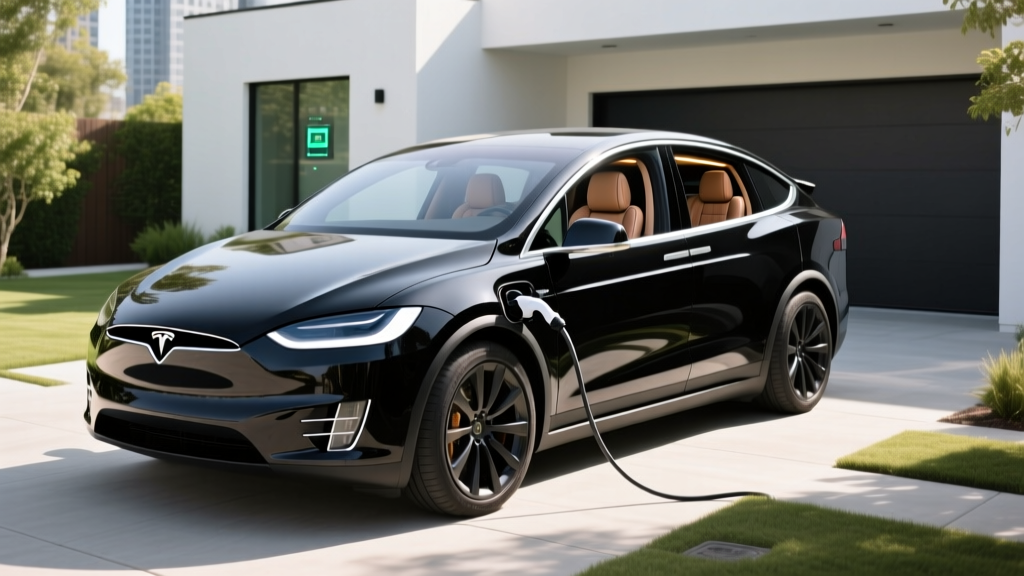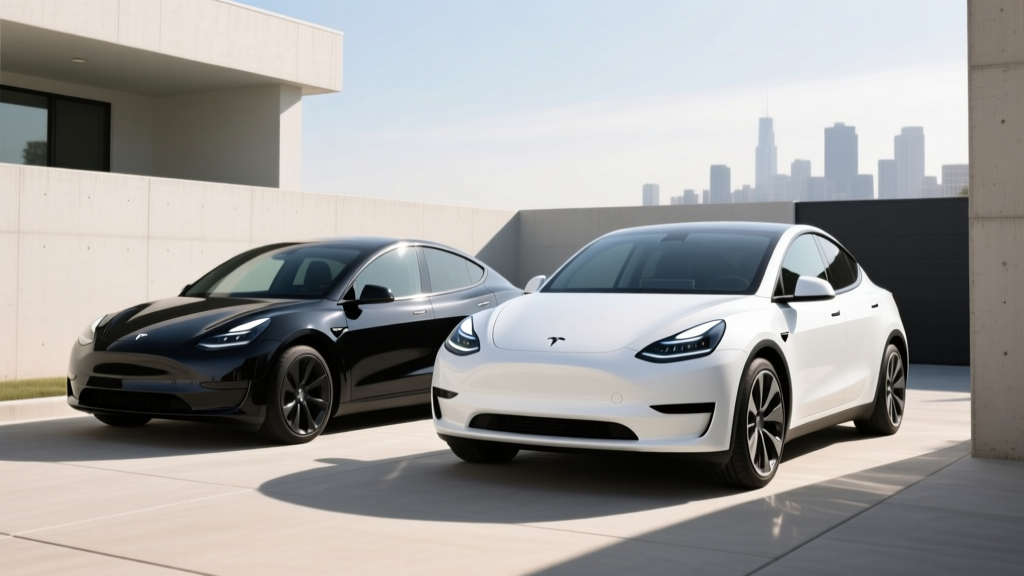
Tesla's entry-level lineup has undergone a quiet but significant transformation. For 2026, the automaker has reorganized its trim nomenclature, replacing the old "Base" and "Standard Range" badges with a streamlined naming convention that now simply designates these as Model 3 and Model Y (with Long Range and Performance sitting above). If you've been searching for clarity on the tesla rebranded model 3 and model y standard trims, this guide breaks down exactly what you're getting — and what you're giving up — at the entry point of Tesla's lineup.
Both vehicles continue to ride on Tesla's refined platform, but the standard trims lean heavily on lithium iron phosphate (LFP) battery chemistry, rear-wheel-drive layouts, and aggressive pricing designed to undercut competitors while still capturing the full federal tax credit. Here's what the numbers actually look like.
2026 Model 3 Standard: Specs at a Glance
| Spec | Value |
|---|---|
| EPA Range | 272 miles |
| Battery Capacity (usable) | ~60 kWh, LFP chemistry |
| Drivetrain | Rear-Wheel Drive (single motor) |
| Horsepower | 271 hp |
| 0–60 mph | 5.8 seconds |
| Peak DC Fast Charge | 170 kW |
| 10–80% DC Fast Charge | ~25 minutes |
| Level 2 Home Charging | 11.5 kW (~44 mi/hr) |
| MPGe (combined) | 132 MPGe |
| Efficiency | 25 kWh/100 mi |
| Cargo Volume | 23 cu ft (rear trunk) + 3 cu ft (frunk) |
| Base MSRP | $38,990 |
| Battery Warranty | 8 years / 100,000 miles (min 70% retention) |
2026 Model Y Standard: Specs at a Glance
| Spec | Value |
|---|---|
| EPA Range | 258 miles |
| Battery Capacity (usable) | ~60 kWh, LFP chemistry |
| Drivetrain | Rear-Wheel Drive (single motor) |
| Horsepower | 295 hp |
| 0–60 mph | 6.6 seconds |
| Peak DC Fast Charge | 170 kW |
| 10–80% DC Fast Charge | ~27 minutes |
| Level 2 Home Charging | 11.5 kW (~40 mi/hr) |
| MPGe (combined) | 122 MPGe |
| Efficiency | 28 kWh/100 mi |
| Cargo Volume | 30 cu ft (behind 2nd row) + 4 cu ft (frunk); 72 cu ft (seats folded) |
| Base MSRP | $41,990 |
| Battery Warranty | 8 years / 100,000 miles (min 70% retention) |
Real-World Range: What the EPA Sticker Doesn't Tell You
EPA Estimate: 272 miles
Real-World Highway (70–75 mph, moderate temps): ~240–250 miles
Cold Weather (below 32°F, mixed driving): ~200–220 miles
Real-World Range Callout — Model Y Standard
EPA Estimate: 258 miles
Real-World Highway (70–75 mph, moderate temps): ~225–235 miles
Cold Weather (below 32°F, mixed driving): ~185–210 miles
The EPA cycle is a blended test that includes low-speed city driving where regenerative braking recovers significant energy. On sustained highway runs at 70–75 mph, both vehicles consume more energy than the sticker suggests. The Model 3's sedan profile gives it an aerodynamic edge over the bluff-fronted Model Y, which explains the wider gap in real-world highway efficiency.
LFP chemistry also behaves differently than the NMC packs in Long Range variants. LFP cells tolerate — and actually benefit from — regular charging to 100%, which Tesla recommends for these trims. This means you can use the full 60 kWh daily without the degradation anxiety that comes with NMC packs. However, LFP cells are heavier and less energy-dense, which partly explains why the standard trims carry less total capacity despite similar physical pack sizes.
Cold weather hits LFP batteries harder than NMC in terms of charge acceptance. While Tesla's thermal management system preconditioning mitigates this, expect noticeably slower DC fast-charge speeds when the battery is cold-soaked below freezing. Always use the navigation-based preconditioning feature (set a Supercharger as your destination) to warm the pack before arrival.
Charging Speeds: DC Fast, Level 2, and the Charge Curve Reality
| Charging Level | Power (kW) | Model 3 Speed | Model Y Speed |
|---|---|---|---|
| Level 1 (120V household) | ~1.4 kW | ~4 mi/hr | ~3 mi/hr |
| Level 2 (240V, 48A) | 11.5 kW | ~44 mi/hr | ~40 mi/hr |
| DC Fast Charge (peak) | 170 kW | 10–80% in ~25 min | 10–80% in ~27 min |
| DC Fast Charge (sustained avg.) | ~110–120 kW | ~180 mi in 30 min | ~160 mi in 30 min |
The 170 kW peak charge rate is respectable but not class-leading. Competitors like the Hyundai Ioniq 5 (peaking at 240 kW on 800V architecture) can pull more power in the mid-state-of-charge window. Tesla's charge curve on the LFP pack holds near peak from roughly 10% to 45% SoC, then tapers progressively. By 80%, you're pulling under 60 kW. This is normal — all batteries taper to protect cell health — but it means the average charge speed over a 10–80% session is closer to 110–120 kW than the advertised 170 kW peak.
For home charging, the 11.5 kW onboard charger is a strong point. On a 48-amp Level 2 circuit (requiring a 60-amp breaker), you'll add roughly 44 miles of range per hour in the Model 3. An overnight session from 20% to 100% takes about 7 hours — easily manageable with a Tesla Wall Connector or equivalent J1772/NACS unit.
According to fueleconomy.gov, the Model 3 standard trim achieves 132 MPGe combined, translating to 25 kWh per 100 miles. At the national average residential electricity rate of ~$0.17/kWh, that's roughly $4.25 per 100 miles — compared to $12–14 for a 30 MPG gas car at $3.50/gallon.
Pricing, Trims, and the Federal Tax Credit Equation
| Item | Model 3 Standard | Model Y Standard |
|---|---|---|
| Base MSRP | $38,990 | $41,990 |
| Destination Fee | $1,390 | $1,390 |
| As-Tested (w/ FSD + paint) | ~$48,380 | ~$51,380 |
| §30D Federal Tax Credit (max) | $7,500 | $7,500 |
| Effective Price (after max credit) | ~$32,880 | ~$35,880 |
Both the Model 3 and Model Y standard trims fall well under the IRS §30D MSRP caps ($55,000 for sedans, $80,000 for SUVs/vans/pickups). As of 2026, Tesla's US-built vehicles continue to meet the critical-minerals and battery-component sourcing requirements that unlock the full $7,500 credit. The point-of-sale transfer option allows buyers to apply the credit as an immediate price reduction at delivery rather than waiting to claim it on their tax return.
However, §30D eligibility is not automatic. Per the IRS clean vehicle credit page, buyer income must not exceed $150,000 (single), $225,000 (head of household), or $300,000 (joint) modified adjusted gross income. Additionally, the vehicle must be manufactured in North America and meet the evolving battery-sourcing thresholds. Always verify current-year eligibility on irs.gov or consult a tax professional before committing.
- ✅ Buyer MAGI within income limits ($150K single / $300K joint)
- ✅ Vehicle MSRP under cap ($55K sedan / $80K SUV)
- ✅ North American final assembly
- ✅ Battery critical-minerals and component sourcing thresholds met
- ✅ Vehicle is new (not previously titled)
- ✅ Purchased for personal use, not resale
Rules subject to change. Verify at irs.gov before purchasing.
Performance, Tech, and Daily Livability
Neither standard trim is slow. The Model 3's 5.8-second 0–60 time and 271 hp deliver confident highway merging and passing. The Model Y, despite its SUV mass, manages 6.6 seconds with 295 hp. Both are RWD-only, which means no dual-motor traction advantage in snow — a consideration for buyers in northern climates who may want to budget for the Long Range AWD upgrade.
The interior remains Tesla's minimalist benchmark: a single 15.4-inch center touchscreen handles infotainment, climate, vehicle settings, and the camera-based driver visualization. There is no traditional instrument cluster. The refreshed "Highland" interior (introduced in the Model 3's 2024 redesign and carried into 2026) added ventilated front seats, ambient lighting, rear-seat touchscreen, and significantly improved cabin insulation. The Model Y received a similar "Juniper" refresh for 2025, bringing comparable refinements.
Autopilot (basic adaptive cruise + lane centering) is standard. Full Self-Driving (Supervised) remains a $8,000 add-on or $99/month subscription. To be clear: FSD is an SAE Level 2 driver-assistance system. It does not make the vehicle autonomous. You must remain engaged, hands on or near the wheel, and eyes on the road at all times. Only Level 4 services like Waymo operate without a human driver in defined geofenced areas.
Cargo space is a key differentiator. The Model Y's 30 cu ft behind the second row (72 cu ft with seats folded) plus a 4 cu ft frunk makes it a legitimate family hauler. The Model 3's 23 cu ft trunk and 3 cu ft frunk are adequate for commuting and weekend trips but tight for families with strollers or bulky gear.
Pros and Cons: The Honest Assessment
✅ Pros
- Class-leading efficiency (25–28 kWh/100 mi)
- Full $7,500 §30D tax credit eligibility
- Access to Tesla Supercharger network (20,000+ stalls in North America)
- LFP battery tolerates daily 100% charging without degradation concerns
- Strong OTA update pipeline keeps software current
- Best-in-class resale value among EVs
- 11.5 kW Level 2 onboard charger is faster than many competitors
❌ Cons
- RWD only — no AWD option on standard trims
- 170 kW peak DC charge rate trails 800V competitors
- LFP battery loses more range in extreme cold vs. NMC
- No Apple CarPlay or Android Auto
- Minimalist interior not for everyone (no physical buttons, no cluster)
- FSD (Supervised) is expensive and still requires full driver attention
- Insurance costs tend to run 15–25% higher than comparable non-Tesla EVs
Competitor Comparison: Is It Worth Buying?
The standard-trim Model 3 and Model Y face credible competition in 2026. The Hyundai Ioniq 5 (SE Standard Range, ~$42,000) offers faster 800V charging and a more conventional interior but slightly less range. The Chevrolet Equinox EV (LT FWD, ~$33,000 after credit) undercuts on price with 319 miles of EPA range, though its charge speed and driving dynamics trail Tesla's. The Ford Mustang Mach-E (Select RWD, ~$40,000) offers a sportier drive but lower efficiency.
For the Model Y, the Kia EV6 and Volkswagen ID.4 are the closest cross-shops. The ID.4 offers more cargo volume and standard AWD on some trims but significantly slower DC charging. The EV6 matches Tesla on tech but sacrifices some range and Supercharger network access (though NACS adoption is expanding Kia's options).
The Tesla advantage remains the Supercharger network. While competitors are gaining NACS access to Tesla's stalls throughout 2025–2026, Tesla owners still benefit from the most seamless plug-and-charge experience, real-time stall availability in navigation, and the densest fast-charging coverage along major US highway corridors.
Who Should Buy the Standard Trims?
Model 3 Standard is ideal for: Solo commuters or couples who prioritize efficiency and value over cargo space. If you drive 30–60 miles daily, can charge at home, and live in a moderate climate, the 272-mile EPA range and ~$32,880 effective price (after credit) make this one of the most compelling EVs on the market.
Model Y Standard is ideal for: Small families needing SUV cargo versatility without the Long Range price premium. The 258-mile range covers most daily needs, and the 72 cu ft of maximum cargo space handles real life. If you regularly drive in snow or take road trips exceeding 250 miles in cold weather, consider the Long Range AWD upgrade instead.
Consider stepping up to Long Range if: You need AWD, regularly road-trip in cold climates, or want the 330+ mile range buffer that makes DC fast charging less frequent and less stressful on long drives.
Frequently Asked Questions
What is the real-world range of the Model 3 and Model Y standard trims?
The Model 3 Standard delivers an EPA-estimated 272 miles, but expect ~240–250 miles on sustained highway drives and ~200–220 miles in freezing temperatures. The Model Y Standard rates at 258 miles EPA, with real-world highway range around 225–235 miles and cold-weather range around 185–210 miles. Preconditioning and moderate speeds help close the gap.
How fast do these trims charge at home and on the road?
On a 48-amp Level 2 home charger (11.5 kW), the Model 3 adds ~44 miles per hour and the Model Y adds ~40 miles per hour — a full overnight charge is easily achievable. On DC fast chargers, both peak at 170 kW and reach 10–80% in approximately 25–27 minutes, though sustained average power is closer to 110–120 kW due to charge-curve tapering above 50% SoC.
How much do these vehicles cost after the federal tax credit?
With the full $7,500 §30D credit applied, the Model 3 Standard drops to approximately $32,880 (including destination) and the Model Y Standard to approximately $35,880. Eligibility depends on buyer income, MSRP caps, and battery-sourcing rules — verify current requirements at irs.gov before purchasing.
Do the standard trims qualify for the full $7,500 federal EV tax credit?
As of 2026, yes — both vehicles are assembled in North America, fall under the MSRP caps, and meet the battery critical-minerals and component sourcing requirements. However, buyer income must be within IRS limits ($150K single / $300K joint MAGI). The credit can be transferred at point of sale for an immediate price reduction.
Is the LFP battery a concern for longevity?
LFP chemistry actually offers excellent cycle life — often exceeding 3,000 full cycles with minimal degradation, far more than most owners will accumulate. Tesla warrants the battery for 8 years or 100,000 miles with a minimum 70% capacity retention guarantee. Real-world data from high-mileage Tesla LFP fleets suggests degradation plateaus around 8–12% after 100,000 miles, which is well within warranty tolerance.
Should I choose Model 3 or Model Y?
Choose the Model 3 Standard if you prioritize maximum range and efficiency, don't need SUV cargo space, and want the lowest effective price. Choose the Model Y Standard if you need family cargo versatility, prefer a higher seating position, and can accept ~14 fewer miles of EPA range. Both share the same LFP battery, RWD layout, and tech stack — the decision comes down to body style and space needs.