If you are researching Tesla ownership, the first question is usually range. "How far will a Tesla go?" sounds simple, but the answer depends on which model you choose, the battery chemistry inside it, how you drive, and the weather outside. Tesla's 2026 lineup spans from the refreshed Model 3 to the Cybertruck, and each delivers a very different real-world experience than its EPA sticker suggests.
This guide walks through every current-production Tesla model, pairing EPA estimates with the real-world range data and charging realities that actually matter when you own one. We cover battery capacity, chemistry, charge curves, tax credit eligibility, and who each model fits best — with exact numbers, not marketing fluff.
Tesla 2026 Lineup: Range, Battery, and Performance at a Glance
Before we get into the weeds on real-world expectations, here are the hard specs for every Tesla you can order today. All figures reflect the latest EPA data and Tesla's official spec sheets for the 2026 model year.
| Model & Trim | EPA Range | Battery (usable kWh) | Chemistry | 0-60 mph | Drivetrain | Base MSRP |
|---|---|---|---|---|---|---|
| Model 3 RWD | 272 mi | ~60 kWh | LFP | 5.8 sec | RWD | $38,990 |
| Model 3 Long Range AWD | 363 mi | ~79 kWh | NMC | 4.2 sec | Dual-Motor AWD | $42,990 |
| Model 3 Performance | 315 mi | ~79 kWh | NMC | 2.9 sec | Dual-Motor AWD | $52,990 |
| Model Y RWD | 277 mi | ~60 kWh | LFP | 6.6 sec | RWD | $39,990 |
| Model Y Long Range AWD | 320 mi | ~79 kWh | NMC | 4.8 sec | Dual-Motor AWD | $44,990 |
| Model S Long Range | 402 mi | ~100 kWh | NMC | 3.1 sec | Dual-Motor AWD | $79,990 |
| Model X Long Range | 335 mi | ~100 kWh | NMC | 3.8 sec | Dual-Motor AWD | $79,990 |
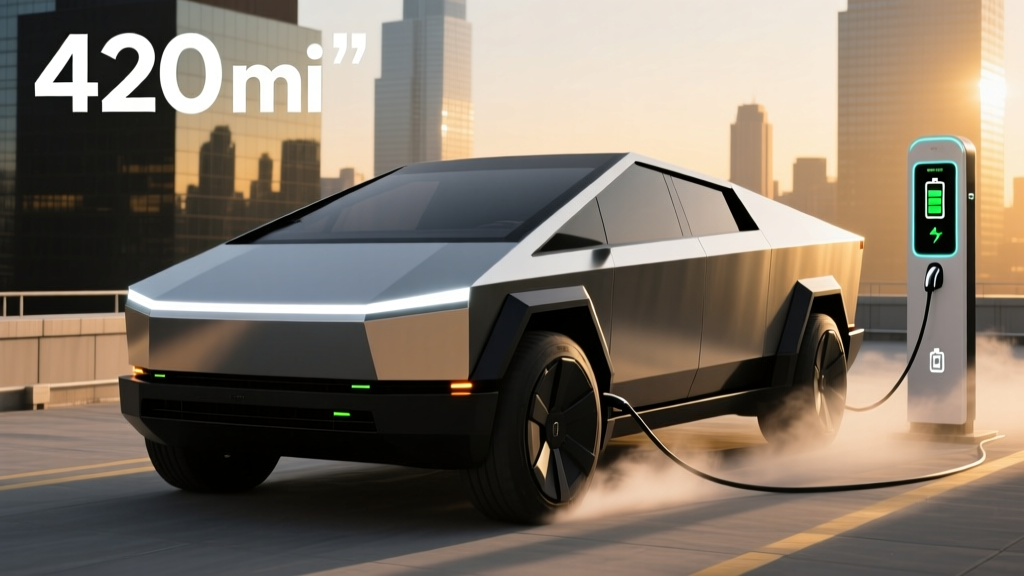
| Cybertruck AWD | 340 mi | ~123 kWh | NMC | 4.1 sec | Dual-Motor AWD | $79,990 |
Sources: fueleconomy.gov, Tesla.com official specifications. Prices before destination fees and any applicable incentives.
Real-World Range: What the EPA Sticker Doesn't Tell You
EPA range estimates are measured on a mixed driving cycle at moderate temperatures. In practice, expect 10-20% less range on sustained highway driving at 70+ mph, and 20-35% less in cold weather (below 30°F) due to cabin heating and battery chemistry limitations. A Model 3 Long Range rated at 363 miles EPA may deliver ~290-310 miles on a summer road trip and ~240-270 miles on a freezing January highway run.
Tesla vehicles are among the most efficient EVs on the market, thanks to strong aerodynamics and excellent thermal management. The heat pump Tesla introduced across its lineup recovers waste heat from the drivetrain to warm the cabin, reducing cold-weather range loss compared to resistive heating systems. But physics still applies.
Here is what to expect in common driving scenarios:
- City commuting (stop-and-go, regen-heavy): You will often meet or slightly exceed the EPA number. Regenerative braking recovers energy that gas cars waste as heat.
- Highway cruising at 65-70 mph: Expect roughly 85-90% of the EPA sticker. Aerodynamic drag increases with the square of speed — at 80 mph, consumption rises sharply.
- Highway at 75-80 mph: Plan for 75-82% of EPA range, especially in the boxier Cybertruck and Model X, which have higher drag coefficients than the sleek Model 3 and Model S.
- Cold weather (20-30°F) mixed driving: Budget 70-80% of EPA range. The battery's internal resistance increases in cold temperatures, and cabin heating draws additional power even with the heat pump.
- Extreme cold (below 10°F): Expect 60-70% of EPA range. Preconditioning while plugged in is critical to minimize this penalty.
The Model 3 Long Range AWD and Model S Long Range are the standout road-trip machines in the lineup. Their combination of high EPA ratings, low drag coefficients, and access to the Supercharger network means you can realistically plan 250-280 mile legs between charging stops in warm weather — enough to cover most US interstate corridors comfortably.
Battery Chemistry: LFP vs NMC and What It Means for You
Tesla uses two distinct battery chemistries across its 2026 lineup, and understanding the difference is essential to choosing the right model.
| Attribute | LFP (Lithium Iron Phosphate) | NMC (Nickel Manganese Cobalt) |
|---|---|---|
| Used in | Model 3 RWD, Model Y RWD | Long Range, Performance, Model S/X, Cybertruck |
| Energy density | Lower (~160 Wh/kg cell-level) | Higher (~250 Wh/kg cell-level) |
| Cycle life | 3,000-5,000+ cycles | 1,000-2,000 cycles |
| Charge to 100% daily? | Yes — Tesla recommends it | No — set daily limit to 80% |
| Cold-weather performance | More range loss in freezing temps | Better cold-weather discharge |
| SoC estimation accuracy | Flat voltage curve can cause gauge drift; periodic 100% charges recalibrate | More linear voltage curve; SoC readout is naturally accurate |
| Thermal runaway risk | Extremely low | Low, but higher than LFP |
| Cost | Lower — no cobalt or nickel | Higher — commodity-sensitive pricing |
The practical takeaway: If you want a daily commuter you can charge to 100% every night without worrying about degradation, the LFP-equipped RWD models are ideal. If you need maximum range for road trips or tow duty, the NMC Long Range models deliver more miles per charge — but you should set the daily charge limit to 80% and only charge to 100% before long trips.
Tesla's battery warranty covers all models for 8 years or 100,000 miles (whichever comes first) on the RWD trims, and 8 years or 120,000 miles on Long Range, Performance, Model S, Model X, and Cybertruck trims. The warranty guarantees the battery will retain at least 70% of its original capacity during the warranty period. Real-world degradation data from high-mileage Tesla owners suggests most packs retain 85-92% capacity at 100,000 miles, well above the warranty floor.
Charging Speed: DC Fast Charging and Home Level 2
Range only matters if you can replenish it quickly. Tesla's Supercharger network remains the most reliable public DC fast-charging ecosystem in the US, and Tesla vehicles charge efficiently on it thanks to native NACS connector integration and battery preconditioning.
| Model | Max DC Fast Charge (kW) | 10-80% Time | Level 2 Home (kW) | Level 2 Miles/Hr |
|---|---|---|---|---|
| Model 3 RWD | 170 kW | ~25 min | 11.5 kW | ~44 mi/hr |
| Model 3 Long Range | 250 kW | ~22 min | 11.5 kW | ~44 mi/hr |
| Model 3 Performance | 250 kW | ~22 min | 11.5 kW | ~44 mi/hr |
| Model Y RWD | 170 kW | ~27 min | 11.5 kW | ~37 mi/hr |
| Model Y Long Range | 250 kW | ~25 min | 11.5 kW | ~37 mi/hr |
| Model S Long Range | 250 kW | ~27 min | 11.5 kW | ~41 mi/hr |
| Model X Long Range | 250 kW | ~28 min | 11.5 kW | ~34 mi/hr |
| Cybertruck AWD | 250 kW (800V arch) | ~25 min | 11.5 kW | ~28 mi/hr |
Understanding the charge curve: The peak kW number (e.g., 250 kW) is only sustained at a low state of charge, typically between 5-30%. Above 50% SoC, the charge rate tapers progressively. By 80%, most Teslas are charging at 50-80 kW — which is why Tesla and the industry quote 10-80% times rather than 0-100%. Charging from 80% to 100% on a DC fast charger can take as long as the 10-80% session. For road trips, plan to charge to 80% and move on; the time penalty for that last 20% is brutal.
At home, a Tesla Wall Connector on a 60-amp circuit delivers up to 11.5 kW (48 amps continuous). That fully replenishes any Tesla overnight — a Model 3 Long Range gains roughly 44 miles of range per hour of Level 2 charging, so a full recharge from 10% takes about 7-8 hours. For the Cybertruck's massive 123 kWh pack, a full home charge takes roughly 10-11 hours.
All 2026 Teslas use the native NACS (North American Charging Standard) connector. With adapters, they can also charge on CCS-equipped networks, though speeds may be limited by the adapter's rating. Tesla has opened portions of the Supercharger network to non-Tesla EVs via the Magic Dock adapter, but Tesla owners still get the most seamless plug-and-charge experience.
Efficiency: MPGe and kWh per 100 Miles
Range is a function of two things: battery size and efficiency. Tesla consistently leads the industry in efficiency, meaning more miles per kWh of battery — which translates to lower charging costs and lighter vehicles.
- Model 3 Long Range AWD: 132 MPGe combined / 25 kWh per 100 miles
- Model 3 RWD: 132 MPGe combined / 25 kWh per 100 miles
- Model Y Long Range AWD: 122 MPGe combined / 28 kWh per 100 miles
- Model S Long Range: 120 MPGe combined / 28 kWh per 100 miles
- Model X Long Range: 104 MPGe combined / 33 kWh per 100 miles
- Cybertruck AWD: 79 MPGe combined / 42 kWh per 100 miles
The Model 3 is the efficiency king here. At the US average electricity rate of ~$0.17/kWh, driving a Model 3 Long Range costs roughly $4.25 per 100 miles. The Cybertruck, by contrast, costs about $7.14 per 100 miles to fuel — still cheaper than a comparable gas truck at current fuel prices, but the gap is narrower than sedan owners enjoy.
Pricing, Tax Credits, and Total Cost
Tesla pricing has shifted considerably over the past few years. Here is where the 2026 lineup stands, including the impact of the federal EV tax credit under IRS §30D.
- Maximum credit: $7,500 for new EVs that meet all requirements
- MSRP caps: Sedans (Model 3, Model S) must be under $55,000; SUVs and trucks (Model Y, Model X, Cybertruck) must be under $80,000
- Buyer income limits: AGI must not exceed $150,000 (single), $225,000 (head of household), or $300,000 (married filing jointly)
- Battery sourcing: Increasing percentages of critical minerals and battery components must be sourced from the US or FTA partners — requirements tighten each year through 2032
- Point-of-sale transfer: Eligible buyers can transfer the credit to the dealer at purchase, reducing the out-of-pocket price immediately
Credit eligibility depends on your specific tax situation and current-year sourcing requirements. Consult a tax professional and see IRS.gov §30D for the latest rules.
| Model & Trim | Base MSRP | MSRP Cap Met? | Est. Price After $7,500 Credit |
|---|---|---|---|
| Model 3 RWD | $38,990 | Yes (under $55K) | ~$31,490* |
| Model 3 Long Range AWD | $42,990 | Yes (under $55K) | ~$35,490* |
| Model 3 Performance | $52,990 | Yes (under $55K) | ~$45,490* |
| Model Y RWD | $39,990 | Yes (under $80K SUV cap) | ~$32,490* |
| Model Y Long Range AWD | $44,990 | Yes (under $80K SUV cap) | ~$37,490* |
| Model S Long Range | $79,990 | No (over $55K sedan cap) | $79,990 (no credit) |
| Model X Long Range | $79,990 | Yes (under $80K SUV cap) | ~$72,490* |
| Cybertruck AWD | $79,990 | Yes (under $80K truck cap) | ~$72,490* |
*Estimated after $7,500 federal credit assuming buyer meets all income, sourcing, and AGI requirements. Actual credit may be $0, $3,750, or $7,500 depending on battery component and critical mineral sourcing compliance for the specific model year. Prices exclude destination fees ($1,390-$2,500 depending on model).
The Model 3 RWD and Model Y RWD are the standout value propositions in the lineup. After the full federal credit, a Model 3 RWD drops to roughly $31,490 — making it one of the most affordable new EVs in America with competitive range and access to the Supercharger network.
Cargo, Passenger Space, and Daily Practicality
Range and charging get you there; cargo and comfort determine whether you enjoy the trip. Tesla's skateboard architecture gives it packaging advantages over converted ICE platforms, but the models vary significantly.
- Model 3: 23 cu ft trunk + 3.1 cu ft frunk. Rear legroom is 35.2 inches — adequate for adults on shorter trips but tighter than the Model Y. Best for 1-2 people or a small family.
- Model Y: 30.2 cu ft cargo (behind 2nd row) + 4.1 cu ft frunk, expanding to 72.1 cu ft with seats folded. Rear legroom is 41.6 inches. Available 7-seat option (very tight 3rd row for children only). The clear family favorite.
- Model S: 28 cu ft cargo + 3.1 cu ft frunk. Rear legroom is 40.5 inches. Premium sedan comfort with hatchback utility.
- Model X: Up to 88 cu ft cargo with seats folded. Available in 5-, 6-, or 7-seat configurations. Falcon-wing rear doors ease child-seat installation in tight parking spots. Rear legroom: 40.2 inches (2nd row).
- Cybertruck: 6.5-foot bed with 34.2 cu ft of lockable under-bed storage. 6-seat configuration (3 front, 3 rear). Rear legroom is generous at ~41 inches. The bed and towing capacity (11,000 lbs) make it a work truck first.
Tech, Driver Assistance, and the Autopilot Reality
Every 2026 Tesla ships with the latest hardware suite supporting Tesla's vision-based driver assistance. The infotainment system runs on a 15.4-inch central touchscreen (Model 3/Y) or 17-inch screen (Model S/X/Cybertruck), with a rear-seat screen in most trims. Navigation, streaming, gaming, and vehicle controls are all integrated — there are no physical buttons for climate or media.
Tesla Autopilot and Full Self-Driving (Supervised) are SAE Level 2 driver-assistance systems. The driver must remain fully engaged, hands on or near the wheel, and eyes on the road at all times. These systems do not make the vehicle self-driving. Only Level 4 robotaxi services like Waymo operate without a human driver. Tesla's FSD (Supervised) can navigate city streets, stop lights, and highway interchanges, but it requires constant supervision and can make errors that require immediate driver intervention.
Standard Autopilot includes Traffic-Aware Cruise Control and Autosteer (lane centering) on highways. FSD (Supervised), available as a $8,000 one-time purchase or $99/month subscription, adds Navigate on Autopilot (automatic highway interchanges), Auto Lane Change, Autopark, Summon, and city-street traffic light and stop sign recognition. FSD capability has improved significantly, but real-world reliability varies by geography and road complexity — it is best understood as an advanced convenience feature, not a replacement for an attentive driver.
Other standout tech includes Sentry Mode (360° parking surveillance), Dog Mode (climate-controlled pet safety), over-the-air software updates that regularly add features, and the Tesla app's remote preconditioning, location tracking, and charging management.
Who Should Buy Which Tesla?
- Choose Model 3 RWD if: You commute under 60 miles daily, can charge at home, want the lowest entry price, and don't need AWD or frequent road-trip range.
- Choose Model 3 Long Range if: You want the best combination of range, efficiency, and price in a sedan. Ideal for road-trippers and cold-climate commuters who need the range buffer.
- Choose Model Y Long Range if: You need family SUV space, cargo flexibility, and solid road-trip range. The highest-volume Tesla for good reason — it does everything adequately and most things well.
- Choose Model S if: You want maximum range (402 mi EPA), premium sedan luxury, and don't need the federal tax credit. Best for executives and long-distance drivers who value comfort.
- Choose Model X if: You need 6-7 seats, falcon-wing door convenience, and premium SUV features. Accept that it is the least efficient and most expensive family option.
- Choose Cybertruck if: You need a truck bed, towing capacity, and want an EV that stands apart. Accept that efficiency is the worst in the lineup and real-world range will be notably below the EPA sticker at highway speeds.
How Tesla Compares to Key Competitors
The Tesla advantage in 2026 is less about any single spec and more about the ecosystem: Supercharger access (still the most reliable DC fast-charging network in the US), OTA updates, and proven battery longevity. But competitors have closed the gap in specific areas:
- Hyundai Ioniq 6 (361 mi EPA, $37,500): Comparable range and efficiency to Model 3 Long Range at a lower price point. 800V architecture charges extremely fast. But Supercharger access requires an adapter and is less seamless.
- BMW i4 eDrive40 (307 mi EPA, $52,200): More traditional luxury interior and driving dynamics. Costs more and offers less range than Model 3 LR.
- Kia EV6 GT-Line (310 mi EPA, $42,600): Strong value and fast 800V charging. Interior quality rivals Tesla. Lacks native NACS (uses CCS with adapter for Superchargers).
- Ford Mustang Mach-E Extended Range (320 mi EPA, $43,000): Direct Model Y competitor with similar range. Ford now has Supercharger access via adapter. Slightly less efficient.
- Rivian R1S (352 mi EPA, $75,900): Competes with Model X in the 3-row electric SUV space. Superior off-road capability. Less range, higher price, smaller charging network.
Tesla's pricing advantage has narrowed as competitors introduced aggressive pricing and 800V charging architectures. The Supercharger network remains Tesla's strongest moat, though it is opening to competitors — which will gradually erode this advantage over the next few years.
Pros, Cons, and the Bottom Line
- Class-leading efficiency (Model 3/Y)
- Supercharger network — most reliable US DC fast charging
- Over-the-air updates continuously add features
- LFP battery option allows daily 100% charging without degradation worry
- Strong real-world range retention thanks to heat pump
- Minimal maintenance costs (no oil, filters, spark plugs)
- Strong resale value relative to most EVs
- No physical buttons — all controls via touchscreen
- Panel gaps and build quality inconsistent vs. legacy luxury brands
- FSD (Supervised) still requires full driver attention; $8K is steep for Level 2
- Model S/X exceed $55K sedan MSRP cap — no federal tax credit for Model S
- Cybertruck efficiency is poor (42 kWh/100 mi); real highway range disappoints
- Insurance costs run 15-30% higher than comparable ICE vehicles
- Service center wait times can be long in some metro areas
So, how far will a Tesla go? The honest answer: anywhere from ~200 miles in a freezing Cybertruck highway run to ~350+ miles in a Model S Long Range on a warm day at moderate speeds. For most buyers, the Model 3 Long Range or Model Y Long Range offers the best balance — 280-320 real-world miles in typical conditions, 22-25 minute fast-charge stops, and a total cost after incentives that undercuts most gas-powered competitors over five years of ownership.
Frequently Asked Questions
What is the real-world range of a Tesla?
Real-world range depends on the model, driving style, speed, and temperature. For a Model 3 Long Range (363 mi EPA), expect roughly 290-310 miles on a highway road trip in warm weather, 250-280 miles in mixed cold-weather driving, and potentially 350+ miles in city commuting with regenerative braking. The Cybertruck and Model X, with higher drag coefficients, see larger real-world shortfalls — plan for 75-85% of EPA on the highway.
How fast does a Tesla charge at home and on the road?
On a home Level 2 Tesla Wall Connector (11.5 kW), you gain 28-44 miles of range per hour depending on the model — a full overnight charge covers any daily driving. On a V3 Supercharger (250 kW peak), Long Range and Performance models charge from 10-80% in roughly 22-28 minutes. RWD models peak at 170 kW and take 25-27 minutes for the same 10-80% session. Remember that charging slows significantly above 80% — plan road-trip stops around the 10-80% window for the fastest throughput.
Does a Tesla qualify for the $7,500 federal EV tax credit?
It depends on the model and your income. The Model 3 (all trims under $55K), Model Y, Model X, and Cybertruck all meet the MSRP cap. The Model S at $79,990 exceeds the $55,000 sedan cap and does not qualify. Buyer income must be under $150K (single) / $300K (married). Battery sourcing requirements also apply and tighten annually — check IRS.gov for current-year eligibility before purchasing.
Is a Tesla worth buying vs. Hyundai, Kia, or Ford EVs?
Tesla still holds advantages in Supercharger access, efficiency, and OTA software updates. Competitors like the Hyundai Ioniq 6 and Kia EV6 offer comparable or faster 800V charging and often better interior quality at competitive prices. If Supercharger convenience matters to you — especially for road trips — Tesla remains the easiest EV ownership experience. If you prioritize interior luxury or prefer physical controls, competitors are strong alternatives. Test-drive both before deciding.
How long will a Tesla battery last?
Tesla warranties its batteries for 8 years / 100,000-120,000 miles (depending on trim) with a 70% capacity retention guarantee. Real-world data from high-mileage owners shows most Tesla packs retain 85-92% capacity at 100,000 miles. LFP batteries in RWD models are expected to outlast NMC packs in cycle life (3,000-5,000+ cycles vs. 1,000-2,000). A Tesla battery should comfortably last 200,000+ miles before degradation meaningfully impacts daily usability.
How much does it cost to charge a Tesla vs. buying gas?
At the US average electricity rate of $0.17/kWh, a Model 3 Long Range (25 kWh/100 mi) costs about $4.25 per 100 miles. A comparable gas sedan at 30 MPG with gas at $3.50/gallon costs $11.67 per 100 miles — nearly three times more. Home charging delivers the biggest savings; public DC fast charging at $0.35-$0.50/kWh narrows the gap but still undercuts gas for most models.