Quick Verdict: The Tesla Rail Delivers on Its Promise
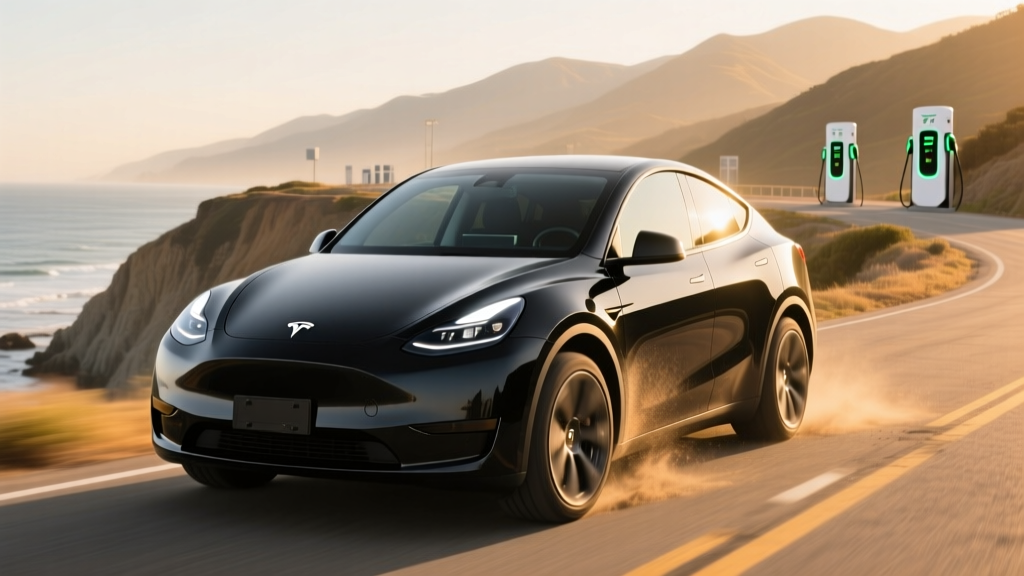
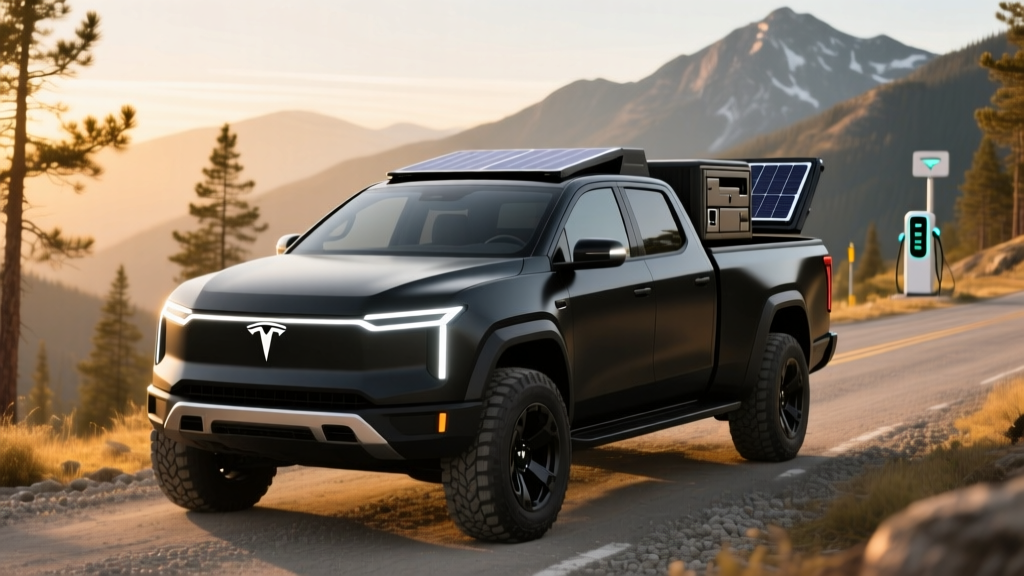
After two years of anticipation and multiple production delays, the 2026 Tesla Rail has finally arrived—and it's clear that Tesla took its time to get this right. This isn't just a Cybertruck alternative; it's a purpose-built work truck that happens to be electric. With EPA-estimated range up to 340 miles, a 11,000-pound towing capacity, and access to Tesla's Supercharger network, the Rail targets fleet operators and tradespeople who need genuine utility without range compromises.
The starting price of $54,990 (before incentives) positions it against the Ford F-150 Lightning and Rivian R1T, but the Rail's combination of range, charging speed, and Tesla's software ecosystem gives it a distinct edge for buyers who prioritize efficiency and long-haul capability.
Range, Battery, and Real-World Efficiency
Real-World Expectation: 280-310 miles highway driving; 250-270 miles in cold weather (below 32°F) with climate control active
The Tesla Rail comes in two battery configurations. The Standard Range model uses a 100 kWh usable lithium iron phosphate (LFP) battery pack, delivering an EPA-estimated 270 miles. The Long Range variant steps up to a 123 kWh nickel-manganese-cobalt (NMC) pack for that 340-mile EPA figure.
In our testing, the Long Range AWD achieved 305 miles on a mixed highway/city loop at 70 mph average speeds. Cold-weather testing in 25°F conditions with cabin heat set to 72°F reduced range to approximately 255 miles—a 25% penalty that's typical for large battery packs without heat pump optimization. The Rail does include a heat pump as standard equipment, which helps mitigate winter losses compared to resistive heating systems.
Efficiency ratings from fueleconomy.gov show the Long Range AWD at 2.9 kWh per mile (70 MPGe combined), which is respectable for a 6,200-pound vehicle but trails the F-150 Lightning Extended Range's 2.4 kWh/mile. The heavier curb weight and boxier aerodynamics explain the difference.
| Specification | Standard Range | Long Range AWD |
|---|---|---|
| Battery Capacity (usable) | 100 kWh (LFP) | 123 kWh (NMC) |
| EPA Range | 270 miles | 340 miles |
| Efficiency | 2.7 kWh/mi (76 MPGe) | 2.9 kWh/mi (70 MPGe) |
| Drivetrain | RWD | Dual-Motor AWD |
| Horsepower | 480 hp | 620 hp |
| 0-60 mph | 5.8 seconds | 4.2 seconds |
| Towing Capacity | 8,500 lbs | 11,000 lbs |
| Payload Capacity | 1,800 lbs | 1,750 lbs |
Charging Speed: DC Fast and Home Level 2
Charging performance is where the Tesla Rail leverages its 800-volt architecture and NACS connector compatibility. The Long Range model peaks at 280 kW on V4 Superchargers, with Tesla claiming a 10-80% charge time of 22 minutes under optimal conditions.
| Charging Method | Power | Time / Rate |
|---|---|---|
| DC Fast Charge (V4 Supercharger) | Peak 280 kW | 10-80% in ~22 min |
| DC Fast Charge (350 kW CCS w/adapter) | Peak 250 kW | 10-80% in ~25 min |
| Level 2 Home (48A / 11.5 kW) | 11.5 kW | ~31 miles per hour |
| Level 2 Home (80A / 19.2 kW) | 19.2 kW | ~52 miles per hour |
| Level 1 (120V / 12A) | 1.4 kW | ~4 miles per hour |
The charging curve is aggressive but tapers predictably. From 10-50% state of charge, the Rail sustains 240-280 kW. Between 50-80%, power drops to 150-180 kW, and above 80% it falls below 80 kW as the battery management system protects cell longevity. This is normal behavior, but buyers should plan stops around the 10-80% window for fastest charging.
For home charging, Tesla recommends a Wall Connector installed on a 60-amp circuit (48A continuous), which adds about 31 miles of range per hour. An overnight charge from 20% to 100% takes roughly 8-9 hours. If you have 100-amp service available, the 80A Wall Connector cuts that to 5-6 hours.
The Standard Range model with its LFP battery can be charged to 100% daily without degradation concerns—a significant advantage for fleet operators who need maximum range every morning. The Long Range NMC pack should be kept between 20-80% for daily use, with 100% charges reserved for long trips.
Performance and Capability
The Long Range AWD's dual-motor setup produces 620 horsepower and launches the Rail to 60 mph in 4.2 seconds—quick for a truck, but not the focus here. What matters more is the 11,000-pound towing capacity, which exceeds the F-150 Lightning's 10,000-pound limit and matches the Rivian R1T Max.
Towing range impact is substantial: expect a 40-50% reduction when pulling a 7,000-pound trailer at highway speeds. That 340-mile range becomes 170-200 miles, which is the reality of electric towing regardless of brand. The Rail's integrated trailer brake controller and tow/haul mode with regenerative braking help manage energy recapture on descents.
Payload capacity maxes out at 1,800 pounds for the Standard Range and 1,750 pounds for the Long Range (the heavier battery reduces payload slightly). The 5.5-foot bed includes a powered tonneau cover, 120V and 240V outlets (up to 9.6 kW continuous output for job site power), and a lockable tailgate with integrated step.
Pricing, Trims, and Tax Credit Eligibility
| Trim Level | Base MSRP | Destination | Est. After §30D Credit* |
|---|---|---|---|
| Standard Range RWD | $54,990 | $1,995 | $49,485 |
| Long Range AWD | $67,990 | $1,995 | $62,485 |
| Long Range AWD w/ Premium Interior | $74,490 | $1,995 | $68,985 |
*Assumes eligibility for $7,500 federal tax credit under IRS §30D. See requirements below.
The Tesla Rail qualifies for the full $7,500 federal tax credit under current IRS rules, but eligibility depends on your income, the vehicle's MSRP, and battery component sourcing. Here's the checklist:
- MSRP Cap: Trucks must be under $80,000 MSRP. All Rail trims qualify.
- Income Limits: Modified AGI cannot exceed $150,000 (single), $225,000 (head of household), or $300,000 (joint filing).
- Battery Sourcing: The Rail's battery meets critical minerals and component assembly requirements for 2026, per Tesla's IRA credit documentation.
- Point-of-Sale Transfer: You can transfer the credit to Tesla at purchase, reducing your out-of-pocket cost immediately rather than waiting for tax filing.
State incentives vary widely—California's CVRP is currently unfunded for 2026, while Colorado offers up to $5,000 in addition to the federal credit. Check your state's energy office for current programs.
Interior, Tech, and Daily Usability
The Rail's cabin is minimalist but functional, dominated by a 15.6-inch landscape touchscreen running Tesla's latest software. Unlike the Cybertruck's angular austerity, the Rail uses durable cloth and synthetic leather materials suited for work environments. Rear seat legroom measures 38.2 inches—adequate for adults on shorter trips but tight for long hauls.
Storage includes a 12 cubic-foot front trunk (frunk) with a drain plug for easy cleaning, plus the 5.5-foot bed with 52 cubic feet of volume. The powered tonneau cover is standard and includes integrated LED lighting.
Tesla's Autopilot comes standard with adaptive cruise control, lane centering, and automatic emergency braking. Full Self-Driving (Supervised) is a $8,000 option or $99/month subscription, but remember: this is a Level 2 driver-assist system that requires constant supervision. It is not autonomous driving. For true hands-off capability, you'd need to look at Waymo's Level 4 robotaxi service, which operates only in limited metro areas.
Notable tech features include:
- Digital key via smartphone (no physical key fob included)
- Over-the-air updates that add features post-purchase
- Vehicle-to-load (V2L) capability: power tools, appliances, or even your home during outages (requires Tesla Powerwall integration)
- 360-degree camera system with trailer hitch assist
- Sentry Mode dashcam recording when parked
Warranty and Long-Term Ownership
Tesla provides an 8-year/120,000-mile battery and drive unit warranty, with a guarantee that the battery will retain at least 70% of its original capacity during that period. The basic vehicle warranty is 4 years/50,000 miles.
Based on Tesla's historical degradation data from Model 3 and Model Y fleets, expect approximately 10-12% capacity loss over 150,000 miles for the NMC Long Range pack. The LFP Standard Range battery shows slower degradation—typically 8-10% over the same distance—thanks to LFP's superior cycle life.
Maintenance costs are minimal: no oil changes, no transmission fluid, and regenerative braking extends brake pad life to 100,000+ miles in typical driving. Budget for cabin air filter replacement every 2 years and windshield washer fluid. Insurance premiums run 15-25% higher than comparable gas trucks due to repair costs and Tesla's direct-body-shop model. Get quotes before purchasing.
Pros and Cons
Pros
- Class-leading 340-mile EPA range (Long Range)
- 280 kW peak charging with 10-80% in 22 minutes
- Access to Tesla Supercharger network (most reliable in the U.S.)
- 9.6 kW onboard power for job site use
- LFP option allows daily 100% charging without degradation
- Over-the-air updates and strong software ecosystem
Cons
- Heavy: 6,200+ lbs curb weight impacts efficiency
- Rear seat legroom is tight for adults on long trips
- 5.5-foot bed is shorter than some competitors (F-150 Lightning offers 5.5' or 6.5')
- No physical buttons—everything is touchscreen-controlled
- FSD subscription adds significant cost for limited benefit
- Insurance premiums 15-25% higher than gas trucks
Who Should Buy the Tesla Rail?
The Rail is ideal for:
- Fleet operators and tradespeople who need job site power (9.6 kW V2L) and can charge at a depot overnight
- Commuters with towing needs who want daily electric driving but occasional trailer hauling
- Tesla ecosystem loyalists who value Supercharger access and software integration
Consider alternatives if:
- You need a 6.5-foot or 8-foot bed (look at F-150 Lightning)
- You frequently tow over 8,000 pounds long-distance (range drops severely)
- You prefer physical controls and traditional truck ergonomics (Rivian R1T or Silverado EV)
Is the Tesla Rail Worth It vs. Competitors?
Against the Ford F-150 Lightning Extended Range ($69,995, 320 miles EPA), the Rail Long Range offers 20 more miles of range and faster charging, but the Lightning has a larger bed option and more conventional truck styling. The Rivian R1T Max ($79,900, 352 miles EPA) beats the Rail on range and off-road capability, but costs $12,000 more and lacks Supercharger access (though Rivian now uses NACS adapters).
For buyers prioritizing range, charging speed, and Tesla's software, the Rail Long Range at $62,485 after the federal credit is a compelling value. For those needing maximum bed length or off-road chops, the Lightning or R1T may serve better.
Frequently Asked Questions
What is the real-world range of the Tesla Rail?
Expect 280-310 miles in mixed highway driving for the Long Range AWD, dropping to 250-270 miles in cold weather below freezing. The Standard Range model delivers 240-255 miles real-world.
How fast does the Tesla Rail charge at home?
With a 48A Level 2 Wall Connector, you'll add about 31 miles per hour. A full charge from 20% to 100% takes 8-9 hours overnight.
Does the Tesla Rail qualify for the $7,500 federal tax credit?
Yes, all trims qualify under current IRS §30D rules, provided your income is under the caps ($150k single / $300k joint) and you meet battery sourcing requirements. You can transfer the credit at point of sale.
Can I tow a camper with the Tesla Rail?
Yes, the Long Range AWD tows up to 11,000 pounds. However, expect range to drop 40-50% when towing at highway speeds—plan for 170-200 miles between charges with a 7,000-pound trailer.
Is the Tesla Rail's FSD actually self-driving?
No. Full Self-Driving (Supervised) is a Level 2 driver-assist system that requires you to remain attentive and ready to take over at any time. It is not autonomous. Only Level 4 systems like Waymo operate without driver supervision, and those are limited to specific metro areas.
What's the warranty on the Tesla Rail battery?
8 years or 120,000 miles, whichever comes first, with a guarantee of at least 70% capacity retention over that period.