Why 'Radio Tesla' Searches Keep Growing — And What Tesla Actually Offers
If you've searched for radio Tesla, you're likely wondering whether Tesla vehicles include AM/FM radio, how streaming audio works without traditional broadcast tuners, and what the infotainment experience is really like across the 2026 lineup. The short answer: Tesla dropped hardware AM/FM tuners years ago, replacing them with internet-based streaming, built-in apps, and Bluetooth audio. That decision shapes the entire cabin experience — for better and for worse.
This guide breaks down exactly how audio and infotainment work in every current Tesla model, then pairs that with the hard ownership numbers buyers need: real-world range, charging speeds, pricing after federal tax credits, and how each model stacks up against key competitors. Whether you're cross-shopping a Model 3 against a Hyundai Ioniq 6 or weighing a Model Y against the Ford Mustang Mach-E, you'll have the data to decide.
How Tesla's Audio System Works Without a Traditional Radio
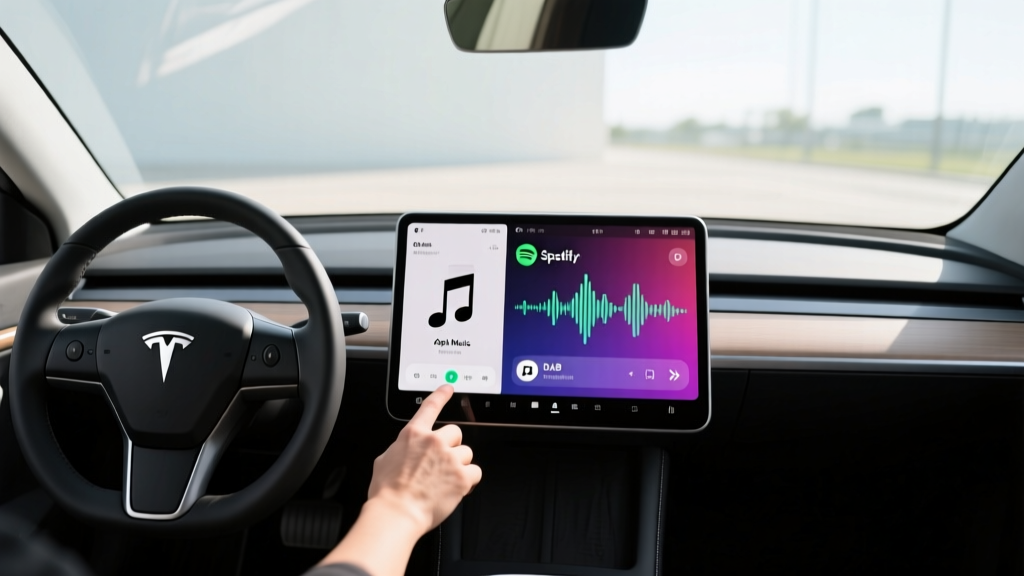
Tesla vehicles do not include a conventional AM/FM radio tuner. Instead, the infotainment system routes all audio through a Linux-based media platform that supports:
- Tesla's built-in streaming service — curated stations and playlists accessible via the vehicle's LTE/5G connection (Premium Connectivity subscription required for in-car streaming while driving, $12.99/month as of 2026).
- Spotify integration — native app with account login, allowing full playlist and search control on the touchscreen.
- TuneIn internet radio — access to tens of thousands of global AM/FM station streams over the internet, effectively replacing the hardware tuner with software equivalents.
- Bluetooth audio — stream from Apple Music, YouTube Music, podcasts, or any phone-based source.
- USB media playback — FLAC, MP3, and WAV files from a thumb drive.
The trade-off is clear: in areas with strong cellular coverage, the streaming experience is superior to broadcast radio (no static, global station access, full on-demand libraries). In rural dead zones, you lose audio entirely unless you've pre-downloaded Spotify content or loaded USB media. Tesla's connectivity relies on AT&T and T-Mobile networks in the U.S., and while coverage is broad, it is not universal.
Audio Hardware by Model
The speaker count and amplifier quality vary significantly across the lineup:
- Model 3 (Highland refresh, 2026): 17 speakers with dual amplifiers in Long Range; 14 speakers in Rear-Wheel Drive. Includes immersive sound processing.
- Model Y (Juniper refresh, 2026): 16 speakers, dual amplifiers, active noise cancellation in Long Range and Performance trims.
- Model S (2026): 22 speakers, 960-watt amplifier system — the most capable audio setup Tesla currently offers.
- Model X (2026): 22 speakers, matching the Model S system.
2026 Tesla Lineup: Range, Battery, and Charging Specs
Audio experience aside, the core purchase decision hinges on range, charging, and value. Here's the spec-by-spec breakdown for every current Tesla model sold in the U.S. for the 2026 model year.
| Spec | Model 3 RWD | Model 3 LR AWD | Model Y LR AWD | Model S LR | Model X LR |
|---|---|---|---|---|---|
| EPA Range | 272 mi | 363 mi | 320 mi | 402 mi | 335 mi |
| Battery (usable, est.) | ~57.5 kWh (LFP) | ~75 kWh (NMC) | ~75 kWh (NMC) | ~95 kWh (NMC) | ~95 kWh (NMC) |
| Peak DC Fast Charge | 170 kW | 250 kW | 250 kW | 250 kW | 250 kW |
| 10–80% DCFC Time | ~30 min | ~25 min | ~27 min | ~30 min | ~32 min |
| Level 2 Home Rate | 11.5 kW (~44 mi/hr) | 11.5 kW (~44 mi/hr) | 11.5 kW (~44 mi/hr) | 11.5 kW (~44 mi/hr) | 11.5 kW (~44 mi/hr) |
| 0–60 mph | 5.8 sec | 4.2 sec | 4.8 sec | 3.1 sec | 3.8 sec |
| Horsepower | 271 hp | 384 hp | 384 hp | 670 hp | 670 hp |
| Drivetrain | RWD | Dual-Motor AWD | Dual-Motor AWD | Dual-Motor AWD | Dual-Motor AWD |
| MPGe (combined) | 132 MPGe | 125 MPGe | 117 MPGe | 120 MPGe | 102 MPGe |
| Efficiency | 25 kWh/100mi | 27 kWh/100mi | 29 kWh/100mi | 28 kWh/100mi | 33 kWh/100mi |
| Base MSRP | $38,990 | $45,990 | $46,990 | $79,990 | $84,990 |
Sources: EPA fueleconomy.gov, Tesla official specs. Prices reflect 2026 MSRP before destination fees.
The EPA numbers above assume a mix of city and moderate-speed driving. In real-world conditions:
- Highway driving at 75 mph reduces range by roughly 15–20%. A Model 3 LR rated at 363 mi EPA will deliver approximately 290–310 mi on a flat interstate in mild weather.
- Cold weather (below 32°F) can cut range 20–30% depending on cabin heat usage. Tesla's heat pump (standard on all 2026 models) mitigates this compared to older resistive heating, but physics still applies. Expect a Model Y LR to deliver roughly 225–260 mi in sustained sub-freezing highway driving.
- Preconditioning the battery before fast charging (automatic when navigating to a Supercharger) is essential for achieving peak kW rates. Without it, cold-soaked batteries may peak at 50–80 kW instead of 250 kW.
Charging Speed and Infrastructure: What You Need to Know
Tesla's Supercharger network remains the most reliable DC fast-charging ecosystem in North America, with over 6,500 V3 and V4 stalls in the U.S. as of early 2026. But charge speed isn't just about peak kW — the charge curve matters enormously.
Understanding the Charge Curve
A Tesla Model 3 Long Range peaking at 250 kW does not sustain 250 kW for the entire session. The typical curve looks like this:
- 10–30% SoC: Peaks near 250 kW (if battery is preconditioned and warm)
- 30–55% SoC: Tapers to ~150–180 kW
- 55–80% SoC: Drops to ~80–100 kW
- Above 80% SoC: Drops sharply to ~30–50 kW — this is why charging past 80% at a DC stall is time-inefficient
The 10–80% time of ~25 minutes for the Model 3 LR reflects this taper. Real-world sessions from 10–90% take closer to 40–45 minutes.
Home Charging Setup
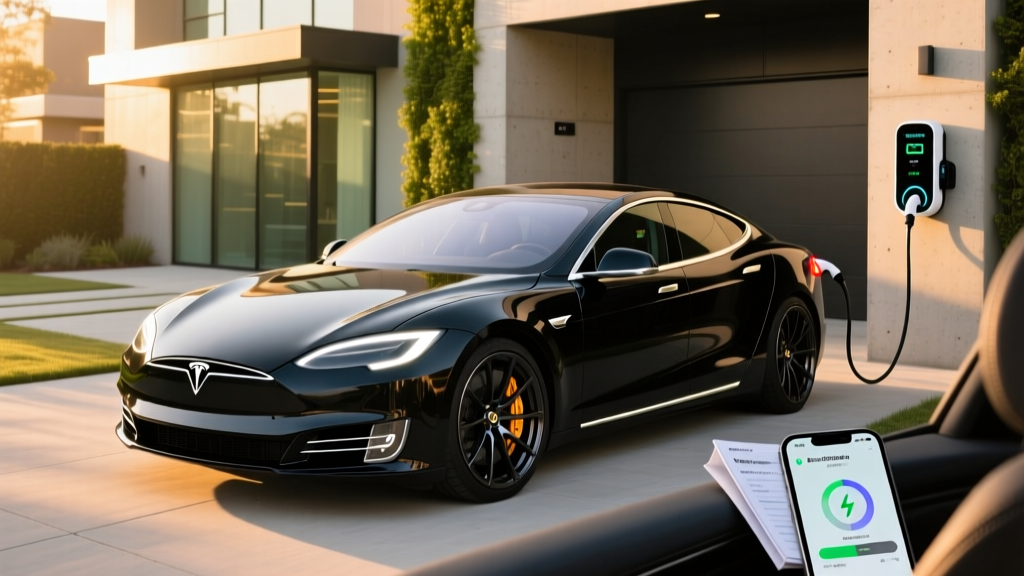
All 2026 Teslas accept up to 11.5 kW on Level 2 AC (48 amps). This requires a NEMA 14-50 outlet on a 60-amp circuit or a hardwired Tesla Wall Connector. Expect a full overnight charge to add roughly 44 miles of range per hour of charging — enough to replenish a full battery in 7–9 hours depending on the model.
Installation cost reality: A basic NEMA 14-50 outlet install runs $500–$1,500 if your electrical panel has spare capacity. If you need a panel upgrade from 100A to 200A service, costs jump to $2,000–$4,500. Always get a quote from a licensed electrician before purchasing.
Pricing, Tax Credits, and Total Cost
Tesla's pricing has shifted repeatedly over the past two years. Here's where the 2026 lineup stands, including the impact of the IRS §30D federal EV tax credit.
| Model/Trim | Base MSRP | §30D Credit Eligibility | Effective Price (with credit) |
|---|---|---|---|
| Model 3 RWD | $38,990 | Eligible for up to $7,500 (point-of-sale) | ~$31,490 |
| Model 3 LR AWD | $45,990 | Eligible for up to $7,500 (point-of-sale) | ~$38,490 |
| Model Y LR AWD | $46,990 | Eligible for up to $7,500 (point-of-sale) | ~$39,490 |
| Model S LR | $79,990 | Not eligible (exceeds $55K sedan cap) | $79,990 |
| Model X LR | $84,990 | Not eligible (exceeds $80K SUV cap) | $84,990 |
The federal credit is not automatic. Buyers must meet all of the following:
- Income caps: Modified AGI ≤ $150,000 (single), $225,000 (head of household), $300,000 (joint).
- MSRP caps: ≤ $55,000 for sedans (Model 3); ≤ $80,000 for SUVs/trucks (Model Y).
- Battery sourcing: Increasing percentages of critical minerals and battery components must be sourced from the U.S. or FTA partners — Tesla's LFP cells (sourced from CATL in China) in the Model 3 RWD have faced scrutiny, though Tesla has restructured supply chains to maintain eligibility for most trims.
- Point-of-sale transfer: As of 2024, buyers can transfer the credit to the dealer for an instant price reduction at purchase, rather than waiting for a tax refund.
Consult a tax professional and verify current eligibility at irs.gov before purchasing.
Interior, Cargo, and Tech Features
Passenger and Cargo Space
| Model | Front Legroom | Rear Legroom | Cargo (rear seats up) | Cargo (rear seats folded) | Frunk |
|---|---|---|---|---|---|
| Model 3 | 42.7 in | 35.2 in | 23 cu ft | 60 cu ft | 3.1 cu ft |
| Model Y | 41.8 in | 37.0 in | 30 cu ft | 72 cu ft | 4.1 cu ft |
| Model S | 42.7 in | 35.4 in | 28 cu ft | 63 cu ft | 5.3 cu ft |
| Model X | 41.2 in | 36.9 in | 42 cu ft (5-seat) | 82 cu ft | 6.6 cu ft |
Standout Tech
- 15.4-inch center touchscreen (all models) — controls virtually all vehicle functions, including climate, mirrors, and glovebox release. No physical buttons for most controls.
- Ambient lighting and ventilated front seats — standard on Highland/Juniper Model 3 and Y.
- Rear-seat entertainment screen — 8-inch display in Model 3 Highland and Model Y Juniper for rear passengers.
- Autopilot (standard) — SAE Level 2 driver assistance including adaptive cruise and lane centering. Requires continuous driver supervision.
- Full Self-Driving (Supervised) — optional $8,000 upgrade or $99/month subscription. Still SAE Level 2 despite the name — the driver must remain fully engaged. Tesla has not achieved Level 4 autonomy in consumer vehicles.
- Sentry Mode and Dashcam — built-in recording using the vehicle's cameras, storing footage to USB drive.
Notable Drawbacks
- No physical radio tuner — if you rely on local AM/FM in rural areas with poor cell coverage, this is a genuine limitation.
- No Apple CarPlay or Android Auto — Tesla's ecosystem is closed. You cannot mirror your phone's interface to the car's screen.
- Minimalist controls — adjusting mirrors, opening the glovebox, and changing vent direction all require touchscreen taps, which some drivers find distracting.
- No heads-up display — surprising omission in 2026 at these price points.
- Insurance costs — Tesla insurance premiums run 20–40% higher than comparable non-Tesla EVs in many states, due to repair costs and claims data.
Pros and Cons at a Glance
✅ Pros
- Class-leading Supercharger network access (20,000+ stalls globally)
- Over-the-air updates continuously add features
- Strong efficiency (kWh/100mi) across the lineup
- Model 3 and Y qualify for $7,500 federal credit
- Excellent audio quality, especially Model S/X
- Robust app ecosystem and remote features
❌ Cons
- No AM/FM hardware tuner — streaming-only audio
- No CarPlay/Android Auto support
- Touchscreen-only controls can be distracting
- Higher insurance premiums than competitors
- Model S/X priced out of federal tax credit
- Panel upgrade may be needed for home Level 2
Who Should Buy a Tesla in 2026?
- Choose Model 3 RWD if: You want the lowest entry price (~$31,490 after credit), commute under 50 miles daily, and have reliable home charging. The LFP battery is durable and tolerates daily 100% charges.
- Choose Model 3 LR AWD if: You take regular road trips and need 363 mi EPA range plus all-weather traction. Best overall value in the sedan lineup.
- Choose Model Y LR AWD if: You need crossover cargo space (30 cu ft), have a family, and want the most practical Tesla at ~$39,490 after credit. This is Tesla's best-selling vehicle for good reason.
- Choose Model S if: Budget is secondary, you want 402 mi of range, 670 hp, and the finest audio system Tesla offers. Understand that no federal credit applies.
- Choose Model X if: You need three rows (optional 7-seat config), falcon-wing rear doors for tight parking, and maximum cargo volume. The 335 mi range is the lowest in the lineup.
- Look elsewhere if: You need AM/FM hardware radio, CarPlay/Android Auto, physical buttons, or want a HUD. The Hyundai Ioniq 5, Ford Mustang Mach-E, and BMW i4 all offer these features.
Warranty and Battery Longevity
Tesla's warranty structure is straightforward but middling compared to Hyundai/Kia's 10-year coverage:
- Basic vehicle warranty: 4 years / 50,000 miles
- Battery and drive unit: 8 years / 100,000 miles (Model 3 RWD); 8 years / 120,000 miles (Model 3 LR, Model Y, Model S, Model X)
- Capacity retention threshold: Tesla warrants that the battery will retain at least 70% of original capacity during the warranty period.
Real-world degradation data from fleet studies (including Tesla's own Impact Reports) shows most NMC packs retain approximately 88–92% capacity at 100,000 miles. LFP packs in the Model 3 RWD show comparable or slightly better longevity, with the added advantage of tolerating regular 100% charging without accelerated degradation.
Frequently Asked Questions
Does Tesla have AM/FM radio?
No. Tesla does not include a hardware AM/FM tuner in any current model. You can listen to AM/FM stations through TuneIn internet radio streaming, which requires a cellular connection. In areas without cell service, you'll need Bluetooth audio from your phone, Spotify offline mode, or USB media.
Can I get SiriusXM satellite radio in a Tesla?
Tesla does not natively support SiriusXM hardware. However, you can stream SiriusXM through your phone via Bluetooth if you have a SiriusXM streaming subscription, or use the TuneIn app for internet radio alternatives.
What is the real-world range of the Tesla Model 3 Long Range?
The EPA rates the 2026 Model 3 LR AWD at 363 miles. In real-world highway driving at 70–75 mph in moderate temperatures, expect 290–310 miles. In cold weather (below 32°F), that drops to approximately 250–275 miles depending on cabin heating usage and terrain.
How fast does a Tesla charge at home?
On a Level 2 home charger at 11.5 kW (48 amps), all 2026 Teslas add approximately 44 miles of range per hour. A full charge from 10% to 100% takes 7–9 hours depending on battery size. Most owners charge overnight and wake up with a full battery daily.
Does the Tesla Model Y qualify for the $7,500 federal tax credit?
Yes, the 2026 Model Y Long Range AWD (MSRP $46,990) qualifies for up to $7,500 under IRS §30D, provided the buyer meets income caps (≤ $300,000 joint AGI) and the vehicle's battery sourcing meets current-year critical mineral and component requirements. The credit can be applied at point of sale as an instant price reduction. Always verify eligibility at irs.gov before purchase.
Is Tesla Autopilot or FSD self-driving?
No. Both Autopilot and Full Self-Driving (Supervised) are SAE Level 2 driver-assistance systems. The driver must remain attentive, keep hands on the wheel, and be prepared to take over immediately. Tesla has not achieved Level 4 (driverless) autonomy in any consumer vehicle. Only dedicated robotaxi services like Waymo operate at Level 4 in geofenced areas.
Is a Tesla worth buying vs. competitors in 2026?
For buyers who prioritize Supercharger network access, over-the-air updates, and strong efficiency, Tesla remains compelling — especially the Model 3 LR and Model Y LR after the $7,500 credit. However, the Hyundai Ioniq 5 offers faster 800V charging (10–80% in ~18 min), CarPlay, and a more conventional interior. The Ford Mustang Mach-E offers comparable range with a more traditional control layout. Test-drive multiple options before deciding.