Why Tesla's Q3 2025 Earnings Call Matters for EV Shoppers
When Tesla released its Q3 2025 earnings call transcript in late October 2025, it wasn't just Wall Street analysts paying attention. For prospective EV buyers, Tesla's quarterly calls serve as the most direct window into the company's production roadmap, pricing strategy, and technology rollout timeline. With the Model Y Juniper refresh now fully deployed in the U.S. market, Cybercab production ramping in Austin, and Full Self-Driving (Supervised) revenue climbing, the Q3 2025 call provided critical data points that directly affect purchase decisions heading into the 2026 model year.
This article translates the financial language of that earnings call into the metrics that matter to EV buyers: real-world range, charging speed, pricing after tax credits, and whether Tesla's current lineup still competes against a rapidly expanding field of rivals from Hyundai, Ford, BMW, and Chevrolet.
The 2026 Tesla Lineup: What Q3 2025 Confirmed
Tesla's Q3 2025 earnings call, led by CEO Elon Musk and CFO Vaibhav Taneja, confirmed several product and production updates that shape the 2026 buying landscape:
- Model Y Juniper (refreshed) is now the sole U.S. production variant, with the pre-refresh body style discontinued as of Q2 2025.
- Cybercab (dedicated robotaxi, no steering wheel) entered initial low-rate production at Giga Texas, with volume ramp targeted for late 2026.
- Model S and Model X continue in production but received no significant hardware updates; Tesla confirmed these remain "low-volume, high-margin" offerings.
- Model 3 Highland continues as the entry sedan with no changes announced for MY2026.
- Next-generation platform (affordable compact EV) remains on track for production start in mid-to-late 2026, per Musk's commentary on the call.
For buyers shopping today, the core lineup remains the Model 3 and Model Y, both of which we'll break down in detail below with the exact specs, pricing, and tax-credit status you need to make a decision.
2026 Tesla Model Y Juniper: Range, Charging, and Specs
The refreshed Model Y (internally codenamed Juniper) is Tesla's volume leader and the best-selling EV in the U.S. market. Here's the full spec breakdown for the 2026 model year, incorporating production data confirmed through Q3 2025:
| Spec | Long Range AWD | Performance |
|---|---|---|
| EPA Range | 320 miles | 298 miles |
| Battery (usable) | ~75 kWh, NMC | ~75 kWh, NMC |
| Drivetrain | Dual-Motor AWD | Dual-Motor AWD |
| Horsepower | 384 hp | 456 hp |
| 0–60 mph | 4.8 sec | 3.5 sec |
| Max DC Fast Charge | 250 kW (peak) | 250 kW (peak) |
| 10–80% DC Time | ~25 min | ~25 min |
| Level 2 Home Rate | 11.5 kW (~44 mi/hr) | 11.5 kW (~44 mi/hr) |
| Efficiency | 117 MPGe / 28 kWh/100mi | 111 MPGe / 30 kWh/100mi |
| Cargo Volume | 72 cu ft (rear seats folded) | 72 cu ft |
| Rear Legroom | 40.5 in | 40.5 in |
| Battery Warranty | 8 yr / 120,000 mi | 8 yr / 120,000 mi |
| Base MSRP | $44,990 | $49,990 |
Real-World Range: What to Actually Expect
EPA sticker: 320 miles (Long Range AWD). In real-world highway driving at 70–75 mph, expect approximately 260–280 miles in mild weather. In cold conditions (below 30°F), range drops to roughly 220–250 miles due to cabin heating demand and reduced battery efficiency — though the Juniper's standard heat pump mitigates some of this loss compared to older Model Y variants. City driving with regenerative braking engaged can push efficiency closer to or even above the EPA estimate, yielding 300–330 miles in stop-and-go conditions.
2026 Tesla Model 3: The Entry Point
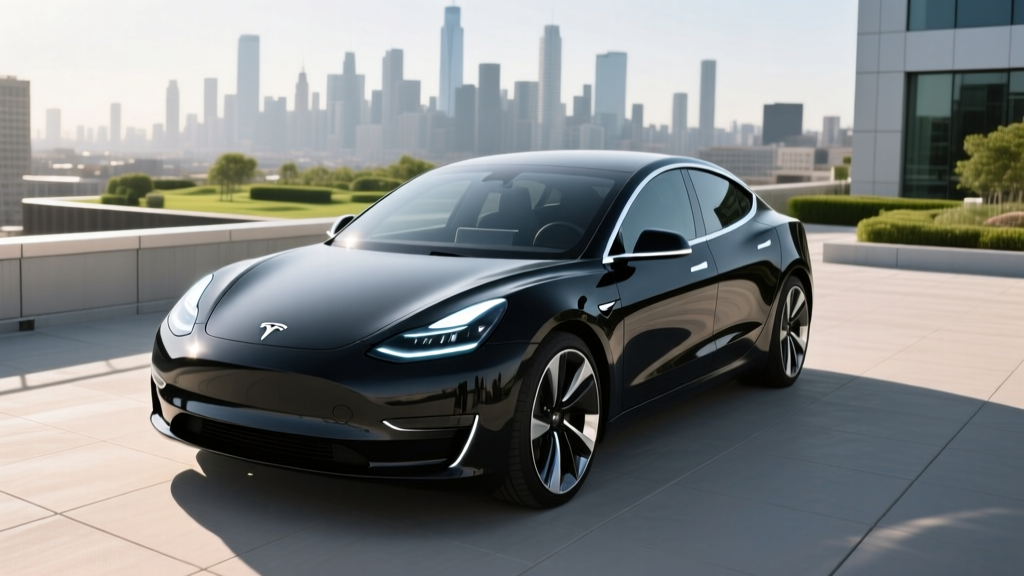
The Model 3 Highland refresh continues into 2026 with the same powertrain options introduced in late 2023. It remains Tesla's most affordable vehicle and a direct competitor to the Hyundai Ioniq 6, BMW i4, and Chevrolet Bolt EUV (returning for 2026 on the Ultium platform).
| Spec | RWD | Long Range AWD |
|---|---|---|
| EPA Range | 272 miles | 341 miles |
| Battery (usable) | ~57 kWh, LFP | ~75 kWh, NMC |
| Drivetrain | Rear-Wheel Drive | Dual-Motor AWD |
| Horsepower | 271 hp | 384 hp |
| 0–60 mph | 5.8 sec | 4.2 sec |
| Max DC Fast Charge | 170 kW (peak) | 250 kW (peak) |
| 10–80% DC Time | ~30 min | ~25 min |
| Level 2 Home Rate | 11.5 kW (~44 mi/hr) | 11.5 kW (~44 mi/hr) |
| Efficiency | 132 MPGe / 25 kWh/100mi | 121 MPGe / 28 kWh/100mi |
| Cargo Volume | 23 cu ft (trunk + frunk) | 23 cu ft |
| Rear Legroom | 35.3 in | 35.3 in |
| Battery Warranty | 8 yr / 100,000 mi | 8 yr / 120,000 mi |
| Base MSRP | $38,990 | $44,990 |
LFP vs. NMC — why it matters for Model 3 buyers: The RWD Model 3 uses a lithium iron phosphate (LFP) battery, which offers slower degradation over time and can be charged to 100% daily without long-term damage. The trade-off is lower energy density (hence the smaller battery and shorter range) and slightly reduced cold-weather performance. The Long Range AWD uses a nickel-manganese-cobalt (NMC) chemistry, which packs more energy per kilogram but Tesla recommends daily charging to 80% for longevity. According to fueleconomy.gov, the Model 3 RWD achieves 132 MPGe combined, making it one of the most efficient EVs on the market.
Charging Deep Dive: Supercharger Network and Home Setup
One of the most significant takeaways from the Tesla Q3 2025 earnings call transcript was CFO Taneja's confirmation that the Supercharger network now exceeds 6,500 stations and 65,000 individual chargers globally, with continued 50 kW urban and 250+ kW highway expansion in North America. For Tesla owners, this remains the most reliable DC fast-charging ecosystem available — a meaningful advantage as competitors rely on Electrify America, EVgo, and Ionity networks that still face uptime and payment interoperability challenges.
| Charging Level | Power (kW) | Miles Added per Hour | Notes |
|---|---|---|---|
| Level 1 (120V outlet) | ~1.4 kW | ~5 mi/hr | Emergency/trickle only |
| Level 2 (240V, 48A) | 11.5 kW | ~44 mi/hr | Full charge in ~7 hr |
| DC Fast (V3 Supercharger) | 250 kW peak | ~1,000 mi/hr (peak) | 10–80% in ~25 min; tapers above 80% |
| DC Fast (V4 Supercharger) | 250 kW peak | ~1,000 mi/hr (peak) | Same peak; improved cable management |
Charging curve reality check: The Model Y peaks at 250 kW only between roughly 10–30% state of charge (SoC). From 30–60%, it sustains approximately 150–180 kW, and from 60–80% it tapers to 80–100 kW. Above 80%, charging slows dramatically to protect battery health — expect 80–100% to take an additional 15–20 minutes. This is why Tesla (and all EV best practices) recommend setting your charge limit to 80% for road-trip stops and only charging to 100% at home before a long drive.
Pricing, Trims, and Federal Tax Credit Eligibility
Pricing remains one of the most dynamic aspects of Tesla ownership, as the company adjusts MSRPs more frequently than legacy automakers. As of early 2026, here's where the lineup stands before and after potential federal incentives:
| Model / Trim | Base MSRP | Destination | As-Tested (Typical) | Est. After §30D Credit |
|---|---|---|---|---|
| Model 3 RWD | $38,990 | $1,390 | $40,380 | ~$32,880* |
| Model 3 Long Range AWD | $44,990 | $1,390 | $46,380 | ~$38,880* |
| Model Y Long Range AWD | $44,990 | $1,390 | $46,380 | ~$38,880* |
| Model Y Performance | $49,990 | $1,390 | $51,380 | ~$43,880* |
| Model S Long Range | $74,990 | $1,390 | $76,380 | No credit (over MSRP cap) |
| Model X Long Range | $79,990 | $1,390 | $81,380 | No credit (over MSRP cap) |
*Credit eligibility requires meeting all IRS §30D criteria. Not all buyers will qualify.
IRS §30D Federal Tax Credit — 2026 Eligibility Checklist
To claim up to $7,500 on a new Tesla, you must meet all of the following (per irs.gov):
- MSRP Cap: Vehicle base MSRP must be ≤$55,000 for sedans (Model 3) or ≤$80,000 for SUVs/trucks (Model Y). Model S and Model X exceed these caps.
- Buyer Income Cap: Modified AGI must not exceed $150,000 (single), $225,000 (head of household), or $300,000 (married filing jointly).
- Battery Sourcing: A percentage of critical minerals and battery components must be sourced from the U.S. or free-trade-agreement countries. Tesla has been transparent about meeting these thresholds for Model 3 and Model Y, but the specific percentages shift annually — verify on the IRS eligible vehicle list before purchase.
- Point-of-Sale Transfer: As of 2024, the credit can be transferred to the dealer at purchase, reducing your out-of-pocket cost immediately rather than waiting for a tax refund. Tesla's checkout flow supports this.
- Final Assembly: Vehicle must undergo final assembly in North America. All U.S.-market Model 3 and Model Y vehicles are assembled at Giga Texas or Giga Fremont — this requirement is satisfied.
Important: Tax credit rules are subject to change. Consult a tax professional and verify current eligibility on the IRS website before finalizing your purchase.
Tech, Autopilot, and FSD: What Q3 2025 Revealed
The Q3 2025 earnings call highlighted that FSD (Supervised) take-rate continues to climb, with Tesla reporting over 1 million cumulative FSD purchases and a growing subscription base. However, it's critical to understand exactly what you're getting:
SAE Automation Level: Level 2 — Not Self-Driving
Both Tesla Autopilot and Full Self-Driving (Supervised) are classified as SAE Level 2 driver-assistance systems. This means the driver must remain fully engaged — eyes on the road, hands available to take over — at all times. Tesla's steering-wheel torque monitoring and cabin camera attention alerts enforce this. Only Level 4 systems (such as Waymo's robotaxi service in select metro areas) operate without a human driver. Do not confuse the "Full Self-Driving" branding with actual autonomous capability.
Autopilot (standard): Includes Traffic-Aware Cruise Control and Autosteer (lane centering) on divided highways. Competent for highway commuting but requires constant supervision.
FSD Supervised ($8,000 one-time or $99/month): Adds Navigate on Autopilot (highway interchanges), Auto Lane Change, Autopark, Summon, and Traffic Light/Stop Sign Control. In Q3 2025, Tesla confirmed the neural-net-based v13.x stack as the production standard, which uses end-to-end learning rather than the older rule-based approach. Real-world performance is impressive on well-marked highways but remains inconsistent in complex urban environments, construction zones, and adverse weather. NHTSA continues to monitor Tesla's ADAS through its Standing General Order on crash reporting.
Infotainment and cabin tech: The Juniper Model Y introduced a ventilated front seat upgrade, ambient lighting, power-folding second-row seats, a rear-seat touchscreen, and improved NVH (noise/vibration/harshness) levels. The 15.4-inch front touchscreen runs Tesla's proprietary OS with native Spotify, YouTube, Netflix (parked only), and a built-in trip planner that accounts for charging stops.
Competitive Landscape: Model Y vs. the Field in 2026
The Q3 2025 earnings call acknowledged what the sales data already shows: Tesla's market share in the U.S. EV segment has decreased from its ~65% peak as compelling alternatives have launched. Here's how the Model Y Long Range AWD stacks up against key 2026 competitors:
| Spec | Tesla Model Y LR AWD | Hyundai Ioniq 5 LR AWD | Ford Mustang Mach-E ER AWD | BMW iX xDrive50 |
|---|---|---|---|---|
| EPA Range | 320 mi | 305 mi | 312 mi | 324 mi |
| Battery | ~75 kWh NMC | 77.4 kWh NMC | 91 kWh NMC | 105.2 kWh NMC |
| Peak DC Charge | 250 kW | 240 kW | 150 kW | 200 kW |
| 10–80% Time | ~25 min | ~18 min | ~38 min | ~31 min |
| 0–60 mph | 4.8 sec | 5.1 sec | 5.1 sec | 4.4 sec |
| Base MSRP | $44,990 | $49,500 | $48,995 | $87,250 |
| §30D Credit Eligible | Yes* | Yes* | Yes* | No (MSRP cap) |
| Charging Network | Supercharger (native) | NACS (Supercharger access) | NACS (Supercharger access) | NACS adapter |
Which EV Should You Choose?
Choose the Tesla Model Y if: You want the lowest price in this segment after tax credits, the most mature Supercharger network for road trips, strong software/OTA updates, and you're comfortable with Tesla's minimalist interior and lack of Apple CarPlay/Android Auto.
Choose the Hyundai Ioniq 5 if: Faster 10–80% charging (thanks to its 800V architecture), a more conventional interior with physical controls, and you want Apple CarPlay/Android Auto. The Ioniq 5 also offers a more comfortable ride quality on rough roads.
Choose the Ford Mach-E if: You prefer a more car-like driving feel, want BlueCruise (hands-free on approved highways, still Level 2), and value Ford's dealer network for service. Note its slower DC charging is a real road-trip limitation.
Choose the BMW iX if: Budget is less of a concern and you want a luxury interior, superior ride comfort, and a premium ownership experience. It's not eligible for §30D due to its MSRP.
Pros, Cons, and Ownership Realities
Pros
- Best-in-class Supercharger network access — still the most reliable DC fast-charging experience in North America
- Competitive pricing, especially after $7,500 federal tax credit on eligible trims
- Strong efficiency (28 kWh/100mi LR AWD) translates to lower per-mile charging cost
- Continuous OTA software updates add features post-purchase
- Juniper refresh meaningfully improved cabin comfort, NVH, and rear-seat amenities
- 8-year/120,000-mile battery warranty on Long Range trims
Cons
- No Apple CarPlay or Android Auto — Tesla's proprietary OS is the only option
- 250 kW peak DC charging is outpaced by Hyundai/Kia's 800V architecture (~240 kW sustained longer)
- FSD ($8,000 or $99/mo) remains a Level 2 system despite the "self-driving" branding
- Service center capacity has not kept pace with fleet growth — wait times for body/paint repair can be lengthy
- Minimalist interior lacks physical buttons for climate/media — all controls are touchscreen-based
- Insurance premiums tend to run 15–30% higher than comparable non-Tesla EVs, per industry data
Who Is the Tesla Model Y (and Model 3) Best For?
Daily commuters (30–60 miles round trip): Ideal use case. Home Level 2 charging overnight covers daily needs easily, and the efficiency keeps per-mile cost low. The Model 3 RWD at ~$33,000 after credits is one of the most affordable ways into a new EV with 270+ miles of range.
Families needing cargo space: The Model Y's 72 cu ft of cargo room (rear seats folded) and available 7-seat configuration make it competitive with compact SUVs. The rear touchscreen and improved Juniper cabin comfort are family-friendly upgrades.
Road trippers: Tesla's Supercharger network and built-in trip planner remain the gold standard for long-distance EV travel. However, note that real-world highway range of ~260–280 miles means planning stops every 2.5–3 hours at 70 mph.
Towing: The Model Y is rated for 3,500 lbs of towing capacity (with the optional tow hitch). This is adequate for a small trailer or a pair of jet skis but not competitive with the Ford F-150 Lightning or Rivian R1T for serious towing duty.
Frequently Asked Questions
What is the real-world range of the 2026 Tesla Model Y?
The EPA rates the Model Y Long Range AWD at 320 miles. In real-world highway driving at 70–75 mph in moderate temperatures, expect 260–280 miles. In cold weather (below 30°F), that drops to roughly 220–250 miles. City driving with regenerative braking can achieve 300+ miles.
How fast does the Model Y charge at home and on DC fast chargers?
On a 240V Level 2 home charger (48A), the Model Y charges at 11.5 kW, adding approximately 44 miles of range per hour — a full charge from empty takes about 7 hours. On a V3 or V4 Supercharger, it peaks at 250 kW and charges from 10–80% in approximately 25 minutes, though the charge rate tapers significantly above 80% SoC.
How much does a Tesla cost after the federal tax credit?
The Model 3 RWD starts at $38,990 and can drop to approximately $32,880 after the $7,500 §30D credit (if you meet all income, MSRP, and battery-sourcing requirements). The Model Y Long Range AWD starts at $44,990 and similarly drops to ~$38,880. Model S and Model X are not eligible due to MSRP caps.
Is the Tesla Model Y still worth buying vs. competitors in 2026?
Yes, primarily for its price-to-range ratio after tax credits and the Supercharger network advantage. However, the Hyundai Ioniq 5 offers faster DC charging (800V architecture), the Ford Mach-E offers BlueCruise hands-free driving, and the Chevrolet Equinox EV undercuts on price. Your decision should weigh charging network preference, interior ergonomics, and whether you need Apple CarPlay/Android Auto.
Does the Tesla Model 3 or Model Y qualify for the $7,500 federal EV tax credit?
Both the Model 3 and Model Y are eligible for the full $7,500 §30D credit, provided the buyer meets income caps ($150K single / $300K joint), the vehicle MSRP is under the cap ($55K sedans / $80K SUVs), and the battery meets critical-mineral and component sourcing thresholds. Tesla confirms its U.S.-built vehicles meet current sourcing requirements, but always verify on the IRS eligible vehicle list before purchasing.
What did the Tesla Q3 2025 earnings call reveal about future models?
The Q3 2025 earnings call confirmed that the Cybercab robotaxi is in low-rate production at Giga Texas with volume ramp targeted for late 2026, and the next-generation affordable compact EV platform remains on track for mid-to-late 2026 production. No new Model S/X refresh was announced. For buyers shopping today, the Model 3 and Model Y represent Tesla's current and near-term core offerings.
Sources: fueleconomy.gov (EPA range and efficiency data), irs.gov (§30D tax credit rules), Tesla investor relations (Q3 2025 earnings call transcript and production data).