Tesla's Current Promotions: What Buyers Actually Get in 2026
Tesla rarely offers traditional dealer discounts or cash-back rebates. Instead, the company's promotions typically center on free Supercharging credits, referral bonuses, reduced APR financing, and limited-time inventory clearance events. In early 2026, Tesla has been leaning heavily on federal tax credit optimization and low-interest financing to move Model 3 and Model Y units as competition from Hyundai, Ford, and Chinese-market EVs intensifies.
Before we break down the numbers, here's the critical context: Tesla's advertised price does not always reflect what you'll actually pay after destination fees, and not every buyer qualifies for the full $7,500 federal tax credit under IRS §30D rules. This review dissects what Tesla's current promotions mean in real dollars — paired with the hard specs on range, charging, and ownership cost that determine whether these deals are genuinely worth taking.
Model 3 and Model Y: The Core Specs That Matter
Tesla's two highest-volume vehicles remain the Model 3 sedan and Model Y crossover. Both share platform architecture, battery chemistry options, and Supercharger network access — but they diverge on range, cargo space, and pricing. Here's the spec-by-spec breakdown for the 2026 model year:
| Specification | 2026 Model 3 RWD | 2026 Model 3 Long Range AWD | 2026 Model Y Long Range AWD |
|---|---|---|---|
| EPA Range | 272 mi | 341 mi | 320 mi |
| Battery (usable) | ~57.5 kWh (LFP) | ~75 kWh (NMC) | ~75 kWh (NMC) |
| Peak DC Fast Charge | 170 kW | 250 kW | 250 kW |
| 10–80% DCFC Time | ~30 min | ~25 min | ~27 min |
| Level 2 Charge Rate | 11.5 kW (~44 mi/hr) | 11.5 kW (~44 mi/hr) | 11.5 kW (~37 mi/hr) |
| 0–60 mph | 5.8 sec | 4.2 sec | 4.8 sec |
| Horsepower | 271 hp | 346 hp | 384 hp |
| Drivetrain | RWD | Dual-Motor AWD | Dual-Motor AWD |
| MPGe (combined) | 132 MPGe | 125 MPGe | 117 MPGe |
| Efficiency | 25 kWh/100 mi | 27 kWh/100 mi | 30 kWh/100 mi |
| Cargo Volume | 23 cu ft (trunk+frunk) | 23 cu ft | 76 cu ft (rear seats folded) |
| Rear Legroom | 35.3 in | 35.3 in | 40.5 in |
| Base MSRP | $38,990 | $45,990 | $47,990 |
| Battery Warranty | 8 yr / 100,000 mi | 8 yr / 120,000 mi | 8 yr / 120,000 mi |
Sources: EPA / fueleconomy.gov, Tesla specifications
Real-World Range: What the EPA Sticker Doesn't Tell You
Model 3 Long Range AWD: EPA 341 mi. Expect ~280–300 mi on sustained highway driving at 70+ mph. In freezing temperatures (below 32°F), range can drop to ~230–260 mi due to cabin heating demand and reduced battery chemistry efficiency. City/regenerative driving recovers closer to EPA estimates.
Model Y Long Range AWD: EPA 320 mi. Real-world highway: ~260–285 mi. Cold weather: ~215–245 mi. The crossover's larger frontal area and weight reduce efficiency versus the Model 3 sedan.
Model 3 RWD (LFP): EPA 272 mi. LFP chemistry holds up slightly better in cold weather than NMC, but expect ~220–245 mi highway and ~185–210 mi in sub-freezing conditions.
Tesla's thermal management system — which includes a heat pump on all 2026 trims — mitigates cold-weather losses better than many competitors. However, the physics of lithium-ion batteries at low temperatures means no EV delivers its sticker range in a Minnesota January. Preconditioning the battery before DC fast charging (via the Tesla app or scheduled departure) remains essential for achieving advertised charge speeds in cold weather.
Charging Speed: Supercharger Network Advantage
Tesla's Supercharger network remains the most reliable and extensive DC fast-charging infrastructure in North America, with over 6,500 stations and 60,000+ connectors as of 2026. The company has also opened many Supercharger stalls to non-Tesla EVs via the NACS (North American Charging Standard) connector, which has now been adopted by Ford, GM, Hyundai, Rivian, and most major automakers.
| Charging Level | Power | Model 3 LR (mi/hr added) | Model Y LR (mi/hr added) | Typical Use Case |
|---|---|---|---|---|
| Level 1 (120V) | 1.4 kW | ~4 mi/hr | ~3 mi/hr | Emergency / trickle |
| Level 2 (240V, 48A) | 11.5 kW | ~44 mi/hr | ~37 mi/hr | Home overnight charging |
| DC Fast (V3 Supercharger) | Up to 250 kW | ~170 mi in 15 min | ~155 mi in 15 min | Road trips |
Charging curve reality: The peak 250 kW rate on Long Range models is sustained only between roughly 10% and 35% state of charge. Above 50%, the rate tapers significantly — by 80% SoC, you're typically pulling 60–80 kW. This is why Tesla's navigation system routes you to arrive at Superchargers at low SoC and recommends charging only to 80% for road-trip efficiency. Charging from 80% to 100% can take as long as the 10%–80% segment.
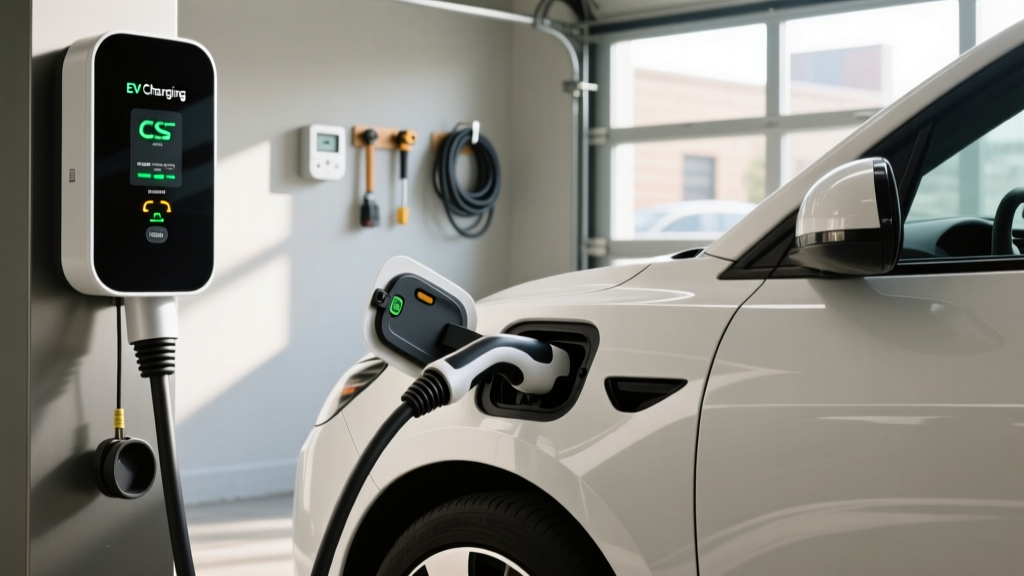
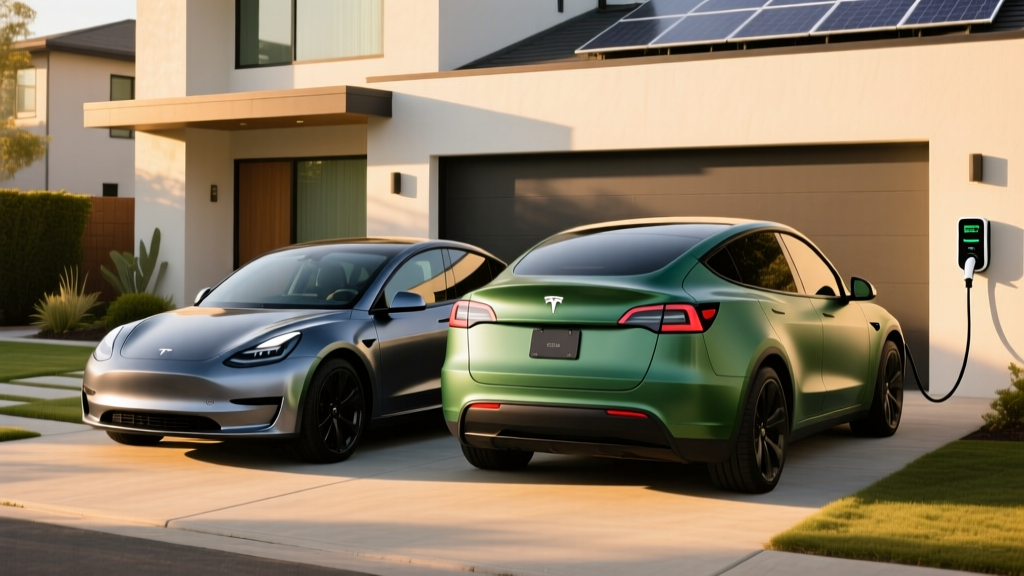
For home charging, a Tesla Wall Connector installed on a 60A circuit delivers the full 11.5 kW (48A continuous). Most Model 3 and Model Y owners report adding 200–300 miles of range overnight — more than sufficient for daily commuting. Installation costs for a Level 2 home setup typically run $500–$2,000 depending on panel capacity and run length from your electrical panel to the garage.
Tesla Promotions and Pricing: What You'll Actually Pay
Tesla's pricing strategy is dynamic — MSRPs shift periodically based on demand, battery costs, and competitive pressure. As of early 2026, here's the current pricing landscape and how promotions factor in:
| Trim | Base MSRP | Destination Fee | Est. Before Credit | Federal §30D Credit | Effective Price |
|---|---|---|---|---|---|
| Model 3 RWD | $38,990 | $1,390 | $40,380 | Up to $7,500* | ~$32,880 |
| Model 3 Long Range AWD | $45,990 | $1,390 | $47,380 | Up to $7,500* | ~$39,880 |
| Model Y Long Range AWD | $47,990 | $1,390 | $49,380 | Up to $7,500* | ~$41,880 |
*Critical tax credit caveats under IRS §30D (2026 rules):
- MSRP cap: Sedans (Model 3) must be under $55,000; SUVs/trucks (Model Y) under $80,000. Both qualify on base trims, but adding Performance packages or high-end paint/wheels can push Model 3 above the cap.
- Income cap: Modified adjusted gross income must not exceed $150,000 (single), $225,000 (head of household), or $300,000 (joint filers).
- Battery sourcing: A percentage of critical minerals and battery components must be sourced from the U.S. or free-trade-agreement countries. Tesla's LFP batteries (used in Model 3 RWD, largely sourced from CATL in China) have faced tighter scrutiny — some buyers in prior years received only $3,750 (half credit) due to component-sourcing rules. Verify current eligibility on IRS.gov before purchasing.
- Point-of-sale transfer: As of 2024, buyers can transfer the credit to the dealer at purchase, reducing the upfront price rather than waiting for a tax refund. Tesla participates in this program.
Current Tesla promotions (early 2026):
- Referral credits: Existing Tesla owners can share referral codes granting new buyers approximately $500–$1,000 off, applied at checkout.
- Low-APR financing: Tesla periodically offers 0.99%–2.99% APR financing on select inventory, significantly below prevailing auto loan rates (~6–7% in 2026).
- Free Supercharging: Some inventory vehicles include 10,000–20,000 miles of complimentary Supercharging, worth roughly $300–$600 in electricity.
- Inventory clearance: End-of-quarter and end-of-year pushes sometimes include price reductions on in-stock vehicles with specific configurations.
Autopilot, FSD, and Tech: What You Get (and What You Don't)
Tesla Autopilot and Full Self-Driving (Supervised) are SAE Level 2 systems. The driver must remain attentive, keep hands on the wheel (or demonstrate engagement via camera monitoring), and be prepared to take over at any moment. These systems are not self-driving. Only Level 4 services like Waymo operate without a human driver — and those are limited to specific geofenced areas.
Standard Autopilot (included on all 2026 Teslas) provides adaptive cruise control, lane-centering, and automatic emergency braking. It's competent for highway use but requires active supervision.
Full Self-Driving (Supervised) — a $8,000 add-on or $99/month subscription — adds automatic lane changes, traffic-light and stop-sign recognition, and city-street navigation. After years of iterative neural-net-based updates, FSD (Supervised) in 2026 handles most suburban and urban driving scenarios but still disengages in construction zones, unmapped areas, and complex intersections. It remains a convenience feature, not a replacement for an alert driver.
Infotainment: Tesla's 15.4-inch center touchscreen handles all vehicle functions, navigation, media, and climate controls. The interface is fast and responsive, but the lack of physical buttons for climate and mirror adjustment frustrates some buyers. Apple CarPlay and Android Auto are not supported — Tesla uses its own software ecosystem exclusively.
Pros and Cons: An Honest Assessment
- Supercharger network: most reliable DC fast-charging infrastructure in North America
- Industry-leading efficiency: Model 3 RWD at 25 kWh/100 mi beats nearly all competitors
- Over-the-air updates continuously add features and improve performance
- Strong resale value relative to other EVs
- Heat pump standard on all trims — better cold-weather range retention
- Point-of-sale tax credit transfer reduces upfront cost
- No Apple CarPlay or Android Auto — proprietary infotainment only
- Build quality inconsistency: panel gaps and paint issues reported more than average
- Model 3 RWD LFP battery may qualify for only half the federal credit ($3,750) due to sourcing rules
- FSD (Supervised) remains Level 2 — expensive add-on that does not deliver full autonomy
- Limited service center availability in rural areas; mobile service wait times can stretch weeks
- Rear-seat comfort in Model 3 is tight for adults on long trips
Tesla vs. Key Competitors: Is It Still the Best Buy?
The 2026 EV landscape has shifted dramatically. Here's how Tesla stacks up against its primary rivals:
- Hyundai Ioniq 6 (Long Range RWD): EPA 361 mi, 800V architecture charges 10–80% in ~18 min at 350 kW chargers, ~$43,000 base. Faster charging and more range, but relies on Electrify America (less reliable than Superchargers) and uses CCS1 connector.
- Ford Mustang Mach-E (Extended Range AWD): EPA ~312 mi, ~$48,000 base, NACS adapter included for Supercharger access. More traditional interior with physical controls, but lower efficiency and slower charging than Tesla.
- Chevrolet Equinox EV (3RS): EPA ~319 mi, ~$43,000 base, qualifies for full $7,500 credit (U.S.-built, GM battery sourcing). More affordable entry point with competitive range, but newer platform with less proven long-term reliability.
Tesla's edge in 2026 is the Supercharger ecosystem and proven software maturity. Its weakness is the aging Model Y platform (introduced in 2020 with a 2025 refresh) and the proprietary approach to infotainment. If charging reliability and efficiency are your top priorities, Tesla still leads. If you want faster peak charging, more interior space, or CarPlay integration, competitors now offer compelling alternatives.
Who Should Buy a Tesla in 2026?
- You drive frequently on highways or take regular road trips (Supercharger network is unmatched)
- You value over-the-air updates and a software-forward ownership experience
- You can charge at home and want maximum efficiency (lowest kWh/100 mi in class)
- You qualify for the full $7,500 federal tax credit based on income and vehicle sourcing
- You need Apple CarPlay/Android Auto for your workflow
- You live in an area with limited Tesla service center access
- You want the fastest possible DC charging (Hyundai/Kia 800V platforms at 350 kW chargers)
- The Model 3 RWD's LFP battery sourcing limits your tax credit to $3,750 and you need the full savings
Frequently Asked Questions
What is the real-world range of the 2026 Tesla Model 3 Long Range?
EPA-rated at 341 miles, but expect approximately 280–300 miles on sustained highway driving and 230–260 miles in freezing weather. City driving with regenerative braking recovers closer to the EPA estimate.
How fast does a Tesla charge at home and on road trips?
At home on a Level 2 Tesla Wall Connector (11.5 kW), you'll add roughly 44 miles of range per hour — enough to fully replenish overnight. On V3 Superchargers, the Model 3 Long Range peaks at 250 kW, adding about 170 miles in 15 minutes (10–80% in ~25 minutes), though the rate tapers significantly above 50% SoC.
Does the Tesla Model 3 RWD qualify for the full $7,500 federal tax credit?
It depends on current IRS battery-sourcing rules. The Model 3 RWD uses an LFP battery sourced primarily from CATL (China), which has historically limited it to the $3,750 half-credit under critical-mineral and battery-component requirements. Always verify current eligibility at IRS.gov before purchasing. Long Range AWD models with NMC batteries have more consistently qualified for the full $7,500.
Is Tesla's Full Self-Driving worth the $8,000 cost?
FSD (Supervised) is a Level 2 driver-assist system — it does not make the car self-driving. It handles many city and highway scenarios but requires constant driver attention and still disengages in construction zones or complex situations. Most buyers are better served by the included Autopilot system unless they specifically want the convenience features and believe in Tesla's long-term autonomy roadmap.
What Tesla promotions are available right now?
As of early 2026, Tesla is offering referral credits ($500–$1,000 off), periodic low-APR financing (0.99%–2.99%), and occasional free Supercharging bundles on inventory vehicles. These change frequently — check Tesla's website directly for current offers, as promotions are often region-specific and inventory-dependent.
How does Tesla's warranty compare to competitors?
Tesla provides a 4-year/50,000-mile basic vehicle warranty and an 8-year battery warranty (100,000 miles on RWD, 120,000 miles on Long Range/AWD) with a minimum 70% capacity retention threshold. This is competitive with Hyundai's 10-year/100,000-mile powertrain warranty but slightly shorter on the basic coverage side.