When Tesla introduces promotional APR (Annual Percentage Rate) financing, it can significantly alter the total cost of ownership for an electric vehicle. A low or 0% APR deal effectively reduces the interest paid over a loan term, sometimes saving buyers thousands of dollars compared to standard auto loan rates. However, a low rate is only valuable if the underlying vehicle meets your needs for range, charging speed, and utility.
This guide breaks down the current Tesla lineup available with promotional financing in 2026, providing exact EPA range figures, battery chemistry details, charging speeds, and federal tax credit eligibility under IRS §30D rules. We focus on the data that matters: how far you can actually drive, how fast you can recharge, and what the final price looks like after incentives.
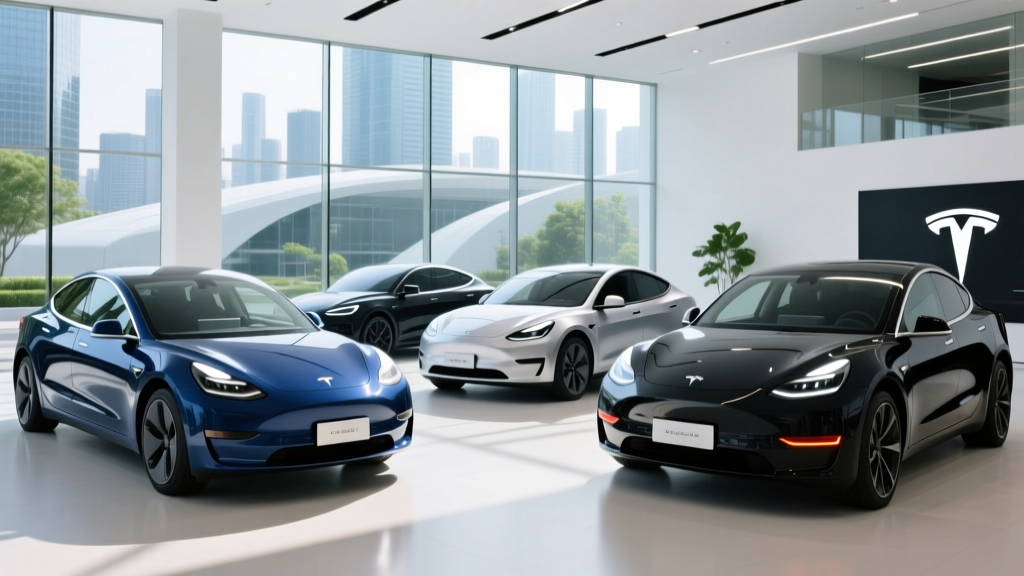
Tesla Model 3: The Efficiency Benchmark
The Model 3 remains Tesla's entry point and one of the most efficient EVs on the market. For 2026, the Long Range RWD and AWD variants dominate the lineup, offering a balance of performance and range that is difficult to beat at this price point.
| Specification | Model 3 Long Range AWD | Model 3 Performance |
|---|---|---|
| EPA Range | 363 miles | 315 miles |
| Battery Capacity | 79 kWh (NMC) | 79 kWh (NMC) |
| 0-60 mph | 4.2 seconds | 2.9 seconds |
| Peak DC Charge Rate | 250 kW | 250 kW |
| 10-80% Charge Time | ~25 minutes | ~25 minutes |
| Base MSRP | $47,740 | $52,990 |
Real-World Range Reality
While the EPA estimates 363 miles for the Long Range AWD, expect approximately 290-310 miles on a sustained highway drive at 70 mph. In freezing temperatures (below 32°F), range can drop by 20-30%, reducing effective range to roughly 230-250 miles unless the battery is preconditioned.
Tesla Model Y: The Family Hauler
The Model Y is the best-selling vehicle in the world for a reason: it offers crossover utility with sedan-like efficiency. The 2026 model year continues with the Juniper refresh, featuring improved suspension tuning and a quieter cabin.
| Specification | Model Y Long Range AWD | Model Y Performance |
|---|---|---|
| EPA Range | 337 miles | 303 miles |
| Cargo Volume | 76 cu ft (max) | 76 cu ft (max) |
| Peak DC Charge Rate | 250 kW | 250 kW |
| Efficiency | 3.6 kWh/mile (28 MPGe) | 3.9 kWh/mile (26 MPGe) |
| Towing Capacity | 3,500 lbs | 3,500 lbs |
| Base MSRP | $49,990 | $54,990 |
Charging at home on a Level 2 (240V, 48A) Mobile Connector or Wall Connector adds roughly 32-35 miles of range per hour. For most owners, this means a full overnight replenishment of daily driving needs.
Tesla Cybertruck: Utility and Controversy
The Cybertruck is available with promotional APR offers, though its high starting price and polarizing design make it a niche choice. The dual-motor and tri-motor (Cyberbeast) variants offer substantial towing capacity and off-road capability.
| Specification | Cybertruck AWD | Cyberbeast (Tri-Motor) |
|---|---|---|
| EPA Range | 340 miles | 320 miles |
| Battery Capacity | 123 kWh (NMC) | 123 kWh (NMC) |
| 0-60 mph | 4.1 seconds | 2.6 seconds |
| Peak DC Charge Rate | 350 kW | 350 kW |
| 10-80% Charge Time | ~20 minutes | ~20 minutes |
| Base MSRP | $79,990 | $99,990 |
Note that the Cybertruck exceeds the MSRP cap for the federal EV tax credit, meaning it does not qualify for the $7,500 §30D incentive. Buyers must rely on the promotional APR to reduce total cost.
Federal Tax Credit Eligibility (IRS §30D)
Not every Tesla qualifies for the full $7,500 federal tax credit. Eligibility depends on three main factors: buyer income, vehicle MSRP, and battery component sourcing.
- Income Caps: Adjusted Gross Income (AGI) must not exceed $150,000 (single), $225,000 (head of household), or $300,000 (joint).
- MSRP Caps: Sedans (Model 3) must be under $55,000; SUVs/Trucks (Model Y, Cybertruck) must be under $80,000.
- Sourcing: A percentage of critical minerals and battery components must be sourced from the U.S. or free-trade agreement partners. Tesla's supply chain has largely met these requirements for Model 3 and Y in 2026, but always verify the VIN on the DOE fueleconomy.gov site before purchasing.
The credit can now be transferred to the dealer at the point of sale, effectively reducing the purchase price upfront rather than waiting for a tax refund.
Charging Infrastructure and Speed
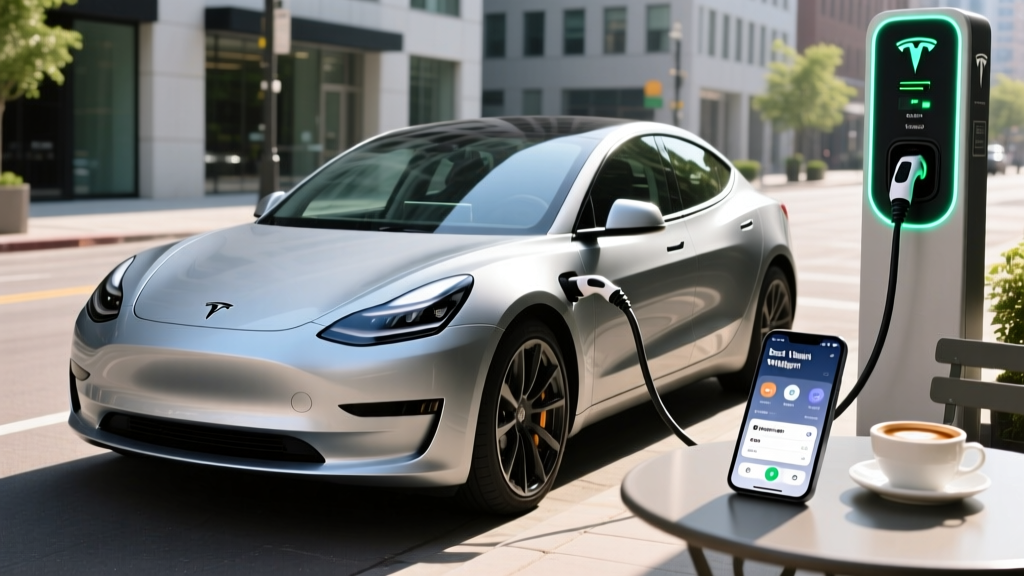
Tesla's Supercharger network remains the most reliable DC fast-charging infrastructure in North America. With the adoption of the NACS (North American Charging Standard) connector, Tesla vehicles no longer require adapters for their native network.
| Charging Level | Power Output | Miles Added Per Hour | Typical Use Case |
|---|---|---|---|
| Level 1 (120V) | 1.4 kW | 3-5 miles | Emergency / Trickle |
| Level 2 (240V, 48A) | 11.5 kW | 32-44 miles | Home / Workplace |
| DC Fast (V3 Supercharger) | 250 kW | ~1,000 miles/hr (peak) | Road Trips |
| DC Fast (V4 Supercharger) | 350 kW | ~1,200 miles/hr (peak) | Cybertruck / Future |
Charging curves matter: a Tesla Model 3 will peak at 250 kW only up to roughly 40-50% State of Charge (SoC), after which the rate tapers to protect battery health. This is why 10-80% times are a more accurate metric than 0-100%.
Pros and Cons of Tesla Ownership
Pros
- Access to the Supercharger network (reliability and density).
- Class-leading efficiency (kWh/100mi) translates to lower charging costs.
- Over-the-air (OTA) updates continuously add features.
- Strong resale value compared to legacy EV brands.
Cons
- Panel gaps and build consistency can vary by factory.
- Insurance premiums are often higher than average for the segment.
- Phantom braking incidents reported with Autopilot (Level 2 ADAS).
- Repair costs can be high due to integrated casting and proprietary parts.
Is the Promotional APR Worth It?
A promotional APR (e.g., 0.99% or 1.99% for 36-60 months) is most valuable when the vehicle's price is already competitive and the federal tax credit is applied. For a Model 3 Long Range at $47,740, a $7,500 credit brings the effective price to $40,240. Financing $40,240 at 0.99% for 60 months results in a monthly payment of roughly $688 with minimal interest paid.
Compare this to a standard 6.5% APR on a competitor with similar range but no tax credit eligibility, and the Tesla total cost of ownership (TCO) advantage becomes clear. However, if you do not qualify for the §30D credit due to income limits, the math shifts significantly.
FAQ: Tesla Financing and Ownership
Does Tesla offer 0% APR?
Tesla occasionally offers 0% APR on specific inventory (often end-of-quarter or on discontinued trims). In 2026, most promotional rates hover between 0.99% and 2.99% for well-qualified buyers.
Can I combine the promotional APR with the federal tax credit?
Yes. The tax credit reduces the principal amount you need to finance (if transferred at point-of-sale), and the promotional APR reduces the interest on the remaining balance.
What is the warranty coverage on the battery?
Tesla provides an 8-year or 120,000-mile (Long Range/Performance) warranty on the battery and drive unit, guaranteeing at least 70% capacity retention.
Is Autopilot included in the price?
Basic Autopilot (lane centering and traffic-aware cruise control) is standard. Full Self-Driving (Supervised) is an additional $8,000 purchase or $99/month subscription. Remember that FSD is a Level 2 system and requires active driver supervision.