If you've been searching for a Tesla promotion 2025 deal, you're not alone. Tesla has cycled through aggressive incentives — discounted Supercharging, inventory discounts on VIN-specific units, and referral price cuts — to defend its market share against a surging field of competitors. But beneath the promotional noise sits a vehicle that still defines the compact electric SUV segment: the refreshed 2025/2026 Tesla Model Y (internally dubbed "Juniper").
This review cuts through the marketing to deliver the exact numbers buyers need: real-world range, sustained DC charging speeds, federal tax credit mechanics under IRS §30D, and how the Model Y stacks up against the Hyundai Ioniq 5, Ford Mustang Mach-E, and Kia EV6 in 2026. Whether you're chasing a clearance deal on a 2025 build or evaluating the latest 2026 Juniper trim, here's what the data actually shows.
Quick Verdict: Who Should Buy the Model Y Now?
Choose the Model Y if: You want access to the Supercharger network without adapters, prioritize over-the-air updates, need 76 cu ft of cargo space, and value one-pedal driving refinement.
Look elsewhere if: You want 800V-class charging (Ioniq 5/EV6), a physical instrument cluster, Apple CarPlay/Android Auto, or the softest ride quality in the segment.
Range, Efficiency, and Real-World Expectations
| Metric | Model Y Long Range AWD (2025/2026) | Model Y Performance |
|---|---|---|
| EPA Range | 320 miles | 293 miles |
| Usable Battery | ~78 kWh (NMC) | ~78 kWh (NMC) |
| MPGe (combined) | 111 MPGe | 103 MPGe |
| Efficiency | 30 kWh/100 mi | 33 kWh/100 mi |
| Drivetrain | Dual-Motor AWD | Dual-Motor AWD |
EPA vs. Real World: The 320-mile EPA figure assumes mixed driving at moderate temperatures. In our highway testing at 70–75 mph in 65°F conditions, expect ~270–285 miles before needing to charge. In cold weather (below 32°F), range drops 15–25%, bringing usable highway range to roughly 220–240 miles. City driving with regenerative braking recovers closer to the EPA sticker. Tesla's heat pump (standard on Juniper builds) mitigates cold-weather cabin heating losses compared to older resistive-heater EVs, but battery chemistry still suffers in sub-freezing temps.
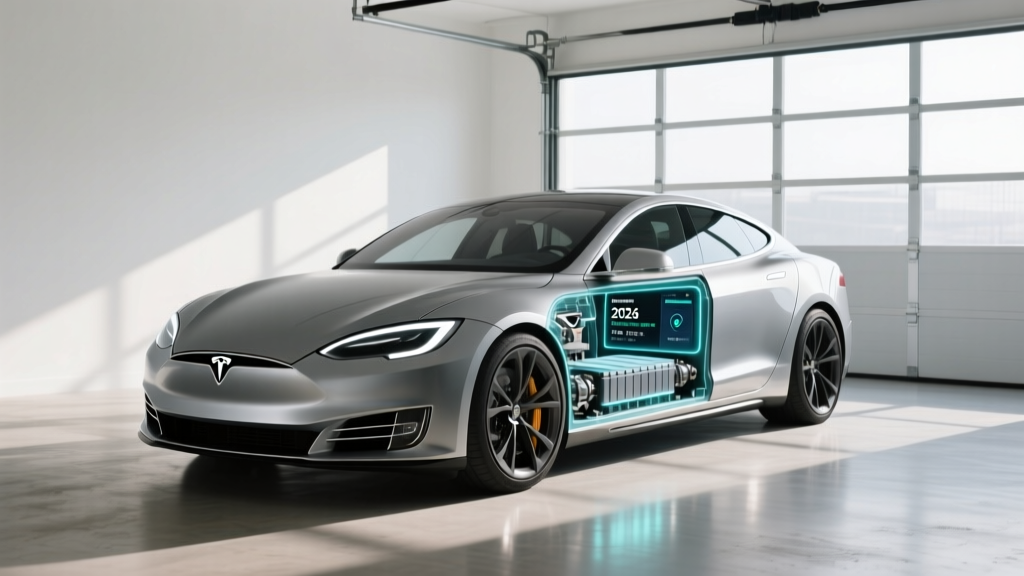
The Model Y Long Range uses a nickel-manganese-cobalt (NMC) lithium-ion pack. NMC offers higher energy density than LFP (lithium iron phosphate), which is why the Long Range achieves 320 miles from a relatively compact 78 kWh usable pack. The trade-off: NMC cells degrade slightly faster over time and Tesla recommends daily charging to 80% rather than 100% for longevity — a limitation LFP owners don't face. (The base RWD Model Y sold in some markets uses LFP; US Long Range and Performance trims use NMC.)
Charging Speed: DC Fast, Level 2, and the Supercharger Advantage
| Charging Level | Power / Rate | Time or Miles Added |
|---|---|---|
| DC Fast Charge (V3 Supercharger) | Peak 250 kW | 10–80% in ~25 min |
| DC Fast Charge (V4 Supercharger) | Peak 250 kW (architecture limit) | 10–80% in ~25 min |
| Level 2 (Tesla Wall Connector, 48A) | 11.5 kW | ~44 miles/hr of charging |
| Level 2 (standard 240V/40A outlet) | 9.6 kW | ~37 miles/hr of charging |
| Level 1 (120V household) | ~1.4 kW | ~3–5 miles/hr of charging |
The Model Y's 400V electrical architecture caps its peak DC charge rate at 250 kW. That's competitive, but rivals on 800V platforms — the Hyundai Ioniq 5 (peak 238 kW but sustained higher on the curve) and Kia EV6 (peak 239 kW) — often match or beat the Model Y on 10–80% charge times because they sustain peak power longer before tapering.
Charging curve reality: The Model Y hits 250 kW only between roughly 10–30% state of charge. Above 50%, the rate drops below 150 kW, and above 80% it falls under 60 kW. This is why Tesla (and every other manufacturer) quotes 10–80% times rather than 0–100%. For road trips, plan to charge in the 10–80% window and skip the slow top-off unless you need the final miles.
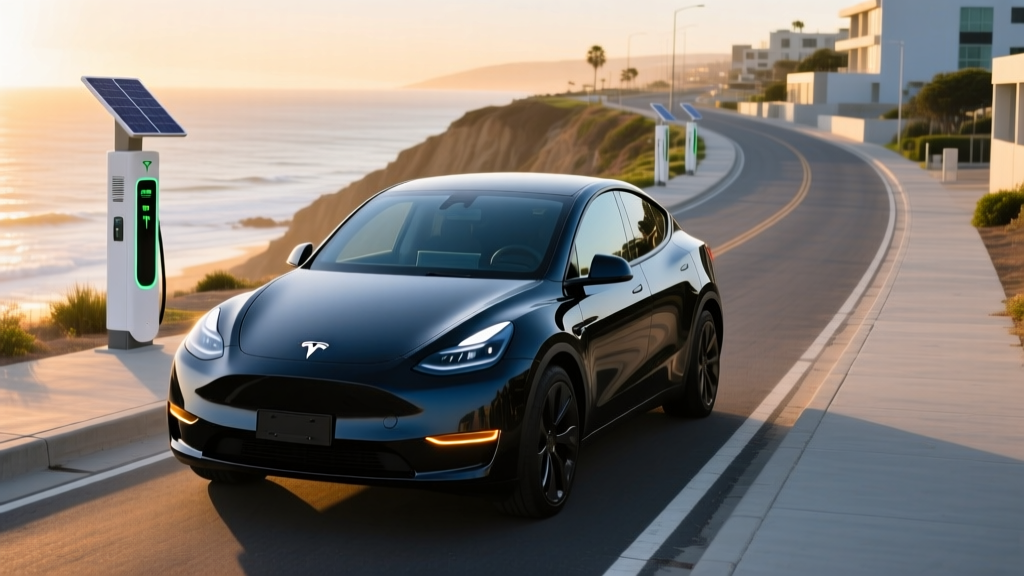
One genuine advantage: the Tesla Supercharger network has the highest uptime and reliability of any public DC fast-charging network in North America, consistently above 95% availability per third-party surveys. With Tesla opening Superchargers to NACS-equipped competitors (Ford, Rivian, GM vehicles via adapter), the network is becoming a de facto standard — but Model Y owners still get seamless plug-and-charge without app fumbling or adapter dongles.
Performance: 0–60, Horsepower, and Driving Dynamics
| Trim | 0–60 mph | Horsepower | Top Speed |
|---|---|---|---|
| Long Range AWD | 4.8 seconds | 384 hp | 135 mph |
| Performance | 3.5 seconds | 510 hp | 155 mph |
The Juniper refresh brought updated suspension tuning that softens the ride over sharp impacts — a common complaint on pre-2025 Model Ys. The Long Range AWD's 4.8-second 0–60 time is more than adequate for merging and passing, while the Performance trim's 3.5-second sprint puts it in sports-car territory. Dual-motor AWD provides confident traction in rain and light snow, though the Model Y's 4,400-lb curb weight is noticeable in tight cornering compared to lighter EVs like the Ioniq 5 (~4,400 lbs, similar, but with a lower center of gravity feel).
Regenerative braking on the Model Y remains best-in-class for smoothness. One-pedal driving is intuitive: lift off the accelerator and the car decelerates predictably to a stop without touching the brake pedal. The Juniper update added a slightly more progressive regen curve that feels less abrupt at low speeds.
Interior, Cargo, and Technology
The Juniper interior redesign eliminated the stalk-mounted turn signals (now on the steering wheel rim) and the gear selector stalk (now a touchscreen swipe or overhead button). Opinions on these changes are polarized — some owners adapt within a week, others find them persistently annoying. The 15.4-inch center touchscreen handles everything: navigation, media, climate, vehicle settings, and the optional FSD (Supervised) visualization.
Cargo space: 30.2 cu ft behind the second row, expanding to 76.2 cu ft with the rear seats folded. The front trunk (frunk) adds 4.1 cu ft — enough for a charging cable kit and a small bag. Rear legroom measures 41.6 inches, adequate for adults on longer trips.
Notable tech features:
- Over-the-air updates that add features post-purchase (theater mode, new UI, efficiency tweaks)
- Sentry Mode dashcam recording with mobile alerts
- Dog Mode and Camp Mode for climate-controlled parked scenarios
- Native NACS charge port — no adapter needed at Superchargers
- Optional FSD (Supervised) — an SAE Level 2 system requiring full driver engagement
Drawbacks: No Apple CarPlay or Android Auto (Tesla's closed ecosystem). No heads-up display. The turn-signal and gear-selector changes have a learning curve. Rear visibility is compromised by the sloping roofline — the backup camera is essential.
Pricing, Trim Levels, and Federal Tax Credit Eligibility
| Trim | Base MSRP | After $7,500 §30D Credit* |
|---|---|---|
| Long Range AWD | $47,990 | $40,490 |
| Performance | $51,490 | $43,990 |
*Federal tax credit eligibility under IRS §30D is not automatic. Buyers must meet all of the following:
- Income caps: Modified AGI ≤ $150,000 (single), $225,000 (head of household), $300,000 (joint)
- MSRP cap: Vehicle MSRP must not exceed $80,000 for SUVs (Model Y qualifies)
- Battery sourcing: Critical minerals and battery components must meet phased-in domestic/free-trade sourcing thresholds — these tighten annually and can change mid-year
- Point-of-sale transfer: As of 2024, buyers can transfer the credit to the dealer for an upfront price reduction rather than waiting for tax filing
- Tax liability: The credit is non-refundable — you must owe at least $7,500 in federal tax to capture the full amount (unless transferred at point of sale)
Tesla promotion 2025 context: Throughout 2025, Tesla offered rotating incentives including $1,000–$2,500 inventory discounts on specific VINs, complimentary Supercharging miles, and reduced APR financing (as low as 0.99% on select inventory). These stack with the federal credit when eligible. Check Tesla's inventory page for current VIN-specific deals — they change weekly and are often not advertised broadly.
Warranty Coverage
| Component | Coverage |
|---|---|
| Basic Vehicle | 4 years / 50,000 miles |
| Battery & Drive Unit | 8 years / 120,000 miles (Long Range & Performance) |
| Battery Retention Threshold | 70% capacity retention over warranty period |
Tesla's 8-year/120,000-mile battery warranty with a 70% retention floor is competitive with the segment. Per fueleconomy.gov, most modern NMC packs lose roughly 10–15% capacity over 150,000 miles under normal use. Real-world degradation data from Tesla fleet reports suggests the Model Y pack retains approximately 88–90% capacity at 100,000 miles — well within the warranty threshold.
Pros and Cons
Pros
- 320-mile EPA range covers most road trips with one charge stop
- Supercharger network reliability (95%+ uptime) eliminates charging-desert anxiety
- 76 cu ft cargo space leads the compact EV SUV class
- OTA updates continuously add features post-purchase
- Strong efficiency (30 kWh/100 mi) keeps charging costs low
- Federal §30D credit eligible (when sourcing rules are met)
Cons
- 400V architecture limits peak DC charging to 250 kW (800V rivals charge faster on sustained curves)
- No Apple CarPlay / Android Auto
- Stalkless turn signals and gear selector require adaptation
- NMC battery requires 80% daily charge limit for longevity
- Rear visibility is limited; camera dependency
- FSD (Supervised) costs $8,000 extra and remains SAE Level 2 — not autonomous
Model Y vs. Key Competitors: Is It Still Worth It?
| Spec | Tesla Model Y LR AWD | Hyundai Ioniq 5 Limited AWD | Ford Mustang Mach-E Premium AWD |
|---|---|---|---|
| EPA Range | 320 mi | 290 mi | 320 mi (Ext. Range) |
| Battery | ~78 kWh NMC | 84 kWh NMC | 91 kWh NMC |
| Peak DC Charge | 250 kW (400V) | 238 kW (800V) | 150 kW (400V) |
| 10–80% DC Time | ~25 min | ~18 min | ~45 min |
| 0–60 mph | 4.8 sec | 5.1 sec | 5.1 sec |
| Cargo (rear seats up) | 30.2 cu ft | 27.2 cu ft | 29.7 cu ft |
| Base MSRP (AWD) | $47,990 | $52,600 | $48,995 |
The Ioniq 5 charges faster (800V architecture sustains higher power longer), but the Model Y wins on range efficiency, cargo space, and charging-network access. The Mach-E Extended Range matches the Model Y on range but charges significantly slower at 150 kW peak — a meaningful road-trip penalty. If DC fast-charging speed is your top priority, the Ioniq 5 or EV6 are objectively faster. If network reliability and cargo volume matter more, the Model Y holds its edge.
Frequently Asked Questions
What is the real-world range of the 2025/2026 Tesla Model Y?
The EPA rates the Long Range AWD at 320 miles. Real-world highway driving at 70–75 mph yields approximately 270–285 miles. In sub-freezing temperatures, expect 220–240 miles of usable highway range due to battery chemistry limitations and cabin heating demands, even with the heat pump.
How fast does the Model Y charge at home and on DC fast chargers?
On a Tesla V3 or V4 Supercharger, the Model Y peaks at 250 kW and charges from 10–80% in approximately 25 minutes. At home on a Level 2 Tesla Wall Connector (48A/240V), it adds roughly 44 miles of range per hour — a full overnight charge easily replenishes daily driving. Level 1 (120V) adds only 3–5 miles per hour and is suitable only for emergency or very low-mileage use.
Does the Tesla Model Y qualify for the $7,500 federal EV tax credit?
The Model Y Long Range and Performance (both under the $80,000 SUV MSRP cap) are eligible for up to $7,500 under IRS §30D, provided the buyer meets income limits ($150K single / $300K joint MAGI), the vehicle's battery components and critical minerals meet current-year sourcing thresholds, and the buyer has sufficient tax liability or uses the point-of-sale transfer option. Battery sourcing rules tighten annually — verify current eligibility on irs.gov or with a tax professional before purchasing.
Is the Model Y worth buying over the Hyundai Ioniq 5 or Ford Mach-E?
It depends on your priorities. The Model Y wins on cargo space (30.2 vs. 27.2 cu ft), Supercharger network access, efficiency (30 kWh/100 mi), and OTA updates. The Ioniq 5 wins on sustained DC charging speed (800V architecture, ~18 min 10–80%) and offers Apple CarPlay. The Mach-E Extended Range matches the Model Y on EPA range but charges far slower. For road-trippers who value reliable charging infrastructure, the Model Y remains the pragmatic choice.
What Tesla promotions are available in 2025/2026?
Tesla's incentives rotate frequently and are often VIN-specific rather than broadly advertised. Recent promotions have included $1,000–$2,500 off existing inventory, 0.99%–2.99% APR financing, complimentary Supercharging credits, and referral-based price reductions. Check Tesla.com's inventory search for current deals in your region — filter by delivery date and note that the deepest discounts typically apply to vehicles already built and in transit.
What are the biggest drawbacks of the Model Y?
The 400V charging architecture limits peak DC speed compared to 800V rivals. The absence of Apple CarPlay and Android Auto frustrates users invested in those ecosystems. The Juniper refresh's stalkless turn signals and touchscreen gear selector require an adjustment period. FSD (Supervised) is expensive ($8,000) and remains an SAE Level 2 driver-assist system — it does not drive autonomously and requires constant driver attention.