Tesla's 2026 Price Cuts: What Changed and Why It Matters
Tesla has slashed MSRPs across its entire lineup entering the 2026 model year, with the Model 3 RWD starting at $36,990 (down from $38,990 in late 2024) and the Model Y Long Range AWD now at $41,990 (previously $44,990). These aren't temporary promotions — they're structural price reductions reflecting Tesla's manufacturing cost improvements and competitive pressure from Hyundai, Ford, BMW, and a wave of new Chinese-market EVs entering global markets.
For buyers, this is the most affordable Tesla lineup in years. But price alone doesn't determine value. Below, we break down every current Tesla model with exact EPA range figures, real-world range expectations, charging performance, tax-credit eligibility under current IRS §30D rules, and honest ownership trade-offs. All specs reflect the 2026 model year as of Q1 2026.
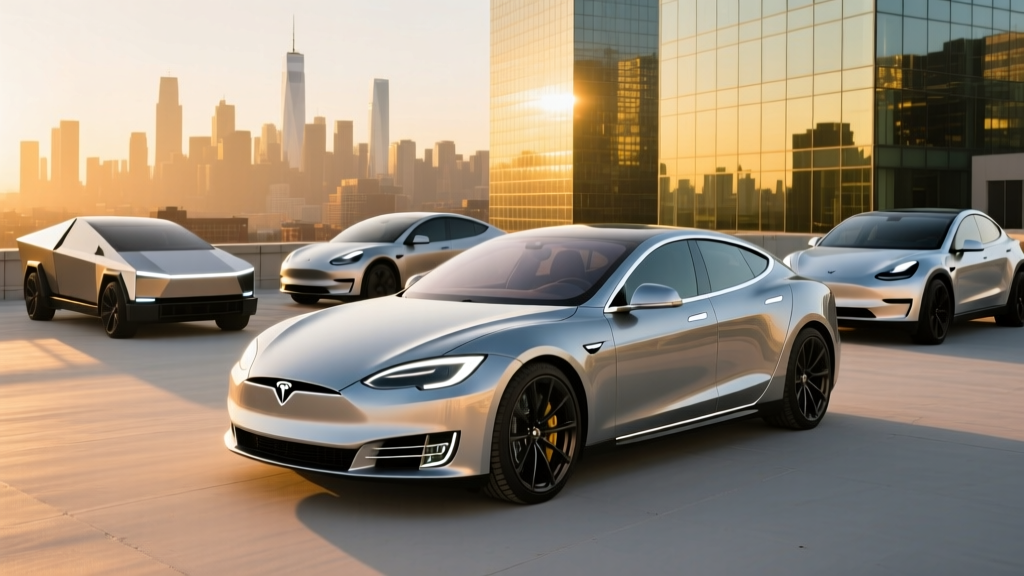
2026 Tesla Model Lineup: Core Specs at a Glance
| Spec | Model 3 RWD | Model 3 Long Range AWD | Model Y Long Range AWD | Model S LR | Model X LR |
|---|---|---|---|---|---|
| Base MSRP | $36,990 | $42,490 | $41,990 | $74,990 | $79,990 |
| EPA Range | 341 mi | 363 mi | 320 mi | 402 mi | 348 mi |
| Battery (usable) | 60 kWh (LFP) | 79 kWh (NMC) | 79 kWh (NMC) | 100 kWh (NMC) | 100 kWh (NMC) |
| Efficiency | 25 kWh/100mi (132 MPGe) | 26 kWh/100mi (130 MPGe) | 27 kWh/100mi (123 MPGe) | 28 kWh/100mi (120 MPGe) | 30 kWh/100mi (111 MPGe) |
| Peak DC Fast Charge | 170 kW | 250 kW | 250 kW | 250 kW | 250 kW |
| 10–80% DCFC Time | ~25 min | ~18 min | ~20 min | ~25 min | ~27 min |
| Level 2 Rate | 11.5 kW (~44 mi/hr) | 11.5 kW (~44 mi/hr) | 11.5 kW (~42 mi/hr) | 11.5 kW (~41 mi/hr) | 11.5 kW (~38 mi/hr) |
| 0–60 mph | 5.8 sec | 4.2 sec | 4.8 sec | 3.1 sec | 3.8 sec |
| Horsepower | 271 hp | 384 hp | 384 hp | 670 hp | 670 hp |
| Drivetrain | RWD | Dual-Motor AWD | Dual-Motor AWD | Dual-Motor AWD | Dual-Motor AWD |
| Cargo (rear seats up) | 23 cu ft | 23 cu ft | 30 cu ft | 28 cu ft | 88 cu ft (folded) |
| Rear Legroom | 35.2 in | 35.2 in | 41.6 in | 35.4 in | 40.9 in |
| §30D Credit Eligible | Up to $7,500 | Up to $7,500 | Up to $7,500 | No (MSRP cap) | No (MSRP cap) |
Sources: fueleconomy.gov, Tesla.com. Prices exclude $1,390 destination fee.
Real-World Range: What the EPA Sticker Doesn't Tell You
- Model 3 RWD (EPA 341 mi): Expect 280–310 mi on highway road trips at 75 mph. In freezing temperatures (below 30°F), range drops to 230–260 mi due to cabin heating and battery chemistry limitations of LFP cells.
- Model 3 Long Range AWD (EPA 363 mi): Highway real-world: 300–330 mi. Cold weather: 250–280 mi. NMC chemistry handles cold slightly better but still loses 15–25%.
- Model Y Long Range AWD (EPA 320 mi): Highway real-world: 265–290 mi. Cold weather: 220–250 mi. The taller, less aero crossover body costs efficiency at speed.
- Model S LR (EPA 402 mi): Highway real-world: 340–370 mi. Cold weather: 280–320 mi. Remains the longest-range Tesla you can buy.
- Model X LR (EPA 348 mi): Highway real-world: 290–320 mi. Cold weather: 240–270 mi. Falcon-wing doors add weight and drag penalty.
Tesla's EPA numbers are among the most accurate in the industry — they don't inflate like some competitors — but physics still applies. Highway speeds above 70 mph, cold weather, roof racks, and aggressive driving all reduce range. The Model 3 RWD's LFP battery is particularly sensitive to cold; Tesla recommends keeping it plugged in and preconditioning before winter drives.
Charging Speed: DC Fast Charging and Home Level 2
Tesla's Supercharger network remains the gold standard for public charging reliability, and the 2026 lineup supports both NACS (Tesla's native connector) and — via the included adapter — CCS1 stations. All current Teslas use the NACS connector natively, which is now the North American Charging Standard adopted by Ford, GM, Rivian, and most major automakers.
| Charging Method | Model 3 RWD | Model 3 LR AWD | Model Y LR AWD | Model S/X |
|---|---|---|---|---|
| Level 1 (120V, 12A) | ~3 mi/hr (1.4 kW) | ~3 mi/hr (1.4 kW) | ~3 mi/hr (1.4 kW) | ~3 mi/hr (1.4 kW) |
| Level 2 (240V, 48A) | ~44 mi/hr (11.5 kW) | ~44 mi/hr (11.5 kW) | ~42 mi/hr (11.5 kW) | ~38–41 mi/hr (11.5 kW) |
| DC Fast (peak kW) | 170 kW | 250 kW | 250 kW | 250 kW |
| DC Fast 10–80% | ~25 min | ~18 min | ~20 min | ~25–27 min |
| Charge Curve Note | LFP allows frequent 100% charging | Tapers sharply above 80% | Tapers sharply above 80% | Tapers above 80% |
Key charging insight: The Model 3 RWD's LFP battery has a lower peak charge rate (170 kW vs 250 kW) but offers a unique advantage — Tesla recommends charging LFP batteries to 100% regularly for calibration, unlike NMC batteries which prefer 80% daily limits. This means the RWD's usable daily range is closer to its full 341 EPA miles, while the Long Range models effectively operate on ~290–300 EPA miles at the recommended 80% daily charge limit.
For home Level 2 charging, Tesla's Wall Connector ($475) delivers up to 48A / 11.5 kW on a 60A circuit. Installation typically runs $500–$2,000 depending on panel proximity, with a 200A panel upgrade adding $1,500–$3,000 if needed. A full overnight charge (10–80%) takes roughly 5–6 hours for the Model 3/Y and 7–8 hours for the Model S/X.
Federal Tax Credit: Which Teslas Qualify Under §30D?
The federal EV tax credit under IRS §30D remains a critical purchase factor, but eligibility depends on three gates: vehicle MSRP caps, buyer income limits, and battery/critical-mineral sourcing requirements.
- MSRP Cap: Sedans must be under $55,000; SUVs/pickups under $80,000. This eliminates the Model S ($74,990 sedan) but the Model Y qualifies as an SUV. Model 3 trims fall under the $55K sedan cap.
- Buyer Income Cap: AGI must not exceed $150,000 (single), $225,000 (head of household), or $300,000 (joint). Check your modified AGI, not gross income.
- Critical Minerals & Battery Sourcing: Vehicles must meet escalating thresholds for North American–sourced critical minerals and battery component manufacturing. Tesla's US-built batteries and supply-chain agreements generally satisfy 2026 requirements for Model 3 and Model Y.
- Point-of-Sale Transfer: You can now transfer the credit to the dealer at purchase, reducing your out-of-pocket cost immediately rather than waiting for a tax refund.
| Model | MSRP | MSRP Cap Met? | Max §30D Credit | Effective Price (with full credit) |
|---|---|---|---|---|
| Model 3 RWD | $36,990 | Yes ($55K sedan) | $7,500 | ~$29,490 |
| Model 3 LR AWD | $42,490 | Yes ($55K sedan) | $7,500 | ~$34,990 |
| Model Y LR AWD | $41,990 | Yes ($80K SUV) | $7,500 | ~$34,490 |
| Model S LR | $74,990 | No (over $55K sedan cap) | $0 | $74,990 |
| Model X LR | $79,990 | Yes ($80K SUV cap) | $7,500* | ~$72,490 |
*Model X eligibility depends on final battery-sourcing compliance confirmation for 2026; verify at purchase. Income caps apply to all credits. Consult a tax professional for personal eligibility. Source: IRS.gov.
Tech, Driver Assistance, and the Autopilot Reality
Every 2026 Tesla ships with Basic Autopilot (Traffic-Aware Cruise Control + Autosteer), a SAE Level 2 driver-assistance system. This means the car handles steering and speed on marked roads, but you must remain fully attentive with hands on the wheel at all times. It is not self-driving.
Full Self-Driving (Supervised) — an $8,000 add-on or $99/month subscription — adds automatic lane changes, city-street navigation, traffic light/stop sign recognition, and Smart Summon. Despite the name, FSD remains SAE Level 2. The driver is legally responsible for all vehicle operation. NHTSA continues to investigate Tesla's Autopilot/FSD crash data. Never treat any Tesla as autonomous — this is not a Level 4 system like Waymo's driverless robotaxi.
Beyond driver assist, Tesla's tech stack includes:
- 15.4-inch center touchscreen (Model 3/Y) or 17-inch (Model S/X) with OTA updates
- Tesla app integration: remote preconditioning, charge scheduling, Sentry Mode camera access, phone-as-key
- Heat pump (standard on all 2026 models) — significantly improves cold-weather efficiency vs resistive heating
- Ventilated front seats, ambient lighting, and premium audio (standard on Long Range trims)
- No Apple CarPlay or Android Auto — Tesla's proprietary infotainment only. This remains a dealbreaker for some buyers.
Ownership Costs, Warranty, and Long-Term Value
Tesla's warranty is competitive but not class-leading:
- Basic Vehicle: 4 years / 50,000 miles
- Battery & Drive Unit: 8 years / 100,000 miles (Model 3 RWD) or 8 years / 120,000 miles (Long Range, Model S/X)
- Capacity Retention Threshold: 70% — if your battery drops below 70% of original capacity within the warranty period, Tesla replaces it. In practice, Tesla battery degradation averages 10–12% over 150,000 miles based on fleet data, well within the threshold.
| 5-Year Cost Factor | Model 3 RWD | Model Y LR AWD | Avg. Gas Sedan (Toyota Camry) |
|---|---|---|---|
| Purchase (after credit) | ~$29,490 | ~$34,490 | ~$28,000 |
| Fuel/Energy (5yr, 15K mi/yr) | ~$4,200 | ~$4,500 | ~$9,400 |
| Maintenance (5yr) | ~$1,500 | ~$1,500 | ~$3,800 |
| Insurance (5yr avg) | ~$9,500 | ~$10,200 | ~$7,200 |
| Estimated Depreciation | ~$12,000 | ~$14,000 | ~$11,000 |
| Total 5-Year Cost | ~$56,690 | ~$64,690 | ~$59,400 |
Energy costs assume $0.14/kWh national average and 80% home charging. Gas at $3.40/gal, 32 MPG combined. Insurance varies significantly by state, age, and driving record. Depreciation estimates based on current resale trends. Source: fueleconomy.gov.
The Model 3 RWD undercuts a comparable gas sedan on total cost when the full tax credit applies, largely due to fuel and maintenance savings. Insurance remains Tesla's weak point — premiums run 20–40% higher than equivalent gas vehicles due to repair costs and claims data.
Pros and Cons: The Honest Summary
- Class-leading Supercharger network (17,000+ stalls in North America)
- Best-in-class efficiency (kWh/100mi) across all trims
- Over-the-air updates continuously add features
- LFP battery on RWD allows daily 100% charging
- Heat pump standard — excellent cold-weather efficiency
- Strong resale value relative to most EVs
- Phone-as-key, Sentry Mode, and app ecosystem are unmatched
- No Apple CarPlay or Android Auto
- Insurance premiums significantly above segment average
- Minimalist interior lacks physical buttons (climate, mirrors via screen)
- FSD ($8K) remains Level 2 despite the name and cost
- Build quality inconsistent — panel gaps, paint issues still reported
- No heads-up display on any model
- Model S/X pricing eliminates tax credit advantage
Who Should Buy a Tesla in 2026?
- Choose the Model 3 RWD if: You want the cheapest entry into a Tesla, commute under 60 miles daily, have home charging, and can use the full $7,500 credit. At ~$29,500 after credit, it's the best value in the lineup.
- Choose the Model 3 Long Range AWD if: You regularly drive 200+ miles, live in a cold climate where AWD matters, and want the faster 250 kW charging for road trips.
- Choose the Model Y Long Range AWD if: You need crossover cargo space (30 cu ft rear, 76 cu ft folded), rear-seat room for child seats, and qualify for the SUV MSRP cap. This is Tesla's best-selling model for a reason.
- Choose the Model S LR if: You want 400+ mile range, luxury performance, and don't need the tax credit. Cross-shop the BMW i5, Lucid Air Pure, and Mercedes EQS first.
- Look elsewhere if: You demand CarPlay, prefer physical controls, need a truck bed (consider Rivian R1T or Ford F-150 Lightning), or want a true Level 4 autonomous experience (Waymo, where available).
Frequently Asked Questions
Why are Tesla prices dropping in 2026?
Tesla has reduced manufacturing costs through its 4680 battery cell production, gigacasting body techniques, and supply-chain optimization. Competitive pressure from Hyundai's Ioniq 5/6, Ford's Mustang Mach-E, BMW's i4/iX, and Chinese brands expanding globally has also forced pricing discipline. The result is the most affordable Tesla lineup since 2020.
Does the Tesla Model 3 RWD qualify for the full $7,500 tax credit?
Yes, if you meet IRS income caps ($150K single / $300K joint) and the vehicle's battery sourcing meets 2026 critical-mineral thresholds. Tesla's US-built LFP batteries and supply agreements currently satisfy requirements, but always verify at point of sale. The credit can be transferred to the dealer for an immediate price reduction.
How long do Tesla batteries last?
Tesla fleet data shows average battery degradation of approximately 10–12% over 150,000 miles. The battery warranty guarantees 70% capacity retention for 8 years / 100,000–120,000 miles depending on trim. Full battery replacement outside warranty runs $12,000–$16,000 for Model 3/Y and $18,000–$22,000 for Model S/X, though replacements are rare within the first 200,000 miles.
Is Tesla's Supercharger network really that much better?
For reliability and ease of use, yes. Tesla's Supercharger network reports 99.9% uptime, plug-and-charge billing (no app or card needed at Tesla stalls), and consistent charge speeds. Electrify America and other CCS networks have improved but still suffer from broken stalls, payment issues, and slower actual vs. advertised speeds. With NACS adoption spreading, non-Tesla EVs are now gaining Supercharger access, which may reduce Tesla's exclusivity advantage over the next few years.
Should I wait for further price drops or buy now?
Tesla's pricing is dynamic and can change without notice. If the current price fits your budget and the tax credit applies, the 2026 lineup represents strong value. Waiting risks losing the §30D credit (which has phase-out provisions tied to domestic manufacturing thresholds that tighten annually) or facing a price increase if demand rebounds. There's no guarantee prices will drop further.