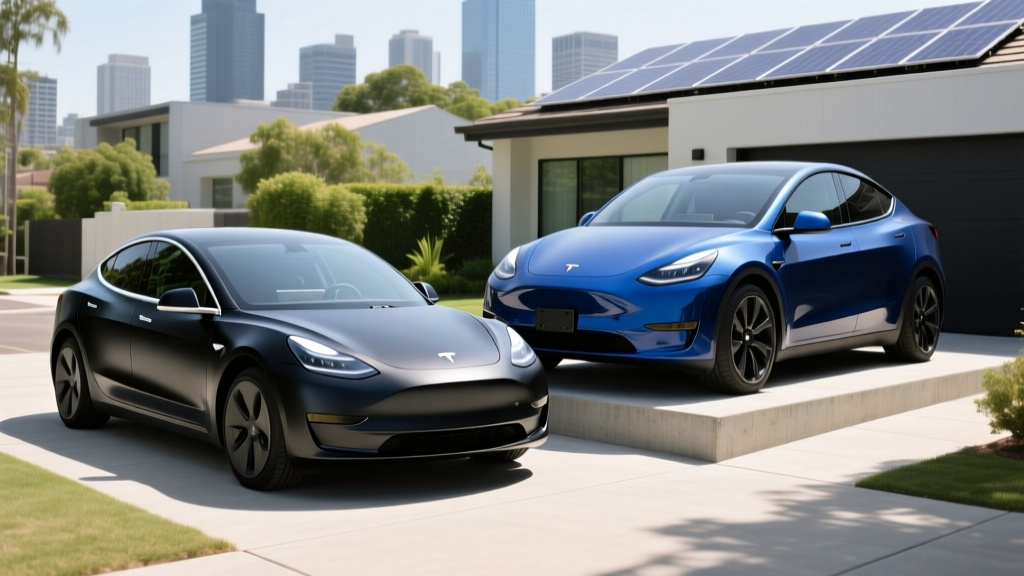
When Tesla prices dropped sharply in 2023, it reset expectations for the entire EV market. Into the 2026 model year, Tesla has continued to trim MSRPs and shuffle trims on its two highest-volume cars — the Model 3 sedan and Model Y crossover — while adding the refreshed "Highland" interior to the 3 and the "Juniper" refresh to the Y. The result is a lineup that, on paper, undercuts many legacy rivals on price-per-mile of range.
But sticker price is only the start of an EV purchase decision. Real-world range, charging-curve behavior on road trips, tax-credit eligibility under IRS §30D, insurance costs, and the NACS-only charging ecosystem all shape the true cost of ownership. This profile puts the 2026 Model 3 Long Range AWD and Model Y Long Range AWD under the microscope, with exact figures and the caveats Tesla's configurator doesn't emphasize.
2026 Tesla Model 3 Long Range AWD: The Numbers That Matter
The Long Range AWD remains the sweet spot of the Model 3 lineup — dual-motor traction, the longest range, and a price that still clears the §30D MSRP cap for sedans. Here is the spec snapshot buyers should screenshot before visiting a showroom.
| Spec | Value |
|---|---|
| EPA range | 346 miles |
| Battery (usable) | ~79 kWh, NMC (nickel-manganese-cobalt) |
| EPA efficiency | 132 MPGe combined / 25 kWh per 100 mi |
| Peak DC fast charge | 250 kW (Supercharger V3) |
| 10–80% DC time | ~27 minutes (preconditioned) |
| Level 2 home charge | 11.5 kW (~44 mi/hr added) |
| 0–60 mph | 4.2 seconds |
| Power | ~384 hp combined (dual motor) |
| Drivetrain | Dual-motor AWD |
| Cargo | 23 cu ft trunk + rear seats folded |
| Rear legroom | 35.3 in |
| Battery & drive unit warranty | 8 years / 120,000 miles |
| Base MSRP (before fees) | $42,130 |
Real-World Range Reality Check
EPA sticker: 346 miles. Expect ~285–310 miles on sustained 70–75 mph highway driving in mild weather, dropping to ~220–250 miles in sub-freezing winter conditions. Tesla's heat pump helps, but cold still saps roughly 20–30% of range. City driving with regen recovers more energy and can push real-world figures close to the EPA number.
2026 Tesla Model Y Long Range AWD: Family-Crossover Specs
The Model Y continues to be America's best-selling EV by volume. The Juniper refresh brought a quieter cabin, ventilated front seats, ambient lighting, and a rear touchscreen — addressing the most common complaints owners logged against the pre-2025 build.
| Spec | Value |
|---|---|
| EPA range | 320 miles |
| Battery (usable) | ~78 kWh, NMC |
| EPA efficiency | 117 MPGe combined / 29 kWh per 100 mi |
| Peak DC fast charge | 250 kW |
| 10–80% DC time | ~28 minutes (preconditioned) |
| Level 2 home charge | 11.5 kW (~37 mi/hr added) |
| 0–60 mph | 4.8 seconds |
| Power | ~384 hp combined |
| Drivetrain | Dual-motor AWD |
| Cargo (behind 2nd row) | 34 cu ft; 76 cu ft folded |
| Rear legroom | 41.6 in |
| Towing capacity | 3,500 lbs (with tow package) |
| Battery & drive unit warranty | 8 years / 120,000 miles |
| Base MSRP (before fees) | $44,630 |
Real-World Range Reality Check
EPA sticker: 320 miles. Highway cruising at 75 mph in 70°F weather typically yields ~260–280 miles. Winter highway drops to ~200–230 miles. The Model Y's taller, less aero shape costs it about 2 kWh/100 mi versus the Model 3 at speed — meaningful on 300-mile road-trip legs.
Charging Speed: What the Curve Actually Looks Like
Peak kW numbers flatter; sustained kW matters more. Both the Model 3 and Model Y LR AWD peak at 250 kW on a V3 Supercharger, but that rate holds only roughly between 10–30% State of Charge. From 30–60%, expect ~175–200 kW; from 60–80%, the curve tapers to ~90–110 kW. That's why the 10–80% time is closer to 27–28 minutes rather than the "15 minutes" marketing occasionally implies.
| Level | Power | Added Range per Hour | Typical Use |
|---|---|---|---|
| Level 1 (120V) | ~1.4 kW | ~3–5 mi/hr | Emergency / trickle |
| Level 2 (240V, 48A) | 11.5 kW | 37–44 mi/hr | Home overnight |
| DC Fast (V3 Supercharger) | Up to 250 kW | ~180–220 mi in 15 min | Road trips |
| DC Fast (V4 / 3rd-party CCS w/ adapter) | Up to 250 kW* | Similar | Non-Tesla networks |
*Non-Tesla DC chargers require Tesla's NACS-to-CCS adapter or a V4 Supercharger with native NACS cabling. Peak rate depends on the host site's cabinet.
Home charging on a Wall Connector at 48 amps adds roughly 37–44 miles per hour, so an overnight 8-hour session replenishes ~300 miles — plenty for daily use. Preconditioning the battery (automatic when the car navigates to a Supercharger) is essential for reaching peak kW; skip it and you'll see ~120–150 kW even at low SoC on a cold morning.
Tesla Prices Dropped — But What's the Out-the-Door Cost?
Tesla's list prices have fallen materially since 2022, but destination fees, paint/trim upgrades, and FSD purchases move the real transaction price. Here's the current price ladder for the two most-shopped trims, with the federal credit applied where eligible.
| Model / Trim | MSRP (incl. destination) | §30D Credit | Effective Price |
|---|---|---|---|
| Model 3 RWD | $36,630 | Up to $7,500 | ~$29,130 |
| Model 3 Long Range AWD | $42,630 | Up to $7,500 | ~$35,130 |
| Model Y Long Range AWD | $44,630 | Up to $7,500 | ~$37,130 |
| Model Y Performance | $49,130 | Up to $7,500 | ~$41,630 |
Eligibility is not automatic. Under IRS §30D, the full $7,500 credit requires:
- MSRP cap: ≤$55,000 for sedans (Model 3), ≤$80,000 for SUVs/pickups (Model Y qualifies as SUV).
- Buyer AGI cap: ≤$150,000 single / ≤$225,000 HOH / ≤$300,000 joint.
- Battery sourcing: Split $3,750 / $3,750 between critical-minerals and battery-component requirements — both must be met for the full $7,500, and sourcing rules tighten annually through 2032.
- Point-of-sale transfer: You can assign the credit to the dealer at purchase to reduce the cash price, or claim it on your tax return via Form 8936.
Check the latest eligibility on IRS.gov's clean-vehicle credit page, because battery-component sourcing lists update throughout the year.
Driver Assistance: Autopilot and FSD Supervised
Every new Tesla ships with Basic Autopilot (lane-keep + traffic-aware cruise). The optional FSD (Supervised) package — currently a $99/month subscription or lump-sum purchase — adds city-street traffic-light and stop-sign handling, autosteer on more road types, and parking features.
SAE Automation Level: Level 2
Both Autopilot and FSD (Supervised) are SAE Level 2 systems. The driver must remain attentive, hands-on or eyes-on (per the cabin camera), and ready to intervene at any moment. This is not "self-driving" — only Level 4 services like Waymo operate without a driver in the loop.
What FSD (Supervised) Does NOT Do
- It does not remove your legal responsibility for the vehicle.
- It does not handle all construction zones, unmapped rural roads, or severe weather reliably.
- It does not yet qualify as a "Level 3 or 4" system under NHTSA definitions.
Pros, Cons, and the Verdict
Pros
- Class-leading efficiency — 25 kWh/100 mi (Model 3 LR) still beats most rivals.
- Access to the Supercharger network — the most reliable U.S. DC network by uptime.
- OTA updates continuously add features post-purchase.
- Strong cargo space and available tow rating on the Y.
- Prices after §30D undercut comparable Hyundai Ioniq 6, BMW i4, and Ford Mustang Mach-E trims.
Cons
- No physical stalks on the refreshed 3/Y — turn signals and wipers are steering-wheel buttons.
- Insurance premiums remain 15–30% higher than comparable ICE sedans in most states.
- NACS-only port requires an adapter for Electrify America and other CCS networks.
- Minimal dealer-style service footprint — mobile rangers and a handful of service centers.
- FSD (Supervised) is still Level 2 and, for many buyers, not worth the subscription cost.
Choose Tesla If…
- You road-trip frequently and want Supercharger access without adapters on most corridors.
- You want the lowest kWh/100 mi in a premium sedan/crossover segment.
- You qualify for the full §30D credit and can charge at home overnight.
Look at Competitors If…
- You prefer physical controls and a more traditional interior (Hyundai Ioniq 6, BMW i4).
- You need a hatchback liftgate (Ioniq 5, Kia EV6).
- Local Tesla service-center distance is a dealbreaker.
Frequently Asked Questions
Why did Tesla prices drop — and will they keep falling?
Tesla has cut MSRPs repeatedly since 2023 to defend market share against the Ioniq 5, EV6, Mach-E, and incoming Chinese-market models. Further cuts are possible but not guaranteed; Tesla also adjusts pricing weekly based on demand, incentives, and battery-cost swings.
Does the 2026 Model 3 or Model Y qualify for the full $7,500 federal credit?
Yes, as of the current tax year, both qualify — subject to buyer income caps and the annual battery-sourcing requirements. Always verify on the fueleconomy.gov tax-credit lookup before signing.
Is the Model Y still worth it now that the Juniper refresh is out?
Yes — the refresh addressed cabin noise, ride quality, and rear-seat comfort, which were the Y's biggest criticisms. For families needing 34 cu ft of cargo and 320 miles of range, it remains the segment benchmark.
How long will the NMC battery last?
Tesla warranties the pack for 8 years / 120,000 miles against dropping below 70% State of Health. Real-world fleet data suggests most NMC packs retain ~85–90% SoH at 100k miles with normal charging habits (daily limit set to 80%).
Should I buy or lease after the price drop?
If you qualify for §30D, buying usually wins on total cost. If you don't (income above the cap), leasing lets the lessor claim the credit and pass it through as a lower monthly payment — a common workaround.
Bottom line: the latest Tesla price cuts make the Model 3 LR and Model Y LR the value leaders in their segments if you qualify for §30D and have home charging. For road-trippers, Supercharger access remains a tangible advantage; for budget-focused buyers who don't qualify for the credit, rivals with lower MSRPs and dealer-service convenience deserve a serious test drive.