The Real Question: Is Tesla Premium Connectivity Worth Paying For?
If you own a Tesla or are about to take delivery, you've likely seen the prompt: subscribe to Premium Connectivity for $9.99 per month (or $99 annually) or stick with Standard Connectivity. The decision isn't trivial — it determines which navigation, entertainment, and remote features your car actually supports when away from Wi-Fi. But before we dissect the subscription itself, let's ground this in the vehicles it affects. We'll use the 2026 Tesla Model 3 Long Range AWD as our reference platform, since it represents the highest-volume Tesla sedan on the road today.
| Spec | Value |
|---|---|
| EPA Range | 363 miles |
| Battery (usable) | ~79 kWh, NMC chemistry |
| Drivetrain | Dual Motor AWD |
| 0-60 mph | 4.2 seconds |
| Horsepower | ~384 hp (combined) |
| Max DC Fast Charge | 250 kW peak |
| 10-80% DC Fast Charge | ~25 minutes |
| Level 2 Home Charge (11.5 kW) | ~44 miles/hr |
| MPGe (combined) | 132 MPGe |
| Efficiency | 25 kWh/100 mi |
| Cargo Volume | 23 cu ft (rear trunk + frunk) |
| Rear Legroom | 35.3 inches |
| Battery Warranty | 8 years / 120,000 miles |
| Base MSRP | $47,740 (before incentives) |
Standard vs. Premium Connectivity: What You Actually Get
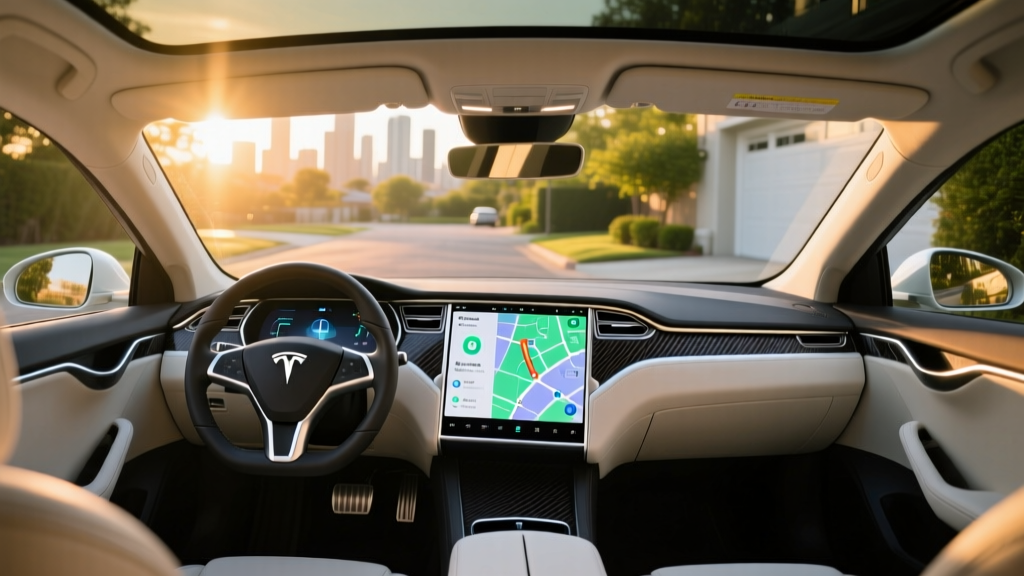
Every Tesla ships with Standard Connectivity at no extra charge. This includes basic navigation (map rendering and turn-by-turn directions), Bluetooth audio streaming, and over-the-air (OTA) software updates — but only when connected to Wi-Fi. Once you leave your home network, Standard Connectivity drops satellite imagery, traffic visualization, and route optimization around congestion.
Premium Connectivity unlocks the following features when the vehicle is on cellular data:
- Live Traffic Visualization: Color-coded congestion overlays on the navigation map, allowing you to see slowdowns ahead before your route recalculates.
- Traffic-Based Routing: Navigation actively reroutes around congestion, potentially shaving 10-20 minutes off a commute in heavy metro areas.
- Satellite-View Maps: Aerial imagery layered beneath the map — useful for spotting parking structures, trailheads, and rural driveways that street-view rendering obscures.
- Video Streaming: Netflix, YouTube, Disney+, and Twitch on the center touchscreen — but only while parked. (No, you cannot watch while driving.)
- Caraoke: Full lyrics displayed on-screen for in-car sing-alongs. A niche feature, but families with kids use it regularly.
- Music Streaming via Tesla's Built-In Apps: Spotify, Tidal, and other services stream directly through the car's cellular connection without needing your phone as a hotspot.
- Internet Browser: A full Chromium-based browser accessible from the touchscreen while parked.
- Phone-as-a-Key Reliability: While not exclusive to Premium, the cellular connection ensures remote commands (climate preconditioning, unlocking for a guest, Sentry Mode clip downloads) work reliably from the Tesla app regardless of Wi-Fi availability.
Real-World Range Reality Check
EPA Sticker: 363 miles
Expect in Practice: ~290-310 miles at sustained highway speeds (70-80 mph). In freezing temperatures (below 30°F), plan for 230-260 miles due to battery chemistry limitations and cabin heating load. The Model 3 Long Range's heat pump helps mitigate cold-weather loss compared to older resistive-heating EVs, but physics still applies — cold lithium-ion cells are less efficient and regen braking is limited until the battery warms.
Charging Speed: DC Fast, Level 2, and the Curve You Need to Understand
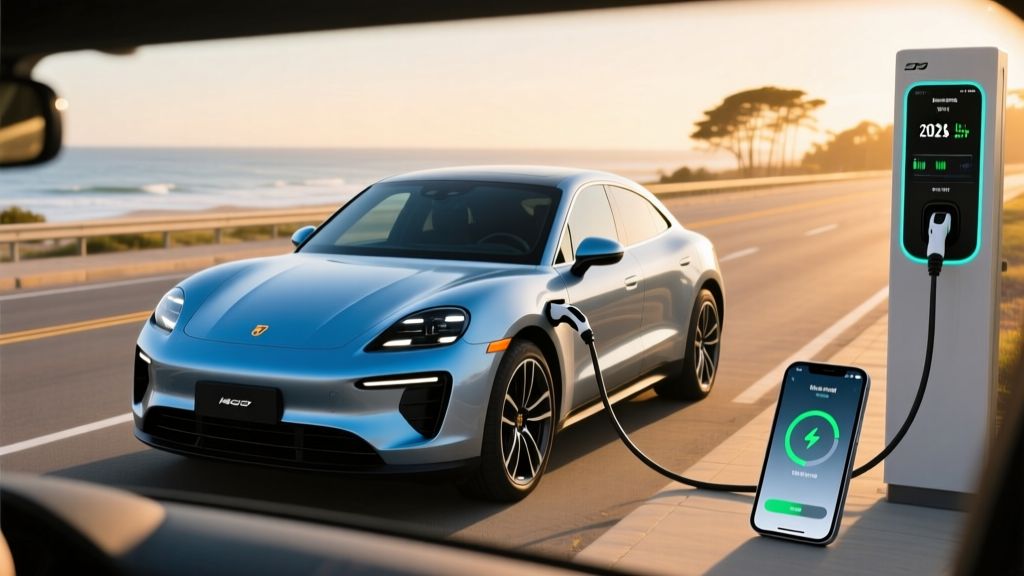
Charging specs matter whether you're a daily commuter or a cross-country road-tripper. The 2026 Model 3 Long Range supports:
| Level | Power / Rate | Miles Added | Notes |
|---|---|---|---|
| Level 1 (120V household) | ~1.2 kW | ~3-5 mi/hr | Emergency/trickle only |
| Level 2 (240V, 48A Wall Connector) | 11.5 kW | ~44 mi/hr | Full overnight charge in ~7 hrs |
| DC Fast (V3 Supercharger) | 250 kW peak | ~175 mi in 15 min | 10-80% in ~25 min |
| DC Fast (V4 Supercharger) | 250 kW (current vehicles) | Same as V3 | Future vehicles may support higher |
Critical charging-curve context: The 250 kW figure is a peak, not a sustained rate. The Model 3 Long Range hits peak power only when the battery is preconditioned (navigating to a Supercharger triggers this automatically) and between roughly 10-30% state of charge. Above 50% SoC, the rate tapers to ~120 kW; above 80%, it drops further to ~40-60 kW to protect battery longevity. This is why Tesla (and every other automaker) quotes 10-80% times rather than 0-100% — the final 20% can take as long as the first 70%.
For home charging, Tesla's Wall Connector at 48 amps on a 60A circuit delivers 11.5 kW, adding roughly 44 miles per hour of charging. A typical overnight session (8 hours) restores ~350 miles — more than the usable battery capacity. If your home has a 200A electrical panel with spare capacity, installation typically runs $500-$1,500 beyond the $475 Wall Connector hardware. Older homes with 100A panels may need a $2,000-$4,000 panel upgrade — get a quote from a licensed electrician before committing.
Pricing, Tax Credits, and the Total Cost Picture
The 2026 Model 3 Long Range AWD starts at $47,740. The Rear-Wheel-Drive variant undercuts it at $42,740, while the Performance trim jumps to $54,740. Here's where the federal tax credit enters — and where it gets complicated.
| Trim | MSRP | §30D Credit Potential | Effective Price |
|---|---|---|---|
| RWD | $42,740 | Up to $7,500* | ~$35,240 |
| Long Range AWD | $47,740 | Up to $7,500* | ~$40,240 |
| Performance | $54,740 | Up to $7,500* | ~$47,240 |
*Subject to IRS §30D rules: buyer income caps ($150K single / $300K joint AGI), MSRP cap ($55K for sedans), battery critical-mineral and component sourcing requirements. The credit can be transferred to the dealer as a point-of-sale discount. Verify current eligibility on IRS.gov before purchase — sourcing rules tighten annually.
All three Model 3 trims fall under the $55,000 MSRP cap for sedans, which is the first hurdle cleared. The second is your adjusted gross income. The third — and the one that trips up the most buyers — is battery sourcing. As of 2026, the critical-minerals and battery-component requirements are at their strictest phase-in levels, meaning not every VIN qualifies for the full $7,500. Tesla's US-built models with LFP batteries (typically the RWD variant sourced from certain supply chains) may see partial credit reductions. Always confirm the specific VIN's eligibility with the dealer and cross-reference against the IRS qualified-vehicles list.
For the Long Range AWD specifically, the NMC battery pack has historically met the full credit threshold, but this is supply-chain-dependent and subject to change mid-year.
What Premium Connectivity Costs — and the Math on Whether It Pays Off
Premium Connectivity is $9.99 per month or $99 per year (effectively getting ~1.5 months free on the annual plan). Let's compare that against the alternatives:
- Phone hotspot: If your cellular plan includes hotspot data, you can tether your phone and unlock most Premium features (satellite maps, traffic, streaming) for free. The tradeoff: you must manually connect every drive, and hotspot data caps (often 15-50 GB before throttling) can be eaten quickly by video streaming or frequent navigation use.
- Google Maps / Apple Maps on your phone: These provide real-time traffic and satellite view on your phone screen, but you lose the integration with Tesla's native navigation — meaning no automatic Supercharger routing, no preconditioning-for-charger triggers, and no energy-aware route planning that factors in elevation and wind.
- Doing without: Standard Connectivity still gives you turn-by-turn directions. You just won't see congestion or satellite imagery, and you'll need Wi-Fi for OTA updates and entertainment apps.
Who benefits most from Premium: Daily commuters in congestion-heavy metros (LA, Atlanta, DC, Chicago) who rely on traffic-based routing. Road-trippers who use satellite-view maps to scout campsites and trailheads. Families who use video streaming during charging stops. Owners without a generous phone hotspot plan.
Who can skip it: Single-car commuters with predictable routes and a Wi-Fi-connected garage. Owners with unlimited hotspot data who don't mind tethering. Minimalists who use CarPlay-style phone projection for navigation (though Tesla does not support CarPlay or Android Auto — a notable omission that makes native nav more important).
Driver Assistance: Autopilot, FSD, and the Connectivity Overlap
Premium Connectivity does not affect Tesla's driver-assistance systems. Basic Autopilot (Traffic-Aware Cruise Control and Autosteer) is standard on every Model 3. Enhanced Autopilot ($6,000) adds Navigate on Autopilot, Auto Lane Change, Autopark, and Summon. Full Self-Driving (Supervised) at $8,000 adds traffic-light and stop-sign recognition, and city-street autosteer capability.
SAE Automation Level: What Tesla Actually Offers
All Tesla driver-assist features — including FSD (Supervised) — are SAE Level 2. This means the system provides combined steering and acceleration/braking support, but the driver must remain fully engaged, hands on or near the wheel, eyes on the road, and ready to take over at any moment. Tesla's cabin camera monitors driver attention. This is not autonomous driving. Only Level 4 services like Waymo One (operating in Phoenix, San Francisco, and Los Angeles) provide true driverless rides in geofenced areas.
Connectivity does matter for FSD in one indirect way: FSD relies on OTA updates for capability improvements, and these updates require Wi-Fi for download (they're too large for cellular). Premium Connectivity won't speed up FSD updates — but it does ensure that real-time map data and road-condition information flow continuously during FSD operation.
Model 3 vs. the Competition: Where Does It Stand?
The Model 3 Long Range competes against the Hyundai Ioniq 6 Long Range AWD (342 mi EPA, ~$52,600), the BMW i4 xDrive40 (279 mi EPA, ~$57,000), and the Polestar 2 Long Range Dual Motor (320 mi EPA, ~$53,300). The Tesla's advantages remain efficiency (132 MPGe leads the segment), Supercharger network access (though NACS adoption is opening this to competitors via adapters), and software integration. The Ioniq 6 counters with 800V architecture enabling faster peak charging (~350 kW on capable chargers), and the BMW i4 wins on interior materials and ride refinement.
On connectivity subscriptions: Hyundai's Bluelink and BMW's Connected Drive offer comparable remote features but typically include them free for the first 3-5 years before requiring a subscription (~$10-$20/month). Tesla's approach is more transparent — you see the cost upfront — but the lack of CarPlay/Android Auto means you're more locked into Tesla's ecosystem.
Pros
- Segment-leading efficiency (132 MPGe / 25 kWh/100mi)
- 363-mile EPA range covers most road trips with one charge stop
- 250 kW Supercharger network with reliable plug-and-charge experience
- OTA updates continuously add features post-purchase
- Class-leading cargo space for a sedan (23 cu ft including frunk)
- Traffic-based routing genuinely saves time in congestion
Cons
- No Apple CarPlay or Android Auto — you're in Tesla's ecosystem
- Premium Connectivity is an extra $120/year for features some competitors bundle
- Ride quality is firm; road noise is noticeable on coarse pavement
- Rear-seat space (35.3" legroom) is tight for tall adults on long trips
- Turn-signal stalk removal (steering-wheel buttons) remains polarizing
- Tax credit eligibility depends on evolving battery-sourcing rules
Who Should Buy the Model 3 Long Range — and Who Should Look Elsewhere?
Buy it if: You want the most range-per-dollar in a premium electric sedan, you road-trip enough that Supercharger reliability matters, you commute in traffic and will actually use traffic-based routing daily, and you're comfortable living without CarPlay.
Look elsewhere if: You need spacious rear seats for adult passengers regularly (consider the Model S or Hyundai Ioniq 6), you want the fastest possible DC charging (Hyundai/Kia's 800V E-GMP platform charges faster), you prefer traditional luxury interiors (BMW i4), or you refuse to pay for connectivity features you consider basic.
Does every Tesla require Premium Connectivity for navigation?
No. Standard Connectivity includes basic turn-by-turn navigation with map rendering. Premium adds satellite imagery, live traffic overlays, and traffic-based rerouting. You can always navigate without Premium — you just lose the real-time congestion data and aerial map view.
Can I use my phone's hotspot instead of paying for Premium Connectivity?
Yes. Tethering your phone's hotspot to the Tesla unlocks satellite maps, traffic data, and streaming — the same features Premium provides. The tradeoff is convenience (manual connection each drive) and data consumption (video streaming can exhaust a 50 GB hotspot cap in a few hours).
Does Premium Connectivity improve Autopilot or FSD performance?
No. Autopilot and FSD (Supervised) operate using the vehicle's onboard cameras and neural-network processing. Cellular connectivity does not affect their real-time driving capability. However, OTA updates that improve these systems require Wi-Fi for download.
How much does Premium Connectivity cost in 2026?
$9.99 per month or $99 per year, billed through your Tesla account. You can subscribe or cancel at any time via the Tesla app or your car's touchscreen.
Is the 2026 Model 3 eligible for the $7,500 federal EV tax credit?
It can be, but eligibility depends on three IRS §30D requirements: your adjusted gross income (must be under $150K single / $225K head of household / $300K joint), the vehicle MSRP (must be under $55,000 for sedans — all Model 3 trims qualify), and battery sourcing (critical minerals and component manufacturing must meet phase-in thresholds that tighten annually). The credit can be applied as a point-of-sale discount at the dealer. Verify current eligibility at IRS.gov and confirm with your dealer for the specific VIN.
What happens to Premium Connectivity features if I cancel?
You revert to Standard Connectivity immediately at the end of your billing period. Satellite maps, live traffic, video streaming, Caraoke, and the browser become unavailable on cellular. They reactivate instantly if you resubscribe.
Does the Model 3 come with a free Premium Connectivity trial?
New Tesla vehicles typically include a 30-day trial of Premium Connectivity. After the trial, you must subscribe to retain the features on cellular data.
Sources: EPA range and efficiency data from fueleconomy.gov; federal tax credit rules from IRS.gov §30D; vehicle specifications from Tesla's official spec sheets.