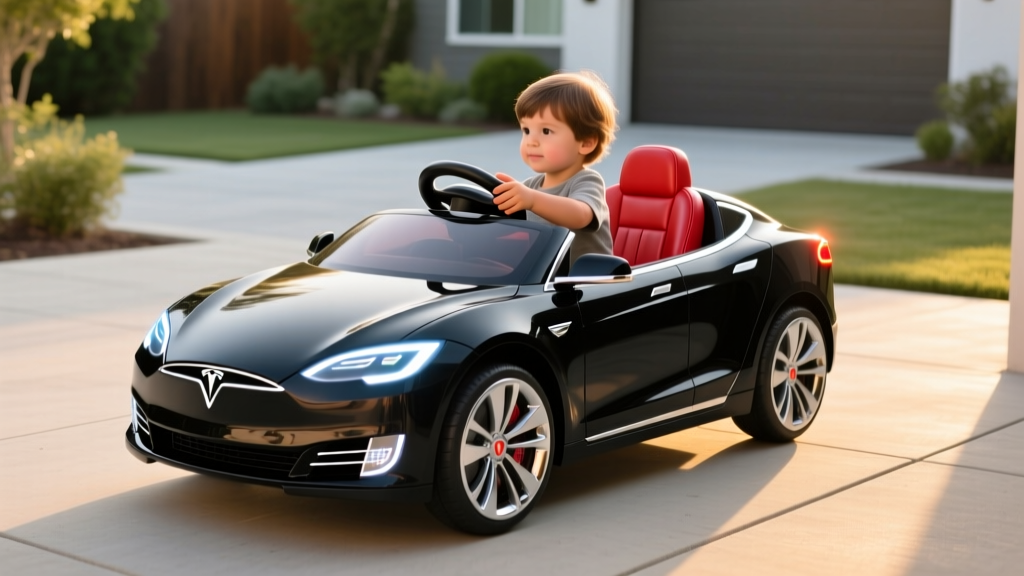
If you've browsed social media or visited a toy aisle lately, you've likely seen miniature Tesla vehicles zipping around driveways and backyards. The term Tesla Power Wheels has become shorthand for a growing category of battery-powered ride-on toys modeled after real electric vehicles. But unlike the full-size Tesla Model Y or Cybertruck, these pint-sized EVs are designed for children — and the market has expanded well beyond a single brand or model.
This guide breaks down what parents need to know about Tesla-branded and Tesla-style electric ride-on toys in 2026: battery specs, real-world runtime, charging times, safety features, pricing, and whether these mini EVs deliver enough value to justify the cost compared to traditional Power Wheels or pedal-powered alternatives.
What Are Tesla Power Wheels? The Electric Ride-On Toy Landscape
The term "Power Wheels" is a trademark of Fisher-Price (Mattel), but it has become genericized — much like "Kleenex" for tissues — to describe any battery-powered ride-on toy for children. The "Tesla" modifier reflects a trend: manufacturers licensing or imitating Tesla's vehicle designs (Model S, Cybertruck, Roadster) to create miniature electric cars for kids aged roughly 1.5 to 8 years old.
Key players in this space in 2026 include:
- Fisher-Price Power Wheels — the legacy brand, offering various licensed vehicle replicas (Jeep, Barbie, Disney), though not currently a licensed Tesla model
- Radio Flyer — has offered Tesla Model S ride-ons in past years; availability varies by model year
- Rollplay (by Kidzone) — produces Tesla-licensed ride-ons including Model S and Model 3 variants
- Tobbi, Costzon, and Best Choice Products — budget brands offering Tesla-style designs without official licensing
- Tesla's own merchandise store — has occasionally offered a branded kids' ride-on Model S, though stock is sporadic and often sells out quickly
The common thread: all use sealed lead-acid (SLA) or lithium-ion battery packs, DC brushed or brushless motors, and simple throttle/brake controls designed for young children.
Battery Specs, Chemistry, and Real-World Runtime
Unlike full-size EVs that use sophisticated NMC or LFP lithium-ion packs, most children's ride-on toys — including Tesla-styled models — rely on one of two battery chemistries:
| Attribute | Sealed Lead-Acid (SLA) | Lithium-Ion (Li-ion) |
|---|---|---|
| Typical Voltage | 6V or 12V | 12V or 24V |
| Capacity (Ah) | 7–12 Ah | 4–10 Ah |
| Energy (Wh) | ~42–144 Wh | ~48–240 Wh |
| Weight | Heavy (5–10 lbs) | Light (2–5 lbs) |
| Cycle Life | 200–300 cycles | 500–1,000 cycles |
| Runtime (typical) | 40–60 minutes | 60–120 minutes |
| Replacement Cost | $20–$45 | $50–$120 |
| Charge Time | 8–14 hours | 3–6 hours |
Most Tesla-styled ride-ons in the $150–$400 range ship with 12V SLA batteries. Premium models ($400+) increasingly include 24V lithium-ion packs, which offer meaningfully better runtime, faster charging, and longer overall lifespan — echoing the same LFP/NMC upgrade calculus that full-size EV buyers face, just at a much smaller scale.
Motor Power, Speed, and Performance
Children's ride-on toys aren't measured in 0–60 mph times or horsepower, but motor specs still matter for safety and capability:
| Tier | Voltage | Motor Wattage | Top Speed | Age Range |
|---|---|---|---|---|
| Entry (6V) | 6V | 15–25W | 1.5–2 mph | 1.5–3 years |
| Standard (12V) | 12V | 30–55W (×2 motors) | 2.5–5 mph | 3–6 years |
| Performance (24V) | 24V | 60–120W (×2) | 5–8 mph | 5–8 years |
Most Tesla Model S ride-on replicas fall into the 12V/standard tier, with dual rear motors (one per rear wheel) delivering a combined 60–90 watts and a top speed around 3–5 mph. That's roughly a brisk walking pace — fast enough to be exciting for a 4-year-old, slow enough for parents to jog alongside.
Higher-end 24V models can reach 6–8 mph and handle grass, gravel, and mild inclines (up to ~10% grade). These often include features borrowed from real EVs: regenerative braking simulation (the car slows when the child lifts off the pedal), LED headlights, and Bluetooth speakers playing engine sounds or music.
Charging: Times, Equipment, and What Parents Should Know
Charging a ride-on toy is nothing like plugging in a Tesla Model Y — there's no DC fast charging, no Supercharger network, and no charge-curve taper to worry about. But the basics still apply:
| Battery Type | Charger Included | Charge Time (0–100%) | Charger Wattage | Cost per Charge |
|---|---|---|---|---|
| 6V / 7Ah SLA | Wall adapter (included) | 8–10 hours | ~10W | ~$0.01 |
| 12V / 12Ah SLA | Wall adapter (included) | 10–14 hours | ~18W | ~$0.02–0.03 |
| 24V / 7Ah Li-ion | Dedicated Li-ion charger | 3–5 hours | ~40W | ~$0.01–0.02 |
The energy cost of charging a ride-on toy is negligible — fractions of a penny per charge. A full summer season of daily use might cost $0.50–$1.50 in electricity. The real cost consideration is battery replacement: a 12V SLA battery typically lasts 1–3 seasons depending on care, and replacements run $20–$45 from retailers like Batteries Plus or Amazon.
Pricing: What Tesla-Style Ride-On Toys Cost in 2026
Prices vary significantly by brand, battery voltage, build quality, and licensing:
| Tier | Price Range | Voltage | Features | Examples |
|---|---|---|---|---|
| Budget | $100–$200 | 6V–12V SLA | Basic throttle, no remote | Tobbi, Costzon generic models |
| Mid-Range | $200–$400 | 12V SLA | Parent remote, LED lights, MP3 | Rollplay Tesla Model S, Best Choice |
| Premium | $400–$800 | 24V Li-ion | EVA tires, leather seat, suspension | Licensed Tesla models, custom builds |
| Collector/Licensed | $500–$1,200+ | 12V–24V | Official Tesla branding, limited runs | Tesla Shop ride-on (when available) |
Safety Features and Parental Controls
Safety is the primary concern for any motorized toy. Here's what modern Tesla-style ride-ons offer:
- Parent remote override: Most 12V+ models include a 2.4 GHz remote control allowing parents to steer, accelerate, or stop the vehicle from up to ~100 feet away. This is essential for toddlers who haven't mastered steering.
- Speed limiter: Many models offer a physical or switch-based speed lock — typically capping speed at 2.5 mph for beginners and unlocking 5 mph for experienced riders.
- Seat belts: Most include a lap belt or 3-point harness, though these are light-duty nylon and not comparable to automotive restraints.
- Automatic brake: Releasing the foot pedal engages a motor brake (not regenerative braking in the EV sense, but a simple short-circuit brake on the DC motor).
- Spring suspension: Premium models include basic spring suspension on all four wheels for smoother rides over bumps.
The U.S. Consumer Product Safety Commission (CPSC) regulates ride-on toys under ASTM F963 toy safety standards. Parents should verify that any ride-on toy carries ASTM compliance labeling and has not been subject to a recall. Battery compartment security is critical — children should not be able to access battery terminals during normal use.
Tesla Power Wheels vs. Traditional Power Wheels: Which Is Better?
The "Tesla" label on a ride-on toy is largely aesthetic. Here's how Tesla-styled models compare to the broader Power Wheels category:
✅ Tesla-Style Ride-Ons
- Sleek, modern design kids recognize from real Teslas
- Often include Bluetooth speakers and LED light bars
- Higher-end models use Li-ion batteries (faster charge, longer life)
- Strong "cool factor" for EV-enthusiast families
❌ Traditional Power Wheels (Fisher-Price)
- Wider model selection (Jeeps, trucks, ATVs, tractors)
- Longer track record; easier to find replacement parts
- Generally more rugged for outdoor/off-road play
- Better retail availability (Walmart, Target, Amazon)
For pure play value and durability on grass and dirt, traditional Power Wheels Jeeps and trucks often outperform Tesla-styled ride-ons, which tend to prioritize smooth-surface aesthetics. For driveway cruising, design appeal, and tech features, Tesla-styled models win with kids who want to drive "just like mom and dad."
Who Should Buy a Tesla-Style Ride-On Toy?
✅ Best for:
- Families with EV-enthusiast parents who want a matching mini Tesla for the driveway
- Kids ages 3–6 who primarily ride on paved or smooth surfaces
- Gift-givers looking for a high-impact, memorable present ($200–$500 range)
- Indoor or garage use during winter months (compact enough to store)
❌ Skip it if:
- Your child primarily plays on rough terrain, grass, or hills (a traditional Jeep-style Power Wheels handles these better)
- You need a toy that will last 5+ years with minimal maintenance (SLA batteries require replacement every 1–3 seasons)
- Budget is under $150 (you'll get better value from a non-Tesla-styled ride-on at that price)
Frequently Asked Questions
What is the real-world runtime of a Tesla Power Wheels ride-on?
Expect 30–60 minutes of continuous use on a 12V SLA battery on flat pavement. Grass, hills, and heavier riders reduce this to 20–40 minutes. A 24V lithium-ion model can deliver 60–90 minutes under similar conditions. Always plan for one session per charge — overnight recharging is the norm for SLA models.
How fast do Tesla-style ride-on toys go?
Most 12V models top out at 3–5 mph (walking to slow-jog pace). Entry-level 6V models max at ~2 mph. Premium 24V models can reach 6–8 mph, which is fast enough to require close parental supervision and helmet use.
Are Tesla-branded ride-on toys officially made by Tesla?
Tesla has occasionally sold a licensed kids' Model S ride-on through its online merchandise shop, but availability is inconsistent and units sell out quickly. Most "Tesla" ride-ons sold on Amazon and toy retailers are produced by third-party brands (Rollplay, Tobbi, Costzon) — some with licensing agreements, many without. Always check for official licensing if brand authenticity matters to you.
Do ride-on toys qualify for any EV tax credits or incentives?
No. The federal §30D Clean Vehicle Credit and all state EV incentives apply only to highway-capable motor vehicles. Children's ride-on toys are classified as toys under CPSC regulations and are not eligible for any electrification tax credits, regardless of their battery type.
How long does the battery last before needing replacement?
Sealed lead-acid batteries typically last 1–3 seasons (200–300 charge cycles) depending on care. Avoiding deep discharge and storing the battery fully charged during off-seasons extends life significantly. Lithium-ion batteries last 3–5+ seasons (500–1,000 cycles) but cost more to replace ($50–$120 vs. $20–$45 for SLA).
Is a Tesla Power Wheels ride-on worth buying over a regular Power Wheels?
If design appeal and tech features (Bluetooth audio, LED lights, parent remote) are priorities, a Tesla-styled model in the $250–$400 range offers strong kid appeal. If ruggedness, off-road capability, and parts availability matter more, a traditional Fisher-Price Power Wheels Jeep or truck is the more practical choice. Neither category qualifies for EV incentives — this is a toy purchase, not a vehicle purchase.